



Living as we must, in history, it is always important to distinguish between the mostly contingent events of the moment and the deeper trends that will affect the future. Call it, perhaps, the difference between the libretto and the score. I was thinking about this while I was trying to make sense of the latest jousting over the Strait of Hormuz. Trump remains in the same space, having gotten himself into the crisis with no plan for how to get out of it. He’s now making limited efforts to contest control of the Strait. Iran says it remains completely in control of it. But, in a way, that’s a trap for Trump, because if passage through the Strait requires using military force, it’s precisely the use of military force, the danger and uncertainty it creates, which makes it impossible to use the Strait as a secure and safe means of transit. Force may be the medium-term answer to Trump’s problem. But in the short term it makes things worse. And Trump’s not a delaying-gratification, thinking-long-term kind of guy.
But the deeper impact of this crisis, one entirely of Trump’s own making, has been to convince many countries, especially but not only in East Asia, that oil and gas are too vulnerable to price shocks and supply instability. Meanwhile, renewables like solar and wind have now crossed the threshold where they are not only simply cheaper than fossils fuels but, as a tech product, will continue to get cheaper over time. Wind and solar energy can be produced entirely within your sovereign borders. So the Strait crisis is looking like it may be a turning point in the climate/renewables energy transition.
JoinThis is just a short follow-up on the topic of administration vs. ownership, which I discussed yesterday. There’s a huge amount of ground to cover in just how much Donald Trump has willfully and illegally destroyed in his second term, acts which go to the heart of the idea that the president, elected merely for a four year term, owns not only the government but in a sense the country itself. I discussed this with regards to USAID, the Department of Education and so forth. But nowhere is it more clear or is the damage more permanent than in biomedical research and the sciences. There the administration, wholly illegally, has blasted through institutions and processes and national assets that took decades and generations to build. These are latticeworks of expertise, money, experience and connections between the government and the nation’s research universities. They have not only created huge advances in hard sciences and cures. They’ve been been a generator of national power and economic might. A president hired for a four-year term had no legal right to destroy these things the American people had created.
Trump’s ballroom is getting a huge chunk of money in Senate Republicans’ new reconciliation bill, released late last night. That’s the headline today on many pieces about the legislation.
And it is important: the White House insisted that private donors, not taxpayers, would foot the bill for the ballroom. Now, through a vote where — due to Senate rules — Republicans do not need Democratic support, senators will in fact direct $1 billion of taxpayer funding to security features for the project, which, at times, seems to be all Trump truly cares about.
We, however, have been emphasizing another point about this legislation: it lasts for three years. That means if Democrats retake the House or Senate or both later this year, they’ll be deprived, via this reconciliation bill, of a key mechanism for reining in ICE and CBP: funding. The Constitution equipped Congress to check the executive branch via its power of the purse. This reconciliation bill is just the latest example of Republicans doing all they can to shrug off that responsibility.
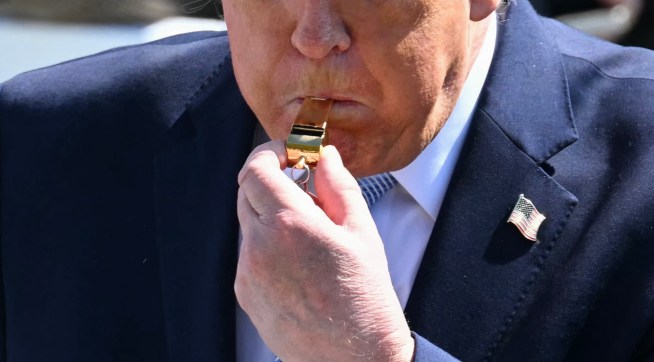
I’ve been talking over the last few weeks about critical reforms that are necessary to make any kind of civic democratic revival in the U.S. even possible. The ending the filibuster and reforming the Supreme Court are high on that list. I want to talk about related topic today that we can only see if we take few steps back from the immediacy of day to day events over the last year and a half. These are tied to the over-mighty nature of the American presidency — or rather, the over-mighty potential of the American presidency, which a mix of Donald Trump’s degenerate personality and the theories of the conservative legal movement have brought to the fore.
The difference I want to note is between administration and ownership. We talk a lot these days about how Donald Trump seems to think he owns the United States – he puts his brand, his likeness, his signature on everything. He talks about his generals, his military, etc. But there’s a more concrete and specific way this is true and it goes to the heart of what needs to be fixed about the American presidency and the whole constitutional system.
Join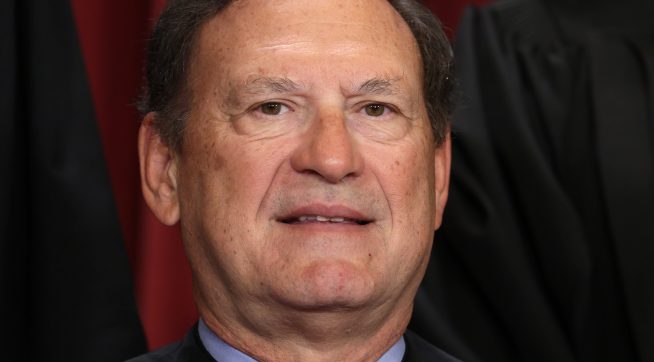
We’re talking a lot today about gerrymandering and Court reform. I want to note one among many ways the two issues intersect. Democrats are consistent on redistricting. They have and continue to support a national gerrymandering law to outlaw the practice. They restated that commitment today even as they prepare to counter new GOP demands to eliminate Black legislative representation across the South.
Read MoreWe’ve been wondering for a few days now how the White House would seek to convince Congress that the Vietnam-era War Powers Resolution, which requires the executive branch to obtain authorization for hostilities from the legislative branch within 60 days, should not apply.
It emerged yesterday, in Hegseth’s assertion to senators that the April 7 ceasefire “pauses” that 60-day clock, and it was formalized by Trump in a letter sent to Congress this afternoon, which we published a copy of here.
The argument, you will not be surprised to learn, is farcical. Emine Yücel and Josh Kovensky ran it by some experts.
The question of who would have standing to challenge the administration’s war is a thornier one, which Emine and Josh get into here.
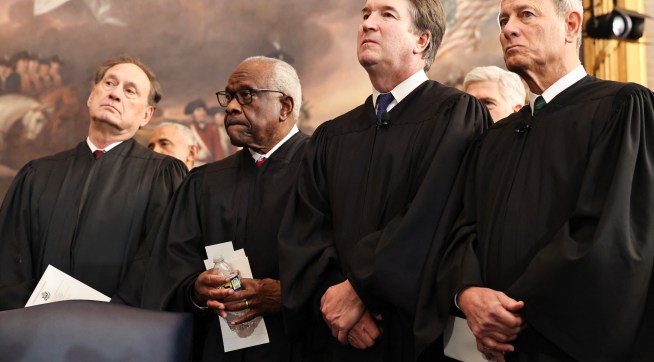
Here’s a brief follow up on yesterday’s post about the corrupt Supreme Court. Yesterday I noticed law professor Steve Vladeck arguing on Bluesky that civic democrats are making a mistake by seeking to “fix” the Court by, as he puts it, “permanently weakening it as an institution.” The gist of his argument is that you constrain the Court by “forcing it to look over its shoulder” as it decides case. In a post on the topic, he writes, “as compared to a time when Congress controlled things like when the Court sits; where it sits; which cases it hears; the Court’s budget; and what the justices must do when not hearing cases (i.e., ride their circuits), today’s Court can do just about whatever it wants, whenever it wants, and all without realistically having to look over its shoulder.”
I told him that I actually agree with the concept of having the court “look over its shoulder” — that you have a series of teeth in place to react to overreach. I’m not sure about the best method of applying that pressure. But I agree with the general principle. Or, rather, I did agree with it — but I think we’ve missed the window for that kind of intervention from Congress. (You can see our brief exchange here.)
Join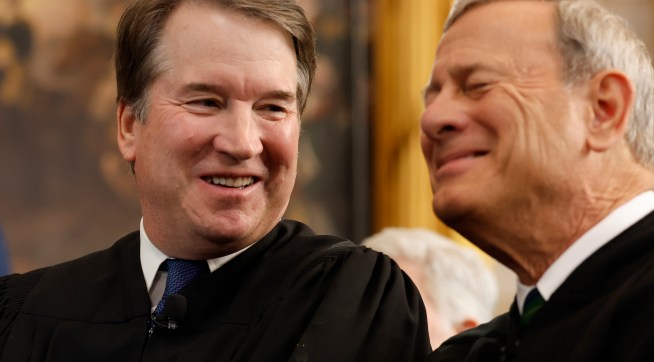
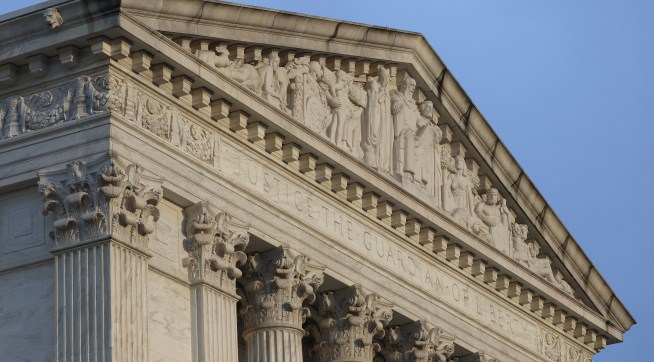
Kate Riga and I will discuss today’s Supreme Court ruling, the ominous oral arguments that followed, and, if we’ve had enough coffee, what hope there is for the future of multiracial democracy in a Substack Live tomorrow at 10 a.m. ET.
We’re about 90% of the way to our goal in our annual TPM Membership Drive. If you’ve somehow missed the theme of the drive, it’s that we here at TPM are chronicling the national crisis. The national crisis we’re talking about obviously includes Donald Trump, who is something akin to a great accelerator or catalyst.
But if you’ve followed our Supreme Court coverage today, you know that the crisis neither began when Trump took office nor will it end when he leaves office. There is a lot of work to do. Much of that work cannot be done by journalists. But the documenting of abuse by public officials not only can be done by journalists but must be done by journalists. So, if you’ve been putting off joining for whatever reason, make today the day and help us hit our goal so we can do our part in return.
Click here to join for 25% off. Thanks in advance, from all of us.