You Can Have Democratic Self-Government or the Corrupt Court — Not Both
04.30.26 | 12:07 pm
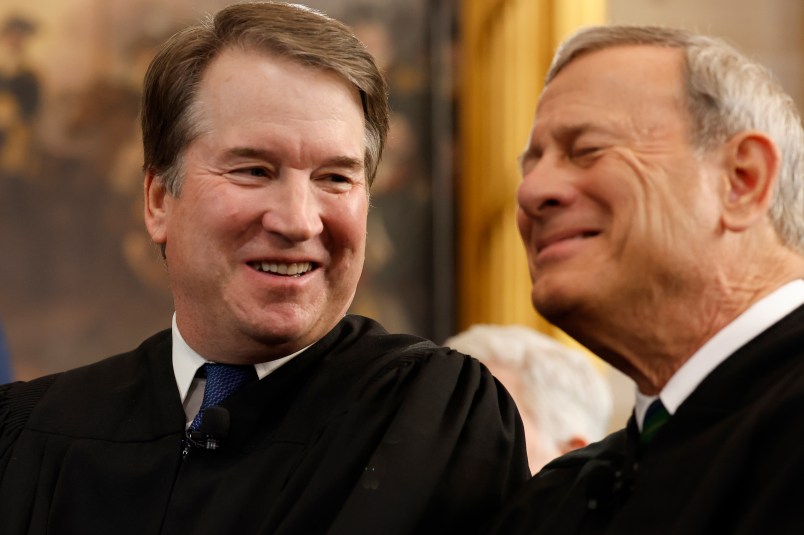
WASHINGTON, DC - JANUARY 20: U.S. Supreme Court Associate Justice Brett Kavanaugh (L) share a laugh with Chief Justice John Roberts while waiting for their opportunity to leave the stage at the conclusion of the inau...WASHINGTON, DC - JANUARY 20: U.S. Supreme Court Associate Justice Brett Kavanaugh (L) share a laugh with Chief Justice John Roberts while waiting for their opportunity to leave the stage at the conclusion of the inauguration ceremonies in the Rotunda of the U.S. Capitol on January 20, 2025 in Washington, DC. Donald Trump took the oath of office for his second term as the 47th president of the United States. (Photo by Chip Somodevilla/Getty Images)MORE LESS
Want to keep reading?
Join TPM to get full-access to our reporting, newsletters, and other member-only features.