

Following up on my morning post about the Democratic political contribution infrastructure, I had a number of TPM Readers write in saying, in so many words, No! You’re wrong. People are totally burnt out about the annoying emails. I want to point out that I said the same thing, how abusive and stupid and annoying the avalanche of emails are. What I noted is a sort of admission against interest, which is that the haul from online small donor giving keeps rising. So at least at the aggregate level, effective burnout, actually seeing contributions decline, is not something we’re seeing. It may be around the corner. And we can and should do better. But on this acid test the money keeps rolling in. And that’s clearly a big reason why it continues.
Read More
Halloween is right around the corner, and it sure seems like monsters are running the country. This week I’m joined once again by Derick Dirmaier, Hunter Walker and Nicole Lafond to discuss what’s scaring us about the world right now. We’ll also catch up on the week’s headlines, and we’ll name the Person of the Week.


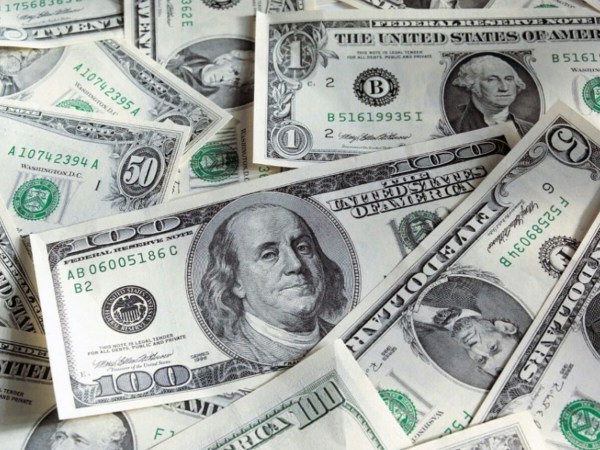


The New Republic has a new piece out by Adam Bonica and Jake Grumbach called How the Consulting Class is Eating the Democratic Party. It’s a very interesting piece and I recommend it to you. The following is a series of comments, responses, thoughts, not necessarily in any particular order. That’s in part because this is a big article and in a several different articles bundled into one, some parts of which I agree with more than others.
The basic gist is that you have a Democratic consulting industry based on profit maximization which is burning through Democratic Party patience, commitment, money rather than cultivating them for the long haul. That expresses itself through high-pressure, doomy fundraising asks and by SuperPACs, fundraising vendors, consultants, etc. who spend a huge amount of fundraising dollars on fundraising itself. Here’s one key passage from the piece …




I’m not sure where to start with this. The latest news is some mix of Webistics, Jukt Micronics and Animal House. But here goes. Yesterday we noted that a FiftyPlusOne investigation had led to the outing of “Wedgewood Polls” as a publisher of entirely fake polls. It’s still unclear the precise motives, but some political narrative setting aim and gaming betting markets seem like good bets. The details are wild. (But see the earlier post or FiftyPlusOne’s write-up for more.)
Early this morning I woke to a short item in The Washington Post noting another pollster, SoCal Strategies, had straight up disappeared. By disappeared it meant that overnight its website, Substack and Twitter account had all vanished. In the earlier write-up of the investigation of Wedgewood, FiftyPlusOne had noted that one of the ways it had initially vetted Wedgewood was speaking to people at another polling firm where one or more of the Wedgewood guys had worked. I can’t remember if I’d already heard SoCal’s name come up in this story. But when I saw the Post item I immediately knew it had to be them. Yes, fake polls are a problem. But stuff like we’re seeing here is super rare. They had to be connected.
Read More
Here is one of those things we can see on the horizon and it will be important to be ready for. It will become especially important if Democrats take both the House and the Senate.
It’s a given that even with only the House under Democratic control, we’re in for a period of pretty intense inter-branch conflict. Just how intense, whether Democrats will fight as much as their partisans demand … those things we can’t know. But this basic feature of the next Congress is pretty clear. What I’d like to discuss here is a wrinkle in that fabric that hasn’t gotten enough attention.