Last Friday, the Washington Post published an opinion piece by a GOP campaign consultant named Brad Todd. He says he’s the one who coined that phrase about taking Trump “literally but not seriously.” The big argument of the piece I think actually makes no sense or represents a kind of denial. But there are building blocks to it that capture key insights about immigration policy in the United States. The gist of Todd’s argument is that Trump’s immigration agenda was a big political winner in 2024 and has actually been very successful in practice — dramatically reducing the number of entries via the southern border. The problem is that it’s being overshadowed and the support for it is being wrecked by Trump sending ICE on these wilding sprees into blue cities.
My view is a bit different. I don’t know if Todd is in denial or willfully obtuse or maybe less than fully leveling with readers. But I don’t think this is actually what’s happening. Nobody foisted Stephen Miller or the whole “mass deportation” policy on Trump. Other than perhaps the concept of tariffs it’s the most organic and natural thing to him. It’s more accurate to say that the energy of MAGA is all about mass deportation and perhaps even more than mass deportation the assaultive cleansing of American society, of both those who are “illegal” and/or brown, but also white people whom through various forms of sexual license, gayness, uppity womenhood and non-traditionalism, are collectively standing in the way of Making America Great Again. “Closing the border” or “securing the border” is just the packaging the gets you electorally to 50%. Because that’s something quite a lot of Americans for a variety of reasons want to do. In other words, wilding sprees aren’t inadvertently driving down support for Trump immigration policies. The actual MAGA policy is “mass deportation” and ICE wilding sprees and it’s unpopular. The border rhetoric is popular but that’s neither here nor there.
Both the calendar and the events in Minneapolis have brought the midterm elections suddenly into focus. We had a special election in Texas in which Democrat Taylor Rehmet scored a double-digit victory in a state senate election in a district Donald Trump won by 17 points just last year. This also comes as polls, which for much of 2025 were more tepid for Democrats than many hoped, have moved more clearly into wave territory. The upshot of all these data points is that Democrats, unsurprisingly, are prepped for a strong midterm showing … as long as the votes are fairly counted. Or to put it a different way, if Donald Trump is looking to avoid losing the House in November and possibly the Senate, him getting more popular or running a super good midterm campaign probably isn’t a viable course of action.
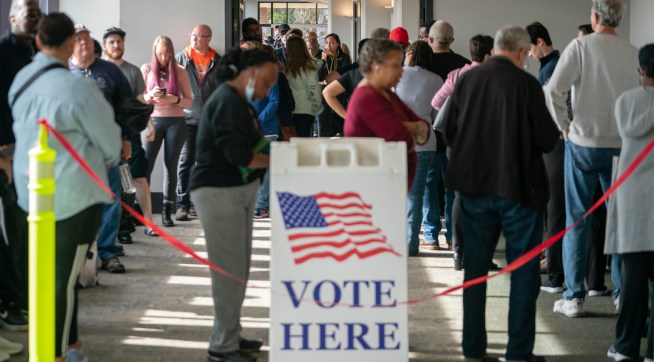
We know about Donald Trump and elections. We had a preview of it in 2020. And now we’re in Trump II where the president has already gone a long way to building a highly politicized domestic paramilitary force which is under his direct personality authority. Many people have rightly been worried for months about the president using ICE to harass voters or create a climate of fear in key cities on election day. Remember that right after the killing of Alex Pretti on Jan. 24, Attorney General Pam Bondi sent a letter to the governor of Minnesota offering to withdraw ICE from Minneapolis if the state would essentially surrender its sovereign governing authority. Along with surrendering public assistance rolls and abolishing sanctuary policies, Bondi demanded access to the state’s voting rolls to free Minneapolis from ICE occupation. So the nexus beyond violence and occupation and the state’s sovereign authority to administer elections no longer has to be imagined. It’s right there.
With a hearing on the constitutionality of birthright citizenship now on the calendar, I want to return to a basic point we’ve discussed several times over the last year. Given our experience living mostly in “normal” times, many of us are used to the idea that the law evolves over time. When judges create new case law, the law evolves and changes. And we accept that it has “changed” — in a certain meaning of the word — even when we may not agree with the change. But with so many other things that have changed slowly since 2016 and then rapidly from early 2025, these are outdated ideas, outdated understandings of how the world and the law works.
Birthright citizenship is a key example of this.
Birthright citizenship is clearly, explicitly and incontestably written into the U.S. Constitution. It’s the country’s fundamental law and more than 150 years of American history have been lived on that basis. There’s a reason why no one has doubted this over all those years even if many have opposed it.
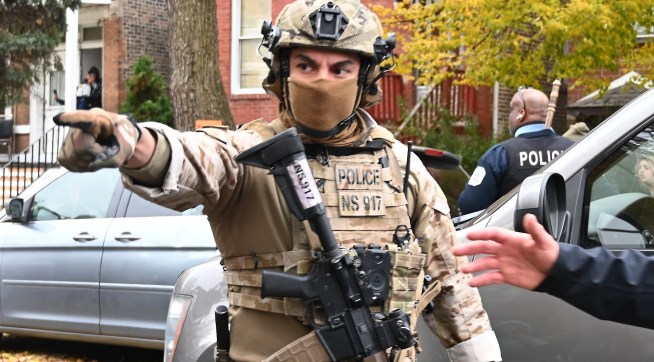
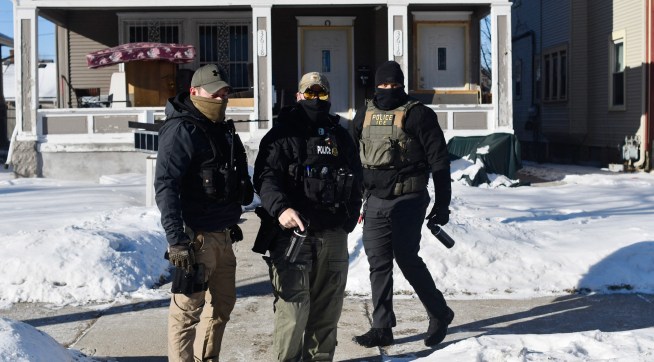
Masks have become the central symbol of the Immigration and Customs Enforcement wilding sprees across America in 2025. They are emblems of a secret police. Their gaiters and balaclavas convey menace. But their central justification is the idea that the agents themselves are endangered by their work, that their identities must be kept secret because they are endangered by the very public they menace while at least notionally working to serve and protect. The general argument is that ICE and Customs and Border Protection agents risk being “doxxed,” being identified and having their private information and home addresses made public. But the word has been the subject to an absurd expansion. Earlier this week I heard an anecdote about a group of ICE agents who were eating at a Minneapolis restaurant. A right-wing account said the agents were then “doxxed,” which in this case meant that activists saw them and sent out word to other activists who then started protesting outside the restaurant.
It’s remarkable how accepted this purported need for anonymity has become. Retiring Sen. Thom Tillis (R-NC) has become increasingly outspoken about ICE and called for DHS Secretary Kristi Noem to lose her job. But he still thinks ICE agents should remain masked because of this fear of “doxxing.” A bunch of the country seems to have forgotten that even the most abusive of metropolitan departments require their officers to show their faces and wear name tags as a matter of course.
In this post I want to dig more into that rationale: that the people who are entrusted with the power to wield legitimate violence to serve the public need special protection, special rights to privacy and anonymity in order to do so. What is implicit in this claim is that ICE needs to do its work in a highly abusive manner, or perhaps even that its work is to be as abusive as possible. Why else do they need to be more anonymous than your average beat cop? If they’re going to get a lot of people mad, it just follows that they need some additional protection from the consequences of generating that kind of anger.
Needless to say this argument treads a pretty slippery slope.
I agree with a lot of your post on disorganized retreat. But I want to come at this from another angle.
For the most benefit practically and politically over the next few months, the concession that is most important imo is giving MN AG full, real time access to all evidence. Not to be crass about it but the public loves a murder trial. Talking about legislative constraints on ICE will put the public to sleep. But the public will have an endless appetite when it comes to pursuing justice for Alex Pretti and putting the man who shot him in the back of the head in jail.
Big public and political fights often have the dynamics of military confrontations. The ongoing backlash and outcry over the ICE murder of Alex Pretti is one such example. Over the first days of this week, the Trump White House lost its footing on the whole issue of ICE wilding sprees in Blue cities. As we discussed yesterday, they’re trying to manage what amounts to a live-action rebranding, telling the public they’re getting things back into line without, if possible, changing anything. But the White House’s public line on ICE and its Blue state wilding sprees has been so categorical and over-the-top it’s a really tough pivot. It’s hard to get your footing when you’re rapidly going from “ICE is our warrior force against immigrant-befouled hellholes run by domestic terrorists” to “we need a real investigation and ICE probably shouldn’t be murdering this many people.”
Yesterday I discussed how in a flash, over roughly 24 hours, the Trump administration began to lose control of the public narrative about ICE and its wilding missions in Minneapolis. The public has been turning against ICE for months. This isn’t new. What we see now is the fragmentation of the pro-ICE wilding chorus. These propaganda choruses are like schools of fish. They are marvelously united and function in a way that no fish has any interest in straying from the school. They flit this way and that but always in unison. When they begin to fragment, that coherence breaks apart very rapidly as the incentive for each fish to stay in line diminishes.
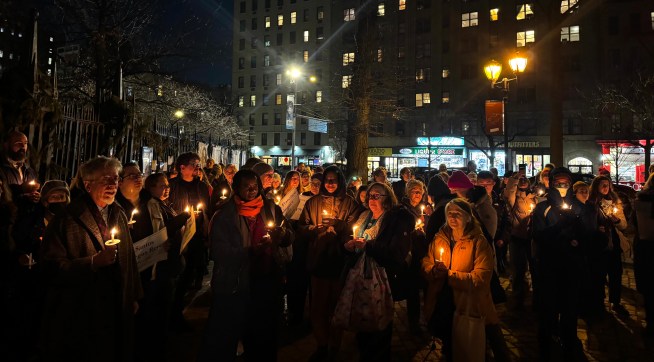
I want to recommend a new article in The Atlantic, one by Adam Serwer, the kind of article only Adam can write. The gist is that ICE and MAGA are losing in Minneapolis in large part because the citizens of the city are performing — really embodying — a resistance of mutual protection. MAGA (and its paramilitary wing, ICE) presents itself as a movement of social solidarity, camaraderie and valor based on ethnic and ideological purity. But it’s the citizens of Minneapolis who are embodying those values. Good and Pretti lost their lives acting as observers, spotters, place-your-body-in-the-breach defenders of people they didn’t know. They showed bravery and selflessness and concern for their neighbors, the kind of intense communalism MAGA posits as commonplace in a lost golden age that can be regained with a purifying violence.
In just the first month of this year, President Trump’s forces have abducted a foreign leader and fatally shot two U.S. citizens protesting the administration’s sweeping immigration crackdown. Laws are being bent, twisted and broken so frequently and so egregiously that it’s hard to keep up.
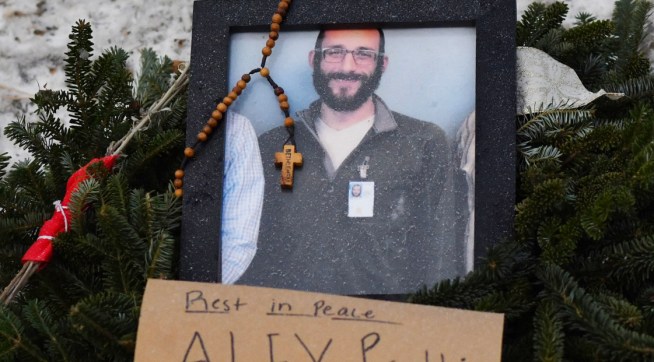
Everywhere we’re seeing signs that ICE, the White House and its virtual army of influencers, agitators and generalized degenerates are losing control of the public narrative surrounding the murder of VA ICU nurse and activist Alex Pretti. These things don’t come in one coherent motion. You see it more in a kind of fragmentation, a general loss of a coherent and aggressive message. Individual players and factions start groping for their own climb down and then often at one sudden point run rapidly for the hills. The White House and ICE have over the last 48 hours simultaneously been claiming that Pretti was there for a mass shooting of ICE agents, so thank god they killed him, and, also, that Pretti’s death is a terrible tragedy and it’s all Governor Tim Walz’s fault because Minneapolis is a sanctuary city. Those two messages don’t really hold together.
Things accelerated from there. Just today, Texas Governor Greg Abbott said that the White House needs to “recalibrate,” which presumably means not murdering so many civilians or at least not doing it on camera. A Republican candidate for governor in Minnesota, Chris Madel, who is currently representing Jonathan Ross, the agent who shot Renée Good to death, dropped his candidacy, blaming ICE, and even left the Republican Party. The president himself seems to be moving to declaim any ownership of Pretti’s murder by sending Tom Homan to Minneapolis as his man who “has not been involved in that area” (i.e., isn’t the one who is doing all the killing) to get the situation under control and “report directly to me.” These moments of breakdown in the White House’s feral and, to date, overwhelmingly united propaganda campaign were matched by dozens of other MAGA influencers and other members of the GOP who could not quite manage to keep yelling that Pretti’s killing was anything other than murder.
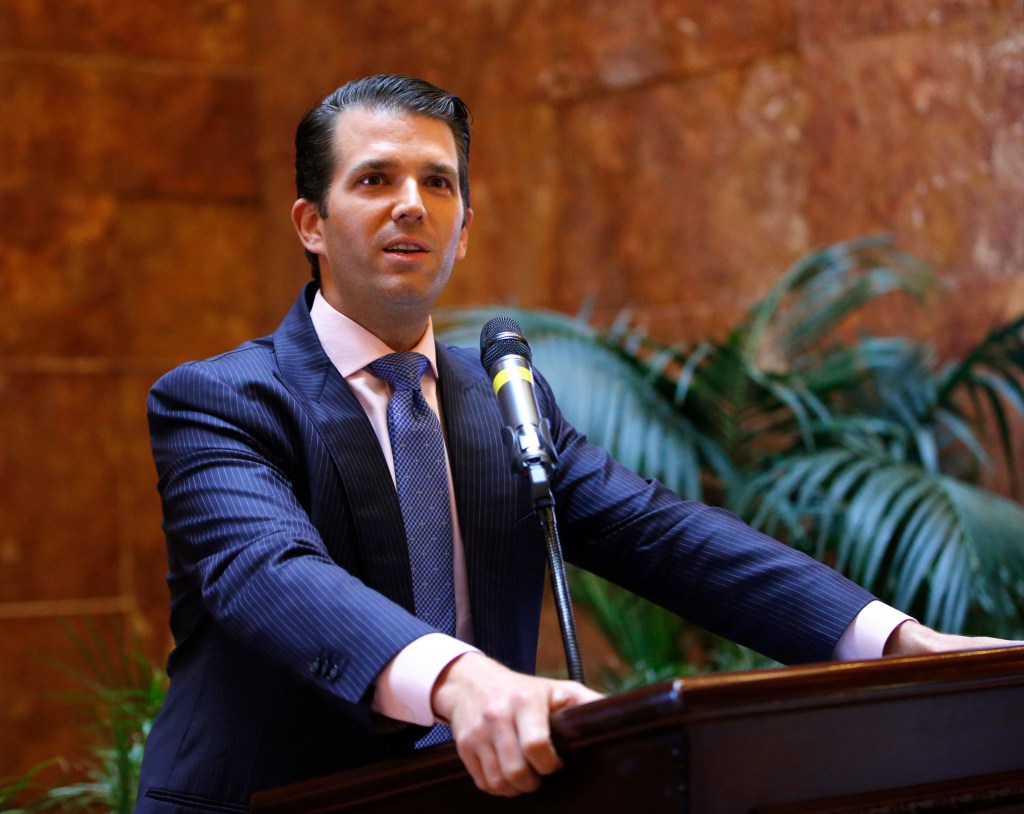
Donald Trump Jr. on Saturday said that his father did speak to fired FBI Director James Comey about his preferred outcome for the investigation into former national security adviser Michael Flynn, though President Donald Trump flatly denied doing so.
“When I hear the Flynn comments, you and I know both know my father for a long time. When he tells you to do something, guess what? There’s no ambiguity in it,” Trump Jr. told Fox News’ Jeanine Pirro. “There’s no ‘Hey, I’m hoping. You and I are friends. Hey, I hope this happens, but you’ve got to do your job.’ That’s what he told Comey.”
On Friday, however, the President flatly denied making those remarks to Comey or pressuring him to drop the investigation into Flynn, implicitly or otherwise.
“You said you hoped the Flynn investigation he could let go,” ABC News’ Jon Karl asked Trump during a press conference.
“I didn’t say that,” Trump interrupted.
“So he lied about that?” Karl asked, referring to Comey.
“Well, I didn’t say that,” Trump said. “And I mean I will you tell you I didn’t say that.”
But, he added, “There would be nothing wrong if I did say it, according to everybody that I’ve read today, but I did not say that.”
Trump Jr. on Saturday claimed that “everything that went on in the Comey testimony was basically ridiculous.”
“For this guy as a politician to then go back and write a memo, ‘oh, I felt,’ he felt so threatened, he felt that — but he didn’t do anything!” Trump Jr. said.
Comey’s blockbuster testimony before the Senate Intelligence Committee on Thursday, however, prompted Trump to offer to do the same.
Off message here for Trump Jr. Says his father did tell Comey he hoped he let the Flynn investigation go. His dad says that's a lie. pic.twitter.com/oOhaFgZY4a
President Donald Trump on Sunday suggested that there are more revelations to come from fired FBI Director James Comey, and questioned their legality.
“I believe the James Comey leaks will be far more prevalent than anyone ever thought possible,” Trump tweeted early Sunday morning. “Totally illegal? Very ‘cowardly!'”
I believe the James Comey leaks will be far more prevalent than anyone ever thought possible. Totally illegal? Very 'cowardly!'
Trump made similar remarks on Friday in another early morning tweet where he labeled Comey a “leaker,” referring to Comey’s decision to share the contents of memos about his conversations with Trump to the press via a friend.
Comey revealed that decision during his testimony on Thursday before the Senate Intelligence Committee, where he painted Trump as a liar and testified that Trump tried to obtain a loyalty pledge from the former FBI head and pushed him to drop an investigation into former national security adviser Michael Flynn.
Trump on Friday said he was “100 percent” willing to match Comey and testify under oath to contradict Comey’s testimony.
A spokesman for Attorney General Jeff Sessions late Thursday pushed back on several aspects of James Comey’s Senate testimony after the former FBI director raised new questions about Sessions’ actions before and after he recused himself from the federal investigation of Russia’s interference in the U.S. election.
Comey’s testimony touched on Sessions at several points. He hinted that the FBI was aware of information that led the bureau to believe Sessions would recuse himself from the Russia probe weeks before he actually did so, and reportedly told senators in a subsequent closed session that Sessions may have met with the Russian ambassador to the U.S. on a third occasion that the attorney general had not disclosed.
The morning after former FBI Director James Comey delivered blockbuster testimony in the Senate in which he painted President Donald Trump as a liar and said that the President pressured him to quash a probe into Michael Flynn, Trump published a tweet declaring “vindication.”
Trump published his tweet shortly after 6 a.m. on Friday morning, during the time frame when he typically shares his thoughts on Twitter.
He referenced “false statements and lies,” appearing to accuse Comey of lying under oath.
Trump also labeled Comey a “leaker,” referencing Comey’s decision to get a friend to share the contents of memos about his conversations with Trump to the press, a revelation the former FBI director shared on Thursday during with the Senate Intelligence Committee.
Despite so many false statements and lies, total and complete vindication…and WOW, Comey is a leaker!
James Comey testified Thursday that he was “stunned” by requests President Donald Trump made to curtail federal investigations related to Russia’s interference in the 2016 election and thought the President’s remarks were of investigative interest— and it seems other senior FBI officials agree.
Though the ousted FBI director did not go as far as accusing Trump of attempting to obstruct justice, Comey’s testimony before the Senate Intelligence Committee offered the clearest indication yet that the President may already be under scrutiny for exactly that.
Part of special counsel Robert Mueller’s job is to “sort that out,” Comey said, dismissing questions from the assembled senators on whether he personally believed Trump obstructed justice. His testimony made the case for why he felt “sure” that Mueller would look into the multiple one-on-one conversations that Trump requested of his then-FBI director.
Comey says Trump asked him to quash the FBI’s investigation into ousted national security adviser Michael Flynn in one Feb. 14 exchange in the Oval Office. In a March 30 phone call, Comey says Trump requested that he lift the “cloud” that the Russia probe was casting over his administration.
“I don’t think it’s for me to say whether the conversation I had with the President was an effort to obstruct,” Comey said of the Feb. 14 meeting. “I took it as a very disturbing thing, very concerning, but that’s a conclusion I’m sure the special counsel will work towards to try and understand what the intention was there, and whether that’s an offense.”
Importantly, Comey noted that Trump asked other senior officials, Attorney General Jeff Sessions and his son-in-law and senior adviser, Jared Kushner, to clear the room before initiating the conversation about the Flynn probe. He noted those officials hesitated before complying.
“Why did he kick everybody out of the Oval Office?” Comey said. “That, to me as an investigator, is a very significant fact.”
Senior FBI officials briefed on that conversation said it was “of investigative interest” to determine the intent of Trump’s statements about Flynn, Comey testified.
Acting FBI Director Andrew McCabe made similar remarks in separate testimony before the committee on Wednesday, telling Sen. Jack Reed (D-RI) that it was “accurate” to assume that Comey’s private conversations with Trump either already are or are “likely to become part of a criminal investigation.”
These loaded comments apparently did not trouble Trump’s legal team or his defenders on Capitol Hill, who insisted that Comey’s testimony actually vindicated the President. They noted that, as Trump previously said, Comey confirmed that he informed Trump on three separate occasions that the President was not the subject of a counterintelligence investigation.
Republican lawmakers, the White House and Trump’s own family members also argued that the President was merely looking out for the interest of Flynn, a longtime adviser, and never explicitly ordered Comey to end any investigation. Those defenders neglected to mention that Comey testified that a senior FBI official cautioned him against telling Trump he was not a part of the federal investigation, because that person believed that “inevitably his behavior, his conduct will fall within the scope.”
Whether Trump requested or ordered that Comey drop the investigation into Flynn is an irrelevant semantic distinction. As Comey testified, Trump asked him to swear “loyalty” and repeatedly brought up the status of his job in their conversations, leaving the former FBI director with the impression that his continued tenure at the bureau was “contingent upon how he felt I conducted myself and whether I demonstrated loyalty.”
He did not comply with Trump’s requests and was fired only four months into Trump’s term. By the President’s own admission, Comey was dismissed because of the “Russia thing.”
“I was fired in some way to change, or the endeavor was to change, the way the Russia investigation was being conducted,” Comey testified. “That is a very big deal.”
The ranking member of the House Intelligence Committee said Thursday that it was “hard to overstate the significance” of fired FBI Director James Comey’s testimony to the Senate Intelligence Committee.
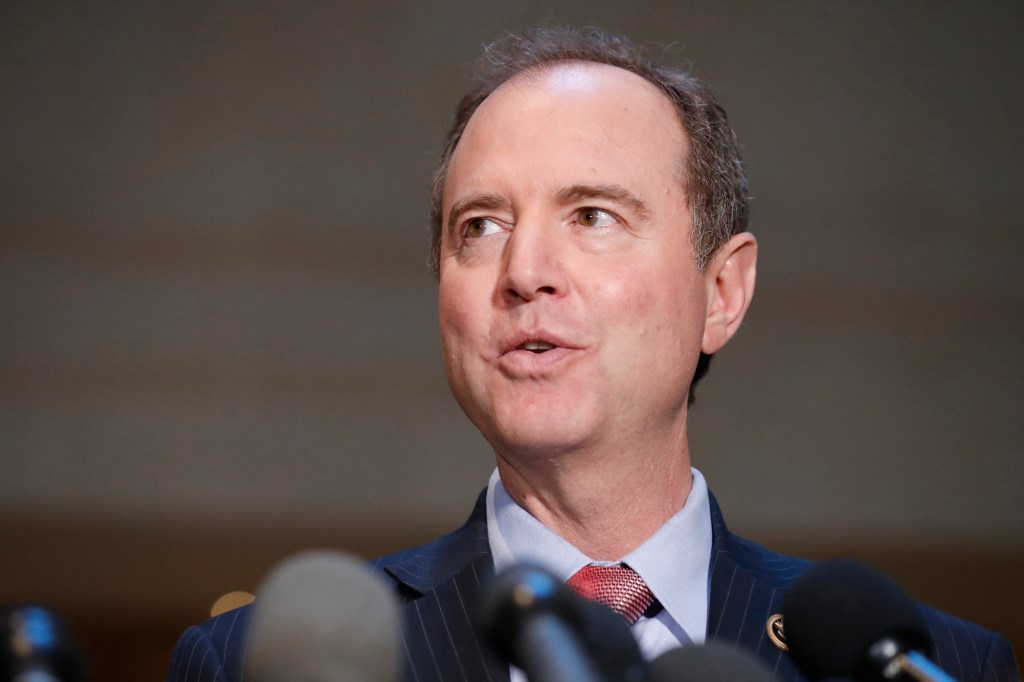
Rep. Adam Schiff (D-CA), whose committee is leading its own investigation into Russian election meddling, wrote in a statement responding to Comey’s testimony that it “constitutes evidence of an intention to interfere or potentially obstruct at least a portion of the Russia investigation, if not more.”
Read Schiff’s full statement below:
“Today, former FBI Director James Comey testified that the President of the United States demanded his loyalty, and directed him to drop a criminal investigation into his former National Security Advisor, Michael Flynn. Director Comey further testified that he believes President Trump ultimately fired him in order to alter the course of the FBI’s Russia investigation. It is difficult to overstate the significance of this testimony.
“These discussions and others took place in one-on-one telephone conversions and meetings initiated by the President, or after the President cleared the room of other people. Director Comey wrote memoranda about his conversations with President Trump because he was worried that the President and his Administration would misrepresent them.
“In my view, this testimony constitutes evidence of an intention to interfere or potentially obstruct at least a portion of the Russia investigation, if not more. It will be important for Congress to obtain evidence to corroborate this testimony — the memoranda, certainly, as well as any tapes, if they exist. We should also interview those around Director Comey at the time of these contacts, to get their contemporaneous impressions of his conversations with the President and to supplement his testimony. Finally, we cannot accept the refusal of Directors Rogers and Coats to answer questions about whether they were asked to intervene with Comey on the Flynn case or any related matter. Similarly, we will need to ask Director Pompeo the same questions. These additional steps are vital to determining the ultimate significance of the President’s actions.”
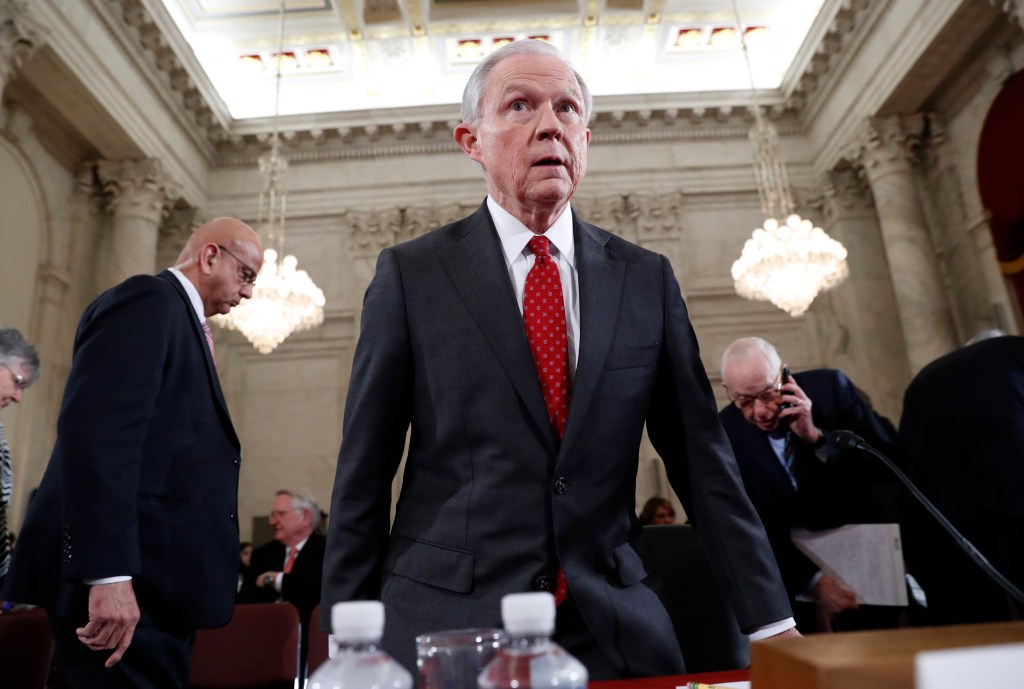
A routine budget hearing in the Senate next week featuring Attorney General Jeff Sessions took on heightened importance following ousted FBI Director James Comey’s explosive Thursday testimony, which raised questions about what Sessions did both before and after he recused himself from the federal investigation into Russian interference in the 2016 election.
At least one member of the Appropriations Committee, Vice Chair Sen. Patrick Leahy (D-VT), plans to use next week’s budget hearing as an opportunity to grill Sessions about Russia, Comey and President Donald Trump. “I have many important questions for him to answer,” he said in a statement.
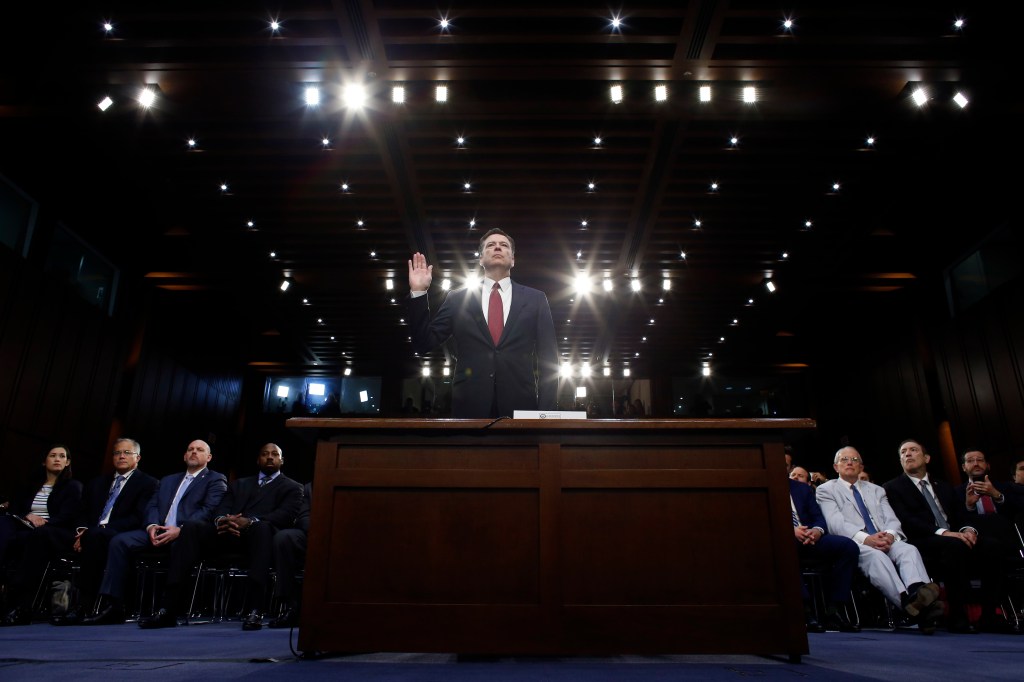
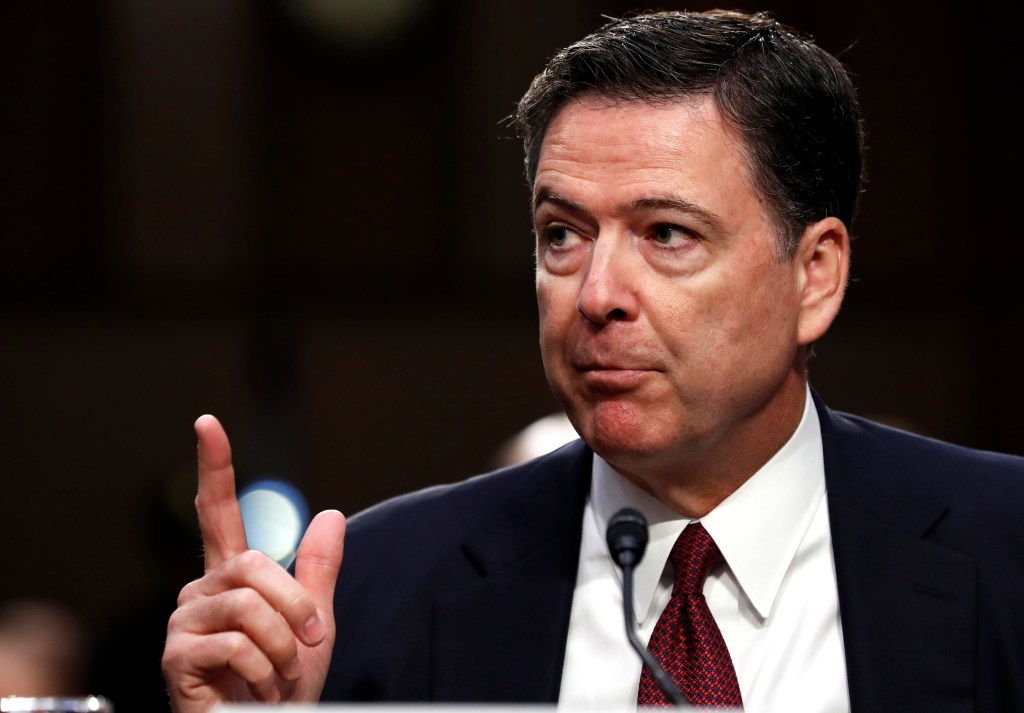
During his feverishly-anticipated testimony Thursday before the Senate Intelligence Committee, ousted FBI Director James Comey made a host of major revelations about his handling of President Donald Trump and the federal investigation into Russian interference in the U.S. election in the months before he was abruptly fired in May.
Importantly, Comey disclosed new information about actions he took when he became concerned about the Trump administration’s attempts to establish a “patronage” relationship with him and persuade him to drop the FBI investigation into former national security adviser Mike Flynn. Here’s an overview of some of the most significant moments from the hearing, where Comey revealed exactly what steps he took and why he took them.
Throughout his testimony Thursday, former FBI Director James Comey repeatedly stressed the serious implications of Russia’s attempts to interfere in the 2016 election. He argued that the issue of Russian meddling it not about politics, but about the credibility of the American government.
Toward the beginning of the hearing, Comey said that he has no doubt that Russia attempted to interfere in the 2016 election and that Russian government officials were aware of the meddling.
He later stressed that Russian interference is very real, countering President Donald Trump’s constant dismissals of the Russia probe.
Sen. Martin Heinrich (D-NM) asked Comey about the way Trump has discussed Russia’s election meddling, noting that the President has described Russian interference “as a hoax and as fake news.” In response, Comey stressed that there’s no doubt that the Russian government tried to interfere in the 2016 election and that the conclusion on Russia’s actions is “about as unfake as you can possibly get.”
“There should be no fuzz on this whatsoever. The Russians interfered in our election during the 2016 cycle. They did it with purpose. They did it with sophistication. They did it with overwhelming technical efforts. And it was an active measures campaign driven from the top of the government. There is no fuzz on that,” Comey said.
“It is a high confidence judgment of the entire intelligence community — and the members of this committee have seen the intelligence — it’s not a close call,” he continued. “That happened. That’s about as unfake as you can possibly get and is very, very serious, which is why it’s so refreshing to see a bipartisan focus on that. Because this is about America, not about any particular party.”
Asked if it was a “hostile act by the Russian government,” Comey replied, “Yes.”
Later in his testimony, Comey emphasized that Russia’s attempt to meddle in the election is a threat to the United States and should rise above politics. He delivered a passionate monologue about just how grave a threat Russia’s meddling is to America.
“The reason this is such a big deal is we have this big, messy, wonderful country where we fight with each other all the time but nobody tells us what to think, what to fight about, what to vote for, except other Americans. And that’s wonderful and often painful,” Comey said. “But we’re talking about a foreign government that — using technical intrusion, lots of other methods — tried to shape the way we think, we vote, we act.”
“That is a big deal. And people need to recognize it. It’s not about Republicans or Democrats. They’re coming after America, which I hope we all love equally,” he continued. “They want to undermine our credibility in the face of the world. They think that this great experiment of ours is a threat to them. And so they’re going to try to run it down and dirty it up as much as possible. That’s what this is about. And they will be back, because we remain — as difficult as we can be with each other — we remain that shining city on the hill and they don’t like it.”
The former FBI director also noted that Russia’s attempt to interfere in the 2016 election was part of an ongoing effort targeted at the U.S.
“It’s a long-term practice of theirs. It stepped up a notch in a significant way in ’16. They’ll be back,” he told the Senate Intelligence Committee.
He stressed that the probe into Russian election meddling is also about prevention of future attacks, saying that Russia is not a threat to any one political party, but to the country as a whole.
Comey also addressed some of the details of the the FBI’s investigation into Russian hacking attempts. He said there was a “massive” effort to target government agencies and non-governmental groups, estimating that hundreds, possibly around 1,000, entities were targeted. He also said that the FBI never examined the hardware that was hacked at the Democratic National Committee’s, but that the FBI got the information they needed from a third party.
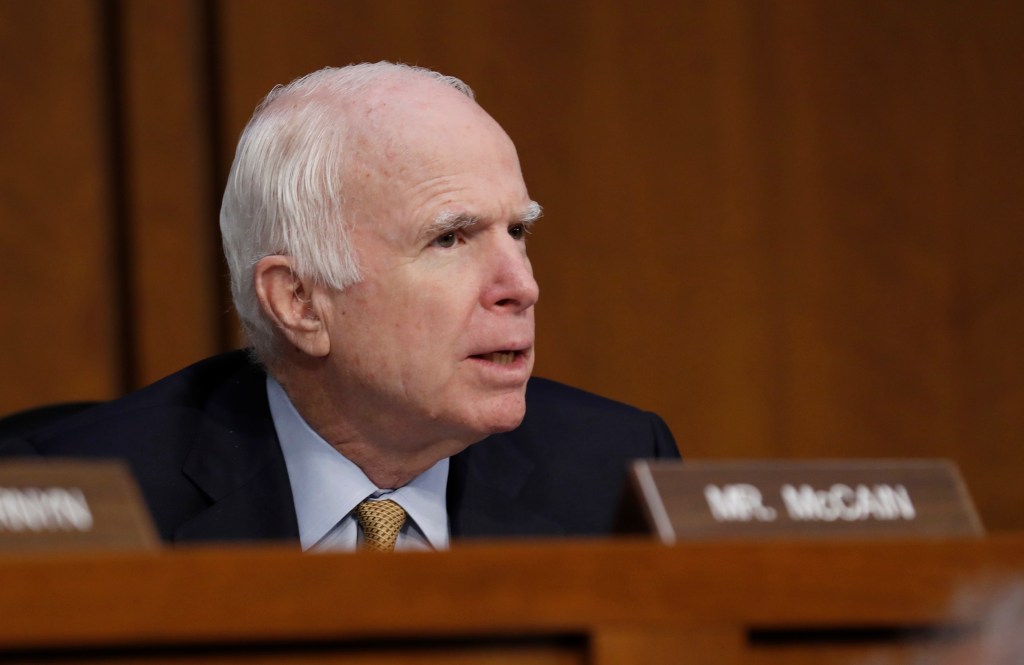
Sen. John McCain (R-AZ) on Thursday reflected ruefully on his questions to fired FBI Director James Comey during an open session of the Senate Intelligence Committee.
“I get the sense from Twitter that my line of questioning today went over people’s heads,” McCain said in a statement. “Maybe going forward I shouldn’t stay up late watching the Diamondbacks night games.”
McCain said he wanted to find out whether Comey believed “that any of his interactions with the President rise to the level of obstruction of justice.”
“While I missed an opportunity in today’s hearing, I still believe this question is important, and I intend to submit it in writing to Mr. Comey for the record,” he said.