









When Maya Schenwar and her colleagues at Truthout began to talk about unionizing, the global economy had just imploded. It was 2008, and most people still thought of digital news outlets — particularly progressive or left-leaning ones like Truthout — as “blogs.”
“At the time, a lot of people saw online writing as something that you did for free,” Schenwar told me in July 2025. Unionizing allowed them to change that narrative, to insist in public that what they did was work, “not just someone’s LiveJournal.”
Legacy media, like the New York Times, had unions, and to most journalists, those were the dream jobs. But as the global economic crisis spread, the Truthout staff — around 20 people at the time — began to talk about their own precarity as well as the precarity they were covering, and to discuss what it might mean to make their own jobs into good jobs, jobs worth hanging on to.
They signed that first union contract in 2010, the first all-digital news site to unionize. Their union drive had contained a lot of “firsts.” They had to figure out how to build trust virtually — they all worked from home and Truthout had no central office — and even had the country’s first virtual card check to verify employees’ signed union cards. In doing so, they laid out a path that workers at dozens of media outlets have followed. Transforming their own working conditions helped change the reputation and power of digital publications, and to shape a generation’s thinking about labor unions.
Read More
The debate over Who Destroyed Journalism borders on theology among journalists and our fellow travelers. Particular fanaticisms often reflect when the believer’s heart first got broken by the Fourth Estate. Popular Satans have included “Craigslist,” “Hedge Funds,” “Fox News” and “the publishers who thought it was a good idea to put news on the internet for free.” Like all the best journalistic controversies, there will never be a declared winner; the argument can last as long as you like.
As a skeptic who isn’t above some self-flaggelating, I’m open to blaming everything and everyone, all the way down to the audiences and journalists ourselves. But as a matter of capitalism 101, it also seems reasonable to blame multi-trillion-dollar tech companies possessing the advertising dollars that once funded tens of thousands of news jobs. Although I rarely advise placing trust in a cliche, follow the money is one of the better coinages to circulate in American newsrooms over the past half-century. And so in 2023 and 2024, I chased the trail of missing journalism cash toward Silicon Valley. Like many of California’s classic detective stories, the pursuit ended in heartbreak.
Read More
It was March 2020 and suddenly I had much more free time on my hands. Presumably you did, too.
All the hours we’d otherwise have spent commuting, traveling, or socializing were suddenly ours to fill with other diversions. In hindsight, it’s striking how much we gave over to screentime. That includes all the restless evenings wiled away in the infinite scroll. But even bringing our favorite hobbies and goods and services home entailed logging on.
How do you make sourdough starter? Ask the internet.
What’s the best recipe for your favorite cocktail? Ask the internet.
How do you exercise in your living room with bodyweight or minimal equipment? Ask the internet.
With these questions, we gave precious details about ourselves over to the companies that control the information our computers feed to us.
And it was through this give and take that I eventually realized our information ecosystem had undergone a transformation. Where the digital-media universe had, for most of its existence, resembled a content archipelago divided by niche, somewhere along the line it had become an amorphous blob, and politics had suffused everything — often in subliminal, insidious ways.
Read More
In the aftermath of the 2024 election, explanations for Donald Trump’s decisive victory abounded. One narrative that quickly took hold was Trump’s popularity with online “manosphere” influencers — Joe Rogan, Andrew Tate, Adin Ross, the NELK Boys, Theo Von — and their massive audiences of young men, many of whom are reeled in to their content by seemingly apolitical interests, then radicalized over time by these creators’ takes on feminism and “wokeness.”
But we’ve seen far less attention paid to how young women are also being radicalized in digital spaces, similarly lured by seemingly apolitical content — about celebrity gossip, “natural” birth control, “clean girl” aesthetics, and dating — only to eventually be persuaded that our rights to abortion, contraception, even to vote or own bank accounts, were all a mistake. Billionaire-backed, anti-feminist women’s media outlets and viral female lifestyle influencers are increasingly shaping young women’s politics, too.
As a reporter at Jezebel and now at the newsletter Abortion, Every Day, I’ve watched TikTok and other social platforms become hotbeds for birth control disinformation. For years now, conservative outlets like the National Review have baselessly characterized birth control pills as “carcinogenic,” and anti-abortion organizations frequently lie that hormonal contraception can cause infertility and a range of other adverse health outcomes. But it wasn’t until the last several years, with the rise of women’s lifestyle influencers who don’t outwardly identify as right-wing, that anti-birth control content reached mainstream audiences.
Read More
I learned many surprising lessons from my 20 months as editor-in-chief of Deadspin, the skeptical, irreverent, hilarious, trailblazing sports outlet that entertained, offended, and educated audiences in roughly equal measure.
I learned from a cease-and-desist letter that Jacuzzi is a trademarked brand, and that the hotel room in which a world-famous soccer star was alleged to have raped a woman contained a mere “spa” or “hot tub.” I learned from inhaling Chartbeat that our very dumbest stories and our very smartest stories would always be our biggest traffic drivers. I learned from our general counsel more than I ever wanted to know about the precise limits of fair use. I learned from my coworkers — all of them brilliant and entirely deranged — that there is no limit to how hard I can laugh in a soul-suckingly bland Times Square cubicle farm. Even knowing how it all ended, I’d still take the job 100 times out of 100.
The most consequential lessons I learned, though, were about the ways in which I had misunderstood “free market” capitalism, and about what that meant for the industry that gave me my career. Those are the lessons I haven’t stopped agonizing over six years later, the ones that led to my first book but also caused scores of sleepless nights.
Read More
We don’t know the minute when X started throttling links to news, but we know that Elon Musk asked for it, and we basically know why.
Musk disdains the “legacy media.” He wanted people to spend more time in his walled garden, and to build the walls so high that you couldn’t see outside of them. For the umpteenth time, maybe for the last time, people who published news were lulled into giving it away gratis.
Read More
“The human animal differs from the lesser primates in his passion for lists of Ten Best.” —H. Allen Smith.
The listicle — that staple of 2010s digital journalism — was often maligned, not least by other journalists. The format was decried as lazy, on the part of both publishers and consumers, in an age of shortening attention spans; as a killer of “real journalism,” and as “pseudo-journalism that has become a drain on our collective intelligence”; as emblematic of an era defined by vacuous, money-grabbing clickbait. In 2017, Lake Superior State University in Michigan proposed to ban the term “listicle” itself, as part of an annual “List of Words Banished from the Queen’s English for Mis-Use, Over-Use and General Uselessness.” (The irony was not lost on the authors.) The Oxford English Dictionary notes that usage of the word is still “frequently disparaging.”
These days, listicles feel like a relic of a different online age — one of scale-chasing and peppy social virality; of BuzzFeed (perhaps the pioneer of the listicle) and Upworthy — that has been superseded by today’s fractured web. They are often remembered not as journalism, or even good content, but as trash, engineered to entice users to click on a link while scrolling Facebook (something young people once did), stay on the page for as long as possible, and, preferably, share it on with family and friends. (Listicle-adjacent concepts included “listflation,” or the idea of stretching listicles to ever greater numbers of items, and the “demolisticle,” a piece of content targeted at a niche audience — Berkeley grads, say, or children of Irish parents — but primed for sharing among the communities that saw themselves represented.) As I see it, though, listicles deserve to be remembered more favorably — and may not be dead yet. Here are seven reasons why, because of course.
Read More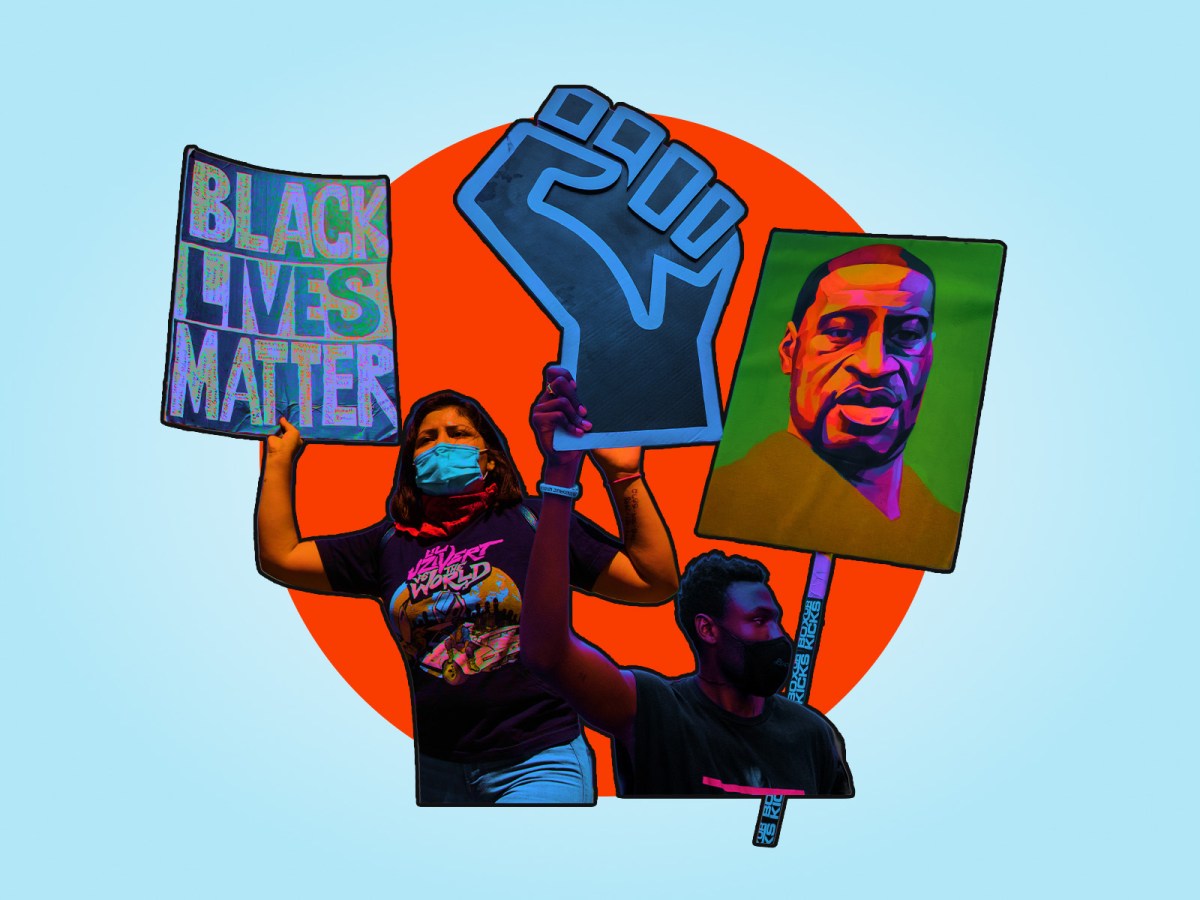
In May 2020, a nation already cracked by a pandemic convulsed further as the world watched the murder of George Floyd, his final breaths captured and uploaded, looping endlessly across screens.
Digital media didn’t just amplify his murder; it made the pain unavoidable, everywhere at once, and for a fleeting moment, it seemed to wake mainstream American journalism up. Empathy became a part of American digital life in an unprecedented way: suddenly, stories about racism, police violence, and systemic injustice were not only homepage news, but treated with a solemnity, care, and nuance rarely seen. And Black-led outlets and journalists, who were driving the shift, saw a surge in attention and investment.
As someone who was just entering the industry full-time, it felt like this was how it might always be. Editors who, just weeks earlier, seemed immune to my pitches on police violence, were suddenly not only receptive but proactive. They wanted frontline dispatches and Black perspectives, and they wanted them now. That summer, the sixth-largest news website in the world commissioned me to cover protests in Chicago and Kenosha, Wisconsin. My fifth-ever professional byline, a dispatch from the night Kyle Rittenhouse shot three protestors, killing two, garnered 1 million views in 24 hours.
The story’s digital life took on a logic of its own: death threats in my DMs, emails from grateful readers who found catharsis in my words, and comments from colleagues saying my work was “necessary.” It was, in digital terms, “viral empathy”— and what a strange, exhausting thing it was. Still, it seemed necessary for a future where American journalism might best serve the country’s most vulnerable.
I didn’t yet realize how quickly tides could turn.
Read More
Gawker Media’s Nolita office, where the blog conglomerate was located until the summer of 2015, was always dank and weird: a brick, loft-style room in a former tenement on Elizabeth Street, with lighting so low it was probably reportable to the Occupational Safety and Health Administration. I began working there in 2014, as culture editor for the women’s site Jezebel, and while I adapted to the speed of blogging culture, I could never quite get over the fact of the office. It was so dark that our computer monitors emitted more light than the overheads, which were strung across the ceiling with the aplomb of an early 20th century publichouse, and had the useless brown glow of tiny Edison bulbs. Those of us without the wherewithal to get desk lamps, which was most, clacked away in the dark at the long rows of tables where the staffs of its six sites, about a hundred of us, sat side by side. We communicated almost exclusively through internet chat — even coworkers who sat a foot apart — though often the room erupted in gales of laughter at quips known only to those in their particular Slack channel. Everyone got used to that, but otherwise the office was so silent, like a wacky library, that it was almost startling if someone spoke to you aloud.
Except for Feb. 26, 2015, when a viral outfit known as “The Dress” upended the office silence and, probably, the trajectory of the media itself.
Read More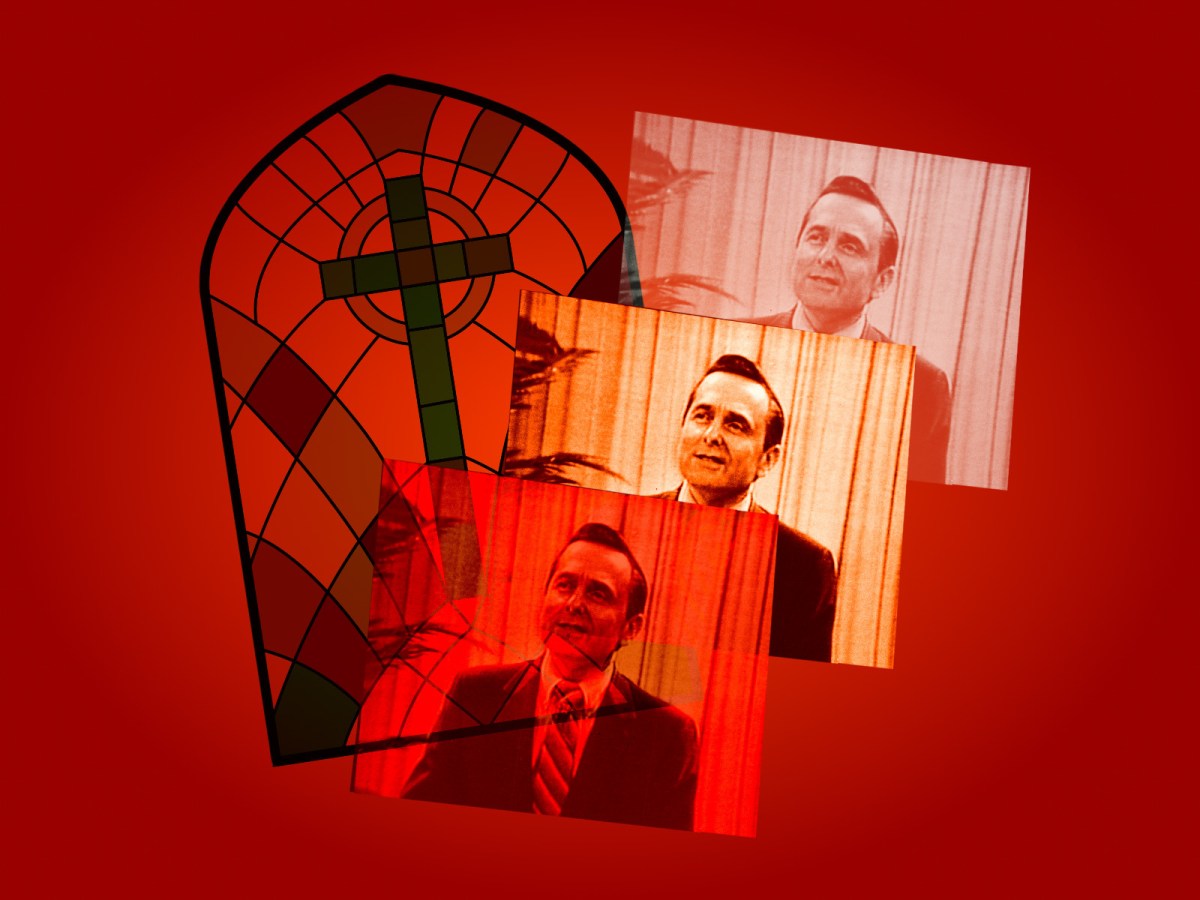
Back in the early 2000s, when we were outraged by the excesses of authoritarian dilettantes George W. Bush and Dick Cheney, a friend suggested I start a blog. I had been a lawyer, but was eager to change careers. Having studied the rise of the Christian right as a college student in the 1980s, I was now watching their aspirations unfold in real time. I wanted to investigate, expose, weigh in on all the things other people were missing. I was accustomed to writing fast. I was built to blog.
I never ended up starting my own blog, but was the very fortunate beneficiary of a serendipitous series of events that made it possible for a person with no entry point or foothold in journalism to find her way into it. Another friend told me about the group blog The Gadflyer (since, sadly, defunct), making its mark in the burgeoning progressive blogging space. They took a chance on me, and I wrote persistently about the Christian right, its assaults on secular law and governance, and the D.C. money and power politics driving it.
The revolution in digital media made my two decades of reporting on the Christian right possible. Not only because it offered expansive space beyond the coveted, exclusive pages of print magazines, but because the best digital journalism — and here I’m talking about reported, edited, fact-checked journalism, although opinion writing is also an essential part of the equation — demands a long-term commitment to the bit. It depends on a reporter consistently drilling down into an important corner of the political world, and continually exposing and contextualizing that world for readers. This type of journalism is fundamentally different from the other kind of online journalism that was born alongside it in the 2000s. Both appear in the digital form, more nimble than print, but that other kind, which still plagues us today, is the inside-the-Beltway, gossip-driven, anonymity-granting, driving-the-day coverage that thrives on access and adrenaline rather than illumination and insight.
Read More
- Sarah Jaffe
- Matt Pearce
- Brian Beutler
- Kylie Cheung
- Megan Greenwell
- David Weigel
- Jon Allsop
- Adam Mahoney
- Julianne Escobedo Shepherd
- Jeet Heer
- Andrew Parsons
- Eric Garcia
- Marcy Wheeler
- Aurin Squire
- Kelly Weill
- Marisa Kabas
- Ana Marie Cox
- Hamilton Nolan
- Bhaskar Sunkara
- Nathan J. Robinson
- Max Rivlin-Nadler
- David Dayen
- Elizabeth Spiers
- Julianne Escobedo Shepherd
- Max Rivlin-Nadler
- Bhaskar Sunkara
- Hamilton Nolan
- Ana Marie Cox
- Marisa Kabas
- Kelly Weill
- Aurin Squire
- Marcy Wheeler
- Andrew Parsons
- Jeet Heer
- Sarah Posner
- Julianne Escobedo Shepherd
- Jon Allsop
- Adam Mahoney
- David Weigel
- Kylie Cheung
- Brian Beutler
- Megan Greenwell
- Matt Pearce
- Sarah Jaffe
