


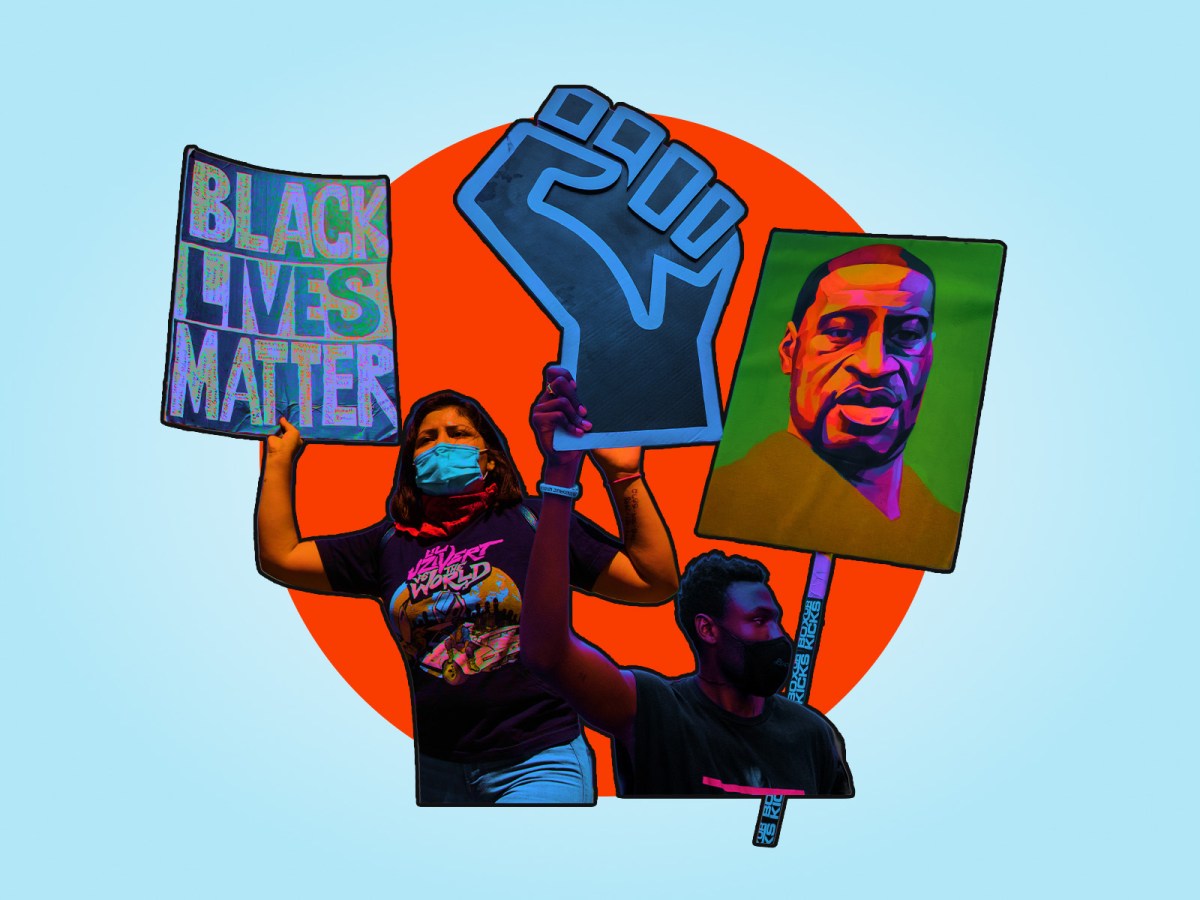








In May 2020, a nation already cracked by a pandemic convulsed further as the world watched the murder of George Floyd, his final breaths captured and uploaded, looping endlessly across screens.
Digital media didn’t just amplify his murder; it made the pain unavoidable, everywhere at once, and for a fleeting moment, it seemed to wake mainstream American journalism up. Empathy became a part of American digital life in an unprecedented way: suddenly, stories about racism, police violence, and systemic injustice were not only homepage news, but treated with a solemnity, care, and nuance rarely seen. And Black-led outlets and journalists, who were driving the shift, saw a surge in attention and investment.
As someone who was just entering the industry full-time, it felt like this was how it might always be. Editors who, just weeks earlier, seemed immune to my pitches on police violence, were suddenly not only receptive but proactive. They wanted frontline dispatches and Black perspectives, and they wanted them now. That summer, the sixth-largest news website in the world commissioned me to cover protests in Chicago and Kenosha, Wisconsin. My fifth-ever professional byline, a dispatch from the night Kyle Rittenhouse shot three protestors, killing two, garnered 1 million views in 24 hours.
The story’s digital life took on a logic of its own: death threats in my DMs, emails from grateful readers who found catharsis in my words, and comments from colleagues saying my work was “necessary.” It was, in digital terms, “viral empathy”— and what a strange, exhausting thing it was. Still, it seemed necessary for a future where American journalism might best serve the country’s most vulnerable.
I didn’t yet realize how quickly tides could turn.
I watched as traditional newsrooms and digital media platforms scrambled to publicly address their shortcomings in empathetic coverage. While algorithms propelled the pain, for once, newsrooms seemed ready to reckon with their own biases. Internal memos called for better coverage. Publishers promised change. Some even delivered.
Yet the “reckoning” was short-lived. Within two years, I stepped away from a career in mainstream digital outlets to join Capital B, a Black-led digital news venture, as mainstream outlets’ commitments waned and coverage priorities realigned.
In a country built on anti-Black violence, for the media — one of the historic perpetrators of that violence — to truly reckon with the harm it has done would require dismantling itself as we know it. But this institution will never kill itself, and too few journalists were willing to risk their own comfort, careers, or material security to force that kind of transformation.
You could see the limits of all this in how quickly so-called progress collapsed back into policing Black voices the moment things got uncomfortable. Black journalists were simultaneously asked to lead coverage and questioned for our objectivity. The clearest case: Alexis Johnson at the Pittsburgh Post-Gazette. That summer of 2020, just as newsroom leaders were issuing those statements promising solidarity and self-examination, Johnson — a Black reporter — was abruptly barred from covering the very protests her lived experience made her uniquely qualified to report.
Why? Because of a tweet.
Johnson had posted, with a journalist’s wry eye for double standards, photos of the mess left after a country music concert, joking about how there hadn’t been national panic over the behavior of Kenny Chesney’s tailgaters. It was a sharp (and fair) contrast to the coverage of “looting” during the protests. Johnson’s tweet went viral and almost instantly, her bosses accused her of bias and yanked her off stories.
The paper’s publisher, John Block, had in previous years fired the paper’s cartoonist for anti-Trump political cartoons and insisted on the publication of an op-ed on Martin Luther King Jr. Day that defended Trump’s remarks calling nations like Haiti “shithole countries.
Yet in Johnson’s case, “objectivity” was a weapon wielded by managers trying to put a lid on messy and quickly expanding digital narratives.
The whole thing played out online, in the same forum that was just uplifting Black voices: fellow journalists, Black Twitter, and media watchdogs made sure everyone saw how the paper was applying “objectivity” as a cudgel. But as quickly as digital attention arrived, it left, and the institution carried on intact, unchanged, and still in charge of whose stories could be told and who was considered credible enough to tell them.
Studies indicate that Black media, in this period, produced stories deeply focused on racism and its structural impacts that were markedly more nuanced and extensive than in the mainstream digital press. Yet Black journalists like Johnson and myself felt both the professional spotlight and the personal cost of that heightened attention.
That November, my newsroom sent me to rural Illinois to cover a congressional campaign event. I was the only Black journalist there. I stood in the cold as a MAGA flag-wielding truck sped by with its passengers yelling racist profanities. As I made the two-hour drive home at 1 a.m., I, too, joked online, asking my followers to send me a music playlist for the ride home, so I could distract myself from Donald Trump trying to steal the election.
Later that morning, after I woke up to half a dozen missed calls from my editor, I was told that if my contract weren’t already ending in two weeks, I would have probably been let go. Months later, that same editor acknowledged and posted online about Trump’s continued attempt to steal the election.
The speed with which digital media can sanctify — and then erase — a movement is dizzying.
The story of this shift is inextricable from the digital media landscape, where ever-present images of Black trauma still go viral and algorithms, headlines, and platform dynamics wield an outsized influence over which struggles are able to hold the nation’s compassion.
Empathy is easy to promise during crisis, but difficult to sustain when the algorithms demand constant novelty and the news cycle moves on. Social media and search platforms and the digital outlets still reliant on those trends may amplify injustice — and, potentially, solidarity — but they do not have the tools or the desire to nurture the long, slow work of building trust or seeing people as more than hashtags.
That summer proved what’s possible when digital newsrooms place empathy at the center, but also exposed the limits of the digital newsroom itself.



I would be interested in checking out Capital B. Do they have a website I can l look at and maybe support?
Legacy media can’t die fast enough,