









In the aftermath of the 2024 election, explanations for Donald Trump’s decisive victory abounded. One narrative that quickly took hold was Trump’s popularity with online “manosphere” influencers — Joe Rogan, Andrew Tate, Adin Ross, the NELK Boys, Theo Von — and their massive audiences of young men, many of whom are reeled in to their content by seemingly apolitical interests, then radicalized over time by these creators’ takes on feminism and “wokeness.”
But we’ve seen far less attention paid to how young women are also being radicalized in digital spaces, similarly lured by seemingly apolitical content — about celebrity gossip, “natural” birth control, “clean girl” aesthetics, and dating — only to eventually be persuaded that our rights to abortion, contraception, even to vote or own bank accounts, were all a mistake. Billionaire-backed, anti-feminist women’s media outlets and viral female lifestyle influencers are increasingly shaping young women’s politics, too.
As a reporter at Jezebel and now at the newsletter Abortion, Every Day, I’ve watched TikTok and other social platforms become hotbeds for birth control disinformation. For years now, conservative outlets like the National Review have baselessly characterized birth control pills as “carcinogenic,” and anti-abortion organizations frequently lie that hormonal contraception can cause infertility and a range of other adverse health outcomes. But it wasn’t until the last several years, with the rise of women’s lifestyle influencers who don’t outwardly identify as right-wing, that anti-birth control content reached mainstream audiences.
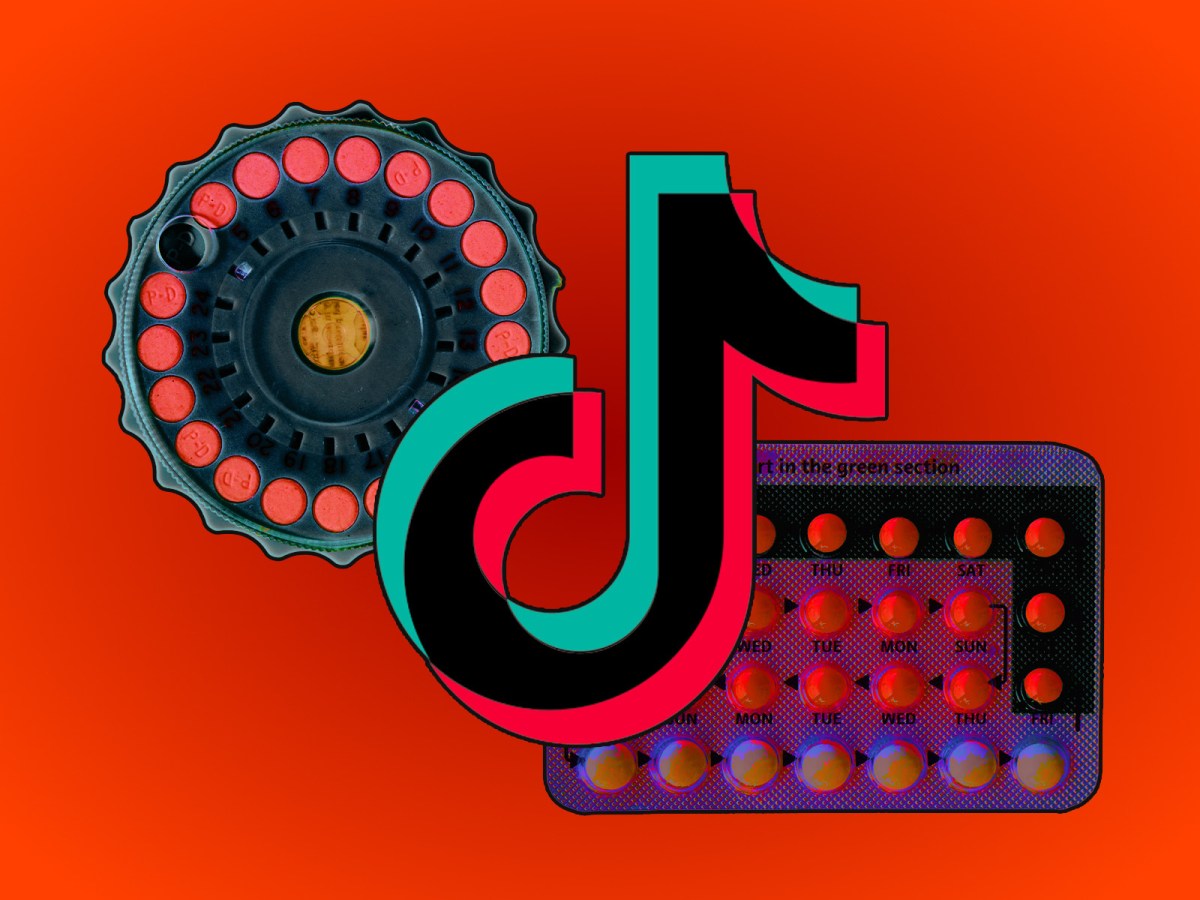
Videos featuring young women raving about their experiences avoiding pregnancy without hormonal birth control began trending toward the end of 2021, racking up millions of views and shares. One video from around this period features a young woman who says, “I am 24 years old, and I have never been on birth control, and I’ve only ever gotten pregnant when we were trying to get pregnant.” Birth control-free family planning is “a lot easier than you might think,” she says. The comment section is rife with women around her age sharing similar stories. TikTok is also brimming with videos of women recounting trauma and severe pain from IUD insertions, with some collectively garnering millions of views — a trend that similarly can be traced to the early 2020s. “i need anyone who wants to get an iud understand it can be traumatic,” the caption of one TikTok reads. “it was traumatic for me.”
In 2022, Duke University researchers found that of the 100 most viewed videos tagged #IUD on TikTok at the time, about 38% had a “negative tone,” 28% expressed distrust of health care workers, and about a quarter pushed “moderately or highly inaccurate scientific claims.”
Much of this content has capitalized on legitimate, negative experiences with birth control, like side effects from the pill or pain associated with IUD insertion. Everyone has different experiences with different forms of birth control, and our health system has often been unhelpful in supporting patients as they search for the right method. The medical system writ large also has a long history of dismissing women’s pain, and doctors too often don’t adequate resources or support for pain management for IUD insertion. These experiences can naturally prime women to be more vulnerable to anti-birth control propaganda. While Republican lawmakers block protections for birth control in Congress and state legislatures, on a cultural level, women “wellness” influencers support this agenda by pushing the lie that contraception is dangerous in mass media.
In 2024, research from the American College of Obstetricians and Gynecologists showed that TikTok videos related to birth control “had low quality and reliability of information,” and the majority of this content came from non-health care providers. In response to such extensive disinformation related to birth control on the platform, TikTok announced new content moderation standards solely governing contraception-related content earlier this year.
Some anti-feminist influencers are tapping into these conversations as they launch their own media outlets. Earlier this year, Candace Owens launched a company offering everything from podcasts and spicy takes on pop culture, to a book club and fitness app geared toward young mothers. In 2024, Owens shared an 11-minute video denouncing birth control and characterizing it as “unnatural,” pointing to how eugenicists once advocated for its use as a population control tool to suggest it should be restricted today.
For more of a sense of Owens’ views on feminism, at Turning Point USA’s Young Women’s Leadership Summit in 2023, she declared that “every ill that we are fighting right now in society has been brought forth by women.” In a tweet from around the same time, she pondered, “Can you name one objective thing that has gotten better in American society since women were given the right to vote?”
This kind of anti-feminist media is getting support from deep-pocketed donors. In 2019, the conservative, hyper-feminine Evie magazine launched with backing from billionaire Peter Thiel. The publication maligns birth control as unsafe and argues that feminism ruined women’s lives.The brand also rolled out “28,” an eerie, so-called “femtech company” that offers women personalized advice about fitness and nutrition aligned with their self-reported menstrual cycle. It’s effectively a period tracker owned by a known techno-fascist, who is heavily embedded in this authoritarian, anti-abortion extremist presidential administration.
All of these developments in mass media have coincided with a staggering erosion of access to reproductive health care in the U.S. In 2022, the Supreme Court overturned Roe v. Wade with the Dobbs v. Jackson Women’s Health ruling. Over a dozen states now enforce total or near-total abortion bans. While working as a staff writer at Jezebel, I spent much of 2022 interviewing domestic violence experts, attorneys, advocates, survivors, abortion patients, people denied abortions, abortion funds, doctors and health workers, patients who were denied abortions for life-threatening complications. I pored through court documents, legislation, testimonies and more to ensure none of these stories fell to the wayside.
Since Dobbs, birth control has been the next target. Congressional Republicans have repeatedly blocked legislation to enshrine a right to birth control. State-level Republicans like Virginia Gov. Glenn Youngkin have done the same. The recent, “Big, Beautiful Bill” gleefully strips reproductive health providers like Planned Parenthood of Medicaid reimbursements, depriving millions of low-income patients of services like birth control. And especially concerning, the Trump administration has point-blank equated certain forms of birth control with abortion — an increasingly popular strategy among conservatives — which is not just a factual error, but a strategy to eventually ban both. It’s hardly a coincidence that the right is taking these steps toward restricting birth control at the same time that younger generations of women are being exposed to an influx of anti-birth control content, priming them to more willingly give up this right.
Recent polling from KFF shows about a quarter of younger women (ages 18 to 25) report using “fertility awareness-based methods” rather than hormonal birth control. Women in this demographic also reported being more likely to change or consider changing their contraceptive method “based on something they saw or heard on social media.” A different study from earlier this month showed that “negative information circulating on social media” can amplify or otherwise impact someone’s experience of side effects from birth control, rendering them more likely to stop taking it. Reproductive health doctors told the New York Times they’re concerned about the “dubious podcast talking points” they’re increasingly hearing from patients.
As young, female social media users increasingly fall into the trap of a misogynist online ecosystem, we’re also losing large swaths of women who might otherwise have been willing to fight back. The result is a generation of women who are ultimately accepting of the rollback of their rights — and open to losing even more.
We need feminist media to track these attacks on our fundamental rights, and counter a rising tide of misogyny in politics and culture with thoughtful, critical reporting. Time and again, we’ve seen how that grueling, even dangerous work is undervalued and under-invested in. The blog Feministing closed in 2019. The iconic Bitch Media, founded in 1996, shuttered in 2022. Jezebel was shuttered by its parent company in 2023, then acquired by another company but allowed only three employees. This month, Condé Nast folded Teen Vogue, one of few national media outlets that centered the voices and political perspectives of young people, from a refreshingly unapologetic, leftist, feminist vantage point.
Anti-feminist media is thriving right now, while feminist media dwindles. But there are bright spots. Abortion, Every Day, founded by feminist author Jessica Valenti, tracks everything from state house bills to pregnancy criminalization cases and decodes the anti-abortion movement’s playbook on a daily basis. As its name suggests, the newly founded, worker-owned Autonomy News offers incisive reporting on all things bodily autonomy. The 19th is a nonprofit newsroom that produces in-depth original stories on the wide range of news affecting women’s lives. These publications may lack the reach of Candace Owens, but even with limited resources, digital feminist media is still managing to tell so many crucial stories that otherwise fall through the cracks.



Apropos of nothing, I’m for renaming the “Morning Memo” the “Nooner”. Who’s with me?
I do not believe for an instant that women are attracted to MAGA because they want to society back to the 1950s and spend their youth pregnant and raising a brood of children. They may fain agreement, but in reality it is what else MAGA offers them, gay bashing, religious bigotry, xenophobia and racism.
The first thing that needs to be pointed out is nobody, except maybe their sex partners, are telling women to use birth control, it is a choice just like being a stay at home mom or dad. Therefore, I do not believe for an instant that large numbers of women are really swearing off the use of birth control.
In my experience, women are not any smarter or dumber than men, but they are just as racist, religious bigoted, xenophobic and anti-gay. In practice, what does this mean?
It means women are just as big of hypocrites and liars as men. I mean 99% of women who are or have been married have used birth control during their marriages including 97% of Catholic women.
Noting if you are like me, a boomer and the seventh of eight children, you are alive because during the boom there was no real birth control. In fact birth control ended the baby boom.
Birth control took off because WOMEN CHOSE BIRTH CONTROL OVER BEING “IN THE FAMILY WAY” FROM 15 TO OVER 40 AND HAVING A BROOD OF CHILDREN.
Birth control is why women can have lives outside the home least they spend their prime not having sex or being pregnant and having more than 2 babies. Many women still rely on their husbands for their economics but even if not especially stay at homers will never give up their birth control noting that in many cases a wife’s birth control is their husbands vasectomy. But to birth control and women who choose not to work, being a “house wife” is a much better gig with birth control and having two children than without birth control and having many more than 2 children.
So while I agree that right wing has been successful in attracting women, it is in spite of and not because of the misogyny but because of the racism, xenophobia, gay bashing and religious bigotry.
The rhythm method as we called it back in the day. I would use another term for “fertility awareness-based methods”: Pregnancy
Candace Owens is being ridiculous. Women’s suffrage didn’t harm American society, it’s the global loss of pirates. If you plot American happiness against number of pirates in the world, you will clearly see the relationship.
Life spa. Infant mortality? Fewer unwanted children? Better nutrition?