


For years, and especially in the last month or so, we’ve been collectively inundated with an AI industry which, uncannily and bizarrely, tells us simultaneously that AI is essential, inevitable and runs a significant chance of exterminating all of us in as few as two or three years. If you’ve dipped into this debate at all, you’ve quickly come upon discussions of so-called “rationalists” or “long-termists” or supporters of “effective altruism” who are simultaneously ubiquitous among those developing AI and in the AI safety (i.e., the folks sounding the alarm) community as well. (For the sake of simplicity and brevity, I’ll refer to these folks as the “REL nexus”: rationalists, effective altruists and long-termists. This is my coinage since I don’t know a better one.) I’ve spent a fair amount of time familiarizing myself with this world and how it relates to current debates about AI. So I wanted to share my basic impressions.

Daniel Drezner says we are now in the Wile E. Coyote phase of the 2026 midterm, the phase of six weeks or so in which everyone knows the GOP is toast but we pretend we don’t. Some of this is simply the political press’s collective suspension of disbelief. It’s neither fair nor fun to act as though the outcome is mostly known. Nor is this new. G. Elliott Morris notes that election odds makers consistently overstate the odds of the president’s party in the midterms, which is sort of another way of saying the same thing since the president’s party is usually on the losing end of the proposition. I would argue that a significant amount of this remains the structural, though not necessarily ideological, bias in favor of the Republican party — two decades on, Washington, D.C. remains wired for the GOP. But what all of this really reminds me of is the aftermath of the 2024 presidential election and what was then referred to as the “vibe shift” — both the hidden reality Donald Trump’s narrow but clear victory had purportedly revealed but also the shift in attitudes about cultural power and the future driven by that victory.
In elite circles the argument and belief went something like this. We thought that MAGA was a movement of reaction fueled by those left behind or discarded by the forward march of history and culture trying to wrench society back to an imagined 1950s. Not at all. In fact, it was the movement of the young and the most vital elements of the culture and the future. It was even expanding in the non-white constituencies which were supposed to be the anchors of the political left, the communities which were supposedly the targets and victims of MAGA, not its latest converts. Most of all, MAGA now had cultural sway to match its electoral power. And both were growing.


We held an event Wednesday evening at a bar in Brooklyn, co-hosted by TPM and Marisa Kabas’ indy site The Handbasket. I really enjoyed it and I wanted to thank everyone who came out. We have an expanding roster of in-person events. We’ve held events in Chicago, Boston and Austin over the last year or so — usually live podcasts — and we do them more frequently in our home bases in New York and D.C., where they’re easier to put on. Please join us for one of these when we do one in your area. They’re so much fun and it’s really special to meet and spend time with members of the far-flung or sometimes close-flung TPM community.
It’s become a cliche of the politics of this moment that the one thing that unites all Americans in our polarized age is that they hate data centers. But a dimension of this occurred to me during the discussion between Marisa and I that was moderated by TPM publisher Joe Ragazzo. I hadn’t thought of it before.


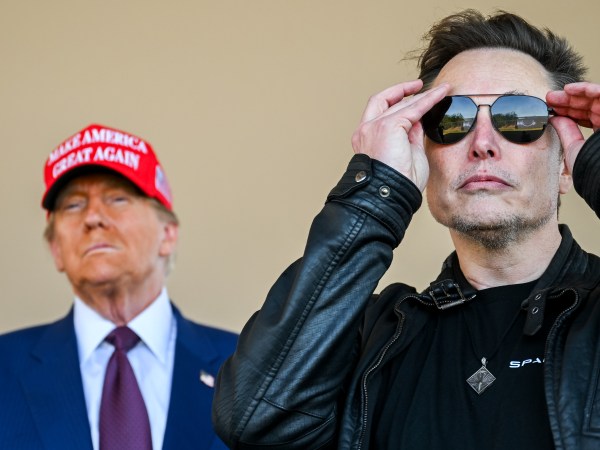



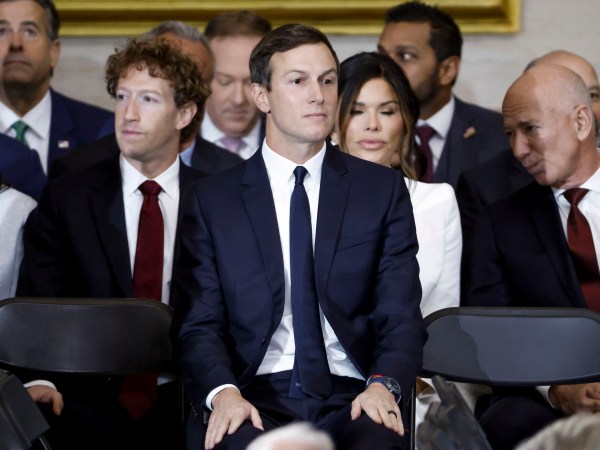

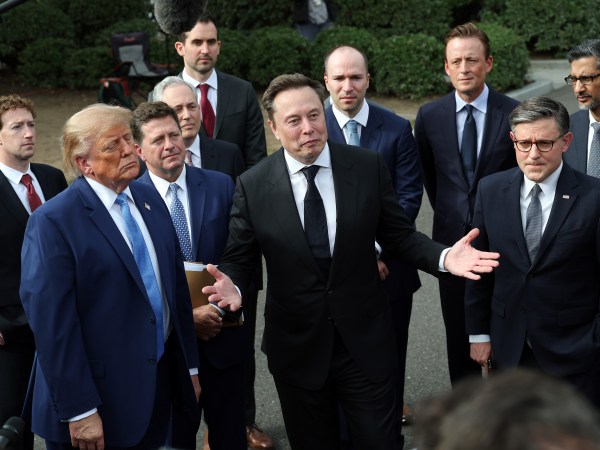
Today, I want to share some additional thoughts with you on this ranging topic of tech lords and predators, the conquistadors and pirates in our midst. It’s a point that is perhaps the most visible part of the current moment, but because of that, paradoxically, hardest to see clearly. It’s been more than a century since the men at the highest pinnacles of the American economy so visibly and directly intervened in the country’s politics. An element of that is the highly personalist nature of the big tech monopolies. Mark Zuckerberg isn’t just a CEO or plurality owner. He is Facebook. He’s the founder, the driving mind since the beginning. I believe that voting rights are structured in such a way at Meta that in terms of control as opposed to equity stakes he is in total control. Meta cannot be taken away from him. Whether or not voting rights are precisely the same, a similar story prevails at Amazon, Google, certainly X and all of Musk’s companies. We haven’t seen anything like that since the Gilded Age and the Robber Barons, when big names like Carnegie, Vanderbilt, Morgan and Rockefeller similarly owned, drove and personified the great corporate behemoths and monopolies of the day.
For many decades, certainly since the Second World War, even the more politically- and ideologically-minded corporations kept their political spending and their exertions in the background. Perhaps they gave most of their money to Republicans but they’d give to Democrats too just to keep them mostly on side.
What we began to see in the late Biden administration and then to an almost mind-boggling degree through 2025 is not just the big tech titans cozying up to Trump and doing so visibly, but making themselves what we might call main characters in the American Political Cinematic Universe. There’s really nothing like it in our history. I know many friends who are into MMA and the UFC. My sons are into it. Not my thing. But great if it’s yours. But if you’re Mark Zuckerberg and you take ringside seats at a UFC match with Trump friend and UFC CEO Dana White, you’re sending a very clear and specific message and you’re sending it far outside the channels where most traditional political messaging takes place. Even more if you put White on your board. And the same applies to going on Joe Rogan’s show and talking about a rights movement for “high testosterone males.” Yes, Zuckerberg got into MMA before the so-called “vibe shift.” But not in this politics-inflected way. We’ve seen countless examples of this in so many different contexts, starting with that unforgettable inauguration image where the seats of greatest distinction were reserved for the centi-billionaire tech titans. Government of, by and for them.


A friend of mine ran an analogy by me which really resonated. Perhaps others have drawn the comparison.
In the late 18th century, what would later evolve into the British Raj was coalescing into full British domination of the Indian subcontinent — especially after two key battles in 1757 and 1764 waged not by Britain but a private company called the British East India Company. That made it possible for what were often British men of relatively modest origins to build almost unimaginably large fortunes. Life in India was a matter of extremes for British operatives of the East India Company, a joint stock company which owned what were in effect Britain’s Indian colonies. Countless young Brits went out to India and died in short order. But if they could avoid dying, in a relatively few years they could build these unimaginable fortunes. None of them wanted to stay. Virtually no Britons died of old age in India at the time. The whole point was to make as much money as possible in as little time as possible and get back to Great Britain while they were still alive. Then they would pour that money into an estate and land.
They were called “nabobs,” a corruption of “nawab,” a title in the Mughal Empire which originally referred to a provincial governor but evolved into something more like a hereditary lord as Mughal rule disintegrated.