When In Doubt, Pivot To The Laptop

A lot of things happened. Here are some of the things. This is TPM’s Morning Memo.

Something Something Hunter Biden

Since January Republicans have been using their hanging-by-a-thread majority in the House to launch fake investigations into the various entities investigating Donald Trump, host photo-ops with fake explosives at the border and seize on any and all opportunities to yell about Hunter Biden’s laptop. It’s a well-worn Republican strategy at this point — a one-size-fits-all distraction tactic designed to give GOPers an out to not engage seriously, one that walks and talks like “but her emails.”

In the wake of news of Trump’s potential indictment this week, things are no different.

Obviously a few big things happened over the weekend.

  • Donald Trump posted an ALL CAPS APOCALYPTIC SCREED on Truth Social, informing his supporters that he believes he will be arrested on Tuesday and inviting his truest believers to protest the potential impending indictment. 
  • It’s unclear where Trump’s information is coming from — whether he was told he would be indicted on Tuesday or if he’s just playing fast and loose with his own speculation. The ex-president did claim that his info came from “ILLEGAL LEAKS.”
  • Manhattan District Attorney Alvin Bragg privately, without naming names, reassured his team that the office would not be intimidated by threats.
  • “We do not tolerate attempts to intimidate our office or threaten the rule of law in New York,” he wrote in an email to staff Saturday.
  • Trump is posting through it. On Sunday he shared some conspiracy theories claiming that President Biden “‘stuffed’ the D.A’s Office with Department of Injustice people,” including some sort of “DOJ operative” from D.C. 
  • Some Trump supporters are responding to the call for protest with online chatter about blocking off the “the bridges and tunnels” surrounding New York City and/or building a “patriot moat” around Mar-a-Lago to protect Trump. 

Republicans, meanwhile, are doing one of two things in response.

  1. The Kevin McCarthy route: performatively straddling the line between unironic outrage over politically motivated investigations and grave concerns about a Jan. 6 2.0 or …
  2. Pulling a James Comer.

During an interview on Fox News’ “Sunday Morning Features” Rep. James Comer (R-KY) suggested the coming indictment is part of some grand scheme to distract from his and other House GOPers’ Very Important Research:

“Well, it’s very odd that [the news of a possible Trump indictment] would come out just the very next day after I revealed bank records which showed that the Biden family — the president in particular — hasn’t been truthful with respect to his family receiving payments directly from the Chinese communist party,” Comer said, referencing some memo he released last week about Hunter Biden potentially sharing money with his brother’s widow at some point.

Manhattan DA’s office to Comer:

Pence Pours The Kool-Aid

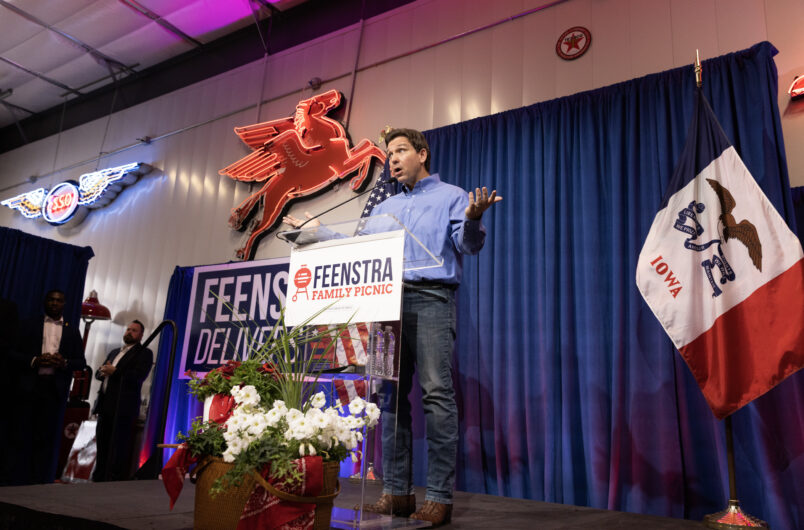
Around the time Trump posted his incendiary statement on his knock-off Twitter app, Pence sat down for an interview with ABC News’ Jonathan Karl in Iowa and responded to news of the potential indictment — using it all as a vehicle to go after the “radical left” and fuel right-wing conspiracy theories about America’s cities crumbling into hell holes as they burn up with crime.  

“I’m taken aback at the idea of indicting a former President of the United States, at a time when there’s a crime wave in New York City, that — the fact that the Manhattan DA thinks that indicting President Trump is his top priority, I think is, just tells you everything you need to know about the radical left in this country,” Pence told Karl. “It just feels like a politically charged prosecution here. And I, for my part, I just feel like it’s just not what the American people want to see.”

But First …

Before the Manhattan grand jury votes on whether to indict Trump this week, the panel will hear testimony from at least one more witness: lawyer Robert J. Costello. 

The news about the additional testimony from the New York Times is significant. While Trump’s team reportedly rebuffed the DA office’s invite for Trump to come testify before the grand jury last week, Costello is appearing at the request of Trump’s lawyers. Under New York law, a person who is facing indictment can call in witnesses to testify on their behalf, which is what’s happening here. Costello will likely go after the prosecution’s star witness, Michael Cohen, because the two have bad blood. 

Vintage Trump

Josh Marshall unpacks what he agrees with and disagrees with about arguments centered on why, after all these years, it doesn’t really matter whether the Stormy Daniels’ hush payment case goes first.

The Jack Smith Files

In addition to reacting to his former running-mate’s potential indictment, Pence also discussed the Jack Smith grand jury subpoena for his testimony with ABC News over the weekend. He indicated he doesn’t plan to fight the entire thing. 

  • “We’re not asserting executive privilege, which may encompass other discussions,” Pence told ABC. 
  • “I just believe that the work that I did preparing for and conducting on my role as President of the Senate is covered by the speech and debate clause. I believe we have the law on our side.”

This Is Why We Don’t Mess With NYC Drag Shows

When they’re not busy trying to overthrow the government, they’re out on the streets, confronting the Real Enemy.

Most of the details are still unclear, but here’s the gist: Some Proud Boys tried to protest a drag show story hour in Manhattan, hosted by New York Attorney General Letitia James. A clash broke out between supporters and some of the Proud Boys. At least one person wearing Proud Boys colors was arrested and one of the protesters wearing the far-right militia group’s attire appeared to have some bloody facial injuries. 

Some tweets documenting the clash:

Purveyor Of Lies Continues Taunting Families Of Dead Children

Alex Jones is reportedly moving his money around to avoid paying the families of Sandy Hook victims the $1.4 billion in damages he owes them for spreading lies and conspiracy theories about their children’s deaths. The New York Times conducted a review of his finances and court records and found that he has transferred millions in cash and assets to family and friends over the past year, potentially keeping his money out of creditors’ reach. More here

DJ Milk And Cooks

Rarely, if ever, is my high school friend group chat abuzz with messages about a Politico article, but that was the case this weekend. These guys used to DJ at the dingiest dungeon of a campus bar in my hometown back when I was 18 and … absolutely not sneaking into college bars. 

How 2 Midwestern College Kids Became Trumpworld’s Favorite DJs

Constitutional Sheriffs Craze Swells In Illinois

Read the Chicago Tribune’s new deep-dive into the constitutional sheriffs movement as a group of Illinois sheriffs refuses to follow or enforce the state’s new assault weapons ban.

The OG October Surprise

Four decades too late, a former Texas politician spilled the details of secret meetings between former Texas Governor John B. Connally Jr. and Middle Eastern leaders ahead of the 1980 presidential election, revealing the Ronald Reagan “October Surprise” plot was real after all. 

According to Ben Barnes, who spoke to the Times, Connally pushed Middle Eastern officials to delay the release of the 52 American hostages being held captive in Iran until after the election between Ronald Reagan and Jimmy Carter, a plan that would eventually help rob the incumbent Carter of a diplomacy win ahead of Election Day.

Barnes was moved to finally tell the story amid news of Carter’s failing health. A must read: “History needs to know that this happened.

Do you like Morning Memo? Let us know!

Correction: An earlier version of this article incorrectly identified Barnes’ political affiliation. TPM regrets this error.

Is It Tuesday or No?

I have been assuming that Trump’s unhinged reference to his being “arrested” on Tuesday is based on what Alvin Bragg’s office has told his lawyers (for arranging Trump’s turning himself in to be booked in Manhattan). In other words, the “leak” is from Trump and the information is accurate. But CNN is reporting that Robert Costello, a one time legal advisor to Michael Cohen, has been designated by Trump’s lawyers to testify to the Manhattan grand jury about Cohen’s credibility on Monday. You could still have last-ditch testimony on Monday and an indictment on Tuesday. But that makes me significantly less confident that Tuesday is the day.

Why Ohio And Michigan’s Politics Continue To Diverge

This article is part of TPM Cafe, TPM’s home for opinion and news analysis. It was originally published at The Conversation.

It may seem that the midterm elections are firmly behind us.

Pollsters are already measuring likely outcomes in 2024 presidential matchups. And announced candidates and possible contenders for the Republican presidential nomination are taking trips to Iowa, the party’s first nominating state.

But 2022 election results from two key states tell us a lot about how voting laws and issues on the ballot influence the way people vote.

At first glance, it’s not easy to understand why Michigan, a left-leaning swing state, and Ohio, a Republican stronghold and former swing state, had such different electoral outcomes in the midterms. Their similar demographic makeups and past similar voting patterns – such as electing Republicans statewide over several election cycles – suggest they would tend to have similar results at the ballot box.

As scholars of electoral politics and state policy in Ohio, we explored recent elections in both states and found a divergence after 2016, with Michigan voting more blue and Ohio voting more red. Our analysis suggests differences in voter registration laws and ballot initiatives may explain why these two states have taken different electoral paths. This preliminary research has not yet been peer-reviewed.

Between 2000 and 2012, the states had similar voting results more than half the time. But they did diverge slightly. During the period, Michigan voters picked the Democratic presidential candidate in each of the four contests. Meanwhile, in Ohio, voters went twice each for Republican President George W. Bush and Democratic President Barack Obama. At the gubernatorial level, for three elections during this period – 2002, 2006 and 2010 – Michigan elected one Republican and elected and reelected one Democrat, while Ohio elected two Republicans and one Democrat.

In the 2016 presidential election, voters in both Michigan and Ohio chose Republican candidate Donald Trump. That year, there was no U.S. Senate election in Michigan, but Ohio voters returned Republican U.S. Sen. Rob Portman for another term. And voters in both states sent more Republicans than Democrats to the U.S. House of Representatives and both houses of their state legislatures.

While the two states had been slowly moving apart for a couple of decades, they converged in the 2016 presidential election for Trump.

Michigan goes blue, Ohio stays red

Since 2016, however, voters in the two states have followed drastically different political paths. In 2018, 2020 and 2022, Michigan voters elected Democratic candidates for governor, U.S. Senate and president as well as a majority in both houses of the state legislature. And they voted for ballot initiatives that legalized marijuana, reformed redistricting and legalized same-day voter registration, which included straight-ticket voting, automatic voter registration, same-day voter registration and no-excuse absentee voting. They also voted to modify the state constitution to protect abortion and contraception rights – all policies typically supported by Democratic candidates.

During the same three election cycles in Ohio, residents cast their ballots for Republican candidates and policy initiatives favored by Republicans. Voters rejected drug-related criminal justice reform, approved a referendum that could make bail more punitive and affirmed that only U.S. citizens could vote in Ohio elections. Republicans actually dominated electoral politics in both federal and state races, with one exception: in 2018, voters sent Democrat Sherrod Brown back to the U.S. Senate.

Beyond that, Ohioans voted for a Republican governor, presidential candidate, all statewide executive offices, in addition to the governor, the three open seats on the state supreme court and a super majority in the state legislature. The U.S. Senate seat vacated by a Republican stayed in Republican control.

It’s not demographics

Analysts suggest that Ohio is no longer a swing state because it is overwhelmingly white and working-class. But, as we examined the populations, we learned demographic differences were not the reason Michigan and Ohio voters diverged politically. Data from the American Community Survey, a demographic study from the U.S. Census Bureau, shows that these two Midwest states are remarkably similar demographically.

Michigan and Ohio have similar white populations, 78% and 80%, respectively; Black populations, 14% and 12%; bachelor’s degree recipients, both 18%; people over 65, both 17%; median household incomes, both $59,000 in 2020 dollars; and workers belonging to unions, 13% and 12%.

But state-specific exit polls of early and 2022 Election Day voters in Michigan and Ohio show there are differences in the electorate. Ohio voters were a little more likely to be male – 52% to 50% – and white, 83% to 80%, than Michigan voters.

Ohio voters were less likely to reside in a union household – 21% to 27% – and were much more likely to identify as Republicans, 41% to 32%.

Early voter registration may play a part

In 2018, Michigan approved same-day registration, which allows voters to register on Election Day, and automatic voter registration, which makes voter registration automatic with driver’s license applications and renewal for those eligible. Ohio requires voters to register nearly a month prior to Election Day.

Registration data for Michigan shows these easier methods of registration may have corresponded with higher voter participation in the state. The increase in total votes cast in Michigan, from 4.8 million in 2016 to 5.5 million in 2020, suggests the 2018 registration changes had an effect. While there may be other factors related to Michigan’s increased turnout, the changes in the state’s laws suggest same-day and automatic registration played a part.

What’s more, there was a higher number of registered voters in Michigan than in Ohio, even though Ohio has 1.7 million more people than Michigan. And, according to the Federal Register, Ohio has 1.3 million more residents of voting age than Michigan. The data also indicates Ohio historically had a larger number of registered voters than Michigan until Michigan approved same-day and automatic voter registration.

According to the Michigan secretary of state’s official election results, there were 4.5 million total votes in the gubernatorial election, the highest office contested in 2022. Meanwhile in Ohio, the secretary of state reported 4.2 million total official votes cast for governor.

Issues may affect voter participation

There is some indication that when social issues that people care about are on the ballot, more people vote. In 2022, Michigan had a proposal that called for adding the right to abortion and contraceptive use to the state constitution. That year, according to data from the Michigan secretary of state’s office, the total number of voters in the state was up by 159,060 from 2018. Ohio, though, had ballot issues in 2022 related to setting bail for criminal defendants and prohibiting noncitizens from voting in local elections. The total number of voters in Ohio dropped by 295,466 between 2018 and 2022.

Before candidates work to mobilize and persuade voters, campaigns try to influence the pool of potential voters, acting within the rules of their states. Changes in the registration rules in Michigan, along with social issues on the ballot and other factors, may have created a different electoral environment there than exists in Ohio, where none of these changes have taken place. This suggests the possibility that writing off Ohio as a noncompetitive state may be premature.

This article is republished from The Conversation under a Creative Commons license. Read the original article.

The Conversation

California’s Historic Snowstorm, In Photos

Does It Matter That the Stormy Case Goes First?

Quite a lot of ink has been spilled in recent weeks over the supposed problem — perhaps a very big problem — that the years-old case of the Stormy Daniels’ payoff might be the first — and perhaps the only — prosecution of Donald Trump. It weakens, so the argument goes, the whole global case against Trump. It’s old, technical, small stuff, and “why now?” when Trump needs to be held accountable for the gravest sorts of crimes against the country itself. Trump will clearly try to take the iffy nature of a Daniels’ payoff prosecution, use it to make the case that charges against him are all weak and manufactured and then try to use that broad brush to color whatever other more serious charges come later.

Some of these points I agree or agreed with; some not. So let me address different parts of this question.

Continue reading “Does It Matter That the Stormy Case Goes First?”

Trump Says He Believes He Will Be Arrested On Tuesday, Calls On Supporters To Protest

In a Saturday morning, all-caps screed on Truth Social, Donald Trump said he believes he will be arrested this coming Tuesday, and called on his supporters to protest in response.

Continue reading “Trump Says He Believes He Will Be Arrested On Tuesday, Calls On Supporters To Protest”

There’s More To Texas State Gov’s Takeover Of Houston Schools Than Meets The Eye

This article is part of TPM Cafe, TPM’s home for opinion and news analysis. It was originally published at The Conversation.

When the state of Texas took over Houston’s public school district on March 15, 2023, it made the district one of more than 100 school districts in the nation that have experienced similar state takeovers during the past 30 years.

The list includes New York City, Chicago, Boston, Philadelphia, Detroit, New Orleans, Baltimore, Oakland and Newark. Houston is the largest school district in Texas and the eighth largest in the U.S.

While the state of Texas claims the planned takeover is about school improvement, my research on state takeovers of school districts suggests that the Houston takeover, like others, is influenced by racism and political power.

States fail to deliver

State governments have used takeovers since the late 1980s to intervene in school districts they have identified as in need of improvement. While state administrations promise that takeovers will improve school systems, 30 years of evidence shows that state takeovers do not meet the states’ promised expectations. For instance, a recent report called Michigan’s 15-year management of the Detroit schools a “costly mistake” because the takeover was not able to address the school system’s major challenges, which included adequately funding the school district.

But while the takeovers don’t deliver promised results, as I show in my book, they do have significant negative political and economic consequences for communities, which overwhelmingly are communities of color. These negative consequences often include the removal of locally elected school boards. They also involve decreases in teachers and staff and the loss of local control of schools.

Despite the highly problematic history of state takeovers, states have justified the takeovers on the grounds that the entire school district is in need of improvement. However, this is not the case for the Houston takeover because by the state’s own standards, the Houston school system is not failing.

Low threshold for state intervention

Following a 2015 law, HB 1842, the state of Texas was granted authority to take over a school district if a single school in that district fails to meet state education standards for five or more years. The bill was passed by the Republican controlled state legislature with Democratic support. However, Democratic state lawmakers representing Houston argue that the law was a mistake and urged for it to be revised.

Although the state has given the Houston Independent School District a B rating, it plans to take over the Houston schools because one school, Wheatley High School, has not made sufficient progress since 2017. According to state law, the state can take over a school district or close a school if it fails to meet standards for five years.

The Houston Independent School District has 280 schools. The district serves over 200,000 students. It employs roughly 12,000 teachers. Wheatley High School serves roughly 800 students and has roughly 50 teachers.

So why would a state take over a school district that has earned a B rating from the state? And why base the takeover on the performance of one school that represents fewer than 1% of the district’s student and teaching population?

In order to understand the logic of the planned state takeover of the Houston schools, it pays to understand the important role that schools have played in the social, political and economic development of communities of color. Historically, communities of color have relied on school level politics as an entry point to broader political participation. School-level politics may involve issues like ending school segregation, demanding more resources for schools, increasing the numbers of teachers and administrators of color, and participating in school board elections.

The process of gaining political power at the local level – and eventually state level – often begins at the schools, particularly the school board. For instance, before Blacks and Latinos elect members of their communities to the city councils, the mayor’s office and the state legislatures, they often elect members to the school board first.

Political representation at stake

In Texas, communities of color are politically underrepresented. Although Blacks, Latinos and Asians represent nearly 60% of the population in Texas, their political power at the state level is not proportional to their population. Whites make up 54% of the state legislature. The Republican Party controls the governorship, state House of Representatives and state Senate, but only 12% of all Republican state legislators are of color. Communities of color in Texas have filed lawsuits arguing that they have been prevented from gaining political representation at the state level by Republicans through racial gerrymandering and voter identification laws that disenfranchise Black and Latino voters.

However, despite years of systematic exclusion of people of color, the political landscape is changing in Texas. Texas is increasingly urbanizing as a result of population growth in the state’s cities. Since urban voters are more likely to vote Democratic, the growth in the urban population may potentially alter political dynamics in the state. Also, while African Americans have solidly identified with the Democratic Party in Texas, Latinos have not. But that, too, is changing. Polls show that Latino support for Republican presidential candidates in Texas went from a high of 49% during George W. Bush’s reelection in 2004 to 35% for John McCain in 2008, 29% for Mitt Romney in 2012 and a low of 18% for Donald Trump in 2016, before bouncing back to 41% for Trump in 2020.

Houston, as the largest urban center in Texas, is at the forefront of this challenge to the Republican grip on state power. The Houston schools, in particular, are representative of the state’s demographic and political future. The nine-member Houston school board is reflective of the community it serves. It has three Latinos, four African Americans and two white school board members. This, in my view, is what has put the Houston public school system and school board at the forefront of a battle that is really about race and political power.

The Houston public school system is not failing. Rather, Republican Gov. Greg Abbott, Education Commissioner Mike Morath and the Republican state legislature are manufacturing an education crisis to prevent people of color in Houston from exercising their citizenship rights and seizing political power.

This is an updated version of an article previously published Jan. 10, 2020. This article is republished from The Conversation under a Creative Commons license. Read the original article.

The Conversation

A Florida-Sized Roadblock For The League Of Women Voters

This article was originally published at ProPublica, a Pulitzer Prize-winning investigative newsroom.

The nonpartisan League of Women Voters has been facing a nationwide backlash after decades of going about its business of surveying candidates, registering voters, hosting debates and lobbying for its causes with little fuss.

Continue reading “A Florida-Sized Roadblock For The League Of Women Voters”

On It Not Actually Mattering

If you think back over the last three years, we’ve had a series of epic socio-cultural smackdowns over COVID: Lockdowns, masks, vaccines, schools. Each of these have tended to array broadly similar groups against each other, though with some key variations. But whatever you made of those fights, the public debate had really immense and immediate real world consequences. That is what is so odd and mystifying about the intensity of Lab Leak Discourse. It doesn’t actually matter. Or rather there are basically no real-world implications to either side being “right” or “winning.” I was talking to someone today who said how incredibly important it was. But after thinking about it for a bit, I thought, why? Now it’s much better for people to think up is up rather than up is down. And there are probably important secondary effects of getting this wrong, whichever way is “wrong.” But in any direct sense it’s not clear it has any real impact on anything.

Continue reading “On It Not Actually Mattering”

Keep An Eye Out

I just wanted to flag for you that we’ve got our annual sign up drive coming up in a couple weeks. It’s a very important one. So if you’ve been a member and lapsed or if you’re a TPM Reader who’s never taken the plunge please consider becoming a member during this drive. Before we kick it off I’ll be sharing a few more thoughts with you about our membership business model, why we do these drives and what we’re doing more broadly today as an organization.