

Kathleen Sgamma unceremoniously withdrew herself as President Trump’s nominee to run the Interior Department’s Bureau of Land Management on Thursday just before her confirmation hearing in front of the Senate Energy and Natural Resources Committee. Sgamma is the director of Western Energy Alliance, a Denver-based oil and gas trade group made up of over 300 companies. She has long advocated for the Interior Department’s BLM to focus on the expansion of oil and natural gas drilling, mining and for cattle to graze on public lands. It’s a match made in the Trump administration’s anti-preservation, anti-renewable resources heaven. So what went wrong?
Continue reading “Cult Of Personality Has Strict Rules”DOGE Playas, their DOGE Enforcer Pals And the Security Detail You Need to Be a True DOGE-Banger
Here is a topic that isn’t as consequential in itself as the wholesale and illegal reshaping of the federal government. But it is of a piece with it and captures the mood and pretensions of DOGE and Trumpism generally. News emerged a few days ago that the FBI has created a 20-person security detail for FBI Deputy Director Dan Bongino. Bongino is the first deputy director who doesn’t come from within the FBI. That’s customary because often the director is a judge or a prosecutor who lacks knowledge of the agency from the inside. The director’s deputy, as a veteran of the bureau, provides that operational knowledge and thus a hands-on managerial control. Since Bongino has been a failed political candidate and podcaster for as long as he wore any kind of uniform, one might be tempted to ascribe this security detail to his personal quirks and pretensions. But it’s actually pervasive across the Trump administration, often especially within DOGE and with DOGE-adjacent appointees, whose firing squads often show up at target agencies with security details of uncertain origin.
Continue reading “DOGE Playas, their DOGE Enforcer Pals And the Security Detail You Need to Be a True DOGE-Banger”Listen To This: All Going Tariffically
A new episode of The Josh Marshall Podcast is live! This week, Kate and Josh talk tariffs and the Supreme Court’s latest on the Alien Enemies Act deportations.
Continue reading “Listen To This: All Going Tariffically”House GOP Hardliners Cave, Unlocking Process To Make Sweeping Medicaid Cuts
After two days of back and forth that involved House Republican leadership delaying a vote on the Senate-approved budget resolution, Republicans’ “one, big beautiful” budget blueprint passed the House in a 216-214 vote Thursday morning, unlocking the reconciliation process.
Continue reading “House GOP Hardliners Cave, Unlocking Process To Make Sweeping Medicaid Cuts “Trump Shifts Into Full-Bore Retribution Mode
A lot of things happened. Here are some of the things. This is TPM’s Morning Memo. Sign up for the email version.
‘I Am Your Retribution’ Comes Home To Roost
President Trump issued two new executive orders Wednesday that each target former government officials in his first administration for investigation and retaliation.
Each executive order identifies the former officials – Chris Krebs and Miles Taylor – by name:
- Addressing Risks from Chris Krebs and Government Censorship
- Addressing Risks Associated with an Egregious Leaker and Disseminator of Falsehoods
You’ll recognize Krebs as the head of Cybersecurity and Infrastructure Security Agency whom Trump fired after he debunked the bogus claims that the 2020 presidential election was somehow rigged. Taylor was the Department of Homeland Security official who anonymously wrote a deeply critical NYT op-ed in 2018 titled: I Am Part of the Resistance Inside the Trump Administration.
The executive orders single out private citizens for punishment, including ordering that they be investigated and that their security clearances be revoked. In Krebs’ case, Trump ordered the attorney general to investigate him, which opens the door to potential criminal prosecution.
It is a daily struggle to convey how abnormal, dangerous, and unprecedented Trump’s depredations are. The White House directing DOJ investigations of anyone in this way is by itself off the charts. The president targeting private individuals with executive orders is unprecedented. Turning the might of the federal government and the bully pulpit against his own former officials is without any corresponding precedent.
All of this – it must be repeated – is being undertaken because of President Trump’s own personal grievances, whims, and perceived slights to his ego and his power. No one is safe from such indiscriminate lawlessness, which itself serves to cow all Americans from confronting or challenging the president’s power.
“I am your retribution,” he promised his supporters in 2023.
The retribution is now.
Trump DOJ Targets American Bar Association
In retaliation against the pre-eminent professional association for lawyers, the Trump Justice Department has barred its attorneys in their official capacities from traveling to or participating in American Bar Association activities. The move was announced in a memo from Deputy Attorney General Todd Blanche.
Next In Line: New Law Firm Targeted By Trump
President Trump issued a new executive order targeting the law firm Susman Godfrey, which quickly said it would challenge the move. Unlike Trump’s other executive order targeting law firms, this one was a bit more opaque about his motivations. Susman Godfrey handled Dominion Voting Systems’s defamation lawsuit against Fox News for its involvement in the 2020 election’s Big Lie, which resulted in a $787 million settlement.
Quote Of The Day
“Big Law continues to bend the knee to President Trump because they know they were wrong, and he looks forward to putting their pro bono legal concessions toward implementing his America First agenda.”–White House press secretary Karoline Leavitt, saying the quiet part out loud while undermining both the already-shaky legal defense of Trump’s executive orders targeting law firms and the flimsy rationale offered by law firms that cut deals to avoid being targeted
Trump Targets State Climate Laws
One of the most maddening things about America’s descent into lawlessness is that it comes at the exact moment collective action is most needed to address the threat of climate change. But it’s not like the two things are happening in parallel. This week alone Trump has boosted coal and targeted state climate laws. I’m dubious that he can lawfully do much to rein in states, but the message is clear.
At the dawn of the Trump era, I tended to see Trumpism as the final death spasm of majority white rule in America. A decade in, the MAGA era feels more like the death rattle of the carbon-based economy. In either case, they both clinging fiercely to their privileges and prerogatives.
Purged Probationary Workers Lose Again
A day after the Supreme Court blocked the reinstatement of purged probationary workers in the federal government in a California case, the Fourth Circuit Court of Appeals followed suit in a Maryland case.
Death Knell For Indy Agencies?
The Trump administration is trying to skip the appeals court and fast-track to the Supreme Court its effort to rewrite existing law on independent agencies and bring them more firmly under control. The vehicle for the urgent request for the Supreme Court to reverse its own 90-year-old precedent comes in the combined case of the firing of members of the NLRB and MSPB.
DOGE Watch
- NYT: Elon Musk’s DOGE is leading an effort to link government databases, alarming privacy and security experts.
- Wired: US DOGE Service Agreement With Department of Labor Shows $1.3 Million Fee—and Details Its Mission
- WaPo: Trump sends DOGE to review the Navy.
- Wired: The GAO is auditing DOGE.
Sheer Madness
I would caution against taking at face value the slew of news stories this morning that purport to make sense of President Trump’s abrupt climbdown from the maximal version of his disastrous tariffs. The journalistic imperative to write stories with beginnings, middles, and ends poorly serves readers in circumstances like these where the emperor has no clothes and everyone from White House officials to Wall Street financiers are exposed as trying to pretend otherwise. By definition, there is no “making sense” of the senseless. Two additional points:
- I would recommend this piece on how the maximal version of Trump’s tariffs were making the global financial system – more that just the equity markets – wobble in dangerous and unusual ways.
- The comedown yesterday still leaves significant and deeply damaging tariffs in place that continue to pose a significant threat to global trade, economic growth, and prosperity.
We’re not nearly out of the woods yet on this madness.
Crash And Burn: House GOP Edition
The dysfunctional House GOP – where the impulse to out-crazy one another continues – failed to come to agreement on the centerpiece of President Trump’s legislative agenda, forcing Speaker of the House Mike Johnson to scrap a planned vote last evening. They’ll try again today.
‘A Multidimensional Approach’
In his latest podcast episode, my old colleague Greg Sargent presses hard on House Minority Leader Hakeem Jeffries (D-NY) to reconcile Democrats’ kitchen table political messaging with the lawlessness of the Trump II presidency.
Alien Enemies Act Cases Are Alive Again
Federal judges in Texas and New York temporarily blocked continuing deportations under the Alien Enemies Act, but only in limited geographical areas. Since the Supreme Court’s decision earlier in the week overturning U.S. District Judge James Boasberg’s nationwide injunction, there has been no similar nationwide bar to the deportation – though the high court did require notice and hearing before any other deportations could occur.
Related: For the deeply curious, LawFare has a deep dive on the Alien Enemies Act litigation. I would particularly recommend the section on whether Boasberg’s contempt of court proceedings against the Trump administration for violating his order blocking deportations survived the Supreme Court’s decision that he didn’t have jurisdiction to issue the order.
Keep An Eye On This Weirdness
The Trump DOJ moved to drop a brand-new criminal case against an El Salvadoran man they’d accused of being a major leader of the brutal Central American gang MS-13. Instead of prosecuting the man, the Trump administration is reportedly preparing to deport him immediately. But the government has offered no explanation publicly for the sudden change in its approach to the case.
The 2020 Election Ain’t Over Yet For Newsmax
A state judge in Delaware has ruled against Newsmax in the $1 billion defamation lawsuit against it by Dominion Voting Systems. The judge found that Newsmax published Big Lie-related falsities about the voting machine company in the 2020 election cycle, but ruled that whether it did so with actual malice would be up to a jury to decide. Trial is scheduled to begin April 28.
Do you like Morning Memo? Let us know!
Commit to Not Being Stupid About Tariffs
I’ve now seen a couple articles claiming that Democrats are missing an opportunity with Trump’s tariff catastrophe or generally trying to thread some moron needle over whether they’re good or bad. Jon Chait did it here. Now Lauren Egan has written a similar piece in The Bulwark. Both these pieces seem vastly overstated to me. I’m pretty immersed in Democratic voices and almost everything I hear is that Trump tariffs are a catastrophe. But to the extent there is some hedging from a few Democrats, I don’t think there’s even any real issue here to hedge, not over anything actually recognizable as trade policy. Joe Biden embraced what used to be the anathema of industrial policy. He also employed targeted tariffs. In fact he had a pretty all-policy, holistic focus on re-shoring specific industries that are either particularly high-value in economic terms or are tied to critical technologies with national security dependencies. Those policies were very broadly embraced by Democrats.
Continue reading “Commit to Not Being Stupid About Tariffs”A Few Notes on Trump’s Abject, Humiliating and Maybe-Not-Even-Accomplishing-Much Cave
Most of what happened today is obvious. And I’m no expert on macro- or international economics. But allow me a few observations. Start with the obvious: Trump rolled out an absurd policy which on its own terms would need to be held to for years to have any hope of success. After repeated pledges never to relent, he caved after one week. He now looks like an even bigger fool and menace on the international stage than he already did which is a feat of some magnitude. I also doubt he undid the damage he’s done to himself domestically as a custodian of the nation’s prosperity. Perhaps most of all he looks weak, reckless and stupid.
Continue reading “A Few Notes on Trump’s Abject, Humiliating and Maybe-Not-Even-Accomplishing-Much Cave”Solicitor General’s Office Reportedly Sees Mass Exodus As Wall Between White House, DOJ Disintegrates
At least eight top lawyers in the Justice Department’s solicitor general’s office are departing or have already announced their impending exit from the elite team, which is responsible for arguing on behalf of the Trump administration before the Supreme Court.
Continue reading “Solicitor General’s Office Reportedly Sees Mass Exodus As Wall Between White House, DOJ Disintegrates”History Has Lessons For Universities As They Consider Giving In To Authoritarian Demands
This article is part of TPM Cafe, TPM’s home for opinion and news analysis. It was originally published at The Conversation.
Many American universities, widely seen globally as beacons of academic integrity and free speech, are giving in to demands from the Trump administration, which has been targeting academia since it took office.
In one of his first acts, President Donald Trump branded diversity, equity and inclusion programs as discriminatory. His administration also launched federal investigations into more than 50 universities, from smaller regional schools such as Grand Valley State University in Michigan and the New England College of Optometry in Massachusetts to elite private universities such as Harvard and Yale.
Trump ramped up the pressure by threatening university research funding and targeting specific schools. In one example, the Trump administration revoked US$400 million in grants to Columbia University over its alleged failures to curb antisemitic harassment on campus. The school later agreed to most of Trump’s demands, from tightening student protest policies to placing an entire academic department under administrative oversight — though the funding remains frozen.
Cornell, Northwestern, Princeton, Brown and the University of Pennsylvania have also recently had grants frozen. Harvard was sent a list of demands in order to keep $9 billion in federal funding.
Now, across the United States, many universities are trying to avoid being Trump’s next target. Administrators are dismantling DEI initiatives — closing and rebranding offices, eliminating positions, revising training programs and sanitizing diversity statements — while professors are preemptively self-censoring.
Not all institutions are complying. Some schools, such as Wesleyan, have refused to abandon their diversity principles. And organizations including the American Association of University Professors have filed lawsuits challenging Trump’s executive orders, arguing they violate academic freedom and the First Amendment.
But these remain exceptions, as the broader trend leans toward institutional caution and retreat.
As a scholar of comparative and international education, I study how academic institutions respond to authoritarian pressure — across political systems, cultural contexts and historical moments. While some universities may believe that compliance with the administration will protect their funding and independence, a few historical parallels suggest otherwise.
German universities: A lesson
In the 1975 book “The Abuse of Learning: The Failure of German Universities,” historian Frederic Lilge chronicles how German universities, which entered the 20th century in a golden age of global intellectual influence, did not resist the Nazi regime but instead adapted to it.
Even before seizing national power in 1933, the Nazi Party was closely monitoring German universities through nationalist student groups and sympathetic faculty, flagging professors deemed politically unreliable — particularly Jews, Marxists, liberals and pacifists.
After Hitler took office in 1933, his regime moved swiftly to purge academic institutions of Jews and political opponents. The 1933 Law for the Restoration of the Professional Civil Service mandated the firing of Jewish and other “non-Aryan” professors and members of the faculty deemed politically suspect.
Soon after, professors were required to swear loyalty to Hitler, curricula were overhauled to emphasize “national defense” and “racial science” — a pseudoscientific framework used to justify antisemitism and Aryan supremacy — and entire departments were restructured to serve Nazi ideology.
Some institutions, such as the Technische Hochschule Stuttgart, even rushed to honor Hitler with an honorary doctorate within weeks of his rise to power. He declined the offer, though the gesture signaled the university’s eagerness to align with the regime. Professional associations, such as the Association of German Universities, stayed silent, ignoring key opportunities to resist before universities lost their autonomy and became subservient to the Nazi state.
As linguist Max Weinreich wrote in his 1999 book “Hitler’s Professors,” many academics didn’t just comply, they enabled the regime by reshaping their research. This legitimized state doctrine, helping build the intellectual framework of the regime.
A few academics resisted and were dismissed, exiled or executed. Most did not.
The transformation of German academia was not a slow drift but a swift and systemic overhaul. But what made Hitler’s orders stick was the eagerness of many academic leaders to comply, justify and normalize the new order. Each decision — each erased name, each revised syllabus, each closed program and department — was framed as necessary, even patriotic. Within a few years, German universities no longer served knowledge — they served power.
It would take more than a decade after the war, through denazification, reinvestment and international reintegration, for West German universities to begin regaining their intellectual standing and academic credibility.
USSR and fascist Italy suffer similar fate
Other countries that have fallen under authoritarian regimes followed similar trajectories.
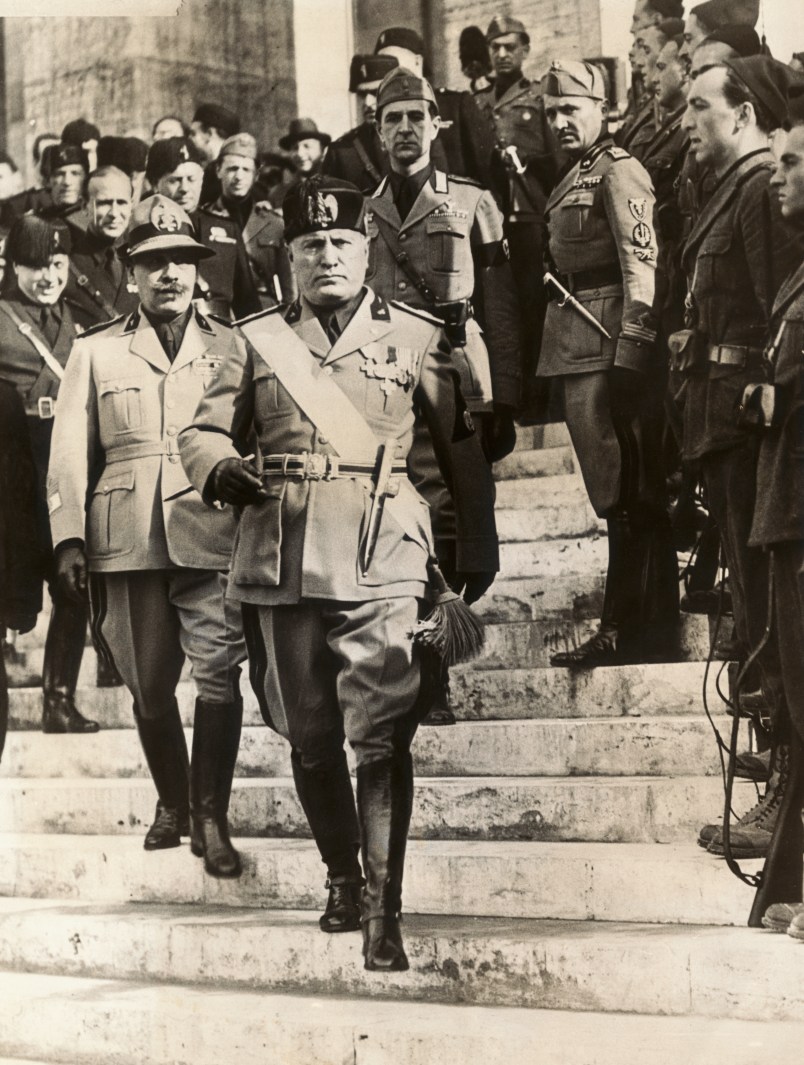
In fascist Italy, the shift began not with violence but with a signature. In 1931, the Mussolini regime required all university professors to swear an oath of loyalty to the state. Out of more than 1,200, only 12 refused.
Many justified their compliance by insisting the oath had no bearing on their teaching or research. But by publicly affirming loyalty and offering no organized resistance, the academic community signaled its willingness to accommodate the regime. This lack of opposition allowed the fascist government to tighten control over universities and use them to advance its ideological agenda.
In the Soviet Union, this control was not limited to symbolic gestures — it reshaped the entire academic system.
After the Russian Revolution in 1917, the Bolsheviks oscillated between wanting to abolish universities as “feudal relics” and repurposing them to serve a socialist state, as historians John Connelly and Michael Grüttner explain in their book “Universities Under Dictatorship.” Ultimately, they chose the latter, remaking universities as instruments of ideological education and technical training, tightly aligned with Marxist-Leninist goals.
Under Josef Stalin, academic survival depended less on scholarly merit than on conformity to official doctrine. Dissenting scholars were purged or exiled, history was rewritten to glorify the Communist Party, and entire disciplines such as genetics were reshaped to fit political orthodoxy.
This model was exported across Eastern and Central Europe during the Cold War. In East Germany, Czechoslovakia and Poland, ministries dictated curricula, Marxism-Leninism became mandatory across disciplines, and admissions were reengineered to favor students from loyalist backgrounds. In some contexts, adherents to older intellectual traditions pushed back, especially in Poland, where resistance slowed though could not prevent the imposition of ideological control.
By the early 1950s, universities across the region had become what Connelly calls “captive institutions,” stripped of independence and recast to serve the state.
A more recent example is Turkey, where, following the failed 2016 coup, more than 6,000 academics were dismissed, universities were shuttered and research deemed “subversive” was banned.
History’s warning
The Trump administration’s early and direct intervention into higher education governance echoes historical attempts to bring universities under state influence or control.
The administration says it is doing so to eradicate “discrimatory” DEI policies and fight what it sees as antisemitism on college campuses. But by withholding federal funding, the administration is also trying to force universities into ideological conformity — by dictating whose knowledge counts but also whose presence and perspectives are permissible on campus.
Columbia’s reaction to Trump’s demands sent a clear message: Resistance is risky, but compliance may be rewarded — though the $400 million has yet to be restored. The speed and scope of its concessions set a precedent, signaling to other universities that avoiding political fallout now may mean rewriting policies, reshaping departments and retreating from controversy, perhaps before anyone even asks.
The Trump administration has already moved on to other universities, including the University of Pennsylvania over its transgender policies, Princeton for its climate programs and Harvard over alleged antisemitism. The question is which school is next.
The Department of Education has launched investigations into over 50 institutions, accusing them of using “racial preferences and stereotypes in education programs and activities.” How these institutions choose to respond may determine whether higher education remains a space for open inquiry.
The pressure to conform is not just financial — it is also cultural. Faculty at some institutions are being advised not to use “DEI” in emails and public communication, with warnings to not be a target. Academics are removing pronouns from their email signatures and asking their students to comply, too. I’ve been on the receiving end of those warnings, and so have my counterparts at other institutions. And students on visas are being warned not to travel outside the U.S. after several were deported or denied reentry due to alleged involvement in protests.
Meanwhile, people inside and outside academia are combing websites, syllabi, presentations and public writing in search of what they consider ideological infractions. This type of peer surveillance can reward silence, incentivize erasure and turn institutions against their own.
When universities start regulating not just what they say but what they teach, support and stand for — driven by fear rather than principle — they are no longer just reacting to political threats, they are internalizing them. And as history has shown, that may mark the beginning of the end of their academic independence.
This article is republished from The Conversation under a Creative Commons license. Read the original article.
Fate Of Independent Agencies Inches Closer To Supreme Court Finale
The Trump administration went to the Supreme Court Wednesday, asking for the justices to intervene in the case that will likely determine whether independent agencies in the executive branch can continue in their current form — or whether they will be brought fully under President Donald Trump’s sway.
Continue reading “Fate Of Independent Agencies Inches Closer To Supreme Court Finale”