

Over the last week, there have been a number of examples popping up on social media of Republicans, often very conservative Republicans in red states, removing President Trump from their campaign websites. It’s not terribly conspicuous. It usually amounts to taking an “endorsed by Trump!” button down and replacing it with some other innocuous tagline, or taking Trump out of a campaign biography. It’s very different from attacking Trump or doing anything publicly. But it still speaks volumes about the political moment, one in which Trump and everything about him if not everything he stands for is politically toxic, even in very conservative states and districts.
It allows us to look a bit over the horizon. What we see won’t surprise us. We probably know it already if we think about it. But it’s worth thinking about. If the midterms go more or less as expected, a lot of Republicans are going to be really, really pissed at Donald Trump. No, I’m not predicting some anti-Trump rebellion or reversion to the pre-Trump GOP. But it will be more than the standard disgruntlement after a bad election cycle. Because a Democratic wave won’t just be the expected thermostatic sloshing back and forth of modern politics. We’re still in a deeply sour public mood in which incumbents are always in some level of trouble. But in this case, Trump has taken step after step almost inviting a major backlash. The tariffs, the disastrous Iran War and resultant high fuel prices, the late fourth quarter trade war with Canada.
As a general matter, people who write about or strategize about politics greatly overestimate our collective ability to shape how an election will play out, the extent to which clever ideas can pivot the course of an election in any new direction. We’re more small sailboats on a big ocean than some kind of latter-day Neptune actually changing the waves or the wind. But, all that said, Trump may have handed a unique card for Democrats to play against Republican candidates, especially those bordering Canada, which include key states like Michigan, Alaska, and Maine, as well as states with strong trade dependencies like Iowa and Ohio. This part requires little explanation. Heading into an ugly midterm cycle with one damaging and needless war underway, it boggles the mind that he thinks it’s a good idea to start a trade war with America’s second-largest trading partner. Trade wars raise prices; and the cost of living is the largest single issue in the election.
But there’s an additional dimension to the politics.
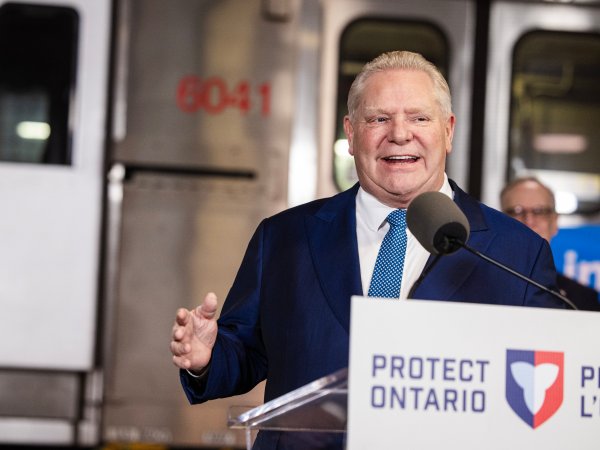
The U.S.-Canada trade situation is so bleak (as I’ve been discussing in these three posts: 1, 2 and 3) that I guess it could use a bit of comic relief-cum-TPM lore. The current Premier of Ontario (their analog to the governor of state) is Doug Ford. He’s the brother of the late Rob Ford, who you’ll remember was the rotund, buffoonish, crack-smoking mayor of Toronto from 2010 to 2014. In December 2013, Rob Ford won a Golden Duke award and we sent Hunter Walker, then in his first stint at TPM, to personally bestow the Golden Duke statuette to Mayor Ford. Hunter and then-TPM intern Yumi Araki hunted around Toronto to find Ford but finally had to settle on giving it to Ford’s brother Doug. (We’ll come back to their quest in a moment. You can read Nicole LaFond’s recollection of the story for our 20th Anniversary celebration here.)
Read More

There’s been a blizzard of commentary about the breakdown of U.S.-Canadian trade talks. Friend of TPM Paul Krugman has a good rundown of just how dependent the U.S. is on key Canadian exports — oil, lumber, hydropower electricity in addition to many other commodities. Of course, the U.S. is a net exporter of oil. But that’s in aggregate. As Paul explains, the details aren’t that simple. The upper Midwest gets most of its oil from Canada while a lot of oil produced in Texas, Louisiana and the Gulf Coast gets exported. These patterns could only be changed over many years and then at great expense. There are similar embedded dependencies on lumber and electricity. Then there are things like potash (for agriculture and some industrial production) where the U.S. gets almost all of its supply from Canada.
Of course, so far this is all hypothetical. Canada isn’t pulling these levers. The U.S. is conspicuously avoiding placing tariffs on these supplies on which it has a critical dependence. But that only highlights U.S. vulnerability. Nothing is stopping Canada from pulling those levers as Trump’s trade war of whim heats up.
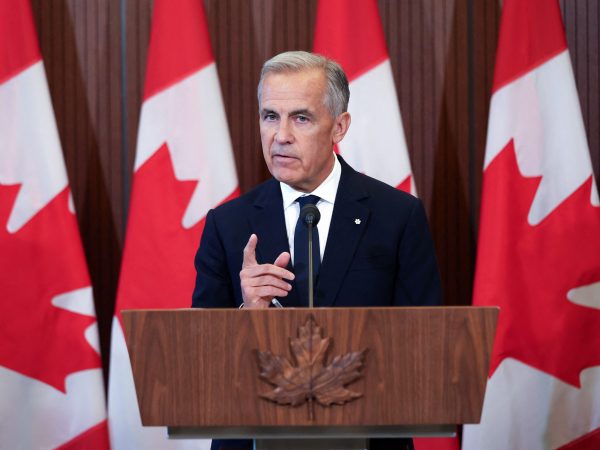
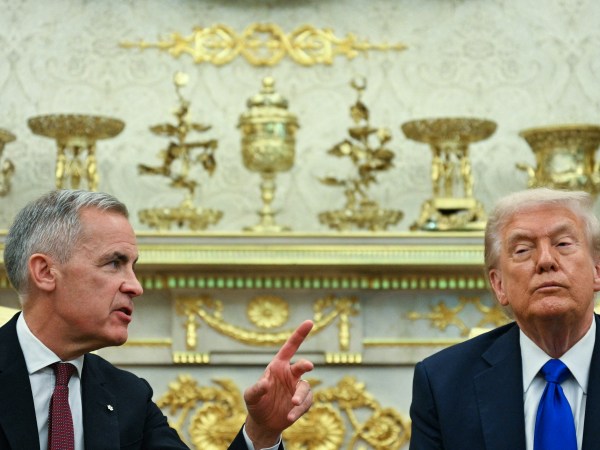

You’ve probably seen that Canadian Prime Minister Mark Carney has walked away from trade talks with the U.S. That has led the U.S. to impose staggeringly large (and certainly illegal) tariffs on Canada, and Canada is responding in kind. It’s not clear precisely what demands the U.S. made that prompted Carney to do this. Given the pain this will cause Canada, at least in the near-term far more than the U.S., they must have been not only unacceptable but an affront to Canada’s sovereignty and national dignity.
As I understand it, negotiations appeared to be going well and productively. They began as an attempt to find an agreement to forestall Trump’s original threat of a new round of draconian and illegal tariffs. Indeed, they appeared to be so near completion that an article I saw mid-week referred to Mexico eyeing and looking to negotiate a deal with comparable contours. Point being, it was a measure not only of how well the negotiations appeared to be going but how close they seemed to completion. The broad outlines were known to other interested countries.
Then Carney abruptly ended them in response to new demands.
Read More