


The school was on lockdown.
Nov. 12 was supposed to be an evening of youth soccer at P.S. 1, a public elementary school in the Sunset Park section of Brooklyn. Yet the fun and games in the school’s gym turned dark when Immigration and Customs Enforcement agents showed up outside and took someone off the streets.
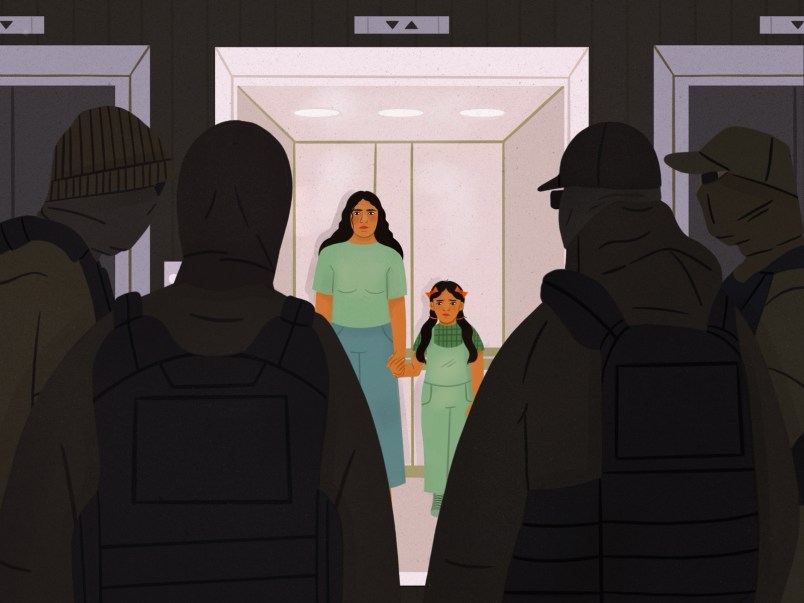
According to multiple witnesses, the federal officers stayed parked on the corner for roughly two hours in three cars with tinted windows. Their presence outside the school where nearly 90% of the students are Latino sparked fear and led many community members to shelter inside.
Aaron Kraus, one of the soccer coaches, said the experience left him questioning whether the games could continue.
“It’s insane that something like a youth soccer event in a school is a place they’re going to park outside of and try to target people. That’s just mindblowing,” Kraus said. “Part of me is like, should we stop? But why should we stop something that’s good for the community?”
Parents who were there throughout the evening said they believe the ICE agents took one man from a nearby building. They were left wondering why the agents then chose to stay near the scene.
“I don’t know why you would stay outside a school. There are kids here and people are scared,” one man who said his child was playing inside told TPM. The father declined to give his name due to his concerns about the heavy-handed law enforcement presence.
These fraught questions and tense moments have become a part of life around the country since Donald Trump returned to the White House and began to implement his mass deportation agenda. In New York City, Trump’s policies have led to dramatic raids and chaos in the courts.
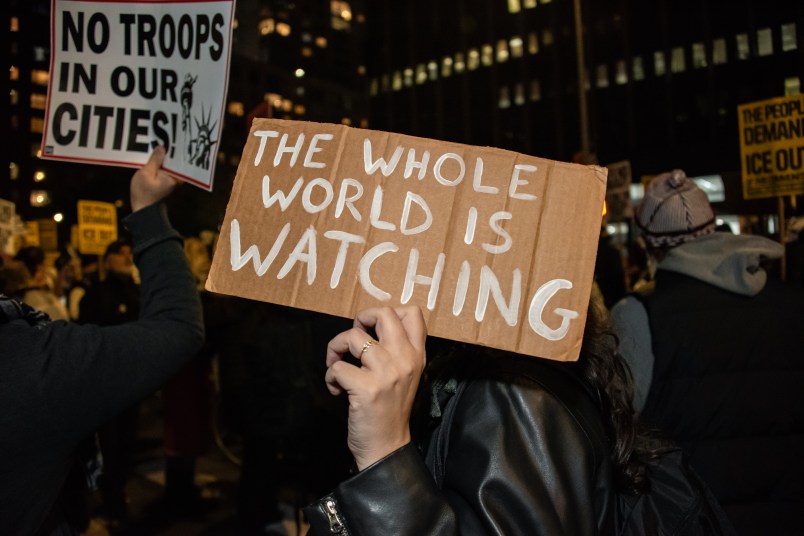
Yet when the parents and children stepped out of P.S. 1 on that chilly night, they were not confronted by the sight of the masked agents. Instead, they saw a group of nearly a dozen activists who rushed onto the scene after being notified by encrypted chat groups. These rapid response networks have sprung up around the city. They are a key component of the Undocumented Underground that is resisting mass deportation in New York and around the nation.
Thus far, New York has not seen the massive workplace raids and large-scale deployments of armed federal officers that have taken place in other cities like Los Angeles and Chicago. Instead, the city has played host to a steady stream of detentions inside immigration courthouses at a level unmatched anywhere else in the country. But the lack of a major federal operation in the streets doesn’t mean there hasn’t been sustained ICE activity in New York — and it doesn’t mean activists have not been preparing for the federal government to focus its efforts more directly on Trump’s home city.
Rapid response networks are, by design, decentralized. They operate largely via encrypted chat systems and websites. While working on this series over the past few months, I’ve gained entry to some of these groups and obtained documents describing rapid response procedures and tracking dozens of sweeps by ICE agents and the ensuing detentions that have taken place across the city since the summer.
“No one way of ICEWatching is the trademarked ‘perfect’ or ‘mandated’ way to do so,” one document shared in an encrypted group explained. “There is no ICEWatch INC., no president, no director, none of that. It’s a verb, not a membership in a group.”
The document went on to outline the “different actions” that can be involved in rapid response including filming raids, shouting or alerting neighbors to officers’ presence via chat networks, and “verbally confront[ing] agents.”
“Demand to see a valid judicial warrant. Demand they get out of the neighborhood. BE LOUD!” the document said.
It also noted that, in some instances, “there have been cases of people surrounding and blocking the vehicle(s) transporting detained person/people” or “forming a human shield around a targeted person.”
“Some people in the past have decided to intervene more. This is your choice depending on your values, risk factors, etc. We are not advocating for any specific actions,” the document said.
Along with these practices, the document included links to other pages with information on how to identify the uniforms and vehicles used by ICE and the agencies that typically assist them. It also detailed potential security measures for rapid responders including wearing medical masks, using nicknames, arranging “jail support” in the event rapid responders are arrested, and avoiding unnecessary conversation.
“When on-the-ground, it’s not the time to discuss all your activism or anyone else’s. Stick to your plans for the moment; no need to discuss or confirm anything unrelated. Informants exist, undercovers exist,” the document said.
In their reports to each other, rapid responders typically employ what’s known as the “SALUTE” protocol in their encrypted group chats. This is an acronym referring to the key information activists typically pass along when they witness the presence of ICE: the size of the group of agents, the activity they are engaged in, the specific location, visible insignias indicating the units or agencies they work for, the time they were seen, and any equipment they were carrying.
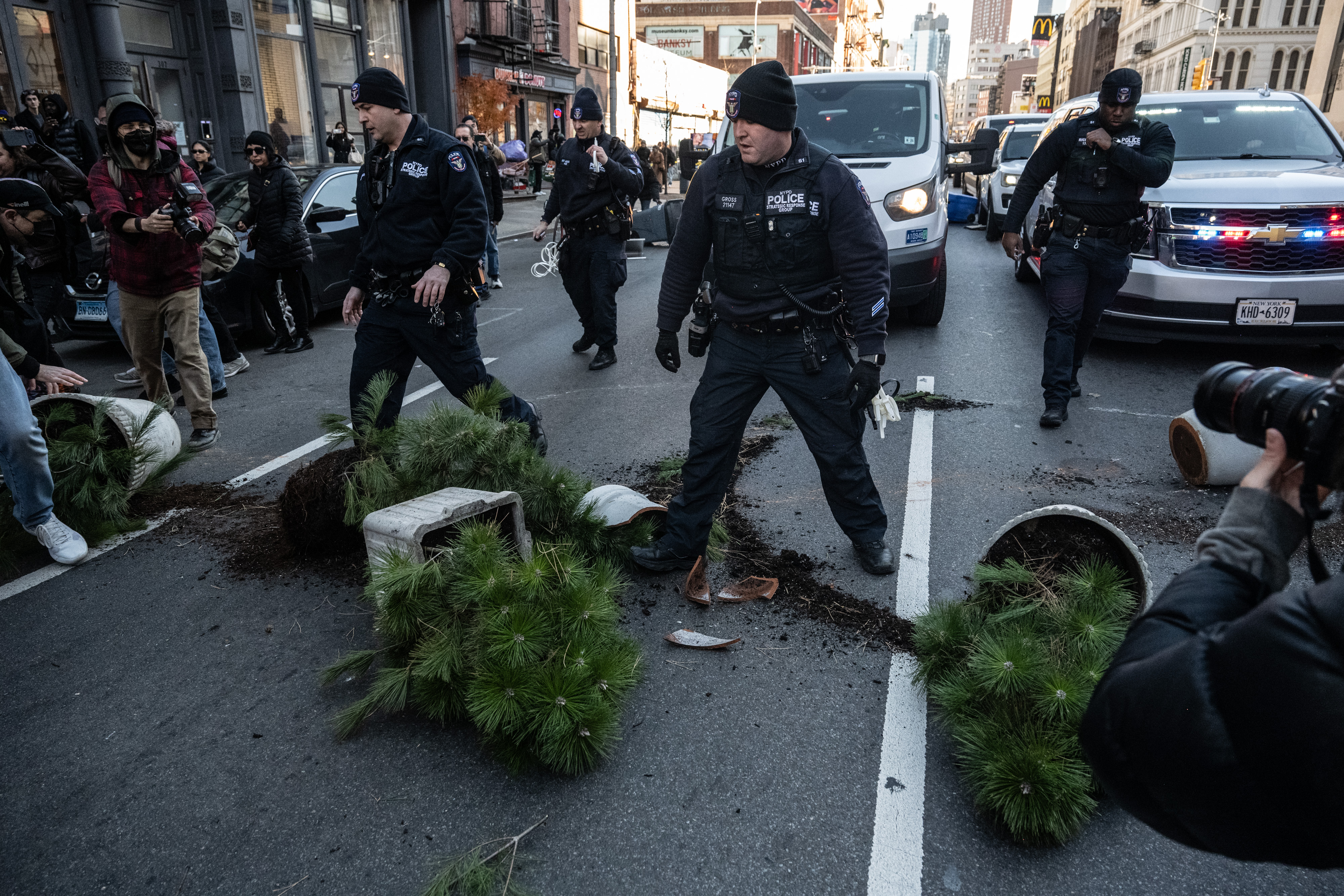
These tactics have made an impact. In late October, New York saw its most high-profile ICE raid since Trump’s return to office as personnel from five federal agencies descended on street vendors operating on Canal Street in Manhattan. The agents were almost immediately confronted by protesters, some of whom were alerted to the situation by rapid response networks. Demonstrations continued into the evening, and federal agents detained a mix of immigrants and activists.
In late November, there was another scene on Canal Street as hundreds of protesters apparently stopped a planned ICE raid by surrounding a garage filled with government vehicles and preventing them from leaving. That action was spurred on by an urgent alert sent out via encrypted rapid response networks.
“Confirmed convoy en route … ALL OUT TO CANAL STREET AREA,” the initial alert said. “ICE RAID IMMINENT RAPID RESPONSE NEEDED IMMEDIATELY. … SHARE WIDELY. ICE OUT OF NYC NOW!”
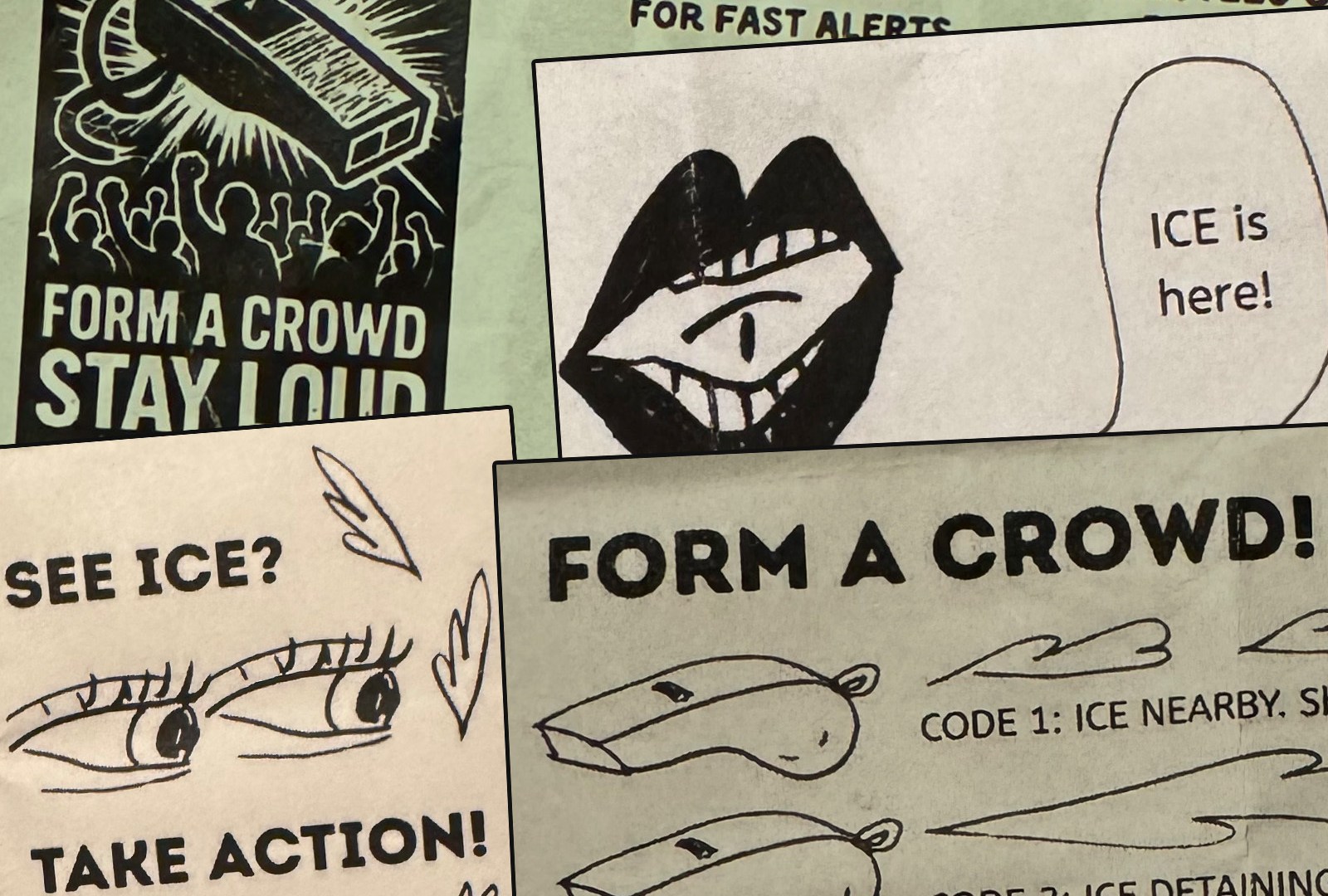
Outside of P.S. 1 last month, the group of rapid responders circled the area on bikes and on foot to ensure the agents had dispersed. They sent word inside the school once the coast was clear. Rapid responders also distributed whistles, which have become a popular grassroots tool in communities around the country for sounding the alarm about the presence of ICE agents. The whistles were packaged with printed guidelines on how to film ICE activity and report it to the rapid response channels.
“WE KEEP US SAFE,” one of the flyers declared. “We’ve all seen what rapid, sustained community response can do in other cities. Now, NYC can join the millions of Americans standing up to protect our neighbors, our cities, and ourselves.”
Along with stopping individual raids, this wave of grassroots activism has drawn the ire of Homeland Security Secretary Kristi Noem, who oversees ICE and other law enforcement agencies that have led the push. In a Nov. 17 appearance on Fox News, Noem expressed frustration as she watched footage of activists blowing the whistle on ICE agents in North Carolina.
“I would hate listening to those whistles day after day,” Noem said. “I was watching those videos and wondering if their parents are proud of them. It’s just unbelievable to me what these people will do in order to facilitate more criminal activity in the United States.”
Despite administration officials’ contentions from Noem that they’re focused on removing the “worst of the worst”, data clearly shows that the majority of people caught up in Trump’s deportation blitz are not criminals at all. The raids have also resulted in the arrests and detention of U.S. citizens.
The Department of Homeland Security has largely brushed off these concerns and said it is on track to deport nearly 600,000 of the estimated 10 million undocumented immigrants who live in the country by the end of the year. Faced with this onslaught, the rapid response networks have provided some comfort in the communities that are being targeted.
The people filling out of P.S.1, for example, clearly appreciated the presence of the activists.
“Have a good night!” two women said to the group. “Thank you!”
A man in a hoodie gave a thumbs up as he walked past with a child.
“Thank you guys for everything,” he said. “Appreciate you guys.”
Alexa Avilés, a Democratic city councilwoman whose district includes Sunset Park was there among the rapid responders. Avilés told TPM that ICE has been a regular presence on the main avenues in the neighborhood, which has a large Latino and immigrant population. She said the situation is “unnerving” in a community where almost half of the residents are born outside of the United States
“The fear is pretty profound as neighbors are watching folks get kidnapped from 26 Federal Plaza on a daily basis,” Avilés said, referencing one of lower Manhattan’s courthouses, where federal agents regularly conduct violent detentions in the hallways. “I think the lawlessness is really clear to people and it’s frightening.”
Avilés was one of many advocates and activists who spoke to TPM for this series and expressed concerns New York could see stepped-up immigration activity in the coming months. She noted President Donald Trump’s uncertain relationship with the city’s incoming progressive mayor, Zohran Mamdani, and the massive new spending the president and congressional Republicans have greenlit for ICE. That funding has enabled a recruitment drive that has drawn apparent interest from right-wing extremist groups.
“I think we have to prepare for the worst given they have the resources,” Avilés said. “If it doesn’t materialize, I will be eternally grateful because no one wants to see their neighbors terrorized, nor do we wanna waste the enormous amounts of taxpayer dollars that this whole apparatus is doing, but we’ve got to prepare.”
For her part, Avilés said she has been leading Know Your Rights trainings aimed at helping community residents understand how to respond to raids and detentions. She explained that she has also been meeting with local businesses and leaders as well as talking to colleagues in Chicago, which has seen a sustained deployment of federal agents. Avilés said part of the goal is sending “a clear message” to Washington.
“We’re not down with this detention and deportation machine, and family separation, and we don’t want any part of it,” she explained.
The rapid response also sends a signal to residents in the affected communities. Even as he wondered whether the soccer games could continue at P.S. 1, Kraus, the coach, told TPM it was “amazing” to come out and find neighbors when he was checking for ICE.
“New York is a place that it sometimes feels like you’re running out of community,” said Kraus. “So it’s really, really great to see so many people here to help.”
As the crowd at the school dispersed, Avilés arranged for activists to escort concerned residents home or to the subway. Before she sent one woman up the block, Avilés put an arm around her shoulder.
“Look at how many neighbors are here and how beautiful it is,” she said in Spanish.







I don’t know what the laws are in NYC… but these guys are armed… they are certainly not NYPD, so are they allowed to be that close to a school?
I suspect the next fight will be about the appropriate amount of automation for the arrest and removal process. Palantir, the giant government AI contractor, has been working on developing “kill chains”, allowing the AI agent through, say, drones to identify persons for removal. Robotic killing, injuring or even capturing people, while feasible, comes with a passel of legal issues. Outside of the battlefield, government-ordered killing is limited to very specific circumstances. It has been alleged by human right groups that Palantir kill-tech has been tested on Palestinians, to which Palantir has responded:
Still, from a technical standpoint, we are already on the path to pursuing persons with AI agents.
NYPD should do a “What are you doing here? Do you have kids in this school?” Then treat them as suspected pedophiles. Arrest and detain.
ETA. Oops, I forgot. Then lose them in the system.
The idea that Palantir is experimenting with arming AIs is really frightening. That is a moral swamp that no one should be thinking about entering, and much less actually going into.
I recently re-read a book from my past (John Brunner’s Stand on Zanzibar from 1968, though I didn’t read until I was in college in the mid-70s). I was astonished by how much Brunner’s dystopia got right–the rise of AI (although he saw it as coming of the One Big Machine model rather than a network), the rise of corporations as rivals of governments (fueled in part by a degeneration of govenment), China as the US rival, genetic modification of organisms, etc.
Brunner uses many of the same techniques John Dos Passos used in his U.S.A. trilogy and that John S. Burroughs used in his fiction. That was what led me to the book. It may be the best of the New Wave Science Fiction novels of the 1960s and 1970s.
If you are into dystopias or science fiction (or speculative fiction or whatever you want to call it), it’s worth a read.
Noem and Hegseth: “Hold my beer.”