

They call them the “forgotten migrants.”
Of the approximately 11 million undocumented immigrants living in the United States, over two thirds of them come from Mexico and South America, according to data compiled by the Pew Research Center last year. However, the population from other regions is growing sharply. Pew found that, as of 2022, there were 375,000 unauthorized immigrants from Africa living in the U.S., which was a striking 36% increase over three years.
Estimates show New York is home to nearly 8% of the nation’s undocumented African immigrants. The community was the primary focus of ICE’s Canal Street raid in late October. As TPM spent nearly two months examining the fallout from that sweep and Trump’s deportation machine in the city, we found that African migrants have faced threats and unique challenges. They’re also receiving help from a growing network of activists and advocates.
At a weekly “Welcome Center” located inside the sanctuary of one New York City church, the majority of visitors are African men who hold the low-paying and dangerous food delivery jobs that are one of the only options for people without work permits in New York.
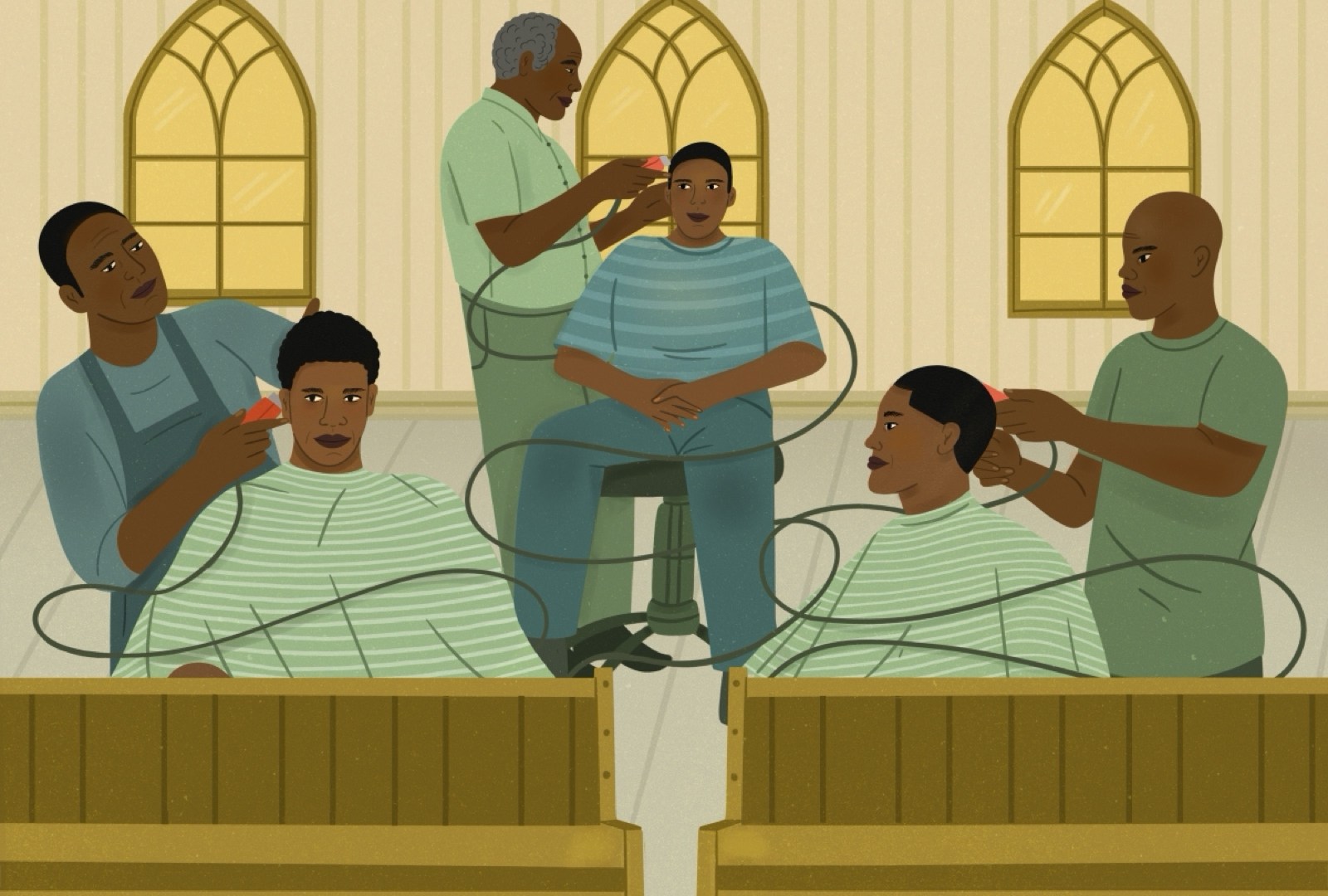
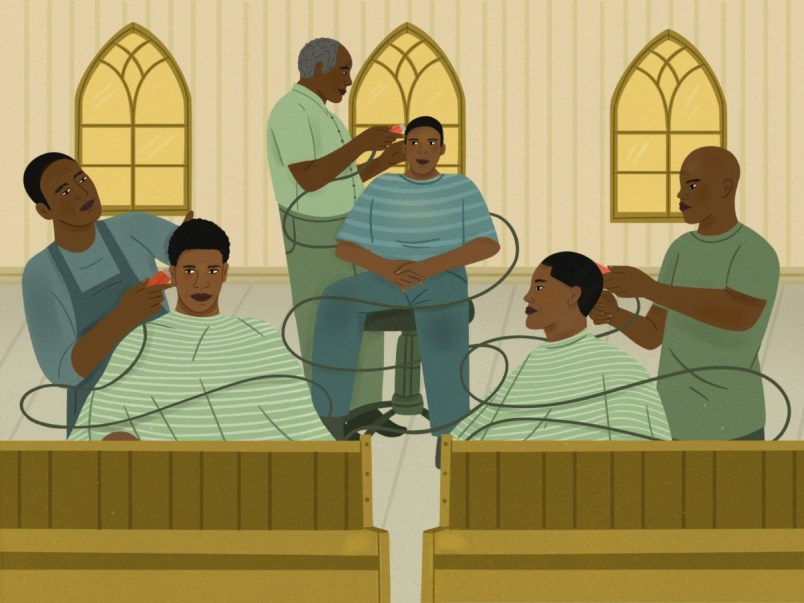
Outside, the only sign of the lifeline being offered at the church is a line of delivery bikes parked on the street. Inside, there is a vibrant, bustling scene. One corner of the room is lined with prayer mats for Muslim worship. Pews that line the side of the chapel have been turned into an impromptu barber shop where three men provide a steady stream of free shaves and fades. The center of the room is open and filled with tables offering food, assistance with court paperwork, job and house hunting, English lessons, and GED tutoring. On a second floor balcony, there is a supply of donated clothing.
One of the two lead volunteers who run the center told TPM they are a parishioner at the church, and that providing services for migrants has become their “full-time second job.” They said the vast majority of people who visit the welcome center are West African men ranging from teenagers to those in their early forties. According to the volunteer, it can be difficult for these men “to navigate and just even find translations” since most services in New York are designed for migrant families and Spanish speakers.
“The people from West Africa are sometimes referred to as the forgotten migrants or the hidden migrants,” the volunteer said. “They don’t speak Spanish. They come from countries where their primary language is either Wolof or Fulani. Most of them speak French. Some of them speak Arabic as well. And the city’s not set up for them.”
The “Welcome Center” began in January 2023. In the previous months, Texas Gov. Greg Abbott and other Republican state leaders began sending busloads of undocumented migrants to New York and other cities led by Democrats to protest President Joe Biden’s immigration policies. Protections from deportation, including avenues to asylum, that were offered by the Biden administration contributed to a spike in the undocumented population, which climbed to record levels in 2022 and 2023.
After Abbott began busing migrants to the city, parishioners at the church noticed large gatherings of West African men in one of the neighborhood’s parks. The church decided to offer some services for these people who had “nowhere to go,” the volunteer said.
“They had no footwear for the winter. They were in sandals. They didn’t have coats. They didn’t have a place to stay. They didn’t have anything,” the volunteer explained.
On that first day, the volunteers distributed flyers in the park. They sat ready with food. Initially, no one showed up. However, within 15 minutes of another nearby facility closing up shop for the day, crowds began pouring through the door.
“We looked up and there were about a hundred, 120 guys outside who were starting to come in,” the volunteer said. “We were just completely overwhelmed and blown away.”
Working with some of the men who spoke English, the church began to assess their needs and expand the welcome center’s offerings to include educational programs, legal services, and haircuts.
“We had no plan. We were really meeting the need. So we would figure [it] out by being in community with these guys,” the volunteer said. “Being there on the margins with them is where we live.”
Through their work with the migrants, the welcome center volunteers also learned about the “enormous hardship” that caused them to leave their homes and seek a new life in the U.S.
“Nobody wants to leave their country,” the volunteer said.
Much of the momentum behind African migration is driven by the political instability, crushing poverty, and large number of armed conflicts that are roiling the continent. The volunteer specifically cited the situation in Guinea where people have been living under a repressive military junta since a 2021 coup d’etat.
“The young kids are fleeing terrible, terrible abuse in their home. And almost all of them have been abandoned in some way by their parents. Either through death … but more likely their parents just leave,” the volunteer said. “With the older guys, we see a lot of political persecution. The guys from Guinea, a lot of that is political as well. So, they got on the wrong side of the rebels. They got on the wrong side of the law. They were arrested. They’ve seen their friend shot.”
Now that they have arrived in the United States, these migrants have new fears. The ICE raid on Canal Street largely targeted unlicensed African vendors who operate there. That week, attendance at the welcome center was down dramatically. Normally, about 100 people visit each week.
Along with the “heartbreaking stories of abandonment and abuse” that brought them to America, the volunteer noted many visitors to the welcome center are part of the LGBTQ community, which is often subject to intense prejudice in Africa. Both anti-gay discrimination and political persecution can be a qualifications for asylum in the United States.
“They go through this enormous hardship to stay here. And they work so hard. Like, they work harder than anybody I know to get to whatever job they can find, to figure out the system,” the volunteer said.
Given the combination of youth, political persecution, and discrimination that has driven many of the migrants to the welcome center, the court counseling offered there is heavily focused on assistance with asylum applications and the Special Immigrant Juvenile visa, or SIJ. Both of these programs can ultimately lead to lawful permanent residency.
“The people from West Africa are sometimes referred to as the forgotten migrants or the hidden migrants. … The city’s not set up for them.”
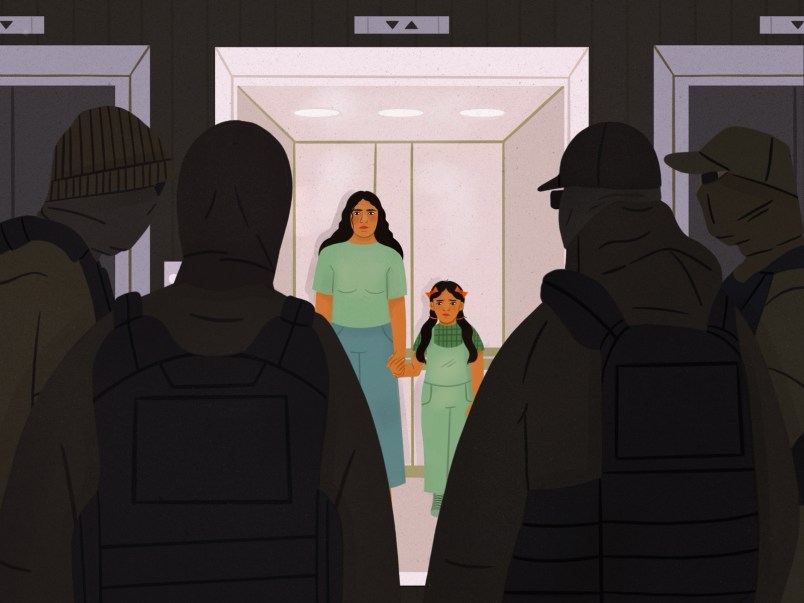
Asylum allows people who face certain demonstrated conditions that preclude them from returning to their home countries, including oppression and prejudice, to obtain lawful permanent residency. SIJ offers the same to people under 21 who have been abandoned by at least one parent. While these programs have continued under Trump, applying has become trickier. And migrants seeking this relief are no longer protected from deportation during their legal proceedings. Both of these pathways to a green card can lead through the courts in Manhattan where hundreds of migrants have been taken from the halls by masked agents after showing up for their hearings and check-ins.
India, an intern at the welcome center, is helping to establish a trauma-informed “collective support” group for immigrants.
“For some of these guys, I think they know that this is a safer place,” she said. “No place is safe, I think, at this juncture, but they know that they can come there and they can trust the people who are coming every week.”
India, a dual degree graduate student at Union Theological Seminary and Hunter Silberman School of Social Work pursuing a Master in Divinity, said she heard about the center through word of mouth. She noted that this is a moment when many are wondering where and how they can resist the Trump administration, and said she has been heartened by what she has seen with the grassroots efforts to assist migrants in New York.
“There are so many people who care so deeply about this and so many folks who kind of stumbled into it,” said India. “Often, I hear people being like, I don’t know how to help this situation — whatever it might be that the administration is currently fucking up in our country. … You just have to talk to people about it and see how other people are plugging in around it. … I’ve just been really impressed by how deep this network goes.”
The volunteer at the welcome center said they believe in a philosophy based on “radical hospitality, and our welcome, and our embrace of the community.” That means that though the facility is run by a church, the immigrants aren’t subject to any Christian proselytizing. The volunteer contrasted their approach with the brand of Christianity espoused by Trump and his MAGA movement.
“The Christian right, the Christian nationalists, they tend to focus on, like, the Old Testament or Paul. They skip right through the Gospels and Jesus,” the volunteer said. “They love Leviticus, right? But they don’t so much love when Jesus says, you know, feed the hungry, and turn the other cheek, and love your neighbor as yourself.”
India, who is an aspiring Unitarian Universalist minister, noted the few direct commandments actually attributed to Christ centered on loving God and an order to “love everyone as your neighbor.” To her, the welcome center fits strongly with these Christian ideals.
“I think if you are a Christian who really deeply believes in the acts, and works, and life of Jesus, then you would take that really seriously and serve the people who are around you directly,” said India.
Much of the efforts to welcome and assist migrants underway in New York City grew out of the Sanctuary movement, which emerged in the 1980s and included over 500 churches and synagogues. That movement was based on decentralized immigrant-led assistance. It led to the establishment of legal clinics, welcome centers, and official sanctuary cities where local governments declined to cooperate with federal law enforcement. A second wave of the sanctuary movement emerged amid rising anti-immigrant sentiment and associated policies during the mid-2000s. In Trump’s second term, this brand of activism and advocacy is once again surging to the fore.
The Undocumented Underground in New York also carries clear echoes of the 19th century abolitionist movement to end slavery. Both phenomena are heavily rooted in the city’s churches and synagogues. In fact, some of the same spaces that played key roles in that historical era have now sprung back into action to support migrants including Plymouth Church, whose first pastor was the famed abolitionist Henry Ward Beecher.
“No place is safe, I think, at this juncture, but they know that they can come there and they can trust the people who are coming every week.”
India, an intern at the welcome center
Rev. Juan Carlos Ruiz is the pastor at the Lutheran Church of the Good Shepherd in Brooklyn. He was involved in the initial wave of sanctuary activism and later became a co-founder of the New Sanctuary Movement. In a conversation with TPM last month, Ruiz said he came to the U.S. as an unaccompanied minor from Mexico in the 1980s. His family had been among the campesinos — seasonal workers who regularly crossed back and forth. After being devastated by hyperinflation in Mexico, Ruiz’s parents once again journeyed north. He followed them.
“I became part of this river of undocumented, people living in the shadows of a society that — it’s evident today — that clearly doesn’t want us, or deems us as disposable,” Ruiz said.
Ruiz was drawn to seminary and later the priesthood because of what he describes as “the power of faith to organize the people. For him, the church provided a platform and a way for “the common folk to really tap into … imagination and create different worlds for themselves.”
“I fell in love with the power of the word,” he recounted.
Ruiz ultimately obtained citizenship. However, that time in the shadows defined who he is today. Ruiz said the eight years he spent looking over his shoulder for the “migra” is still “very much present” and helped cement his belief the church should be a “sanctuary space.”
“The church for me was that place, you know, that protected me — not only protected me, but in a very militant way, kind of upheld my dignity and my sense of self and my ties to a larger body,” he explained.
As a pastor, Ruiz said he has been involved with “at least a thousand” migrant cases. His work has included participating in trainings, accompanying people to court, and working with pro se legal clinics that provide migrants with assistance representing themselves in immigration court. He also explained that there is a “corridor” of Brooklyn churches that are part of rapid response networks and are willing to open their doors in the event of an ICE raid.
Despite all of this activism and preparation, Ruiz said living through this first year of the second Trump administration has been daunting. He has seen people struggling with a combination of crushing poverty and fear of deportation. Ruiz noted the situation goes beyond Trump and said he sees it as part of a larger “violent economy” that is willing to exploit undocumented laborers.
“It’s cringingly painful, sad, and discouraging,” Ruiz said. “We see the immigration stuff as the point of the spear that is really deteriorating our democratic humanistic values, that turns people into their worst selves, and that drains resources from our communities.”
Like many of the activists and advocates who spoke to TPM over the past two months, Ruiz is also worried the situation in New York could get worse. Along with ominous proclamations from Trump’s “border czar,” those concerns are based fears the White House may lash out following democratic socialist Zohran Mamdani’s victory in the city’s mayoral election last month. Trump had a cozy, cooperative, and complicated relationship with Mamdani’s predecessor, Eric Adams. The president’s initial interactions with the new mayor have included a mix of in person friendliness and sharp political attacks on social media.
Nevertheless, as we sat at his church, Ruiz said he is keeping the faith. For him, continuing to serve the migrant community helps give him strength to keep working.
“There is a fire within us that is fed day by day as we keep practicing and developing the muscle of compassion and love,” Ruiz said as an organ played in the background. “That will pull us through.”



The Christian Right absolutely gets off on the opportunity for social murder. They tut-tut when LGBTQ people here complain about unsafe conditions, saying “we don’t throw gays off the tops of buildings like [X country], so what are you complaining about?” Then they deport asylum seekers to countries where they know they’ll be arrested or lynched. And they fan the flames by proselytizing overseas with violent, hate-filled interpretations of Christianity.
I’m looking for ways to donate to these organizations. Can you provide links?
That seems like it might be dangerous for those organizations, in the current climate.
How do we get around that which they don’t want us to get around? Seems like it’s going to hard unless you’re local, and with the flood of hired informers and thugs that ICE is now able to pay for, that won’t get any easier.
I’m conflicted about this. My child is in the US. Legally. While it’s great to address this, im afraid of what this could lead to.
Breaking the law is not a good idea. They will get you.