

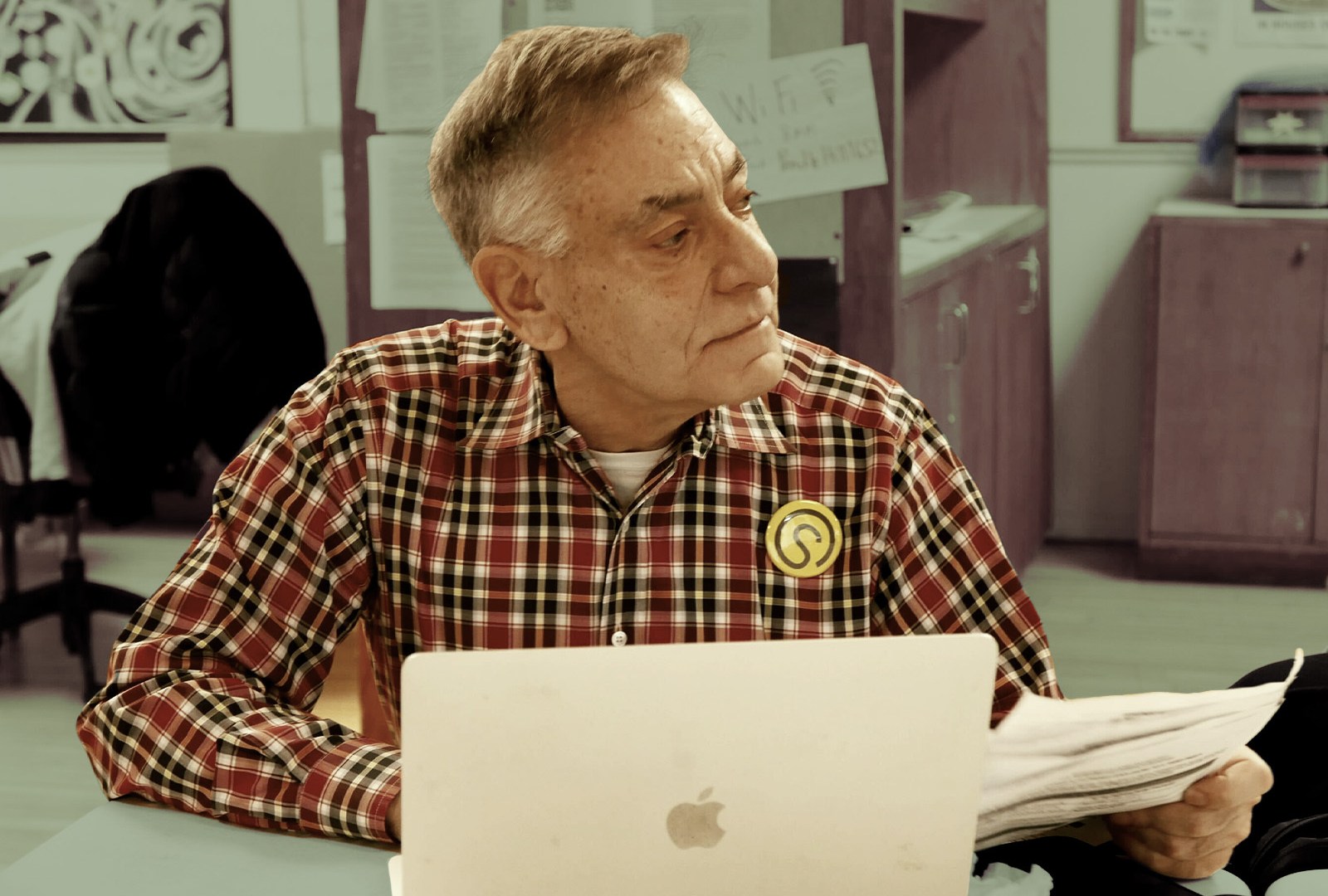
At his clinic, John Sirabella is a hard man to talk to.
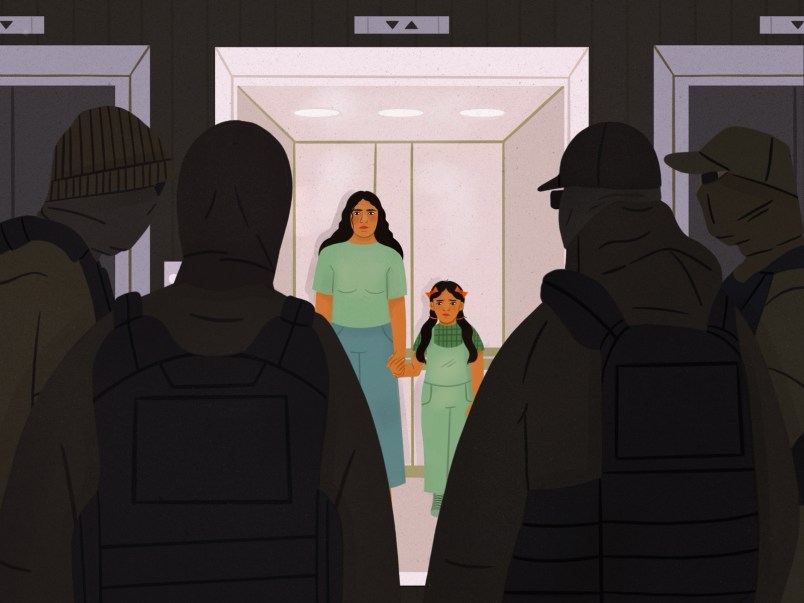
On a recent evening, in the back of a cavernous church basement, he led a training for over two dozen people gathered on folding chairs. Translators and volunteers sat at rows of tables. The session was dedicated to helping immigrants navigate the intense scenes in the Manhattan courthouses where masked Immigration and Customs Enforcement agents have taken to snatching people who show up for scheduled hearings and routine appointments.
After Sirabella ran through his presentation and encouraged people to sign up to help with multiple programs, one volunteer asked, “Where is your need greatest?”
Sirabella explained that his top priority is assembling a team of multilingual volunteers who can reach out to immigrants they have encountered on their days acting as observers and escorts in court.
“My goal, my vision is that everyone we’ve met in court since March is notified; they know we’re here, we’re open, and we’re ready to support them,” Sirabella explained. “Whether they choose to go to us is up to them.”
He is particularly eager to recruit Spanish speakers to spread the word about the clinic.
“People are really terrified, getting a phone call from a stranger,” he said. “They think it’s ICE, so it’s vital to have someone who can call them in Spanish or text and tell them to come here and get help.”
Sirabella is a retired marketing executive from Brooklyn who volunteers with the New Sanctuary Coalition, an organization that was founded in 2007 with the goal of giving immigrants tools to lead their own advocacy and navigate the legal system. Along with leading the weekly clinic, Sirabella also plays a key role in the group’s court accompaniment program, which provides in person support for immigrants as they face the masked agents in Manhattan’s courts.
“I looked for some way of — not serving meals or something — but really helping people where rubber meets the road,” Sirabella said in an interview.
During this second Trump era, NSC has become a key part of New York City’s Undocumented Underground, which includes other advocacy organizations that are running legal clinics and court watching efforts. In churches and meeting rooms around the city, networks of activists and advocates are engaged in the painstaking, mundane work of untangling the cases of thousands of immigrants caught up in Trump’s mass deportation machine.
Sirabella said he “sort of fell into” the role of heading up the NSC’s legal clinic because he was a member of a church that had an optimal space. The clinic is a key engine behind the group’s work escorting migrants in court and trying to release those who have been detained. Inside, volunteers are trained to participate in accompaniment. They also provide ongoing help with cases and give migrants resources to represent themselves. NSC refers to the people they work with as “friends.”
“We’re here to serve them,” Sirabella said.
Throughout the night I watched him at the clinic, Sirabella was at the center of a quiet whirlwind, jumping between trainings and answering questions about a steady stream of immigration cases. He refers to the weekly scene at the clinic as “fluid yet orchestrated chaos.”
As with many of the stories in this series, I agreed not to identify the specific location of the church or the exact day of the clinic since many of the migrants who visit there face the threat of detention and deportation. I also granted anonymity to some of the volunteers involved in these programs.
Sirabella explained that the legal clinic typically draws 30 to 40 volunteers each week. NSC also has another weekly meeting that includes training and counseling for migrants. During my visit to the church, only a handful of immigrants were present. Many of the volunteers meet with those they work with privately and bring their documents and questions to the weekly events. Sirabella said the group is trying to “beef up” the number of migrants who seek help in person.
“It’s really a scary time and people are afraid to trust people,” he said.
After Sirabella wrapped up his briefing on court accompaniment, a woman named Sarah began a training on how to file motions to request a virtual hearing. NSC volunteers assist with those filings to help migrants keep their efforts to obtain legal residency alive without facing the chaos in the courts downtown.
“Right now, ICE is at the courts, waiting outside the rooms, and taking people from the halls,” Sarah said. “They’re basically extrajudicially taking people. No one knows who or why. It’s very terrifying for our friends, and there’s no oversight of detention conditions.”
As Sarah continued, Sirabella began doing laps around the basement. For the rest of the night he was on the move. People grabbed him to talk about individual cases. Others sought his advice on strategies for using Google Translate to communicate with friends. At points, he stopped and called out to the room to encourage people to sign up for Signal chats and to note which trainings they’d received on various attendance sheets. One group of three women pulled him aside and explained that they were all attorneys.
Sirabella stressed that they should always make clear they are a “volunteer” and “not acting as a lawyer.” NSC has forms they provide to friends that detail this distinction. It’s an important one to avoid mistaken impressions, to protect the organization from lawsuits, and to ensure the individuals working with them have the opportunity to continue representing themselves before the courts.
As Sirabella went over this with the trio, he was pulled away by a volunteer who brought over someone who spoke multiple languages. He quickly went with her to another corner of the room where people were working on plans for the outreach effort.
“This is our polyglot of the day,” Sirabella said as he steered the new volunteer into the group.
Sirabella was then corralled by someone who introduced him to a Colombian man who was holding an accordion folder overflowing with documents. Through a translator, Sirabella learned the man was looking for help on an asylum application. Sirabella paired him with a Spanish- speaking volunteer before continuing his rounds of the basement.
The next person to grab Sirabella was a man named Mark who was leading a group working on issues related to Special Immigrant Juvenile status (SIJS), one of the major tools advocates use to help young, eligible migrants obtain citizenship. Mark was wielding three different clipboards and had a bit of good news about a family’s case that had been disjoined.
“Their cases got put back together with the good judge that we want,” Mark said.
Someone else tried to pull Sirabella away. Mark grabbed his arm and drew him into a discussion about setting up a workflow for an operation focused on SIJ.
“Wait John,” he said. “You have to listen.”
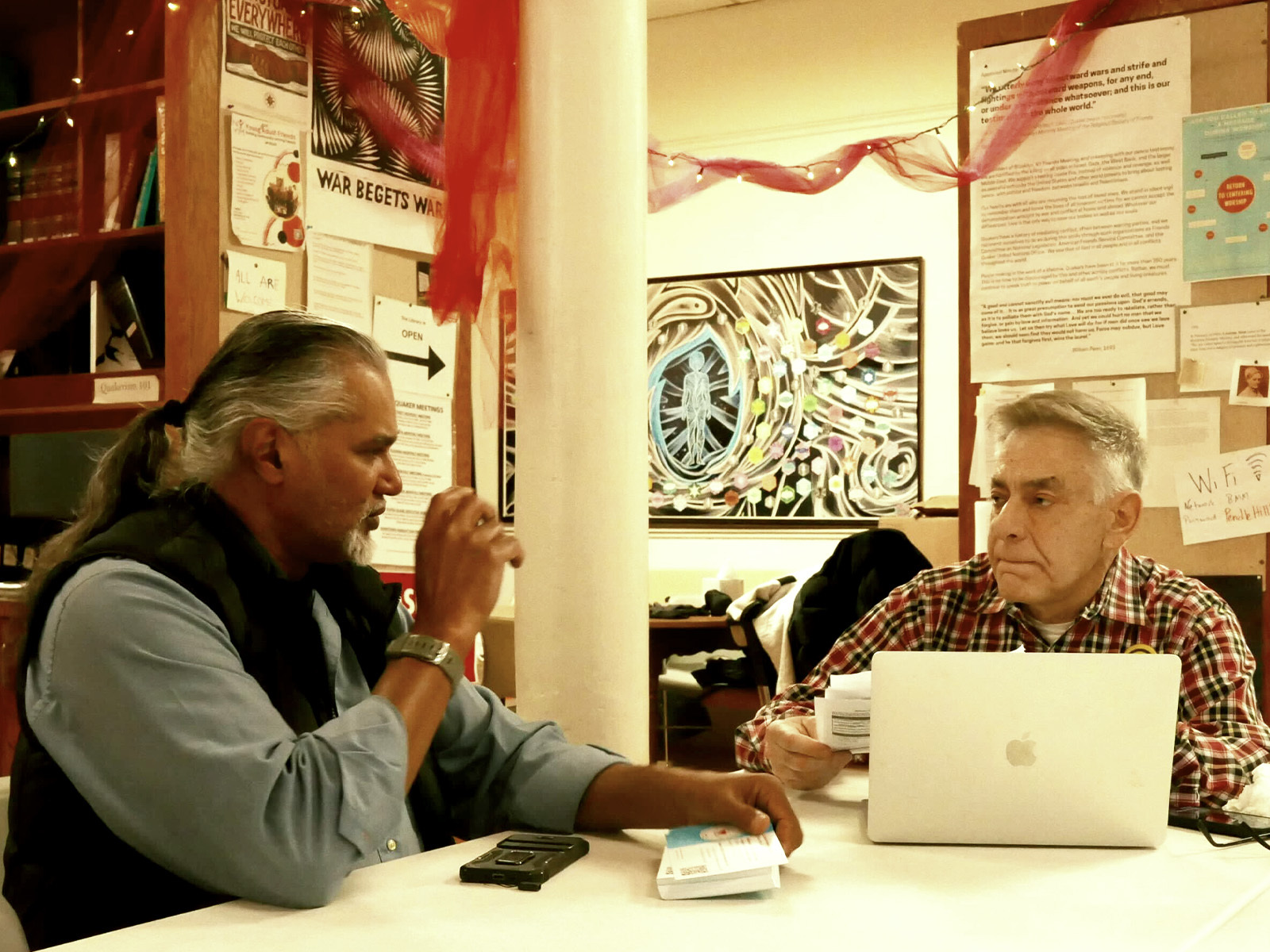
NSC and other church programs around the city including the “welcome center” featured previously in this series have relatively formalized SIJS effort. Some advocates have also relied on a loose network of activists who are helping with court paperwork.
One part of this effort is “NYC 4 All,” which came together largely based on happenstance and word of mouth. An organizer who helped form the group told TPM that it began to coalesce about two years ago as Republican leaders were dispatching buses full of migrants to the city. The organizer was bringing “van loads” of winter clothes donated from wealthier neighborhoods in Brooklyn to churches and shelters where the migrants were staying.
“One of the pastors heard me speak Spanish and tried to recruit me to do the legal help that they were trying to provide,” the organizer said. “I actually resisted because, you know, it’s a lot of work, and I’m retired, and I did not want to commit.”
That reticence faded when they saw the “crazy situation” unfolding at the shelters.
“Hundreds and hundreds of people were coming,” the organizer explained.
Eventually, they said about 40 volunteers were working on the project. At times, they operated out of a storefront provided by a local business. The group focused on helping people from eligible nations apply for Temporary Protected Status, which is available to individuals from countries that have been designated as unsafe due to factors including armed conflicts and natural disasters. As soon as Trump retook the White House in January 2025, his administration set to work eroding the program. While this effort has been met with some legal challenges, the administration has succeeded in ending TPS protections for multiple countries.
After losing TPS as an option, the NYC 4 All volunteers began to, as the organizer put it, “switch into gear for SIJS.”
“It’s a whole other set of laws to figure out. So it took our little TPS group a minute,” the organizer said, adding, “Most of our kids have, usually, a death, or have a parent who is abusive, or who has … stopped support, which is why they left and came here. … The other half that aren’t from abusive situations are orphans.”
Volunteers serve as guardians in the court process for youth who do not have one parent in the U.S. with them. They also work to help the applicant orient themselves.
“We help that kid navigate New York City,” the organizer explained. “Whether that means getting a driver’s license and an ID, or getting enrolled in school, or helping them get health care or whatever it is. We step in to kind of translate New York City to the youth.”
Since, as the organizer put it, “asylum is subjective” and based on an individual judge’s decision, they came to believe SIJS is “the easiest thing” for those who are eligible. However, like so much of the immigration process, it has become harder in the new Trump administration.
“Trump started charging the kids a $250 application fee. Where [would] they get that? God knows because they don’t have work authorization and he won’t give them work authorization,” the organizer said.
The Trump administration also directed judges to stop granting deferred deportation orders to youth who are in the process of applying for SIJS. The organizer laid out the trap this creates for these young migrants.
“So, the courts have declared that they’re abandoned. They come from horrible situations, they’ve got nobody, and they’ve got to come up with money from a job they don’t have legally,” the organizer said. “They’re exploited as food service delivery guys, or construction guys. … They’re exploited with bad working conditions, and low pay, and they have to come up with a fee, and they have to stay underground for five or six years until the visa shows up.”
Last month, a federal judge ruled that the halt on protections for SIJS recipients was illegal. However, in the wake of that ruling it is unclear whether SIJS reviews have actually resumed or whether the Trump administration will appeal.
TPM reached out to the White House with several questions about the SIJS process including why the Trump administration began charging the fee and why they had directed judges to stop granting deferred deportation orders. We also asked whether SIJS reviews have resumed and whether the administration plans to appeal the judge’s ruling. The White House press office referred all questions to U.S. Citizenship and Immigration Services, which reviews applications for SIJS and deferred action. USCIS and DHS, which oversees that agency, did not respond to our request for comment,
Along with providing eligible youth with mentors, NYC 4 All is raising money to cover the SIJ fee for applicants. Overall, the organizer estimated the group has worked on about 100 SIJ cases. The Welcome Center, NSC, and other organizations with similar operations are also working to cover costs for applicants.
Most of the volunteers working with NYC 4 All and other similar groups that offer assistance to migrants have no formal legal training. Lou, a self-described “ex-finance guy” who lives in the Cobble Hill neighborhood of Brooklyn, said he has been “deeply involved” in the group since early 2023. Lou focuses on helping people obtain work permits and SIJS.
“I was self-taught,” Lou said. “I’d just watch YouTube videos and figure out how to do it. It’s not that hard.”
While the volunteers say they have had little trouble learning the ropes of these processes, it’s another story for people who are unfamiliar with the system, do not speak English, and may not have resources for the fees or even a bank account.
“The logistics of it are just so fraught for them,” Lou said.
Multiple advocates who talked with me said legal organizations that provide pro bono aid to migrants are overwhelmed amid Trump’s mass deportation drive. That makes these volunteer efforts particularly critical. Advocates also said undocumented people can fall victim to predatory lawyers who charge exorbitant fees or abandon their clients.
“There’s a special place in hell for those people,” Lou said.
Lou stressed that while he can help with SIJS or obtaining an Employment Authorization Document, he recommends that anyone who has a complex case or is applying for asylum obtain a formal lawyer.
“I keep hammering people: get a freaking lawyer, get a lawyer, get a lawyer. Because I’m not that bright, man,” Lou said.
Overall, Lou estimated he spends about 15 hours a week working with NYC 4 All. Like many of the other volunteers there, Lou said he was motivated by the hardships faced by the migrants.
“They literally have nothing,” he said. “All they have is their character and their story.”
Back at the NSC clinic, during a rare quiet moment, Sirabella explained what motivated him to dive into the world of immigration advocacy and activism.
“I think part of what makes this country so great is this diversity. We’re a country of immigrants,” Sirabella said. “Also I was raised that … without the grace of God, that could just be me.”
Another man at the center of the action in the clinic was Ravi Ragbir, who is NSC’s executive director. Ragbir is a Trinidadian-American with long grey hair who has been through his own immigration odyssey.
He was convicted of mortgage fraud in 2001 and has since faced multiple deportation attempts, even after marrying a U.S. citizen. In 2018, during Trump’s first term, Ragbir was detained by ICE as part of what he and his family believe was retaliation for his activism. In January, on his last full day in office, President Joe Biden gave Ragbir a pardon for the decades-old conviction.
Ragbir told TPM his own experience has inspired his work with New Sanctuary Coalition where they “believe no one should be deported, and welcome everyone.” Ragbir said he knows that he might be “a target” again, but is undeterred.
“Who is not worried about facing retaliation? The thing is, when people are afraid of retaliation … they have won,” he explained. “I’ve always been a target for many years. But we cannot allow that to hinder or to delay our work.”
Like most activists and advocates who spoke with me for this series, Ragbir believes the volume and vehemence of ICE activity in New York is due to ramp up due to rumblings from Trump’s “border czar” and concerns the president might be eager to feud with the city’s new progressive mayor, Zohran Mamdani. Sirabella agreed the situation for immigrants in New York will likely get worse.
“Trump is really good in terms of declaring out front what he plans to do and he follows through,” Sirabella said. “They’re firing judges who grant asylum too frequently and they’re putting [military Judge Advocate Generals] in for judges. I think it is gonna get worse.”
While Ragbir said he thinks the immigration system “has always been horrible,” he does see a major distinction with Trump.
“What is different is the violence … the violence that is permeating his administration. If there is a difference, it’s that they’re willing to break the law to actually facilitate their agenda,” Ragbir said.





Matthew 25:40 “And the king will answer them, ‘Truly I tell you, just as you did it to one of the least of these brothers and sisters of mine, you did it to me.’”
Some of the thunder of this beautiful in depth piece will be stolen by the murder, mayhem and idiocy that occurred over the weekend, but this is a fantastic series worthy of Pulitzer consideration.
Thank you, TPM, and thank you Hunter Walker.
He’s pure stinking garbage:
He’s beyond vile. I hate him more with each passing day.
He’s the bride at every wedding. the baby at every christening, and one day (not nearly soon enough!) he will be the corpse at his own funeral.
I know that Donne warned us not to ask for whom the bell tolls, but this creature has directly caused so much misery it is difficult to believe the world will not be a better place in his absence.