

A few days ago I wrote about popular constitutionalism and Slate’s new podcast series on that topic. This is a critical civic topic because it is probably the only and certainly the proper path back from systemic corruption of the current Supreme Court and the broader problem of judicial supremacy. (If this is fuzzy or if it’s unclear what I’m talking about see that earlier post.) But what that Slate discussion quickly arrived at is that to have that kind of popular constitutionalism, the ability of the people to make decisions about what the U.S. Constitution requires or forbids, you need robust and functioning political parties. And one of the key features of American politics over the last 50 years is that parties really don’t exist anymore in the sense they did for upwards of a century and a half in American politics.




TPM’s own Hunter Walker has won a 2026 New York Press Club award for his seven-part investigative series delving into the impact of President Trump’s mass deportation agenda in New York, the U.S. city with the greatest population of immigrants, and which has seen the highest number of violent courthouse detentions.
Over two months in New York City’s federal courts, churches, and safe houses, Hunter spoke to more than 50 migrants, organizers, ICE agents and lawmakers, including then-mayor-elect Zohran Mamdani and Reps. Dan Goldman and Nydia Velasquez (D-NY). At the heart of the series are the New Yorkers, many of them volunteers, operating in secret to protect and serve their immigrant neighbors.
Read More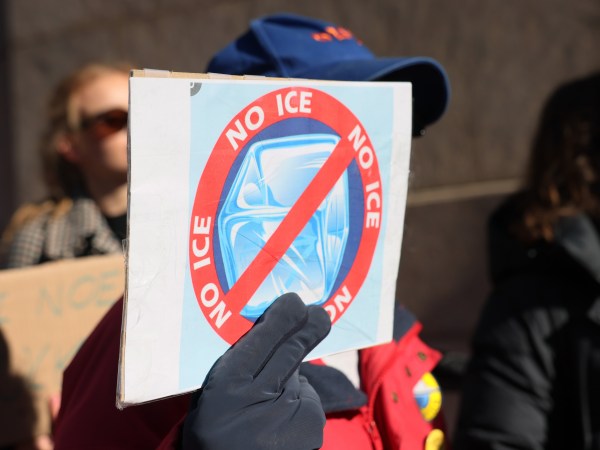


I frequently get asked what people can do to get involved or play some role in fighting for the future of their country — where to donate, what kind of activism has a real impact. Some people have always been activists. But many others aren’t and haven’t particularly wanted to be but now feel they have no choice. And yet the scale of the problem is overwhelming, and the range of organizations and movements calling on your time and money are almost equally so. Critically, if you’re semi-new to these things, you don’t want to find out you were wasting your time or at least not using that or your money most efficiently.
TPM is a news and commentary site, not an activism site. But at least here in the Editors’ Blog we’re not so finicky about that that we feel we can’t share our opinions, hopefully reasonably well informed and perhaps with additional reporting, about what is a good use of your time or money. So with that in mind, and after a friend suggested it, I wanted to do a series of posts on the idea of “What Can I Do?” And here I would love your participation, your suggestions via email. I have my own views of the matter but I certainly don’t have all the answers and, by design, I don’t get directly involved myself. So give me your ideas, and I will try to share my thoughts on practical ways we individually can try to save our country and, as I will explain in a moment, build a new one. What actually makes a difference and what is more like scattering seeds on the wind?