



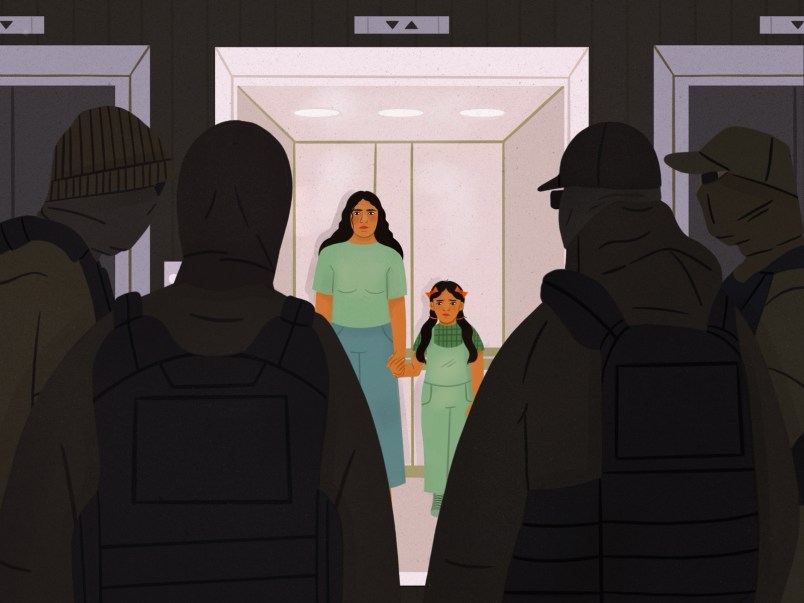
During President Donald Trump’s second term, dramatic raids staged by the Immigration and Customs Enforcement agency have become a part of life. We want to show you what that looks like up close and on the ground in one American city. It’s a story of fear, resilience, and resistance.
TPM has spent the past two months reporting on the effect of Trump’s mass deportation agenda in New York, one of the cities facing the prospect of a large-scale ICE invasion. We went inside the courts where Trump’s deportation machine is firing judges and snatching migrants from the halls. We walked those same corridors with masked agents and a growing network of volunteers, activists, and advocates who are determined to fight this new system. We also spent time with the immigrants who described the dangers that led them to leave their homes, the new fears they face in this country, and their drive to keep going despite these long odds.
The wave of ICE raids are part of the “bloody” vision for mass deportation that Trump promised as he campaigned to return to the White House. Since taking office, he has joined with the Republican-controlled Congress to build up a deportation and detention infrastructure through a $170 billion spending surge to the ICE budget. That cash is aimed at removing one million migrants from the country each year. While the actual annual number of deportations is well below that goal, it is higher than it has been in decades. The number of people in ICE detention has also increased dramatically, soaring to an unprecedented 65,000.
While the Trump administration has maintained that its immigration efforts are focused on removing the “worst of the worst” from the country, the data shows that is simply not true. An analysis conducted by the Marshall Project that was based on documentation obtained from ICE through a Freedom of Information Act request showed that, in the first five months of this year, two thirds of the over 120,000 people deported from the U.S. had no criminal convictions at all. The Marshall Project further found that most of those deported with criminal records had committed minor offenses and only 12% of them “were convicted of a crime that was either violent or potentially violent.” A CBS investigation found that nearly half of the migrants in ICE detention as of Nov. 2025 lacked any criminal charges or convictions. In other words, rather than major criminals, the majority of people targeted by Trump’s deportation complex are simply members of the community.
For much of the last year, Chicago and Los Angeles played host to some of the most prominent ICE raids and counterprotests. More recently, rumblings from Washington and the election of progressive mayor Zohran Mamdani have left many activists and immigrants in New York expecting they will be next and preparing for the worst. The first sign those predictions might be coming true came in late October when the city had its most high-profile immigration enforcement sweep so far as personnel from five different federal agencies descended on Canal Street in Manhattan’s Chinatown neighborhood to round up street vendors. Over the next day, during widespread protests, migrants and activists were detained.
In the weeks since the Canal Street raid, TPM has surveyed the fallout. We found deep fear, but also something less expected.
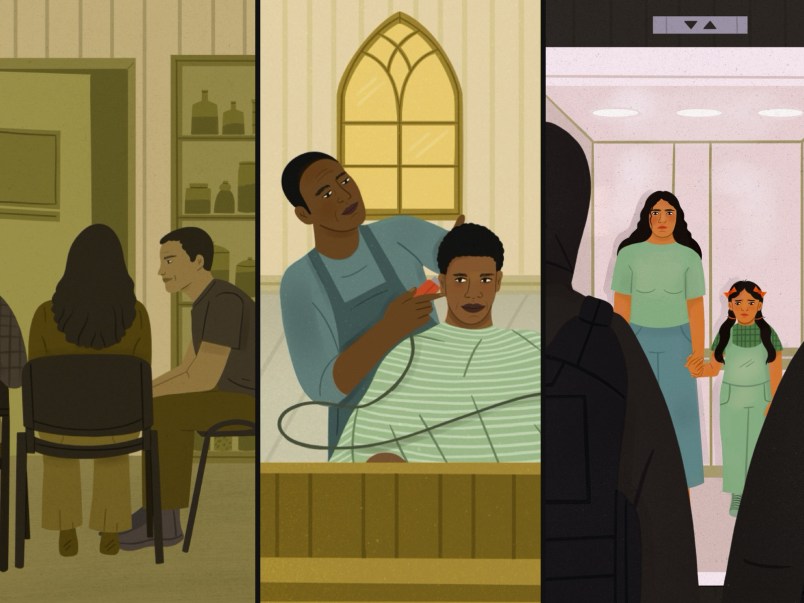
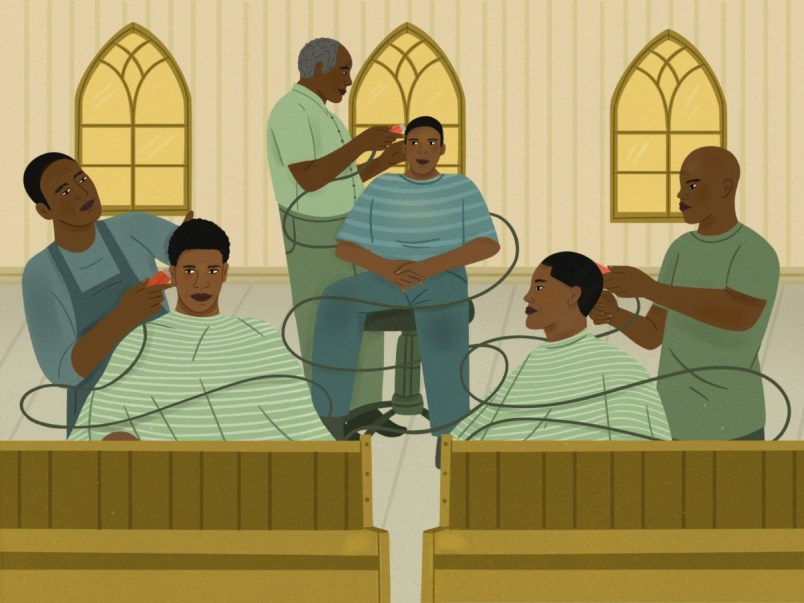
Across the city, there is something of a modern underground railroad with programs offering services to migrants including food, clothing, and free clinics that provide advice and assistance with legal proceedings. Volunteers are also accompanying migrants as they face the gauntlet of masked ICE agents waiting in the halls of the courts downtown.
Due to the fear of raids and detentions, many of the programs offering services to migrants have stepped up their security measures. They guard their doors and do not advertise their locations. As we gained access to these spaces and spoke with the migrants and activists inside, we often agreed not to use peoples’ real names or to identify precise locations.
In the coming days, we will share a series based on this reporting, which is based on conversations with dozens of sources. It’s a deep look at some of the extralegal excesses of the current administration and the lengths people are going to fight back.




i remember the underground from the 60s and 70-s,quite a few passed thro’ KY where i was living, at the time
So, the people who are left are… the worst of the worst. Trump is really engaged in a recruitment drive, leaving the “best of the worst” here to do his bidding.
CATegorically the “worst of the worst”, clearly involved in some kind of felineous activity.
Seriously, all the best New Year’s wishes for the resistance’s increased effectiveness and activities being conducted (sorry, can’t help myself) underground. Hopefully, this TPM series will encourage more of the same as, unfortunately, it continues to be more and more necessary. Still waiting for Congress as a whole to get a clue.
Purrfect : - )
Putin and Trump are setting up Ukrainian president Zelensky today to advance Russian aggression: