


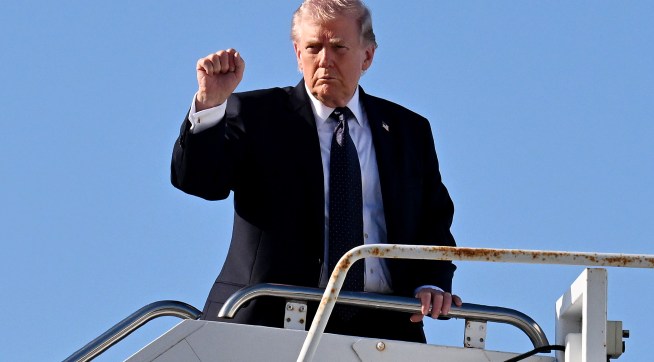
Yesterday, I wrote that President Trump was moonwalking out of his war in Iran. Then later that afternoon and last night he made a series of highly bellicose and bombastic statements that the war is only getting started, and he may destroy Iran altogether as a people, as a nation.
Today, Defense Secretary Pete Hegseth I think told us the story because now he’s bringing his daily briefing in line with Trump‘s idea that this war is pretty much over. A couple more hard-core days and it’s gonna be done. So which is happening here? I think we can really see by the oil futures. Oil went up dramatically over the weekend. I believe it briefly got up to over $110 a barrel and then it fell yesterday when Trump made these statements that the war is pretty much over we’re gonna be wrapping it up, and in anticipation of G7 nations releasing oil reserves. Now today it’s continuing that and it’s fallen significantly below $80, so investors think that Trump is going full taco here i.e. Trump always chickens out.
Join
The Josh Marshall Podcast featuring Kate Riga heads to Austin, Texas to check in with our friends at Texas Observer. Tickets are on sale now!
There’s so much going on in Texas right now that the TPM team decided to come down to sort through it all.
Can James Talarico become the first Democratic senator to represent the state in more than 30 years? What’s the latest political fallout from the Tony Gonzales affair scandal? How will Republicans’ messy redistricting scheme impact the midterms?
Come hang out with us on Wednesday, April 8 at the Alamo Drafthouse as we dig into some of these questions. If you are an Prime Member or an Inside Member, you get discounted tickets. If you missed the email with the access code, feel free to email me directly at Joe at talkingpointsmemo dot com and I’ll help you out. (If you’re not a member, well, now is the time, friend. Now is the time.)
The night will begin with a conversation between TPM founder and editor-in-chief Josh Marshall and the Observer’s politics editor, Justin Miller. Then, D.C. reporter Kate Riga and Josh will record a live episode of The Josh Marshall Podcast featuring Kate Riga.
After the pod, there will be an audience Q&A and then we’ll wrap up the night in the bar.
(And don’t worry, the evening doesn’t have to be all politics. You can ask Josh about his favorite kind of wood or if Kate thinks her Washington Mystics will ever be good.)
Get your tickets here. Not a member? Sign up here.
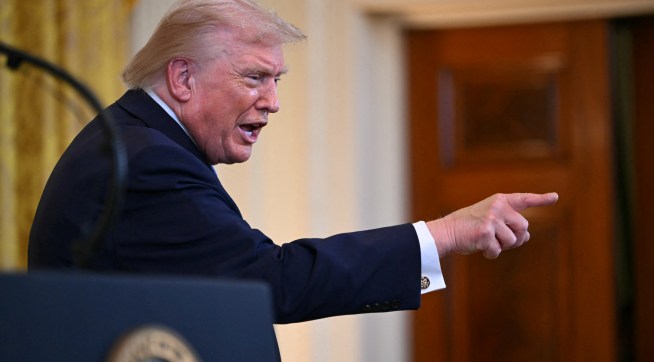
Yesterday UN Ambassador Mike Waltz announced that the US was moving ahead rapidly to achieve all its war objectives which he listed as 1) destroying Iran’s missiles, 2) eliminating its nuclear program and 3) ending its ability to do terrorism. So much for regime change, it seems and also unconditional surrender, both of which don’t seem remotely in the ballpark any time soon. That was the trial balloon. Then today President Trump followed up on this by declaring that the war is actually pretty much over already.
He told CBS News’s Weijia Jiang that “the war is very complete, pretty much” and that the US is “very far” ahead of the initial 4 to 5 week timeline. “The war is very complete,” he said in case there was any ambiguity about his words. Indeed, in his vaguely genocidal way Trump seemed to implicitly take regime change off the table by threatening either regime change or perhaps genocide if Iran got “cute.”
“They better not try anything cute,” he told Jiang, “or it’s going to be the end of that country.”
Read MoreThis is week two of this year’s Annual TPM Membership Drive. We started to get traction at the end of last week. Today we really need to keep that going. If you’re not a member, please consider joining today. This is our lifeblood. It’s what we need to keep doing this work and, if possible, expand our reach going forward. If you’re a new reader or maybe your membership lapsed, we need you back. Just click right here. If you’re on the fence, we’re even offering a 25% discount.
This week I’m going to be telling you some of our plans for the coming year and how you and our growing community figure into those plans.

Sometimes I write a post where I don’t know the topic well enough to discuss it expertly but I understand it enough to point to the outlines of the debate and where to find more information. This is one of those posts. Here, I want to discuss drones and missiles deployed by Iran and the expensive, high-tech weapons the U.S. and its allies use to shoot them down. This applies right now in the Persian Gulf where Iran is using a strategy of “asymmetric attrition.” But it would apply in even more complicated and hard-to-address ways if and when the U.S. got into a major conflict with, say, China over Taiwan. It’s that basic challenge of asymmetric warfare for a Great Power like the United States: the U.S. relies on often quite effective but very expensive and hard to replace weaponry. Iran’s clunky but effective drones cost in the low five-figures to produce, while U.S. missile defense tech can costs millions for a single shot.
Join
In discussions of modern wars, Americans obsess about “exit strategies”. How do you avoid getting “bogged down?” How do you know when the mission is finished? How do you avoid “mission creep?” These are very much Great Power questions. They’re all questions you ask about what are fundamentally wars of choice. They’re framed as questions of duration and sustainability, questions a Great Power asks when there are likely multiple draws on blood or treasure in various parts of the world, fears of over-extension and over-commitment. Other countries don’t have the luxury of these kinds of questions; it’s built into the Great Power equation. Ukraine has no “exit strategy.” They’re being invaded. They’re fighting to control their own territory and sovereignty. In a way, at least if you place yourself in the world of Greater Russian nationalism where Vladimir Putin and his entourage live, Russia doesn’t have one either. They’re trying to reclaim “their” territory or something between a national and imperial possession. They’ll fight until they get it.
But talk of “exit strategies” is really a way of asking what the goals are that led you to start a war in the first place. If the goal of your military action is clear, your exit strategies should be straightforward. Indeed, you shouldn’t need a “strategy” at all. When your goals are met, you’re done and you leave. Or at least you stop using military force. If you know what your goal is, you fight until you’ve a) achieved your goal or b) realized through battlefield reverses that your goal is unattainable. If your goal is unclear, all the inherent forward momentum of superior military force drives you forward.
Read MoreWe live in a time when those who rule over us mix malevolence and absurdity. We have an example of this in this Politico article. White House Chief of Staff Susie Wiles is telling advisors to “bring ideas to the Oval Office to lower gasoline prices in the wake of the U.S. attack on Iran.” One of the oil executive sources for this story says the White House is “looking under every rock for ideas on improving energy prices, especially gasoline prices.” Trump’s Energy and Interior Secretaries are “are getting screamed at to find some good news” on bringing down oil and gas prices.
Read MoreWe just crossed our first threshold in our Annual TPM Membership Drive. We got off to a slow start this week. But our pace is starting to increase. More than a hundred new members now since we kicked off. If you’re not currently a member or if your membership lapsed, please consider signing up right now. Just right this moment. I know about delaying or “I’ll do it later.” It helps so much if you take 90 seconds, click here and just join us. You’ll be so happy you did.
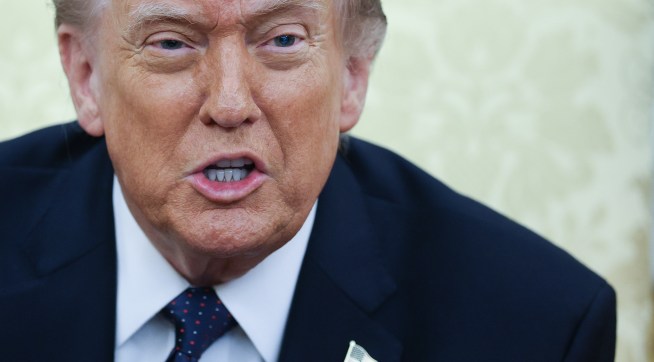
A short time ago I got email from a TPM reader with a version of this question: Josh, are you sure there’s going to be a November election? Because everything I’m seeing tells me they don’t think there are any consequences, even political consequences, coming from any of this. It wasn’t a challenge so much as a question: are you sure? I have no way to predict the future. But yes, I am as confident there’s going to be a November election as I’ve ever been. I’m not trying to get in an argument about that. This is my opinion. You might have another.
A couple months ago, I said that we were starting to see a pattern. As Trump grew less popular and less powerful at home, he would need to compensate to maintain his psychic equilibrium. He’d lean more and more into the presidency’s prerogative powers that are untrammeled and unrestrained regardless of what’s going on at home or how much support he has. He’ll be increasingly aggressive and violent in those realms of power as he becomes more constrained and limited in others. In Trump’s world, there is dominating and there is being dominated. For him, the latter is a psychic death. So leaning hard into these prerogative powers where a president is, in effect, all powerful amounts to a kind of grand and bloody self-care.
Join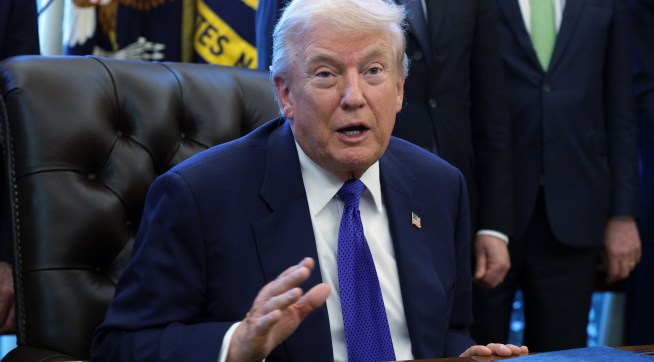
The Friday jobs report just came in and it recorded a major downward miss. The U.S. economy lost 92,000 jobs in February and unemployment ticked up. It’s always important to remember that these reports are fairly noisy on a monthly basis and, especially recently, they’ve been subject to major revisions. Having said that, a lot of politics and economics commentary for the last month or two has been based on other single-month reports which are ripe for narratives but don’t necessarily tell us a lot. The political calculus is perhaps clearer than the economics one. The White House needs a good macro-economic trend to come into focus pretty quickly. Because from an electoral standpoint you need several months of favorable or at least “moving in the right” direction numbers in order for those shifts to show up in public attitudes.
Read More