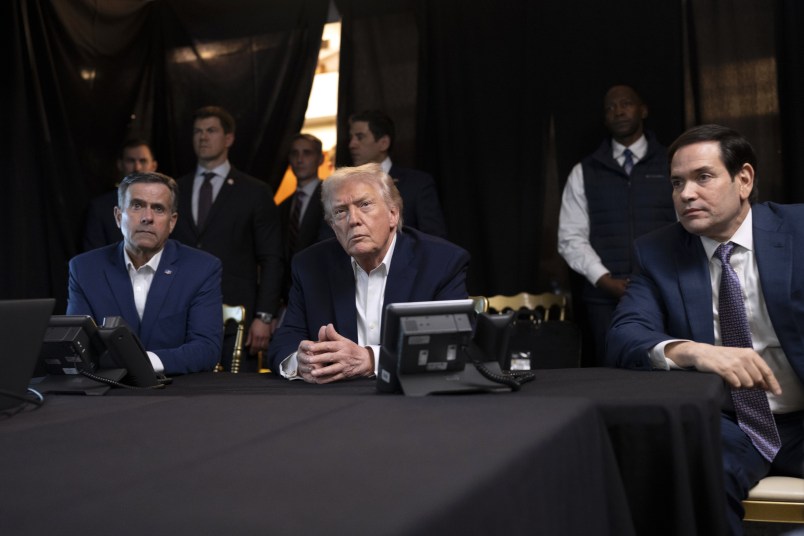
PALM BEACH, FLORIDA - JANUARY 3: (EDITOR'S NOTE: This Handout image was provided by a third-party organization and may not adhere to Getty Images' editorial policy.) U.S. President Donald Trump, CIA Director John Rat... PALM BEACH, FLORIDA - JANUARY 3: (EDITOR'S NOTE: This Handout image was provided by a third-party organization and may not adhere to Getty Images' editorial policy.) U.S. President Donald Trump, CIA Director John Ratcliffe (L) and Secretary of State Marco Rubio monitor U.S. military operations in Venezuela, from Trump's Mar-a-Lago Club on January 3, 2026 in Palm Beach, Florida. President of Venezuela Nicolas Maduro and first lady Cilia Flores were brought to New York on Saturday after being captured by the U.S. military in Caracas. They are expected to face federal charges related to drug trafficking and working with gangs designated as terrorist organizations. (Photo by Molly Riley/The White House via Getty Images) MORE LESS

On Saturday, a friend and I were comparing notes on the events following the U.S. raid on Venezuela. Setting apart all the questions about just what the White House is trying to accomplish in Venezuela, my most basic takeaway from the events of the last week is this: as President Trump’s popularity and power erode domestically he will respond with more aggressive assertions of power in those areas where his executive and prerogative authorities remain unbounded, where his domestic popularity matters the least. (This applies most obviously, though not only, to his military powers overseas.) Anything else wouldn’t be consistent with Trump’s character, which is inflexible and unchanging, though perhaps hardening with the progress of advanced age. The current situation between the U.S. and Venezuela shows how jagged, unstable and uneven this may become.

Want to keep reading?

Join and get The Backchannel member newsletter along with unlimited access to all TPM articles and member features.