A Far-Right Meltdown
It usually doesn’t take a lot, but Erick Erickson managed to do it this week: cause the far-right to melt down online.
He published an article on his Substack called “The Midwestern Führerbunker Driving the Right Off the Cliff.” It’s Claude-assisted writing, but it gets at something that we at TPM have been covering for a while: the effort, out in the open and behind closed doors, to steer the Republican Party as far to the right as it can go, even if means breaking the steering wheel and crashing the car in the process.
Erickson built the piece around an Indiana shampoo magnate named Charles Haywood. In retirement, Haywood has become an online book reviewer and the proprietor of a website in which he calls himself “Maximum Leader.” He’s also gotten involved in politics: he contributes money to the Claremont Institute, and promotes a vision of a future, shattered America in which he can become a “warlord.”
Haywood was a founding member of the Society for American Civil Renewal (SACR), as Erickson notes in the piece. SACR is a men’s only, Christian-only group with members that include the head of the Claremont Institute, venture capitalists, and GOP donors. It describes itself as aiming to place its members in influential positions in government and business, per internal documents I obtained in 2024.
This goes to the core of the argument that Erickson is making: that a group of white men, some of whom orbit Vice President JD Vance, are covertly inserting themselves into the conservative movement in order to propagate their white nationalist, antisemitic, and Nazi sympathies.
Erickson’s piece got attention. The Free Press republished a version of it; more moderate conservatives like Jonah Goldberg boosted it.
Perhaps predictably, this caused a blowup on the online right (many SACR members are extremely online, a fact that’s perhaps not unrelated to their politics). Many of them immediately saw Erickson’s article as part of a broader conspiracy by anti-Trump forces within the Republican Party. Nate Fischer, a venture capitalist and SACR member, described it as an indirect attempt to “smear Vance supporters, and line up behind a Vance opponent to try to wrest back control of the party.”
Andrew Beck, a SACR member and communications strategist, similarly described it to me as an attempt to sully a pro-MAGA Trump successor — he named Vance, Marco Rubio, or Pete Hegseth — by association to SACR and other notables like Nick Fuentes that Erickson describes as one large network in his piece. On X, he noted that while Haywood had provided the “seed money” for SACR, he wasn’t the entire group.
“This was and is a local thing of Christian men building relationships with each other and participating in civic duties in order to effect broader change from the ground up,” Beck told me. “For it [to] be framed any other way is either bad faith or an AI hallucination.”
You may think a men’s-only, Christian-only group, whose membership remains secret but whose identified members are all white, with ambitions to shape society by filling the ranks of a future (or current) government constitutes something more than grassroots organizing. Who am I to decide.
But the SACR guys are on to something: as Trump declines in popularity and the consequences of far-right government seep into everyone’s daily lives, they may not like how people react.
A Fool Determined to Believe a Lie
Last week, I somewhat inexplicably assigned myself the task of listening to a two-and-a-half-hour conversation between right-wing YouTuber Nick Shirley and Twitch streamer ConorEatsPants (i.e. Charlie Rose for Gen Z. Just kidding, but also, maybe). The breakout clip from the conversation, particularly for critics of Shirley, was a trivia segment where Shirley badly misspelled the word “discipline”; didn’t even attempt to spell “colonel” (though he did recognize it as a homophone without identifying it as such); and guessed that mixing the colors blue and yellow might make orange.
In his viral video purporting to expose Somali fraud in Minneapolis — a key part of DHS’s justification for amplifying Operation Metro Surge, which lead to the killing of Renee Good and Alex Pretti — Shirley took particular delight in the fact that one of the daycare centers he was accusing of fraud had misspelled “learning.” His own struggle with spelling, then, was an irony too delicious for his critics to ignore. The clip added fuel to critics’ charge that Shirley isn’t particularly bright, thus making him an easy mark for the Trump administration to enlist in helping spread their propaganda. It didn’t hurt that it was circulating the same week Shirley was scheduled to speak at both Harvard and Yale University.
For a 24-year-old YouTuber who literally can’t spell “discipline,” Shirley has already managed to have quite an impact on American politics. If you’re unfamiliar with his work, he is best known for making videos where he confronts members of immigrant communities in blue cities with various fraud accusations, almost inevitably resulting in DHS taking action against these communities (TPM’s Josh Kovensky explained the symbiotic relationship of right-wing influencers like Shirley and DHS back in April). In his speech to the Harvard Republican Club, Shirley spent a good deal of his introduction listing out his accomplishments, primarily as a rebuke to criticism that he doesn’t belong at a storied institution like Harvard. Cited among these accomplishments were the claims that he “helped save America billions of dollars from fraudsters”; “created the most legislatively impactful video in American history (30+ bills related to fraud since MN)”; grew “one of the largest independent journalist platforms on the internet”; sued “California for violating the First Amendment and creating a law directed to stop [Shirley] from exposing their corruption”; and got “a sitting governor who was almost VP to drop out of politics.”
Whether you view these as accomplishments or specious boasts from a wannabe journalist is almost immaterial to the reality that Shirley’s videos are having an effect, and that his role (witting or not) in the Trump administration continues to grow. In less than a year, Shirley has participated in a White House roundtable on antifa hosted by President Trump; been awarded Citizen Journalist of the Year at an event held at Trump’s Mar-a-Lago; has met with and been endorsed by JD Vance, who is leading the newly established “Task Force to Eliminate Fraud”; has met with and been commended by Commerce Secretary Howard Lutnick; and this summer worked with CMS Administrator Dr. Mehmet Oz in an attempt to find fraud in New York City senior daycare centers. Meanwhile, his YouTube subscribers have swelled to over 2 million. In concluding his list of feats, Shirley acknowledged that he may misspell a word from time to time before smugly questioning what his critics have accomplished.
Well, I, for one, have watched all two and half hours of a video where Shirley and ConorEatsPants play Fortnite and engage in desultory conversation that hits on topics like girlfriends (i.e. lack thereof), favorite episodes of “The Office”, and whether Lutnick is a pedophile. If you are, like I was, in the dark about ConorEatPants (real name: Conor; full name: unknown), his basic deal is that people watch him play video games on the streaming service Twitch (where he has over 700,000 followers) and he hosts a talk show of sorts called Fortnite Fridays. He’s 27 years old, originally from Atlanta, and while his politics are left-leaning, he has an apolitical online cool that makes him popular on Elon Musk’s X (where he has over 1 million followers). When the Democratic Party’s consulting class talks about politicians needing to appear on podcasts that appeal to young men, people like Conor are who they are talking about (Naturally, California Gov. Gavin Newsom has been Conor’s guest on Fortnite Friday).
It’s clear early in Shirley’s appearance that he’s there because he thinks Conor’s cool and that he would rather find common ground outside of politics than defend his position on subjects like immigration. He’s most engaged when the conversation veers into topics related to content creation, such as their mutual appreciation for the Paul brothers (one of Shirley’s early videos was a stunt where he broke into Jake Paul’s wedding) and the most live viewers Conor has had on one of his streams (6 million — Shirley is impressed). Shirley, who is apparently not a gamer and doesn’t understand why people would watch someone play a video game when they can’t even see the gamer’s face, seems genuinely curious to find out how Conor got so popular.
When the conversation turns to politics, however, Shirley becomes unconvincing. At one point, Conor advises him to abandon the fraud stuff and go back to making stunt videos. When Conor suggests to Shirley that important members of the Trump administration are using him, Shirley pauses for a long time before saying that he doesn’t see it that way. This followed an earlier admission that despite not being a gun person, Shirley owns an AR-15 thanks to a gift from a (presumably right-wing) podcaster.
One reason people continue to question why Shirley is doing what he is doing is that the story he tells in public, and repeats to Conor, doesn’t seem to add up. The gist is that he was on a Mormon mission in Santiago, Chile; learned from Venezuelans about the Darién Gap and migrants coming to America; went to the southern border upon returning to America (now fluent in Spanish) where he claims to have witnessed some combination of government and non-profit fraud involving transporting migrants to New York City; and from there developed and sustained interest in both fraud and illegal immigration. By his own account, he was close to the people he met in South America and had empathy for the plight of migrants. That he would subsequently adopt such an extreme anti-immigrant stance seems odd. Unless he did so because he knew it would make for good content.
During his Harvard speech, Shirley shared a picture from an old notebook outlining a five-year plan for his YouTube channel. In it are a list of goals focused on benchmarks like yearly subscriber and revenue growth. Signs of journalistic ambition are scarce, but he does identify that good types of content might include “interviews/investigations on current subjects or on popular/strong topics” and lists going “undercover in Compton” as a potential idea for a video. He told the audience that every one of those goals had come true, and said of his Minneapolis video that, “no video has ever created so much impact in the history of America!” That would appear to be a wild and erroneous claim if it were not clear that the primary metric Shirley is using to gauge “impact” is the 4 billion views he claims the video has received.
Unfortunately, ConorEatPants was unable to nail down what motivates Nick Shirley, and I can’t claim to know either. Regardless of whether he is sincere in wanting to be an independent journalist, it’s unquestionable that his work is being used to further the political objectives of the Trump administration. Perhaps he shares those objectives. Or maybe what Shirley really wants is to become a YouTube star, and he understands the platform incentives well enough to know that embracing a radical political agenda will help achieve those ends. In this way, he is the one using the likes of Musk, Vance, Lutnick et al. to boost his reach. Whatever is motivating him, the non platform-based metric of his impact in the real world is that people are getting hurt.
Shirley ended his Harvard address by reciting what he said was his favorite quote: “The truth has no defense against a fool determined to believe a lie.” The quote has been apocryphally attributed to Mark Twain, but nobody knows where it really came from, or if anybody actually said it. One day it just appeared on the internet, and then it went viral.
A New Entry in the Unqualified Ambassadors Hall of Fame
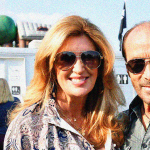
Sorry to the people of Barbados. President Trump announced this week that he was nominating the wife of Lee Greenwood — yes, the “God Bless America” guy — as ambassador to Barbados and six other small Caribbean nations including Saint Kitts and Nevis, Dominica, and Grenada.
This is par for the course for Trump, who has largely chosen an assortment of pals and hangers-on to serve as ambassadors in his second administration, eschewing career diplomats or anyone with anything resembling a qualification. As I wrote in a previous Weekender, we’re talking about nominating failed candidate and Big Lie advocate Doug Mastriano as ambassador to Slovakia and fellow failed candidate and Big Lie advocate Kari Lake as ambassador to Jamaica.
Per CBS, Kimberly Greenwood, a former Miss Tennessee, has long known Trump through the Miss Universe pageant, and she has also directed the Miss Tennessee, Miss Mississippi and Miss Georgia competitions. Famously, Trump can’t get through a public appearance without playing “God Bless America,” and Lee Greenwood is one of the only artists Trump can reliably get to show up to his events.
It’s only a matter of time before Kid Rock’s kid is nominated as the ambassador to somewhere.
It’s Spooky Season!

How Much of This Week’s News Do You Remember?
- In a typically infuriating move, this former Democratic senator endorsed Sen. Susan Collins (R-ME) in her reelection campaign.
- Three-part question: This NFL team owner booted this rapper from this major pop star’s tour over the rapper’s comments supporting Palestine.
- Outgoing Rep. Thomas Massie (R-KY) submitted a resolution to impeach this Trump Cabinet secretary for “high crimes and misdemeanors” this week.
Answers below
I’m the Problem, It’s Me
“Nobody knows there’s a B in dumb. They think it’s D-U-M.” – The President of the United States

The Bestiality Situation at the FBI
Well, that got weird fast. During a Tuesday Senate Judiciary Committee hearing, FBI director Kash Patel was grilled about his eyebrow-raising choice to reverse a policy that automatically disqualified people who acknowledged engaging in prostitution or bestiality from joining the bureau. Sen. John Kennedy (R-LA) pressed Patel to explain the change, asking the very fair question, “Why would you even get into bestiality?”
According to Patel, his decision was intended to protect trafficking victims who were disqualified for jobs with the FBI because they were forced into bestiality. “We are not into bestiality,” Patel clarified.
Good to see everything is going normally over at the Federal Bureau of Investigations!

The Dude Just Loves a Monument, Okay?
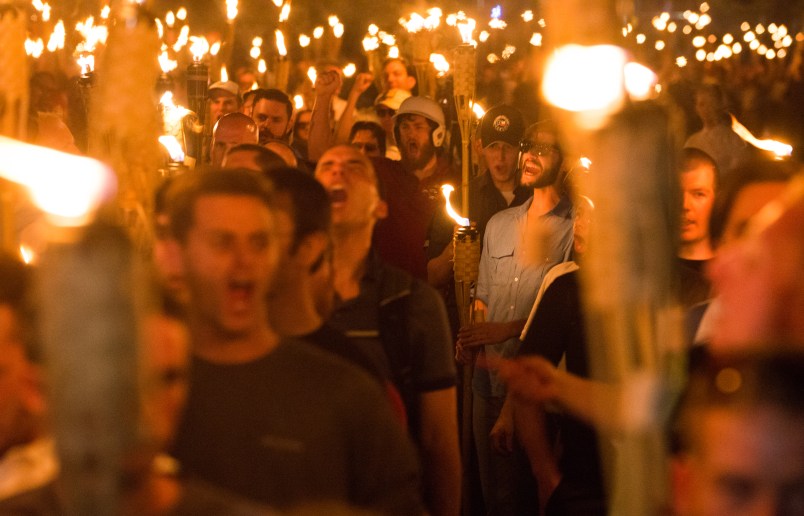
Marshall Rawson may have gone to the Charlottesville “Unite the Right” rally, but he says it’s not what it looks like. The Republican nominee for Florida’s House District 10 keeps insisting he’s not mad about TPM reporter Christopher Mathias’ exclusive story detailing his attendance at the event and the donations he’s received from some of the country’s most infamous white nationalists.
“I’ll continue to defend historical monuments,” Rawson said in a Facebook post about the article that also referenced his “long-standing efforts to preserve southern military monuments.” He’d made similar comments to Chris in his statement for the story, saying “Over the entire span of my adult life, I’ve been very active defending historical monuments from destruction or removal, and I feel that way about almost all monuments, not just those associated with southern history.”
The guy just loves monuments, okay?
As Chris points out, Rawson has not responded to some of the other details in the piece that are perhaps a bit more pertinent than his stance on statues, like whether he condones slavery and lynching, thinks gay people should be executed, or acknowledges that some of his allies at Charlottesville committed brutal acts of violence that day.
Charlottesville’s Long Shadow and the American Right’s WNBA Obsession
Florida Dems Picked Up Chris’ Reporting on Unite the Right
The Florida Democratic Party is demanding that the local GOP denounce their nominee for Florida House District 10, Marshall Rawson, after TPM reporter Chris Mathias revealed that Rawson marched at the 2017 “Unite the Right” rally with the League of the South. Chris’ reporting made a big national splash, too, getting picked up by The New Republic, Washington Post, The Guardian, MS Now, The Independent, The Handbasket the New York Times’ Jamelle Bouie, Politico’s Florida Playbook, and local outlets including the Tampa Bay Times, Miami Herald, and Gainesville Sun
Kate Goes Deep on the Right’s WNBA Fixation
We are happy to report that Kate is continuing to live her dream by moonlighting as a sports reporter. She joined the Title IX podcast this week to talk about right-wing outrage about the WNBA, and how it relates to Christian nationalism and traditional gender roles.
“What could be a bigger threat in that landscape than the WNBA, a league of professional women athletes who at least — you know, recently, are starting to be paid you know, a lot of money for what they do, and it’s a league made up of predominantly Black women and many, many gay women, right?” she said. “And then add on top of that that it’s becoming massively popular. The threat is growing, right? Like other people are kind of joining this bandwagon, and all of that has been scary to them for a long time.”
Macklemore Makes International News
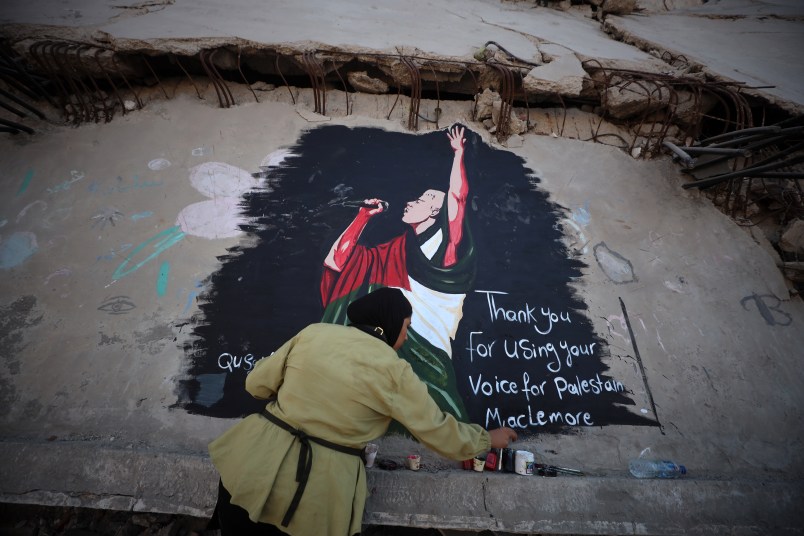
Trivia answers: 1) Former Sen. Joe Manchin 2) Robert Kraft, Macklemore, and Ed Sheeran 3) Defense Secretary Pete Hegseth