








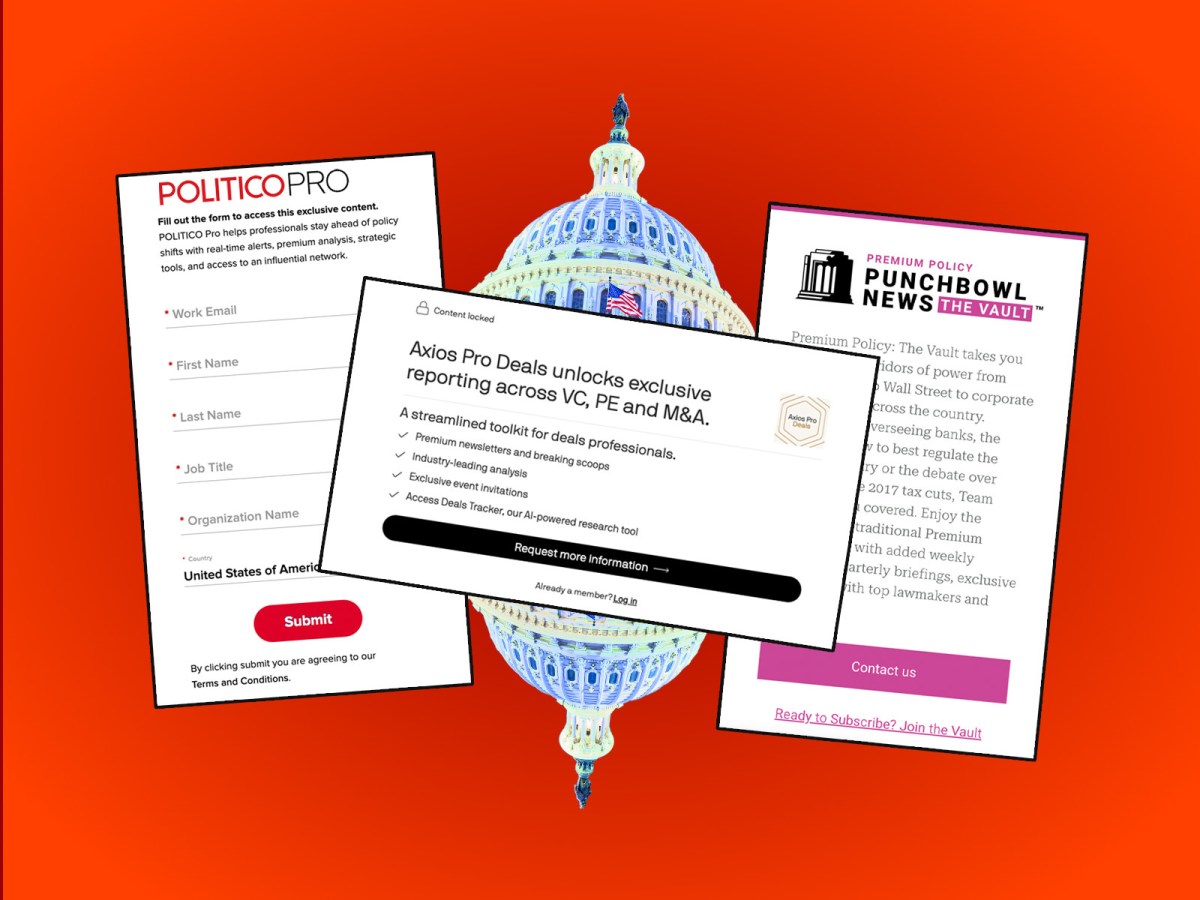
Before the internet, what would today be called a “paywall” was just a place where people could buy a newspaper or magazine. Your subscription or newsstand purchase didn’t pay for every far-flung reporter; media outlets subsidized access to readers with advertising and other revenue streams. But though the barrier to entry was relatively low, it was still a barrier. You had to acquire the physical object hosting the material, and unless you went to the library every day or got your hands on a discarded copy in a coffee shop, you would have to pay for it.
Once all articles got posted on websites, tension grew between the idea that information wants to be free and the need for reporters and editors and production teams to afford food and shelter. At first, legacy subscriptions and digital advertising covered the nut; I remember the New York Times and Washington Post segmenting stories into sections so readers had to click repeatedly to finish them, ringing up more ad impressions. But Google and Facebook robbed publishers of the ad revenue that made this (sort of) work, and ever since, media companies big and small have been grasping for an alternative.
They have mostly failed. Between 2004 and 2022, over 2,100 newspapers have gone out of business, according to data from the University of North Carolina. New media pivots from words to video and back again have proven disastrous. Layoffs have touched everyone in this industry; friends and colleagues habitually call me asking for advice or referrals for hiring.
Those of us remaining to report the news have settled on a noble idea: A community of readers can pay to get the information they need. Sometimes the “reader” is one rich person keeping things alive, but that usually ends in tears. A broader base of support is far more sustainable, and there are several outlets, from my site The American Prospect to the one you’re reading right now, that are making this work.
In some ways, it’s a throwback to the pre-internet era, or even the premodern era of patronage. But the pay-to-play trend in journalism is happening at a time of runaway income and wealth inequality, when the top 10% of income earners account for nearly half of all the spending. This has created a strange paradox: The average news consumer today has more available to read than at any time in human history, yet less ability to understand what’s really going on.
Read More
Whether I like it or not, the first line of my obituary will probably be that I was the founding editor of Gawker.com, the flagship site of Gawker Media, a sprawling blog network that was put out of business by Peter Thiel and Hulk Hogan in 2016. Nick Denton and I started Gawker in 2002 and I left in late 2003 to go to New York Magazine, so I missed some of Gawker’s greatest hits and biggest misses, but the early ‘00s were what I now think of as the heyday of blogging. (Talking Points Memo was started in 2000.)
Read More
I want to begin this introduction to our 25th anniversary essay series by telling you what an exciting and must-read collection it is. Our team has commissioned 25 essays on the history of digital media, which more or less overlaps with the 25 years we’re celebrating here at TPM this year. We solicited contributions from a wide range of contributors — people who first made their mark at different points in the history of digital media, people who’ve worked in different parts of the digital beast, people from very different political persuasions. We have Semafor’s Dave Weigel on Elon Musk and X; Jacobin founder Bhaskar Sunkara on the rise of Substack; Gawker founder Elizabeth Spiers on blogging; Marisa Kabas of the Handbasket on journalists as personal brands; Marcy Wheeler (Emptywheel) on troll culture and the rise of Trumpism. That only scratches the surface on the series we’re kicking off today, and running through our two-day anniversary event in New York City on Nov. 6 and 7.
Read More
- Julianne Escobedo Shepherd
- Max Rivlin-Nadler
- Bhaskar Sunkara
- Hamilton Nolan
- Ana Marie Cox
- Marisa Kabas
- Kelly Weill
- Aurin Squire
- Marcy Wheeler
- Andrew Parsons
- Jeet Heer
- Sarah Posner
- Julianne Escobedo Shepherd
- Jon Allsop
- Adam Mahoney
- David Weigel
- Kylie Cheung
- Brian Beutler
- Megan Greenwell
- Matt Pearce
- Sarah Jaffe
