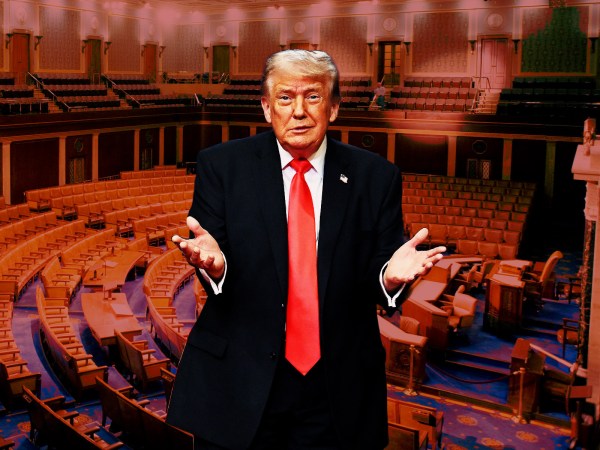

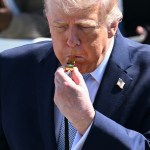

I’ve been talking over the last few weeks about critical reforms that are necessary to make any kind of civic democratic revival in the U.S. even possible. The ending the filibuster and reforming the Supreme Court are high on that list. I want to talk about related topic today that we can only see if we take few steps back from the immediacy of day to day events over the last year and a half. These are tied to the over-mighty nature of the American presidency — or rather, the over-mighty potential of the American presidency, which a mix of Donald Trump’s degenerate personality and the theories of the conservative legal movement have brought to the fore.
The difference I want to note is between administration and ownership. We talk a lot these days about how Donald Trump seems to think he owns the United States – he puts his brand, his likeness, his signature on everything. He talks about his generals, his military, etc. But there’s a more concrete and specific way this is true and it goes to the heart of what needs to be fixed about the American presidency and the whole constitutional system.
Read More





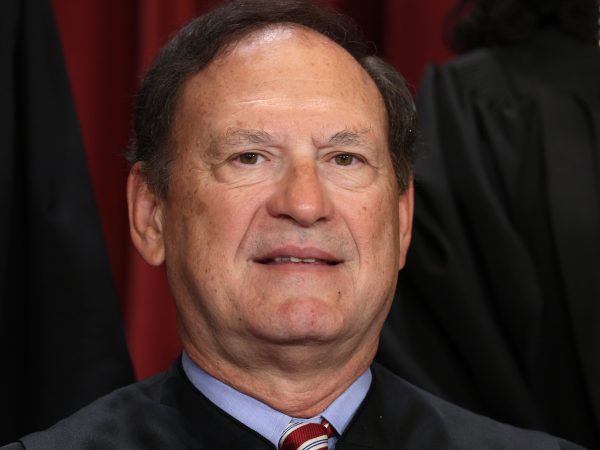

We’re talking a lot today about gerrymandering and Court reform. I want to note one among many ways the two issues intersect. Democrats are consistent on redistricting. They have and continue to support a national gerrymandering law to outlaw the practice. They restated that commitment today even as they prepare to counter new GOP demands to eliminate Black legislative representation across the South.
Read MoreWe’ve been wondering for a few days now how the White House would seek to convince Congress that the Vietnam-era War Powers Resolution, which requires the executive branch to obtain authorization for hostilities from the legislative branch within 60 days, should not apply.
It emerged yesterday, in Hegseth’s assertion to senators that the April 7 ceasefire “pauses” that 60-day clock, and it was formalized by Trump in a letter sent to Congress this afternoon, which we published a copy of here.
The argument, you will not be surprised to learn, is farcical. Emine Yücel and Josh Kovensky ran it by some experts.
The question of who would have standing to challenge the administration’s war is a thornier one, which Emine and Josh get into here.
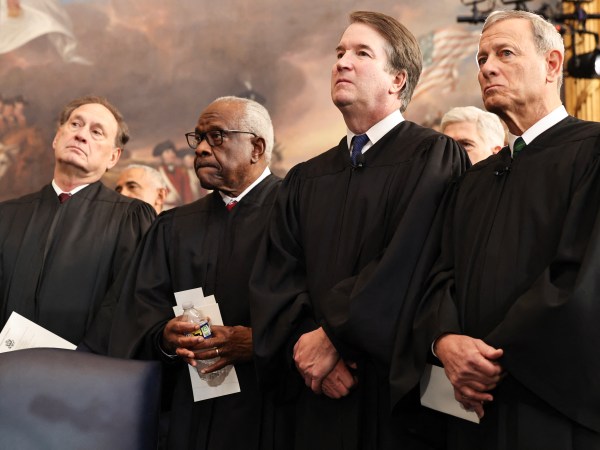
Here’s a brief follow up on yesterday’s post about the corrupt Supreme Court. Yesterday I noticed law professor Steve Vladeck arguing on Bluesky that civic democrats are making a mistake by seeking to “fix” the Court by, as he puts it, “permanently weakening it as an institution.” The gist of his argument is that you constrain the Court by “forcing it to look over its shoulder” as it decides case. In a post on the topic, he writes, “as compared to a time when Congress controlled things like when the Court sits; where it sits; which cases it hears; the Court’s budget; and what the justices must do when not hearing cases (i.e., ride their circuits), today’s Court can do just about whatever it wants, whenever it wants, and all without realistically having to look over its shoulder.”
I told him that I actually agree with the concept of having the court “look over its shoulder” — that you have a series of teeth in place to react to overreach. I’m not sure about the best method of applying that pressure. But I agree with the general principle. Or, rather, I did agree with it — but I think we’ve missed the window for that kind of intervention from Congress. (You can see our brief exchange here.)
Read More