

I noted below that we might know tonight where the Senate GOP is going on the compromise legislation they said they wanted. Well, it’s not even 8 p.m. And we know. They’re going to filibuster it. The explanation of the evening is that voting this week is too soon. They need more time. But of course more time is just to build opposition to it. Trump was able to shut this down pretty quickly. If anything it’s now turning into a secondary effort to show Trump’s dominance over McConnell in the Senate. But that’s a topic for another post. The White House now needs to shift gears and make this a central element of its campaign. There was a bipartisan compromise to crackdown on border crossings. It included lots of what Republicans have demanded for years. But Republicans killed it because Donald Trump told them to.
Continue reading “Well That’s a Wrap!”About Ukraine
According to The Wall Street Journal’s Yaroslav Trofimov, Russian forces in Ukraine are about to capture the first Ukrainian city since the capture of Bakhmut last May. According to him it’s a “direct result of acute ammunition shortage — caused by the U.S. Congress withholding further military aid to Ukraine.”
Senators Falling In Line
Pretty rapidly Senate Republicans seem to be falling in line behind Donald Trump’s demand to kill the Senate border deal.
Sen. Mike Rounds now says he’d be no on cloture if Sen. Schumer brings the bill up for a vote this week, as he said he would. For clarity, “no on cloture” is Senate-speak for supporting filibustering the bill, which he’s actually been a supporter of. In other words, he’s leaving open the possibility he might vote for it later after amendments. But that likely means after adding poison pills to scare off Democratic votes. At a minimum GOP Senators are saying, okay nice start. Make it more draconian and we’ll talk.
At least for now it seems like Trump’s demand to kill the bill have made it impossible for it to get to 60 votes. Trump’s got supporters of the compromise lining up to announce they’re against it.
Nikki Haley Seeks Secret Service Protection Amid New Threats
Nikki Haley, the sole remaining challenger to Donald Trump in the GOP presidential primary, has asked for Secret Service protection in the face of new threats against her, she confirmed in an interview today with the Wall Street Journal.
Continue reading “Nikki Haley Seeks Secret Service Protection Amid New Threats”Border Bill
Following up on the post below about this Senate border bill. However this goes I suspect it will go quickly. No one in the Senate wants to get caught out on the losing side of it. With that in mind Politico’s Burgess Everett just reported that Sen. John Thune says he’s “still reviewing the text and I think James Lankford worked as hard as he could to get the best deal under the circumstances.”
Continue reading “Border Bill”Make No Mistake. The House GOP is On the Ropes Here.
I wouldn’t be so quick to assume Democrats got taken by working with Senate Republicans to put together this bipartisan border deal. There are a number of provisions in this deal which many Democrats won’t like at all just on the merits. That is an important question. But here I’m talking about the politics. It’s House Republicans who are in an awkward position now.
House Republicans are now clearly refusing to support provisions they’ve been demanding for years. Now they claim that they are refusing to support or even allow a vote on the deal because it doesn’t go far enough. But it’s a bit late for that since they were already pretty open about simply refusing to vote for anything until Trump becomes President again.
Continue reading “Make No Mistake. The House GOP is On the Ropes Here.”Waiting for Trump
There was a helpful article in The Wall Street Journal over the weekend illustrating some of the actual situation in Israel-Palestine. It’s a profile of far-right Kahanist politician Itamar Ben-Gvir, who is one of the two ultra-far-right figures keeping Netanyahu in power. Through the article he pines for the return of Donald Trump who would, Ben-Gvir says, finally give Israel the free hand it needs to encourage the “voluntary” departure of the Gazan population and resettle the strip with Israel settlements.
“Instead of giving us his full backing, Biden is busy with giving humanitarian aid and fuel [to Gaza], which goes to Hamas,” Ben-Gvir told the Journal. “If Trump was in power, the U.S. conduct would be completely different.”
Continue reading “Waiting for Trump”Dems Fall For GOP’s Kabuki Theater Over Ukraine, Israel, And The Border
A lot of things happened. Here are some of the things. This is TPM’s Morning Memo. Sign up for the email version.
Hostages For The Taking
It’s a measure of the GOP’s successful demagoguing of Ukraine that the bill finally released last night on the Senate side is widely referred to by the shorthand “border bill.” If you win the naming war, you win a lot.
Border concessions were of course the ransom the GOP demanded be paid. Now Dems have agreed publicly to pay it — and Republicans look ready to walk away. It’s not clear a majority of Senate Republicans will support the package. House Republicans have already called it DOA.
It’s not just Ukraine aid that is at stake. Aid to Israel and Gaza is included. All of it in jeopardy over yet another negotiation in which Democrats are held hostage, negotiate against themselves, and watch Republicans walk away from the deal they demanded because not only is no deal good enough but any “deal” is by definition a cave, a surrender, a capitulation to the evildoers on the other side of the negotiating table.
Republicans as a whole aren’t a viable negotiating partner because any one Republican, including any Republican at the negotiating table, can be quickly outflanked on the right and lose any bargaining power.
Democrats participate anyway because, to give it the most most favorable interpretation I can, they believe that they will come out looking better having tried and having exposed GOP bad faith. No matter that this has failed to come to fruition countless times in the past decade. No matter that it cedes the framing of the debate to the GOP, lets Republican electeds off the hook, concedes way too much, and generates news coverage helpful to the GOP and problematic for Dems.
We’ve seen this play before.
Our Generation’s Henry Ford
Elon Musk embraces the Great Replacement Theory, and historian Kevin Kruse unpacks the racist stupidity: “I know, I know, it’s hard to believe a guy whose grandfather left Canada because it was becoming too diverse and decided to relocate the family to a newly-segregated South Africa could ever embrace paranoid racist nonsense, but here we are.”
Reap What You Sow
Dearborn, Michigan, ramped up police patrols at places of worship in response to fallout from a WSJ op-ed titled “Welcome to Dearborn, America’s Jihad Capital.”
Why Fani Why?
Morning Memo kept its powder dry until Atlanta DA Fani Willis formally responded in court to the claims she had a romantic relationship with the Nathan Wade, one of the special prosecutors she hired to help handle the Georgia RICO prosecution of Donald Trump et al — though it became pretty apparent before her response Friday that she wasn’t denying it.
Willis and Wade admitted to the relationship in the filing, but they hung a lot on their claim that it didn’t begin until after he’d been hired and they’d begun working together. If that holds up to scrutiny, I guess that makes it slightly better?
But it sucks that anyone working on any of the historic and high-profile Trump cases would do anything to give him an edge, advantage or fodder with which to work. The stakes are too high. The sacrifices that everyone else is making — witnesses, investigators, line prosecutors, jurors, court personnel — to bring to Trump to account deserves deference and respect. If you don’t want to make those sacrifices yourself, fine. Get out of the way.
Unfortunately, Willis committed her entire office to this effort and she can’t easily get out of the way without jeopardizing the case against Trump. So we’re stuck with her. Most legal observers don’t think this gives Trump an actual advantage in court, just in the political and public fray. We’ll see in a few days when the trial judge addresses all of this in an evidentiary hearing.
One coda to all this: I do wonder whether a male prosecutor would have been tagged with the same kind of public humiliation if he had engaged in similar conduct as Willis.
It’s Official
What’s been obvious for a couple of weeks is now official: U.S. District Judge Tanya Chutkan formally cancelled the March 4 trial for Donald Trump in the big election subversion case while his immunity appeal drags on.
And We Wait …
Still nothing from the DC Circuit on presidential immunity.
Jack Smith Hits Back Hard At Trump
Special Counsel Jack Smith is forced to educate U.S. District Judge Aileen Cannon at length on why Trump’s counter-narrative in the Mar-a-Lago case is bogus, evidence-free, and self-serving. It’s quite a read.
DQ Clause Week In DC
As we prep for Supreme Court oral arguments Thursday on whether Trump is eligible for the presidency under the Constitution’s Disqualification Clause, some reading for you diehards:
- Yale historian Timothy Snyder: Bad Arguments and Good Historians
- Politico: Here’s What Happens if Trump Gets Kicked Off the Ballot
From The Department Of Ignorance Is Bliss
Philip Bump: Most Republicans aren’t aware of Trump’s various legal issues
J.D. Vance: I’d Have Coup’ed, Too
Sen. J.D. Vance (R-OH) wasn’t in Congress on Jan. 6, 2021 but he made it clear in an interview with George Stephanopoulos that if he had been in Vice President Mike Pence’s shoes he’d have gone along with Trump’s fake electors scheme.
[Sponsored] An Inside Story Of The Democratic Party At A Moment Of Great Peril
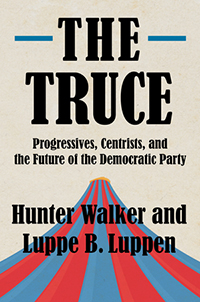
The Truce, from journalists Hunter Walker (of Talking Points Memo) and Luppe B. Luppen, explores the major fault lines that define Democratic politics today and asks big questions about the future of the party. An engrossing page-turner, The Truce grapples with the dangers that threaten American democracy and the complicated cast of characters who are trying to save it.
2024 Ephemera
- Biden romps in South Carolina Democratic primary.
- Why you can safely ignore the Nevada GOP primary/caucus mess.
- NBC News poll: Trump leads Biden 47%-42% among registered voters nationally.
- Donald Trump fans MAGA flames against Ronna McDaniel.
- SNL gives Nikki Haley a do-over on slavery and the Civil War:
Good Read
WaPo: The wild probe into investors of DWAC, Trump Media’s proposed merger ally
Oh …
Tucker Carlson visits Moscow and may interview Putin.
Ground Yourself On A Monday
Whatever controversy there was about Luke Combs’ success covering Tracy Chapman’s “Fast Car,” Chapman put it aside last night at the Grammy’s:
Do you like Morning Memo? Let us know!
Private Schools, Public Money: School Leaders Are Pushing Parents to Exploit Voucher Programs
This article first appeared at ProPublica. ProPublica is a Pulitzer Prize-winning investigative newsroom. Sign up for The Big Story newsletter to receive stories like this one in your inbox.
Tara Polansky and her husband were torn about where to enroll their daughter when they moved back to Columbus, Ohio, a year and a half ago. The couple, who work for a nonprofit organization and a foundation, respectively, were concerned about the quality of the city’s public schools and finally decided to send her to Columbus Jewish Day School. It was a long drive out to the suburbs every day, but they admired the school for its liberal-minded outlook.
So Polansky was startled when, in September, the school wrote to families telling them to apply for taxpayer-funded vouchers to cover part of the $18,000 tuition. In June, the Republican-controlled state government had expanded the state’s private-school voucher program to increase the value of the vouchers — to a maximum of $8,407 a year for high school students and $6,165 for those in lower grades — and, crucially, to make them available to all families.
For years the program, EdChoice, targeted mostly lower-income students in struggling school districts. Now it is an entitlement available to all, with its value decreasing for families with higher incomes but still providing more than $7,000 annually for high school students in solidly middle-class families and close to $1,000 for ones in the wealthiest families. Demand for EdChoice vouchers has nearly doubled this year, at a cost to Ohio taxpayers of several hundred million additional dollars, the final tally of which won’t be known for months.
That surge has been propelled by private school leaders, who have an obvious interest: The more voucher money families receive, the less schools have to offer in financial aid. The voucher revenue also makes it easier to raise tuition.
“The Board has voted to require all families receiving financial assistance … to apply for the EdChoice Program. We also encourage all families paying full tuition to apply for this funding,” read the email from the Columbus Jewish Day School board president. She continued: “I am looking forward to a great year — a year of learning, growing, and caring for each other. Let’s turn that caring into action by applying for the EdChoice Program.”
Polansky bridled at the direction. She had long subscribed to the main argument against private school vouchers: that they draw resources away from public education. It was one thing for her family to have chosen a private school. But she did not want to be part of an effort that, as she saw it, would decrease funding for schools serving other Columbus children. Together with another parent, she wrote a letter objecting to the demand.
“For this public money to go to kids to get a religious education is incredibly wrong,” she told ProPublica. “I absolutely don’t want to pull money out of an underfunded school district.”
For decades, Republicans have pushed, with mixed success, for school voucher programs in the name of parental choice and encouraging free-market competition among schools. But in just the past couple of years, vouchers have expanded to become available to most or all children in 10 states: Arkansas, Arizona, Florida, Indiana, Iowa, North Carolina, Ohio, Oklahoma, Utah and West Virginia. The expansion has been spurred by growing Republican dominance in many state capitals, U.S. Supreme Court rulings loosening restrictions on taxpayer funding for religious schools, and parental frustration with progressive curricula and with public school closures during the coronavirus pandemic. Many of the expanded programs are experiencing high demand, which voucher advocates are taking as affirmation of their argument: that families would greatly prefer to send their children to private schools, if only they could afford them.
But much of the demand for the expanded voucher programs is in fact coming from families, many quite affluent, whose children were already attending private schools. In Arizona, the first state to allow any family to receive public funding for private schools or homeschooling, the majority of families applying for the money, about $7,000 per student, were not recently enrolled in public school. In Florida, only 13% of the 123,000 students added to the state’s expanded school-choice program had switched from public school.
In Ohio, the effects of the move toward looser eligibility in recent years was clear even prior to last summer’s big expansion: Whereas in 2018, fewer than a tenth of the students who were newly receiving vouchers that year had not attended a public school the year before, by 2022, more than half of students who were new to EdChoice were already in private schools.
That ratio will climb much higher in Ohio, now that the vouchers are available for families at all income levels and private schools are explicitly telling parents to apply. The surge in applications this school year has been so dramatic that it’s nearing the total enrollment for all private schools in the entire state.
At St. Brendan’s the Navigator, on the other side of the Columbus beltway from the Jewish Day School, the missive arrived on the last day of July. The letter, signed by the Rev. Bob Penhallurick, called the expanded vouchers a “tremendous boon to our school families and Catholic education across Ohio” and said that all families were “strongly encouraged to apply for and receive the EdChoice scholarship.” He noted that, depending on their income level, families could receive up to $6,165 for each child — nearly covering the $6,975 tuition. “Even a small scholarship is a major blessing for you, the school, and the parish,” he wrote.
And then he added, in italics, that if a family did not apply for the vouchers, “we will respect that decision,” but that “supplemental financial aid from the parish in this case will require a meeting” with either himself or another pastor at the school.
Asked about the directive and parents who might have been reluctant to comply, Columbus diocesan spokesperson Jason Mays said, “Parents are not required to apply for EdChoice.” Asked about the EdChoice expansion’s effect on enrollment, he said, “We expect to see continued growth and demand in the upcoming school year.”
At Holy Family School near Youngstown, the directive arrived a few days later, on Aug. 3. “As you are aware, ALL students attending Holy Family School will be eligible for the EdChoice Scholarship. We are requesting that all families register their child/ren for this scholarship as soon as possible,” wrote the school’s leadership. And then it added in bold: “It is imperative that you register for EdChoice for each of your students. We are waiting to send invoices until your EdChoice Scholarship has been awarded.”
In an interview at the school, Holy Family principal Laura Parise said the push to apply for EdChoice had succeeded. “One hundred percent of our students are on it,” she said. “We made it that way — we made our families fill out the form, and we’re going from there.”
Parise said that some families had been reluctant to apply, but that the school told them that if they did not do so, they could not qualify for any of the school’s discounts from its $5,900 tuition, such as the ones Holy Family offers to second and third children from the same family. If parents still needed additional help beyond the vouchers, they could request it.
She said the school was not yet planning to raise tuition beyond what was already scheduled. “We didn’t want to take advantage of the situation,” she said. For now, she said, the state revenue that replaces some financial aid costs will simply make it possible for the school to spend more on other things. “We might be able to allocate some funds for other things curriculum wise to raise academics,” she said.
The expanded vouchers have not affected enrollment much yet, she said, since they had been made available after most families had already made school decisions for this year. “The true sign will come next year,” she said. “Our families from the previous year were coming anyway. We’ll see what happens next year, if we have an increase.”
Since private-school vouchers launched in Ohio nearly three decades ago, there has been a debate over who their true beneficiaries are. Then-Gov. George Voinovich, a Republican who had been mayor of Cleveland, pushed for the creation of a voucher program in that city in 1995, selling it as an outlet for disadvantaged families seeking an alternative to the city’s troubled schools.
But, within three years, while the program had grown to 4,000 students, private-school enrollment had grown by only 300, suggesting that most participating families were already enrolled in private schools. By 2001, the share of Black students among voucher recipients in Cleveland was 53%, below the 71% ratio of Black students in public school.
The program was the first in the nation to provide public money for tuition at religious schools, and by 2000, virtually all Cleveland voucher recipients were using them at a religious private school (mostly Catholic) rather than secular ones. In 2002, the U.S. Supreme Court narrowly rejected a challenge to the Cleveland vouchers; the court ruled that because the vouchers could be used for religious or nonreligious schools, they did not violate the constitutional prohibition against a state favoring religion. In the years that followed, vouchers spread to more districts around the state, taking on the name EdChoice. Initially, they were targeted at families in other districts deemed to be failing, but a decade ago, the state legislature — whose Republican majorities are buttressed by highly gerrymandered districts — made them available to lower-income students across the state.
Then came last year’s big expansion, eliminating income limits and raising the value of the vouchers. It offers major benefits even to many solidly middle-class families: A family of four at 451% of the poverty level, or $135,300 in household income, will receive $5,200 per year for a K-8 student and $7,050 per year for a high school student.
In the 2022-23 school year, before the expansion, EdChoice cost $354 million, on top of the $46 million for the Cleveland program, according to the state education department. That was already more than quadruple what EdChoice had cost a decade earlier.
The recent surge in applications will propel the price tag far higher. With the state still processing applications and accepting them until the end of June, it has not yet reported the total cost of the expansion, but in August legislative analysts projected that it would cost the state an additional $320 million for this school year. The EdChoice line item is folded within the state’s overall budget for K-12 education, which is roughly $13 billion, and the EdChoice line item is not capped: The more families apply, the more it will cost.
The program’s expansion in recent years has prompted another lawsuit, filed in 2022, this one from a coalition of 250 school districts. The suit argues that the vouchers worsen segregation, since private schools can choose their students (an analysis found that as of November, 90% of the new voucher recipients were white, far above the statewide share of white students, which is about two-thirds); that they violate the state Constitution’s bars against religious control of public school funds (the vast majority of EdChoice funds go to Christian schools); and that the vouchers undermine the Ohio Constitution’s promise of an adequate education for all by leaching money from public schools. Last month, a judge denied the state’s motion to dismiss the case, rejecting the state’s claims that the plaintiffs lacked standing and that all the claims have previously been decided by the state and U.S. supreme courts.
The leaching from public schools happens in two ways. Since public school funding formulas are based on enrollment, every student who uses a voucher to leave public schools means less money for them. But even if few students make that switch and most vouchers go to students already in private schools, the lawsuit’s supporters say, the soaring cost of the vouchers inevitably leaves less money in the state education budget for public schools.
“It’s soon going to be a billion dollars annually, and it’s coming right out of the school funds,” said William Phillis, the director of the coalition that filed the lawsuit and a former assistant state school superintendent. “It’s just an egregious violation of the Constitution.”
State Senate President Matt Huffman, a Republican from western Ohio who has led the push to expand vouchers, is blunt in his defense: Yes, the vouchers cost the state more money now, but they will save it money over time as families opt out of public schools, reducing the need to fund them. “In the long run, the taxpayer saves a lot of money,” he said in an interview last fall. “I hope more people take advantage [of EdChoice] if they want to.”
Aaron Churchill, the research director at the Ohio branch of the Thomas B. Fordham Institute, a conservative-leaning education-reform think tank, said that even if more vouchers are going to families already enrolled in private school, those vouchers are still supporting school choice. These families have been paying taxes for years and not availing themselves of the schools those taxes paid for, he said, and it’s only fair that at least some of that money go toward the education they chose for their children.
“It does follow the basic principle that when we talk about funding education, we’re funding students, regardless of the choice their parents make,” he said. “These dollars are for the kids, regardless of whether it’s the public or private sector.”
Polansky, the Columbus Jewish Day School mother, found an ally in Micah Berman, a fellow parent of a third grader. “One of the reasons we went to this school is because it does have a strong emphasis on teaching students about caring for the broader community and in particular caring for those that have more needs,” he said. “And the idea that you would be putting some pressure on families to accept these vouchers that in effect take money out of school districts that need it strikes me as problematic and in conflict with that.”
Together, they penned a three-page letter to the school leadership. “We chose to send our children to CJDS in large part because of its commitment to tikkun olam, the Jewish obligation to build a better and more equitable world,” they wrote. “The Board’s policy: (1) puts pressure on CJDS families to betray their own values by requiring them to seek out vouchers that they may be morally and ethically opposed to in order to obtain any financial aid; and (2) sends a message to the parents, the public, and other private and public schools that CJDS endorses and is willing to benefit from the EdChoice program, even though the program runs counter to core Jewish values and basic tenets of social justice.”
They added, “We recognize that the Board has a responsibility to ensure the financial sustainability of CJDS and that doing so is no easy task … . But CJDS needs to live its values in the course of doing so.’”
Soon after they sent the letter, school leaders lifted the requirement that families on financial aid apply for the vouchers. But Polansky worried that the order had already had its desired effect in spurring applications. “Even though it was rescinded, my sense is that a lot of the damage was already done,” she said.
Berman said that many parents still may miss the broader picture. “It’s easy not to think of the systemic impact when you’re thinking about individual families or individual schools,” he said. “My fear is that this is sort of the point: to make this as attractive as possible for families to take more of the money, because it increases the incentive to keep taking money from the schools that need it.”
The school’s interim director, Rabbi Morris Allen, responded to inquiries with a brief statement: “We are aware of all Ohio educational guidelines. We work continually to ensure that our school can provide its unique pluralistic and accessible education to any student who desires to benefit from our Jewish vision and mission.”
Visits to both CJDS and St. Brendan to ask other parents what they made of the voucher debate, in the parking lot during school drop-off and pickup, were unsuccessful: At both schools, administrators (and a heavily armed guard at CJDS) came outside to tell this reporter to vacate the premises. Regardless of how much public funding the schools receive, they are, after all, private.
Trump’s Control Of the Republican Party Is Bad For Democracy
This article is part of TPM Cafe, TPM’s home for opinion and news analysis. It was originally published at The Conversation.
As former President Donald Trump edges closer to clinching the Republican presidential nomination in 2024, our political science research has shown that a second Trump presidency is likely to damage American democracy even more than his first term did. The reason has less to do with Trump and his ambitions than with how power dynamics have shifted within the Republican Party.
Continue reading “Trump’s Control Of the Republican Party Is Bad For Democracy”