

I first realized the extent of the internet’s takeover of U.S. politics while standing in the lobby of a drab hotel convention center, listening to an elderly gentleman rattle off a list of fringe conspiracy forums he frequented.
Continue reading “What It’s Like to Watch an Internet-Based Ideology Break Containment”Steve Bannon and the ‘Plan’ for a Neverending ‘Age Of Trump’
Hello, it’s the weekend. This is The Weekender ☕️
Steve Bannon, the MAGA broadcaster and once-and-future adviser to President Donald Trump, just gave an interview to The Economist where he openly discussed a potential “plan” for a third term.
“Well, he’s going to get a third term. So, Trump ‘28,” Bannon said. “Trump is going to be president in ‘28 and people just ought to get accommodated with that.”
This isn’t the first time Bannon has mused about Trump serving for 12 years — or more. Other high-level Trump allies have also hinted at the possibility and, as we’ve already told you in this very newsletter, the official campaign store even has “TRUMP 2028” merch ready to go.
Many observers have dismissed all of this out of hand given that the 22nd Amendment seemingly serves as a hard line enforcing the two term limit. There are, however, actual legal experts who think there could be loopholes to this including a technique essentially pioneered by Russia’s Vladimir Putin, where the president joins a ticket as the vice president with the tacit understanding their running mate would move aside or serve as a mere figurehead. Another potential avenue experts have raised involves challenging whether the 22nd Amendment means solely two terms or actually only two consecutive terms.
Most experts argue these various end runs violate the clear intent of the constitutional amendment. However, if we’ve learned anything about Trump and the Supreme Court that he has increasingly made over, it’s that they are willing to push legal boundaries to serve his interests.
In this interview, Bannon didn’t say which route Trump’s allies are focused on, but he insisted that there is a “plan” in place.
“There’s many different alternatives. At the appropriate time, we’ll lay out what the plan is, but there’s a plan and President Trump will be the president in ‘28,” Bannon said.
Bannon also cast the effort to erode one of the core traditional curbs on presidential power in positively Biblical terms.
“President Trump will be the president of the United States and the country needs him to be president of the United States,” he said. “We have to finish what we started and the way we finish it — through Trump … He’s a vehicle of divine providence. He’s an instrument. He’s very imperfect. He’s not churchy, not particularly religious. but he’s an instrument of divine will.”
Bannon also offered a distinctly dictatorial vision for the “endpoint” of what he termed the “Age of Trump.” He said it would include Trump allies taking “control” of both “the institutions” and the “political process” en route to establishing “an entrepreneurial capitalism paradise.”
“We have to seize the institutions, seize them and then purge them,” Bannon said. “It’s not the DOGE crap, this is serious people like Russ Vought and others that have spent years thinking this whole plan through.”
Despite all of this talk of defying term limits, taking total power, and enacting dramatic purges, Bannon insisted the whole thing somehow isn’t blatant authoritarianism.
“President Trump is nothing but a series of negotiations,” Bannon said, adding, “He’s having tradeoffs all the time.”
The refusal to fully call this what it is and the obvious questionably legal nature of all this might make it tempting to dismiss. However, Trump allies continue to send loud and clear signals that this is something they are considering. And, hasn’t the president broken so many other aspects of our traditional government? Why doubt he would try to destroy term limits when Trump has literally demolished the White House?
In the end, Bannon said one thing we can probably all agree on: Trump’s authoritarian ambitions are clear, the only question is whether the population will let him achieve them.
“The only way President Trump wins in 2028 and continues to stay in office is by the will of the American people,” Bannon said.
— Hunter Walker
Here’s what else TPM has on tap
- Even a handful of Republicans think it’s not the best look for Trump to be demanding a $230 million settlement from the Justice Department that he, essentially, runs out of the White House.
- National Democrats released the findings of a poll of Maryland voters this week, in an attempt to gently nudge state Democrats in the direction of redrawing some congressional district lines before the midterms to help offset the impact of Trump’s power grab.
- The good, the bad and the ugly: For TPM’s 25th anniversary, join us on a journey through 25 years of digital media history.
- House Speaker Mike Johnson’s (R-LA) strategy — keeping the House out of session to compel Democrats to fold — doesn’t seem to be working.
Let’s dig in.
Even Some Senate GOPers Think It’s a Bad Look
By now, you’ve likely heard the news that President Trump is demanding that the Justice Department pay him $230 million in damages for what he claims are wrongful prosecutions damages. His former personal lawyer, Deputy Attorney General Todd Blanche, is the person poised to sign off on the settlement.
Obviously, this is a total shitshow and a completely unprecedented action by the lawless president, who is running the Justice Department out of the White House. House Democrats have already launched an investigation into Trump’s discussions with the DOJ about the settlement. Reps. Jamie Raskin (D-MD) and Robert Garcia (D-CA), the top Dems on the House Judiciary and House Oversight Committees, respectively, called Trump’s actions a “blatantly illegal and unconstitutional effort to steal $230 million from the American people.”
But the move is so befuddling and ill-timed, it even has some members of the Senate Republican conference uncomfortable. Senate Judiciary Committee senior member Sen. Lindsey Graham (R-SC) took issue with Blanche’s role in the whole ordeal.
“He shouldn’t decide, because he’s his former lawyer,” Graham told The Hill this week.
Retiring Sen. Thom Tillis (R-NC) took issue with the timing of Trump’s request, telling reporters this week that the “optics” were bad during a shutdown.
“At the very least, it’s horrible timing, given that we’re in a shutdown,” he said. “I got a lot of optics concerns, and I just don’t know if there’s precedent for it. There doesn’t seem to be.”
Another Republican acknowledged that it might just add fuel to the fire for people who are already protesting against Trump’s lawless presidency.
“The man, woman on the street, they know Donald Trump, they elected Donald Trump. Nothing about this, I don’t think, is either surprising or concerning to them,” Sen. Kevin Cramer (R-ND) said. “That doesn’t mean it isn’t a good talking point for the No Kings crowd.”
— Nicole LaFond
25 Years of Digital Media
As you may have heard, TPM is turning 25 this year. But we know our story is far from the only one worth telling in the past 25 years of digital media. So we went out to a group of writers we admire — 25 of them, naturally — to weigh in on a moment or idea that’s shaped our strange and ever-changing online journalism ecosystem.
We’re rolling out this series, Pivots, Trolls and Blog Rolls, for the next few weeks on this lovely landing page that our design team put together. Already, you can read pieces like Elizabeth Spiers’ requiem for the early blogging years, Dave Dayen’s excellent takedown of D.C. access journalism, and our own Josh Marshall on the original sin of treating digital journalism like a tech business. We hope you like it.
— Allegra Kirkland
Poll Finds Maryland Voters Support Dem Redistricting to Level Playing Field
Congressional Democrats are pushing the message to Democratic members of Maryland’s state legislature that redistricting that favors Democrats is needed to offset the impact of gerrymandering in Republican-led states, and to level the playing field.
New polling by Change Research, first reported by Politico, has found that the majority of Maryland Democratic voters surveyed view redistricting efforts as necessary to counter the Trump administration’s pressure campaign on red states to change their congressional maps ahead of the midterm elections.
The mid-cycle redistricting push by the Trump administration is part of an effort to ensure Republicans maintain control of the U.S. House. So far, states like Texas, Missouri, and North Carolina have all approved revised congressional maps that will likely flip Democratic seats.
The polling for this research was conducted online from October 8 to 10 of this year, surveying 909 likely Maryland voters.
According to the research, 85 percent of Democrats, 65 percent of Independents, and 23 percent of Republicans, responded that they believe that redistricting is necessary “both to provide a check on Trump and to undo some of the substantive damage being done by the Republican Congress.”
The poll also found that, after reading the arguments for redistricting on both sides, 69 percent of Democratic voters would be more likely to vote for a candidate who is supportive of redistricting.
This is one of several ways national Democrats are nudging the Democrats in Maryland’s state legislature to embrace redistricting. Earlier this month, per reporting from NBC, House Minority Leader Hakeem Jefferies (D-NY) met with Democratic Maryland Gov. Wes Moore to discuss possible redistricting plans in the state. And on Wednesday, Rep. Jamie Raskin (D-MD), described redistricting, in a post on X, as a “a political and ethical imperative to fight back across America, from coast to coast, from California to the Free State.”
Similar Democrat-led redistricting counter-efforts are currently underway in California, where voters will vote on a measure next month to approve new congressional maps. And in Virginia, Democratic lawmakers have launched a campaign to redraw their congressional maps.
— Khaya Himmelman
Johnson Won’t Bring House Back Next Week
It’s day 25 of the government shutdown.
House Speaker Mike Johnson (R-LA) said this week he won’t bring the House back in session to vote on a bill that would help pay air traffic controllers and other essential workers during the government shutdown.
The Speaker claimed the measure “would be spiked in the Senate,” adding that bringing back the House “would take the pressure off Chuck Schumer to get his job done and open the government again.”
For the sixth week in a row, the House is expected to be out of session next week.
Tuesday will be the first paycheck air traffic controllers will miss due to the shutdown, according to Transportation Secretary Sean Duffy. And hundreds of thousands of other federal workers officially missed their paychecks on Friday.
Separate party-line bills to pay some exempted federal workers during the shutdown failed in the Senate on Thursday. The issue may come up again next week as senators involved may try to combine their bills and come up with a bipartisan measure.
Meanwhile President Donald Trump doesn’t seem to be planning to negotiate with Democrats to reopen the government any time soon. He left for an extended Asia trip on Friday. Senate Republicans have also shown no signs of negotiating with Dems, who are asking for an extension of the ACA subsidies in exchange for their votes.
— Emine Yücel
Chicago Federal Judge Hauls Bovino in to Court
A Chicago federal judge on Friday demanded that CBP commander and federal escalation impresario Greg Bovino appear next week in her courtroom after he was accused of openly violating one of her orders.
Continue reading “Chicago Federal Judge Hauls Bovino in to Court”Emil Bove Starts Judicial Career With a Sneer
One year ago, Emil Bove was a simple defense lawyer for then-presidential candidate Donald Trump. He had represented him throughout the Manhattan criminal hush money trial that led to his client’s conviction, and worked on the two federal cases against the then-former president.
Continue reading “Emil Bove Starts Judicial Career With a Sneer”Justice Department Announces Plans to Monitor Polling Sites in New Jersey and California
In response to requests from state Republican parties, the Department of Justice announced plans on Friday to send federal election monitors to California and New Jersey ahead of November’s election.
And although election monitors are not necessarily unusual under appropriate circumstances, election experts are raising questions about this specific announcement, including which federal law the DOJ is enforcing and about the qualifications of the observers.
Both Democratic states are holding closely watched elections with high stakes for the MAGA coalition. California currently has a redistricting proposal on the ballot that would allow Democrats to redraw the state’s congressional map, a way to offset GOP gerrymanders in states such as Texas and North Carolina. New Jersey has an open governor’s seat and a tight race for it between Rep. Mikie Sherrill (D) and former state assemblyman and businessman Jack Ciattarelli (R).
According to the Justice Department, the goal of this election monitoring is to “protect the votes of eligible American citizens.”
It will monitor six jurisdictions, it said, including a key swing county in northern New Jersey and five counties in southern and central California.
“The Trump Department of Justice’s announcement that it is sending federal ‘election monitors’ to Passaic County is highly inappropriate, and DOJ has not even attempted to identify a legitimate basis for its actions,” New Jersey Attorney General Matt Platkin in a statement Friday.
New Jersey’s Republican Party had requested that the DOJ “oversee the receipt and processing of vote-by-mail ballots” and “take steps to monitor access to the Board of Elections around the clock,” according to the Associated Press. The California state GOP pointed to “reports of irregularities” in past elections.
Among election experts, there were several things that raised eyebrows about the DOJ announcement. One, legal scholar and UCLA law professor Rick Hasen, said on social media it was a “test run for 2026.”
“They are very vague about this, but the federal laws that the Justice Department uses to monitor elections generally are the laws that protect minority and minority-language voters from any kind of discrimination in voting,” said David Becker, a former DOJ lawyer and the executive director and founder of the nonpartisan Center for Election Innovation and Research.
“I haven’t seen any allegations that any of these jurisdictions may potentially have problems with those,” Becker told TPM.
Becker pointed out several other unusual things about the announcement. Most glaringly, it does not say which federal law it specifically is seeking to ensure compliance with.
The Justice Department has not said who will be observing these jurisdictions, Becker also noted. Typically, he said, these monitors are Department of Justice Voting Section attorneys, but because there are not many of those currently, it’s unclear who they will be.
“There aren’t that many voting section attorneys right now, and they’re looking at several counties to monitor,” he explained. “So I think it’s appropriate for the Department of Justice to reveal who’s going to be monitoring, and if they’re not voting section attorneys, what qualifications do they have to assess compliance with any federal law.”
Becker also flagged that it’s unclear whether or not these jurisdictions have been contacted and given consent to this monitoring.
“It may or may not be necessary, but I can tell you it was DOJ practice all the time to always contact these jurisdictions before an announcement to make sure there was a mutual understanding of the respective roles, to know who would contact whom to confirm that the people monitoring would be well-trained and not interfere in any way with voting process,” Becker added.
The monitoring will be overseen by the Civil Rights Division and Assistant Attorney General Harmeet Dhillon, the DOJ’s announcement said.
“Transparency at the polls translates into faith in the electoral process, and this Department of Justice is committed to upholding the highest standards of election integrity,” Attorney General Pamela Bondi said in a statement. “We will commit the resources necessary to ensure the American people get the fair, free, and transparent elections they deserve.”
Fear, Greed, Civic Virtue and the Fall of the Elites
Members of America’s founding generation had an ambivalent and evolving understanding of the role and importance of public or civic “virtue.” In the 1760s and 1770s, many of them were caught up in a kind of republican idea world which made this kind of virtue the cornerstone of any republic. The anchor of republican government wasn’t well-designed constitutions or legal accountability. It was the virtue of the free citizenry. By the late 1780s, many were developing a more pragmatic and jaded view of human nature and focused more on creating systems in which greed, the drive for power and other unlovely parts of human nature could be placed into some kind of enduring counterbalance. That was the basis of what became the federal Constitution and the driver especially for the two young ideologues, James Madison and Alexander Hamilton, both men in their thirties, who pressed the project forward.
I was thinking about this this morning when I saw a post by Leah Greenberg, the co-founder of Indivisible. She commented on the “utter moral failure of the elite of this country” when referring to a passage from an article by journalist Ed Luce who recounted talking to numerous leaders throughout the American power structure, all of whom said how critical it was for powerful public figures to set an example by speaking out and defying Donald Trump, and none of whom agreed to speak on the record.
Luce concluded by saying “it has felt like trying to report on politics in Turkey or Hungary.”
This got me thinking about the question of civic virtue.
Continue reading “Fear, Greed, Civic Virtue and the Fall of the Elites”Trump Has Demolished the White House East Wing to Make Room for His Pricey New Ballroom (PHOTOS)
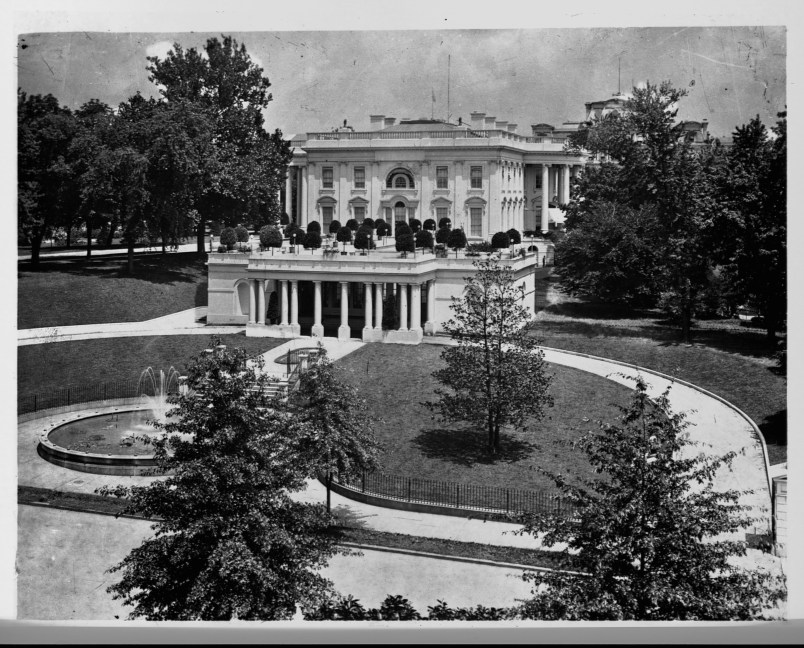
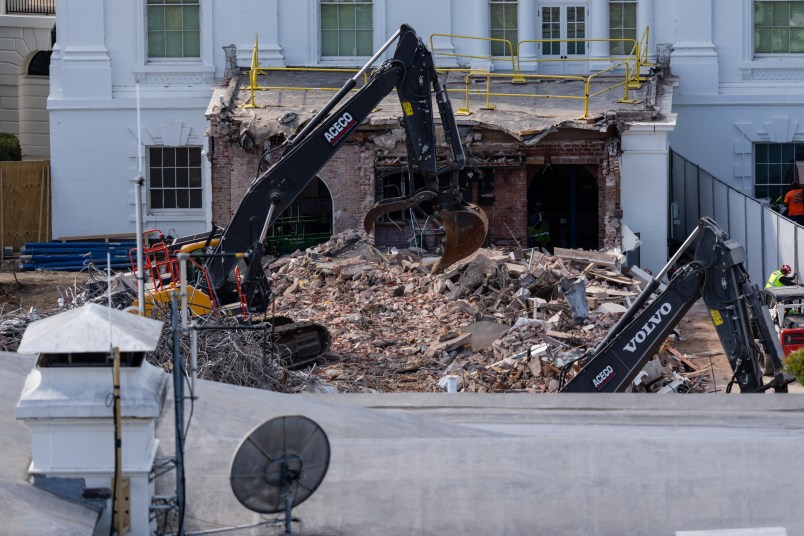
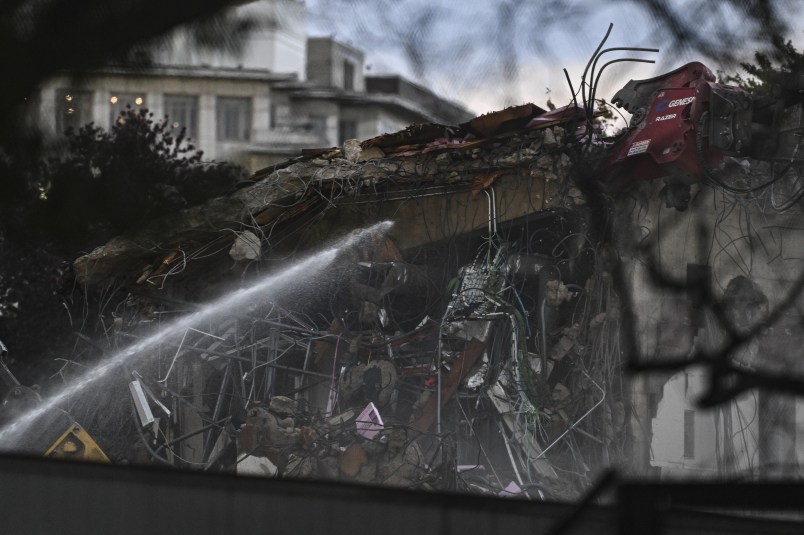
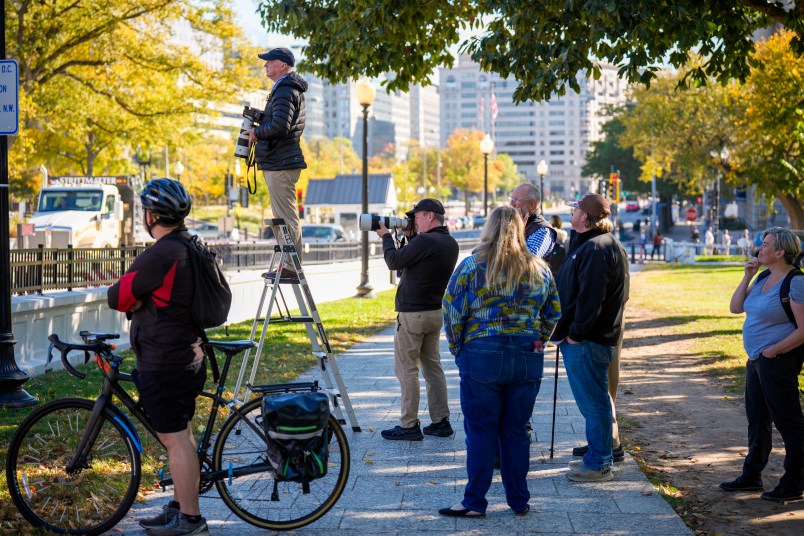
The photos truly speak for themselves. This week, workers began to demolish the White House’s East Wing to make space for President Trump’s new 90,000-square-foot ballroom that will be paid for by the likes of Amazon and Palantir. Though the administration tried to keep the destruction under wraps, images and video of the historic public building being ripped to shreds by a construction crew went viral. See for yourself below.
The newly-built East Wing in 1902
The East Wing decked out with a “We the People” theme for the 2022 holiday season

The demolished East Wing





First Ladies Made History in the East Wing. It Was Razed for Trump’s Ballroom.
This story was originally reported by Errin Haines and Amanda Becker of The 19th. Meet Errin and Amanda and read more of their reporting on gender, politics and policy.
When bulldozers began to tear down the East Wing of the White House this week to clear the way for President Donald Trump’s $250 million ballroom, historians raised alarms that important American history was being buried in the rubble, including chapters about previous first ladies and their roles uplifting women going back nearly a century.
Continue reading “First Ladies Made History in the East Wing. It Was Razed for Trump’s Ballroom.”Under Fire for East Wing Demo, White House Grossly Trolls Last 3 Dem Presidents
Sheer Assholery
The Trump White House has rolled out a new version of a page on its official website about the history of the building to tout the president’s controversial ballroom project — while gratuitously trolling the last three Democratic presidents.
Based on internet archives, the longstanding webpage appears to have been updated yesterday, amid growing criticism of the demolition of the building’s East Wing. The updated version of the page calls it the “East Wing Expansion.”
The webpage includes a “Major Events Timeline” that purports to be a history of the White House itself. It begins normally enough with the building’s design and construction, its reconstruction after the War of 1812, and other historical highlights until … those come to a screeching halt in 1998:

From out of nowhere, the Monica Lewinsky scandal is slotted in as a key moment in the history of the White House. “The Oval Office trysts fueled impeachment for obstruction,” the caption reads, stretching to find the tie-in to the history of the building.
From there, it only gets worse. Much worse:

After the potshots at Presidents Clinton, Obama, and Biden, Hunter Biden, and trans Americans, the timeline has four entries for 2025 alone, all various gaudy additions by Trump. No mention of the East Wing demolition, which the timeline dubs as “renovations.”
As so often is the case with right-wing trolling, it’s highly self-conscious, intended to get a rise from foes and knowing chuckles from allies. It isn’t some peel-back-the-curtain glimpse into the inner workings of the MAGA mind. It’s just an expression of its core asshole-ism.
Covering the trolling as news sometimes feels like a school newspaper reporting on the latest graffiti in the bathroom. And yet …
The White House website — like the East Wing (RIP) — is a public good. The staffers doing the trolling are public employees. The history of the White House as a building is a shared national story that parallels our greatest achievements, conflicts, and tragedies. Its history is our collective experience, which isn’t as tangible of a public good as the bricks and mortar, but can be vandalized just the same.
The Destruction: East Wing Edition
In related developments:
- Trump has dramatically upped the cost of the ballroom in recent days from $200 million to $300 million to $350 million.
- In the midst of the government shutdown, the White House press secretary declared: “At this moment in time, of course, the ballroom is really the president’s main priority.”
- An August profile of President Trump’s architect for the ballroom project, James C. McCrery II, suggests we had more warning this was coming than I realized. The piece, in an architecture newsletter, called it a “controversial plan to build a 90,000-square-foot ballroom to replace the White House’s East Wing” that “threatens to permanently disfigure the White House and its grounds.”
The Retribution: Letitia James Edition
Ahead of the arraignment of Letitia James today in her politicized mortgage fraud prosecution:
- ABC News: Evidence appears to undercut claims against Letitia James, prosecutors found
- NYT: “[I]t is becoming clear that creating the trappings of criminality — the headlines, the scrutiny, the reputational damage — is as much a part of the formula as any realistic chance of conviction.”
- James’ lawyers notified the court that they will be challenging the lawfulness of Lindsey Halligan’s appointment as U.S. attorney and suggested her challenge should be combined with the similar challenge by former FBI Director James Comey in his own politicized criminal case.
- James also brought Halligan’s Signal chat with Lawfare reporter Anna Bower to the court’s attention, asking for it to order Halligan to preserve the messages and stop making “any further disclosures” outside of court.
The Retribution: Adam Schiff Edition
Federal prosecutors in Maryland are hesitant to bring charges against Sen. Adam Schiff (D-CA) for drummed-up mortgage fraud because they have insufficient evidence. The case has stalled, but, under direction from the deputy attorney general’s office, prosecutors will keep the case open and continue looking for more evidence.
Note that ongoing open-ended investigations are one of the prime ways President Trump can abuse the Justice Department’s powers.
The Retribution: Jack Smith Edition
Former Special Counsel Jack Smith has called the bluff of Hill Republicans, responding to their demand for his testimony behind closed doors with his own demand to make it a public hearing (provided he gets permission from the Trump DOJ to testify and to access his old files so that he can prepare).
The Latest on Venezuela …
- NYT: A Mystery in Trinidad as Bodies Wash Ashore After U.S. Strikes
- WSJ: “The U.S. flew Air Force B-1 bombers near Venezuela on Thursday … only days after other American warplanes carried out an ‘attack demonstration’ near the South American country.”
- International Crisis Group: Beware the Slide Toward Regime Change in Venezuela
- Charlie Savage, on why the summary killing of alleged drug smugglers “stands apart” from President Trump’s many other sweeping claims of executive power.
- Trump himself:
The Corruption: Crypto Pardon
President Trump pardoned Changpeng Zhao, the convicted former CEO of the crypto exchange Binance, which is a key supporter of the Trump family’s own newly launched crypto venture.
Mass Deportations: Star Wars Edition
- In a letter posted on social media, Deputy Attorney General Todd Blanche threatened to prosecute Democratic officials in California if they arrest federal agents for violating state laws, calling the public chatter about such a move an “apparent criminal conspiracy.”
- Attorneys representing journalists and protestors rushed to court Thursday afternoon with allegations that CBP commander Greg Bovino launched a gas canister at a crowd of protestors in Chicago earlier in the day in potential violation of a federal court order.
- The ACLU is suing on behalf of a D.C. man who briefly detained in handcuffs after trolling National Guard troops by playing the “The Imperial March” from Star Wars:
Do you like Morning Memo? Let us know!
Journalists Became Personal Brands. That’s Not Necessarily a Bad Thing.
At the very start of the second Trump administration when multiple explosive news stories were breaking every day, I got a scoop that changed the course of my career. When I received the tip, there was no editor to run it by; no legal team to consult. I had to decide in a moment of sheer terror and exhilaration what my next move should be. Then I hit publish — and scooped all of the country’s biggest news outlets by reporting that the federal government planned on freezing all funding for grants and loans. The move caused such an uproar that the federal government walked it back, and my work as an independent journalist saw unprecedented attention.
One of the most drastic changes in journalism of the last 25 years is accountability to readers. In the era before digital media really took off, journalists would write and publish stories and maybe receive an occasional letter or email in response to their work. Now there is an invisible umbilical cord between writers and readers. When I broke the federal grant story, I did so on Bluesky, and hundreds of people immediately responded, expressing outrage and disbelief that the administration was exerting such a heavy hand so soon into its tenure.
This inextricable connection is no coincidence: With the rise of social platforms like YouTube and Instagram that highlighted individual creators, the need to sell one’s self along with one’s work became essential. Just before graduating journalism school in 2009, my senior seminar professor had us all sign up for Twitter accounts; while that arguably set me up for the circuitous path to where I am now, it also encouraged me to emphasize not just the political but the personal. My thoughts on The Bachelor were stacked on top of reporting about the Affordable Care Act — and people could read and react to every single one.
Continue reading “Journalists Became Personal Brands. That’s Not Necessarily a Bad Thing.”