

 Members-Only Article
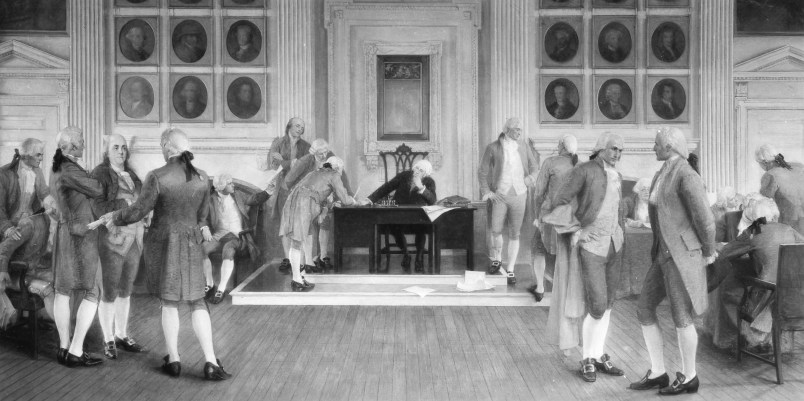
Members of America’s founding generation had an ambivalent and evolving understanding of the role and importance of public or civic “virtue.” In the 1760s and 1770s, many of them were caught up in a kind of republican idea world which made this kind of virtue the cornerstone of any republic. The anchor of republican government wasn’t well-designed constitutions or legal accountability. It was the virtue of the free citizenry. By the late 1780s, many were developing a more pragmatic and jaded view of human nature and focused more on creating systems in which greed, the drive for power and other unlovely parts of human nature could be placed into some kind of enduring counterbalance. That was the basis of what became the federal Constitution and the driver especially for the two young ideologues, James Madison and Alexander Hamilton, both men in their thirties, who pressed the project forward.
I was thinking about this this morning when I saw a post by Leah Greenberg, the co-founder of Indivisible. She commented on the “utter moral failure of the elite of this country” when referring to a passage from an article by journalist Ed Luce who recounted talking to numerous leaders throughout the American power structure, all of whom said how critical it was for powerful public figures to set an example by speaking out and defying Donald Trump, and none of whom agreed to speak on the record.
Luce concluded by saying “it has felt like trying to report on politics in Turkey or Hungary.”
This got me thinking about the question of civic virtue.
Join TPM to get full-access to our reporting, newsletters, and other member-only features.