


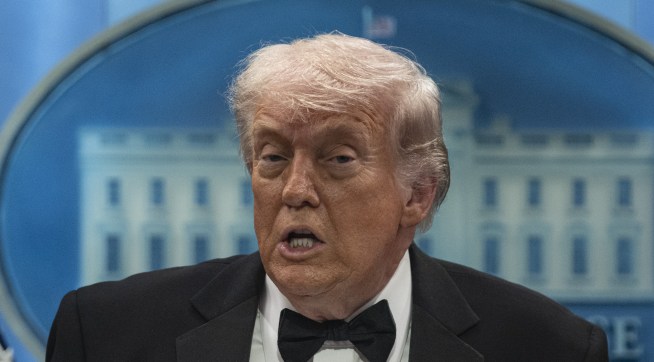
In things I write here in the Editors’ Blog, I am both critical of mainstream news conventional wisdom and also interested in it as a political artifact in itself. Whether it is accurate, fair, quality journalism, it is a fact of the political geography on its own. So it’s important to understand, and I spend a lot of time trying to analyze and place it on that basis.
On that front I wanted to return to a point I’ve alluded to a few times recently, which is that just in the last week or so there’s been a shift in that elite news conventional wisdom toward what we and others have been saying for a couple months. And that is a new focus on the disconnect, really the chasm opening up between Donald Trump’s political fortunes and his political actions. It’s not simply that Trump isn’t adjusting or repositioning as a more conventional politician might. Trump’s never been that way. It’s out of character. But he’s accelerating into the most toxic parts of his presidency. In addition to general discontent about the economy and the very unpopular Iran War, he’s pushed things like his ballroom and his slush fund to the very top of the political agenda, even short-circuiting or delaying other parts of his agenda to further them.
Join
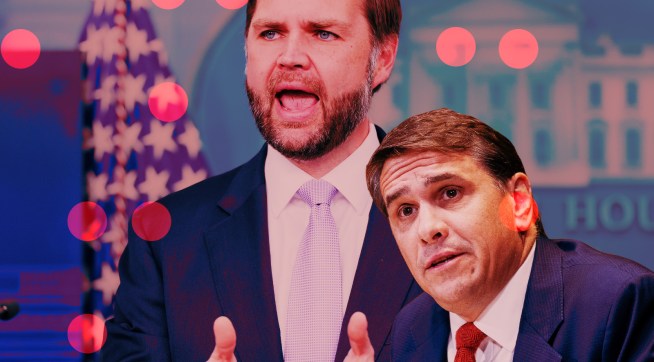
Josh Kovensky has a good piece up today on the collapse of the “Broadview Four” nee Six case in Chicago. What started off as yet another case of wild overcharging by the Trump Justice Department and politically motivated prosecution collapsed a week ago when a stunning level of prosecutorial misconduct was revealed in open court and all the remaining charges were dropped. The taint of the misconduct has already spread to other cases. The U.S. Attorney in Chicago, Andrew S. Boutros, has reacted with what he purports are important and until now neglected “reforms” to avoid anything happening like this again. (He has also been accused by one of the defense attorneys in the case of at least some level of involvement with the tainted grand jury.) But according to experts on grand juries, avoiding the levels of misconduct revealed in the case could have been done easily enough by just not breaking some of the most basic rules for how prosecutors must conduct themselves in grand juries.
It’s a galactic mess. But it’s also an example of the corruption of the Trump DOJ seeping down into depths of the Department.
Join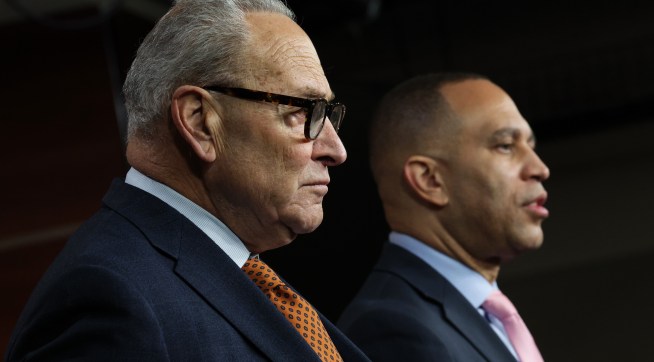
Yesterday The Bulwark’s Lauren Egan ran an “exclusive” with an advance look at Project 2029 and its policy recommendations going into the 2028 election. TPM Alum Brian Beutler looks at it and concludes, in so many words, this ain’t it. I read the piece last night and that was exactly my conclusion.
First, a few points of context. Attitudinally and analytically I blanche at most things Egan writes. That’s not a criticism precisely. There’s nothing wrong with not sharing my viewpoints or outlook. I think it’s fair for me to share that background. I would also say that there’s a lot of hunger for a Project 2029. I had someone pitch me a few days ago on leading one up. But there doesn’t need to be just one. At least for now, we should be in a let 100 Flowers Bloom mode. There can also be different kinds. With that said though, what Egan published didn’t seem like anything like what I and I imagine others are talking about. It seems like a mix of positioning statement and policy portfolio. And some of those policies are good ones. It talks about affordability; it talks about breaking up monopolies, etc. That may have some role. But that’s an entirely different exercise.
Read More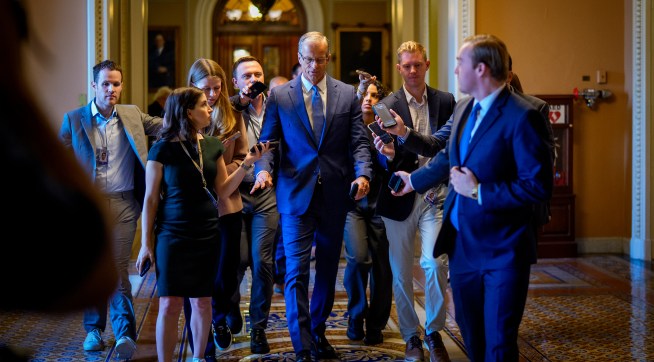
TPM Reader TB dropped me a note this afternoon about today’s second post. He liked it. Then he wrote this: “You’ve pretty much conclusively won the argument on SCOTUS reform, starting with immediate unilateral expansion. You’ve written comparatively much less about the filibuster and I’m among those unconvinced that just nuking it is the best way forward or that that’s a win as a platform plank. Not passionately against it, just not clear on how concretely that plays out as a long-term win.”
I’ve written pretty extensively about abolishing the filibuster. But I haven’t done so in quite some time. So I welcome the opportunity to do so again.
I’d put the matter in three related arguments: 1) It’s bad on the merits and defies if not violates the Constitution. 2) It hurts Democrats disproportionately. 3) The existence of the modern filibuster is a major driver of the loss of confidence in public institutions.
Read More

One feature of the current moment is that there are so many things going on, so much corruption and wrongdoing that it is hard to focus on any one thing. What would otherwise be historic scandals blow by almost unnoticed. Today I wanted to zero in on a couple storylines we should all be following.
One comes from the Broadview Six/Four case. I explained the outlines of the story here. It’s now being referenced in numerous federal cases to persuade judges to deny prosecutors the presumption of “regularity,” i.e. the foundational assumption that the government is following the rules and operating in good faith in its prosecutions. The end of the Kilmar Abrego Garcia case is getting similar treatment. But there’s clearly a deeper scandal brewing here, especially with grand juries. It’s not clear to me how much of this is coming from explicit instructions from the DOJ to violate the rules or simply a climate of permissive lawlessness in which prosecutors start breaking the rules because they see their superiors doing the same.
Join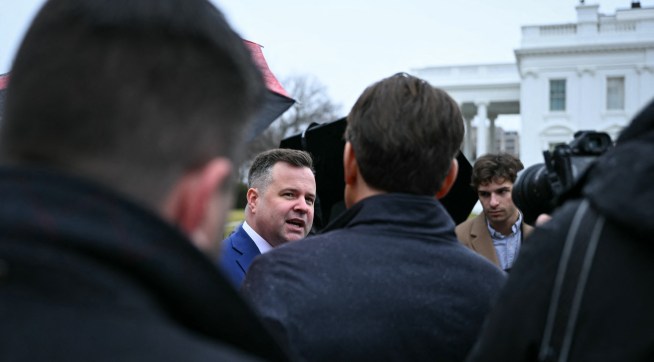
In case you forgot, Bill Pulte is the Federal Housing Finance Agency head who proved his loyalty to the president by combing through the mortgages of Trump’s enemies, such as New York Attorney General Letitia James and Fed Governor Lisa Cook, for things that the DOJ might be able to prosecute. It’s unclear what intelligence community credentials he has, though, given the way he used his power at FHFA and as chairman of Fannie Mae and Freddie Mac, that question is probably missing the point.
Though the role is acting, acting heads can end up serving for quite a while. Pulte is replacing Tulsi Gabbard.
Read More
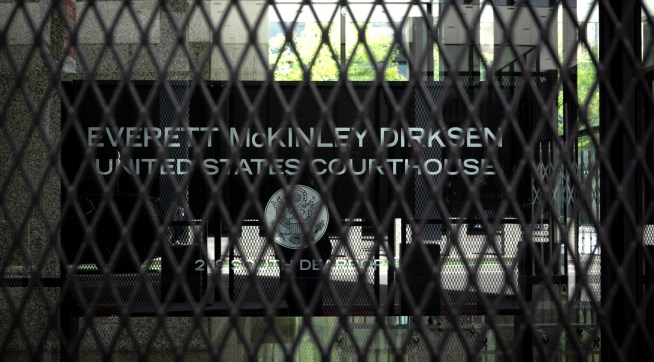
Today Illinois Sens. Dick Durbin and Tammy Duckworth called on Chicago U.S. attorney Andrew Boutros to resign charging that his office is adrift in chaos and official misconduct.
On the one hand this is unsurprising. This is a major and growing scandal. It implicates a Republican president. They’re Democrats. And the office has been at the leading edge of policies (Midway Blitz, mass deportation generally) that are deeply unpopular — certainly in Chicago and to varying degrees across the state. So, as I note, to some agree it’s a predictable development.
But there are some additional threads I want to remind you of.
JoinWhile the AP has not yet called the race, it now appears clear that Democrats have avoided a nightmare scenario they contemplated in the days after Eric Swalwell’s campaign for governor dramatically imploded: That some two dozen Democratic gubernatorial candidates might split the vote, creating room for two Trump-aligned Republicans to advance to the general election in the state’s top-two primary system. The state is notoriously slow to count votes, but, this morning, Trump-endorsed Fox commentator Steve Hilton (R) and former HHS Secretary Xavier Becerra (D) currently have the top two spots. The other major Republican in the race, Sheriff Chad Bianco, trails as a distant fourth.
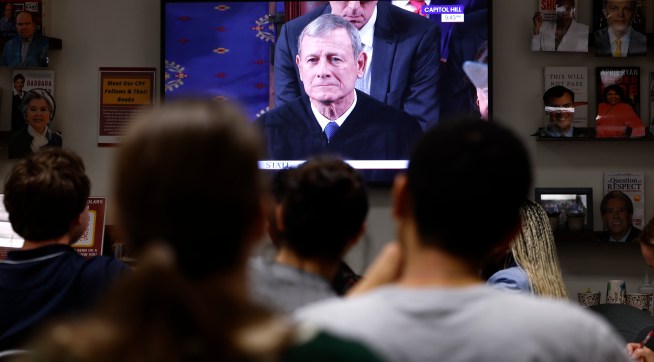
We are now well into the post-Voting Rights Act period, with ruthless attempts at racial gerrymandering unfolding across the South. The latest development came yesterday evening, when the Supreme Court deployed a twisted logic to effectively halt an Alabama election already in progress so state officials can hold it under a map that dilutes the Black vote.
Against that backdrop, we wanted to make sure you didn’t miss this TPM story, from about two weeks ago now, in which the families of civil rights activists who died in the months before and immediately after the passage of the Voting Rights Act talked to us about what the Supreme Court’s April ruling eviscerating it means to them. This kind of work is not always the splashiest political reporting, but we think it’s important. It’s the kind of thing your memberships make possible. So thank you.
Read MoreIn very different language, and coming from his own vantage point, Jamelle Bouie has a piece up in the New York Times today which points in the same direction as I’ve been arguing here in various posts. The gist version is this. The current Project 2029 efforts are a mix of messaging/positioning efforts and policy proposals. Those may be solid or promising on their own terms. But they are inadequate. Trump broke the old system, which has existed in an evolving form since the 1930s and 1940s. You need to build a new system, a new vision and mechanism of public power in its place. As Bouie puts it, “A Project 2029 that has nothing to say about either the Senate filibuster, or an ideologically captured Supreme Court, or extreme partisan gerrymandering — among other concerns — is not a Project 2029 worth the time or effort.”
I’m flagging this because Bouie is one of the best and I want to highlight this article. But this is a position that is clearly enough distinct — structural reformers, reconstructionists — that it really needs to be seen as such in the world of Democratic politics, at least through 2029. When that happens, public arguments become more coherent. It provides clarity to voters.