


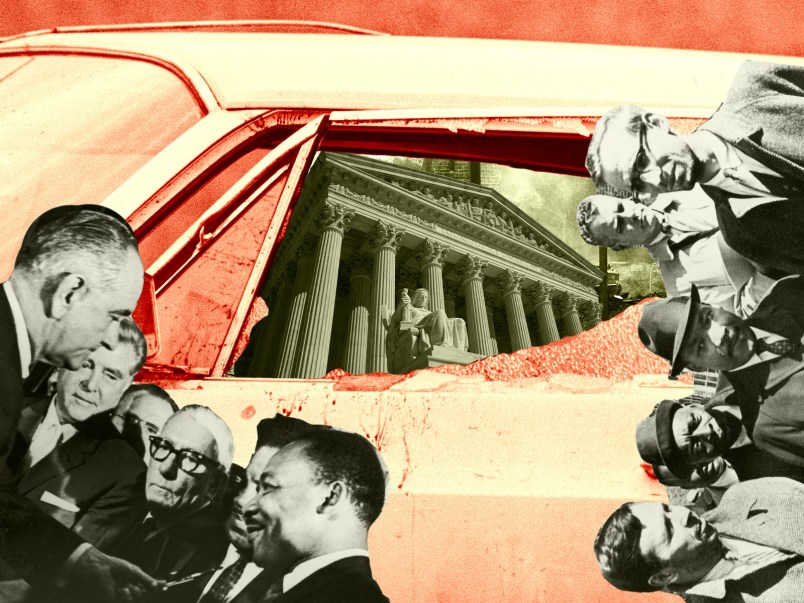
Dennis Dahmer was 12 years old in January 1966 when Klansmen stormed his family home and set it on fire, murdering his father, Vernon. He still remembers the shootout; he remembers watching his father die from smoke inhalation. The trauma lingers to this day, 60 years later.
Vernon Dahmer had been a fixture in the African American community near Hattiesburg, Mississippi. He ran a successful local grocery, and, after the Voting Rights Act was passed in 1965, obtained the right to register voters and collect poll taxes, which were still in effect, at his store. Members of the local White Citizens’ Council started to appear at the family farm, warning his father to stop, Dahmer told TPM, but that didn’t deter him. He recorded a radio announcement in January 1966 offering to cover the cost of poll taxes for African Americans who couldn’t afford to pay. The KKK attacked the next day.
“He would always say to us, ‘do something, dammit,’” Dahmer recalled. “‘Don’t just stand there.’”
With all that in mind, Dennis Dahmer decided late last year to listen in to oral arguments in Callais v. Louisiana, the Supreme Court case that would ultimately gut the remnants of the Voting Rights Act. The law had provided a framework for protecting minority votes in the South for decades.
“It was apparent to me that they had already made up their mind — talking about the MAGA ones for sure,” he said. “They were just laying the groundwork to justify what they were going to do.”
The Callais decision last month threatens to bring the state of Black congressional representation in the South back to the 1960s. State legislatures across the Old Confederacy are gerrymandering away political maps that allowed Black communities a voice in local, state and federal politics, and provided a means for them to elect politicians of their choosing. The rapid democratic backsliding has prompted demonstrations at Selma, the site of key actions during the Civil Rights Movement, and disbelief among Democrats at the consequences.
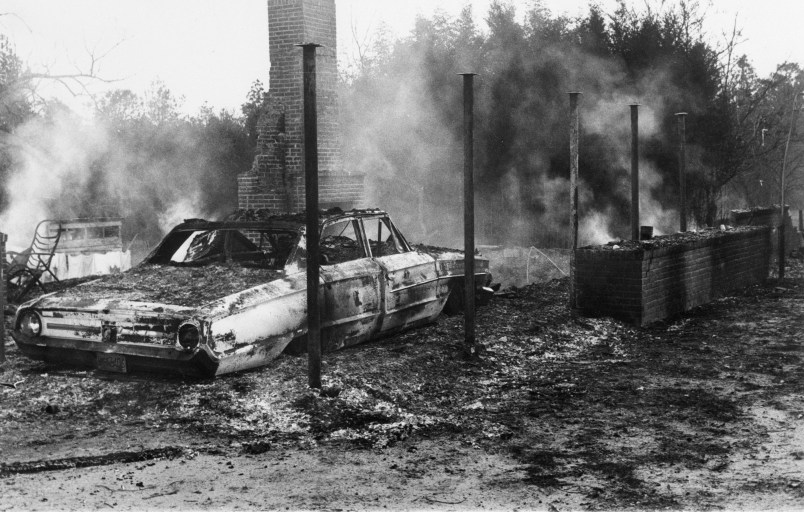
But for Dahmer and other survivors of people who were maimed or murdered during the Civil Rights movement, it’s deeply personal. For these families, the Supreme Court’s decision in Callais represents a return to the 1960s that isn’t abstract, but very real. They remember learning that their relatives died, they remember death threats against them and other loved ones in the aftermath, they remember how the fear and bloodshed prompted President Lyndon B. Johnson to decide that the time had come to send a Voting Rights Act to Congress. In many of these cases, justice was limited, late, or non-existent: the perpetrators were acquitted, died before they were convicted, or were only held accountable after spending decades free.
Now comes a new form of injustice: the one lasting change to American democracy that their relatives’ deaths brought about has been undone.
‘Your mother has not died in vain’
Anthony Liuzzo Jr. remembers how his mother, Viola, would call home every evening when she was in Selma. Viola Liuzzo had joined the NAACP in the late 1940s when she was in her twenties. When she heard Rev. Martin Luther King Jr. call for people to come to Alabama to join protests for voting rights in early spring 1965, she left the home and family she had built in Detroit to help.
On March 25, the day of her murder, Liuzzo was ready to head home, her son told TPM.
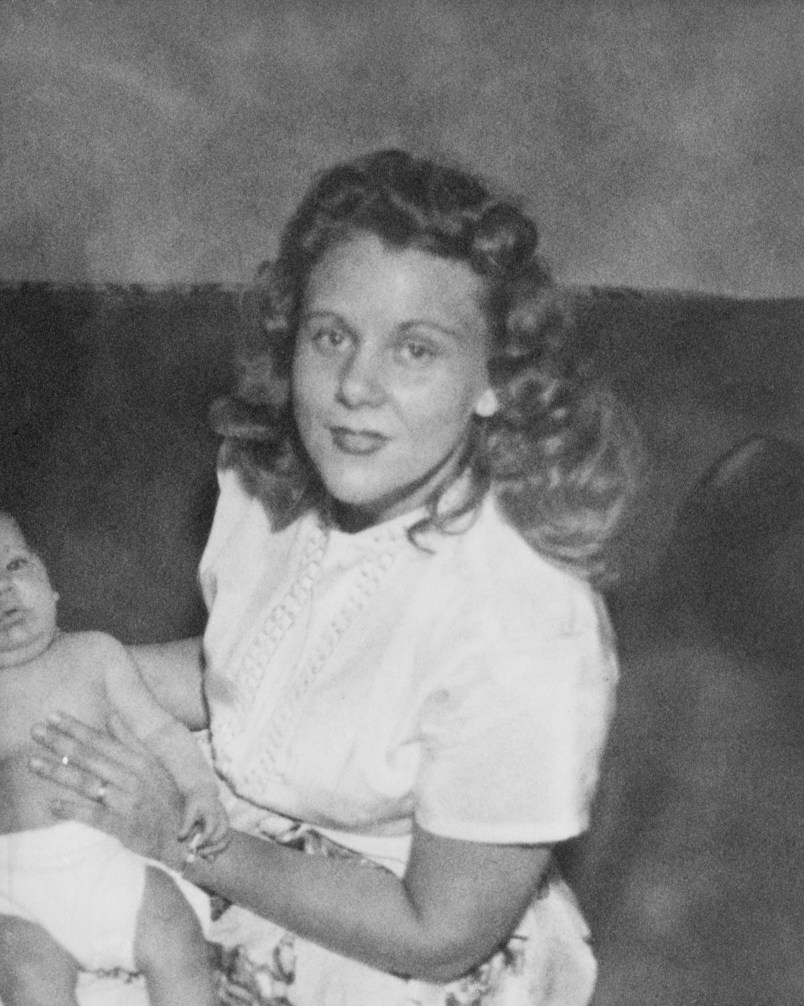
“She said that she was all excited, that it was wonderful how everything went,” Liuzzo recalled. “It was funny, because my brother and I started marching around the house singing, ‘We Shall Overcome.’ My dad got actually upset with us, said, ‘you guys, stop it.’”
Liuzzo drove back to Selma that night with an African-American volunteer. At a red light, a car with four white men pulled up, and began to pursue the activists. Then the men opened fire. Liuzzo was struck twice in the head and died. Alabama state troopers called the Liuzzo home that night to inform the family of her death.
From there, it was immediate chaos, Anthony Liuzzo Jr. recalls. Reporters appeared at Liuzzo’s doorstep, along with FBI agents, he said. Death threats started to pour in.
“We had bullets shot through our window. We had garbage dumped in our yard, crosses burned in our yard. People tried to break into our house,” Liuzzo told TPM. “We lived with armed guards around the clock for two and a half years. It was insanity.”
President Johnson addressed the nation about Liuzzo’s murder the day after it happened, announcing the arrests of four men in the case. At the same time, FBI Director J. Edgar Hoover falsely accused Liuzzo of being a promiscuous drug addict. Liuzzo recalled public opinion being divided in part because of widespread racism and sexism: a mother, she had traveled to Selma alone, and was alone in a car with a Black man at the time of her murder.
Still, the brutal killing shocked many people. Rev. King attended Liuzzo’s funeral, reportedly telling Anthony’s sister: “Your mother has not died in vain.”
Speaking to TPM this week, he expressed rage and disappointment over the Callais decision.
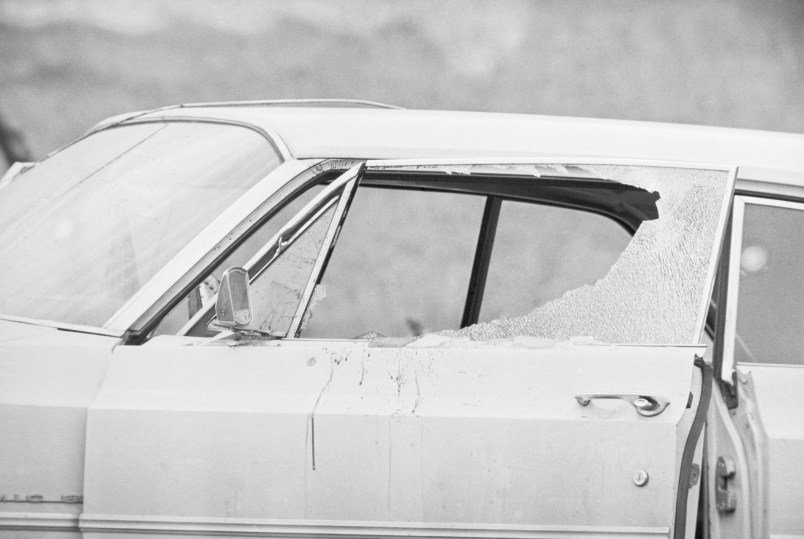
“My mother did not give her life. Her life was taken and it shocked the nation enough that they passed the Voting Rights Act in 1965,” he said, adding that the Supreme Court and Trump administration were “working tirelessly to go back to the ‘60s.”
“It’s disgusting,” he said.
‘Much more grave’
Days before Liuzzo’s murder, a Unitarian minister who had traveled to Selma, Rev. James Reeb, was beaten to death by a group of white supremacists during a demonstration on March 11. President Johnson referenced the murder when he introduced the Voting Rights Act to Congress four days later, saying that in Selma, “long-suffering men and women peacefully protested the denial of their rights as Americans. Many were brutally assaulted. One good man, a man of God, was killed.”
Another Unitarian minister, Rev. Clark Olsen, witnessed the killing, and was himself attacked. Like the others, he had traveled to Selma after hearing Rev. King’s call.
“We wonder what we would’ve done in the 1960s in the Civil Rights Movement, in the same way that you can ask what would you have done in Germany in the 1940s? You’ve got your answer, you’re doing it now.”
Marika Olsen
Olsen died in 2019. His daughter, Marika Olsen, told TPM that her father was traumatized for years after. The beating took place after three civil rights activists were murdered in a case that involved local police; when local sheriffs stopped the ambulance carrying Reeb, Olsen recalled that her father felt “abject fear.” He testified at Reeb’s murder trial — the case ended in acquittal.
“He could not speak about that incident even decades later without crying about it,” Marika Olsen recalled.
For her, the Callais decision brought a mix of outrage and heartbreak.
“We become complacent. It’s like, this is just a reminder that all of us need to be involved. You know, if any of us are young enough that we wonder what we would’ve done in the 1960s in the Civil Rights Movement, in the same way that you can ask what would you have done in Germany in the 1940s?” she said. “You’ve got your answer, you’re doing it now.”
Historians that TPM spoke with said that the aftermath of Callais is in some ways more severe than other, similar periods of regression in American history. Steve Lawson, history professor at Rutgers University, described the Callais decision as “disastrous,” not only because it has gutted the Voting Rights Act, which he called “one of the most effective civil rights laws in American history,” but also because “the Court is imposing its own, I would say, partisan ways and ideological ways.”
“It’s imposing standards that Congress didn’t set,” Lawson added.
J. Morgan Kousser, a history professor at the California Institute of Technology, pointed to the Redemption era, the post-Reconstruction period in the South that saw the rise of white supremacy and Jim Crow laws and the dismantling of Black political power. That era is often understood to begin in 1877, Kousser said, and it helps us to better understand the gravity of this current moment.
The Redemption era was a period during which white Democrats used violence, intimidation tactics, and laws — including racial gerrymandering — to chisel away at the rights of Black people. During it, Kousser said, “the Ku Klux Klan was the Democratic Party in drag.”
“They’re going to get rid of all the Black members of Congress from the South, probably, by the end of Trump’s term.”
J. Morgan Kousser
This post-Callais period however, Kousser emphasized, is in some ways “much more grave” than what happened during the Redemption period. Unlike the Redemption era, Kousser noted, there is now a single, reactionary, national leader — President Donald Trump — at the helm of the effort to curtail Black electoral power.
During the Redemption period, “one state copied another state, but there was no national leader,” he said. “The only comparable president would be Woodrow Wilson, who segregated the federal government workforce, and fired a lot of Black workers — but that was much later.”
Kousser emphasized that the gutting of the Voting Rights Act and the subsequent red state gerrymandering blitz that followed is happening at a much quicker rate than what occurred during the Redemption era.
The last Black member of Congress to be elected during the Reconstruction era, he explained, was Rep. George Henry White (R-NC), who left office in 1901. It took a full 24 years for the white activists of the Redemption era to fully end Black congressional representation. This current post-Callais moment, Kousser said, will dramatically reduce and perhaps fully end the Old Confederacy’s Black congressional representation in a fraction of the time.
“This is going to happen much quicker,” he said. “They’re going to get rid of all the Black members of Congress from the South, probably, by the end of Trump’s term.”
‘More than a hamburger and a cup of coffee’
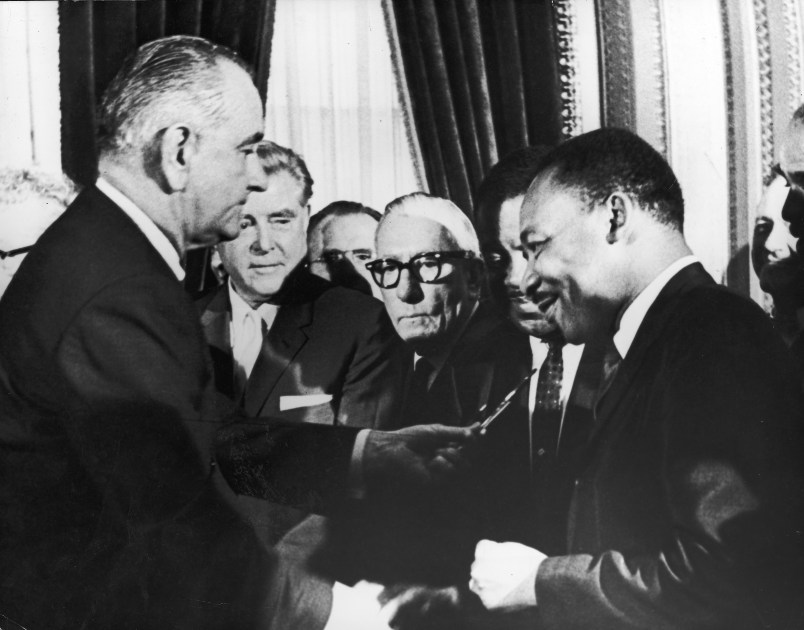
Dr. Rev. Gordon Gibson, who is now based in Tennessee, participated in voting rights demonstrations in Selma in February 1965. Although he initially went to Selma with an “observer mentality,” he told TPM, he soon learned that local people there were not merely observing, but “risking their jobs, their homes, their lives.”
Gibson was convicted of contempt of court for his participation in a demonstration; he was accused of violating a notorious Alabama State Circuit Court injunction forbidding three or more people from publicly meeting in Selma to support civil rights or voter registration. Gibson’s arrest was a turning point for him, transforming how he thought about America.
“It showed me a vision of an America that was expansive and liberating, ” he said. “The civil rights movement was certainly about more than a hamburger and a cup of coffee, it was about an America in which citizenship was open completely to everybody.”
Now, in the aftermath of Callais and amid the red state scramble to gerrymander, Gibson is disappointed and angry. Tennessee passed a map that carves up voters such that it will likely have no Democrats in Congress. Gibson feels like his state’s “legislative majority pissed on those people” who fought for voting rights.
But at the very same time, he said, he feels energized. He is hoping people who are just as angry channel that rage into a “reenergization of voting activity.”
To Dahmer, whose father was murdered by Ku Klux Klan members in the aftermath of the VRA’s passage, it’s a reminder of the blood that was shed to pass the law, and the activism still to come.
“Each one of those stories deserves to be told as well as those of the unknown who were murdered, jailed or whatever, just for trying to get Black folks the right to vote and to be treated equally and fairly in America,” he said. “So don’t only be mad, get proactive.”
Kate Riga contributed reporting.




It is time for all of us to just get on with making life better for our children and grandchildren It has been 60 years since the voting rights act. It has been 60 years since schools were integrated. Time for all of us to let the past be the past. We need to learn from it (big lesson some people are monsters) and move on. I am more worried about how our society is going to adapt to AI than I am about the Supreme Court killing the voting rights act.
It occurs to me that our society is in trouble on a lot of levels many of which we don’t focus on. Right now I am worried about the absolute decline of America and how we can fix it. How will a consumer driven America get money into the hands of citizens if AI destroys all the middle class jobs. Not all of us can be billionaires.
Look at it this way the racists on the Court are pleased. It took years but they are finally getting what they want. I would call them White Nationalists but Thomas throws that moniker out the window.
I remember each of the murdered heroes you cite and the rage I felt in those days. Those murders were two and a half years after the March on Washington for Jobs and Freedom. We were committed to non-violent resistance. The violence continued. But non-violent resistance won the day.
We will win again and this time our non-violent resistance will win the day for our democracy itself, for all of us, equally, inclusively in each, our own, diversity.
It does appear like the Supreme Court has an agenda that’s being organized by forces with a specific agenda having nothing to do with law or precedent. It’s an agenda that says the good of the country is bound to the good of a few individuals.
I had someone comment to me that “now that the Supreme Court has done all of this, and claimed there is no racism and gone full in on allowing gerrymandering basically for any reason, it’s even more preposterous that they only approve Republican changes.”
If the California case had come to the court any later in this process than it did, it would have been denied like all of the others are now.