


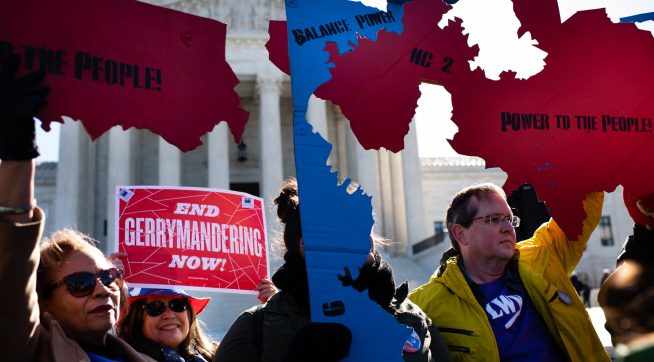
Callais, combined with today’s court ruling in Virginia, has jolted Democrats and sent commentators into bemoaning an accelerating “race to the bottom” and, to paraphrase Jeff Zeleny on CNN this afternoon, the end to norms that have organized American politics and redistricting for generations.
I’d like to offer a significantly different view of the situation. What we have seen over recent months is that Democrats have largely abandoned the mode of the last decade plus in which with one hand they fought the partisan battles of the day and with the other assume the mantle of defending the political norms Republicans have already destroyed. In other words, it was the responsibility of Democrats both to be contestants and referees. Republicans violated norms; Democrats tried to uphold them. That of course meant no partisan battle was ever on equal terms and Republicans almost always won them.
JoinThe Supreme Court’s decision in Louisiana v. Callais probably closes the book on the use of the Voting Rights Act to ensure Black voting rights in the South. The decision is being taken as a blow to Black voting rights — and even as indicative of the court’s racist leanings — but I wouldn’t jump to those conclusions. The redistricting effort that Callais ends may not have been of unequivocal benefit to the Southern Blacks it was designed to aid. And while it could damage Democratic prospects in 2026, it might help them in the longer run.
Read More
TPM’s own Hunter Walker has won a 2026 New York Press Club award for his seven-part investigative series delving into the impact of President Trump’s mass deportation agenda in New York, the U.S. city with the greatest population of immigrants, and which has seen the highest number of violent courthouse detentions.
Over two months in New York City’s federal courts, churches, and safe houses, Hunter spoke to more than 50 migrants, organizers, ICE agents and lawmakers, including then-mayor-elect Zohran Mamdani and Reps. Dan Goldman and Nydia Velasquez (D-NY). At the heart of the series are the New Yorkers, many of them volunteers, operating in secret to protect and serve their immigrant neighbors.
Read More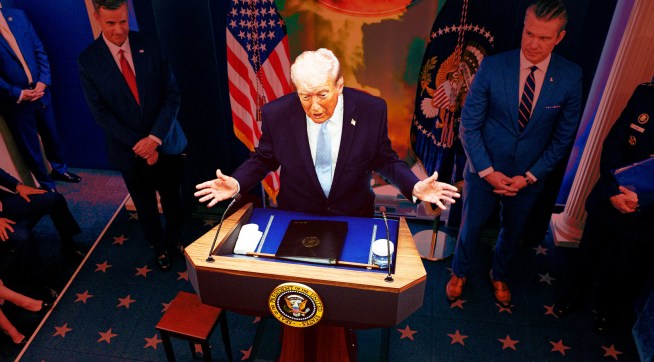
Again we see that, contrary to numerous press reports, the U.S. and Iran remain lightyears apart in their on-again, off-again negotiations to end their war. Iran’s demands, its response to Trump’s latest proposal, amount to a maximal package of winnings for a war Iran won: an end to the decades-long sanctions regime, sovereignty over the Strait of Hormuz, reparations. It is true that antagonists can sometimes seem very, very far apart and then suddenly arrive at an agreement. But these two sides seem really, really far apart.
Read MoreKate Riga has a good summary of the stakes Democrats currently face in Virginia. There’s a way to reverse the state Supreme Court’s decision tossing out the majority statewide vote supporting the new Dem-friendly districts. It involves intense political hardball. But it’s the same kind of political hardball Democrats will need to embrace at the national level in 2028-29 with a trifecta if there’s any hope on turning the tide against Trumpism. So Virginia will give us some view into what kinds of fights Democrats are ready for.

Independent media can feel like an isolating place. Most of us operate as individuals or in small newsrooms with limited resources, throwing spaghetti at the wall to try to reach new audiences and get our stories in front of people in an ever-more-consolidated media environment.
But we’re in this together, as celebrated historian and writer Heather Cox Richardson reminded us in a generous live interview with TPM’s Kate Riga and Josh Marshall this afternoon.
HCR had Josh and Kate on to talk about what it’s like to report on today’s frenetic politics; the founding and future of TPM; and what independent media will look like in the years to come.
Read More
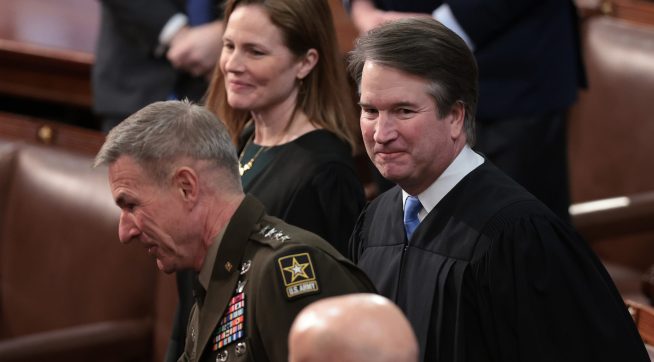
Some of the most consequential and trust-shattering Supreme Court decisions of late have been ones that could have been predicted decades ago. Certainly that’s the case with the Dobbs decision. Callais doesn’t have quite as long a history, in terms of attempts to overturn the precedent. But certainly it’s been in the cards for at least a decade. Still, it’s some of the smaller decisions that tell us just who and what this corrupt court is. Kate Riga notes one of them here: Conservatives on the Supreme Court have previously invoked the “Purcell principle” to rule that a change couldn’t be made to districts on the “eve” of an election. Now it’s fine to do so in states like Louisiana and Alabama where primary elections are actually already underway and tens of thousands of cast ballots must be invalidated.
The message is simple: there are no rules. Only power. It reminds me of my hand tool woodworking shop. There are a big selection of tools. And it’s just a matter of what helps the GOP and the Court in that particular moment. In a way it’s clarifying. Even helpful.
Join“We are the most gerrymandered Republican state in the country already,” said South Carolina Sen. Majority Leader Shane Massey (R), announcing his opposition to a new post-Callais redistricting effort which went down to defeat, for now, a short time later. Massey made both political and moral arguments against the move. We shouldn’t underestimate the political motivation. Democrat Joe Cunningham won the 1st district in the wave election of 2018. Nancy Mace defeated him by less than a single percentage point two years later. Her district then had to be significantly fortified with Republican voters to help her keep her seat. Point being, there are a lot of Democratic voters in Jim Clyburn’s 6th district. Spread them out into neighboring districts and you’ve spread the gerrymander so tight it can just snap. And those snaps happen in wave elections.
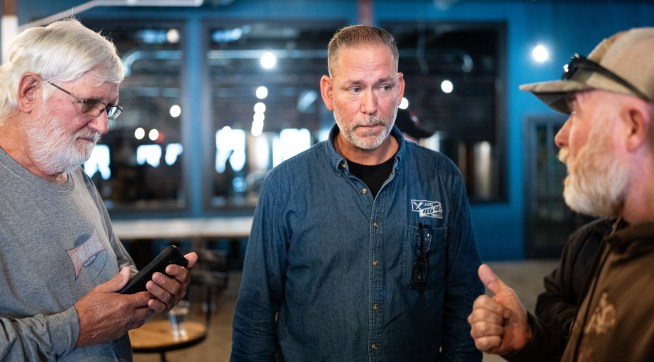
A bright spot for Democrats, as Republicans’ scramble to gerrymander the old confederacy plows forward: Over in Nebraska, the path is cleared for an independent who supports things like strengthening the social safety net and taking on corporate power.
Read MoreIn the Southeast right now, we are seeing a no-holds-barred push to obliterate Black electoral power following the decimation of a law for which generations of activists marched and sometimes died. In service of this goal, state officials are going so far as to cancel elections in which voters have already cast ballots.
Yet many news outlets are talking about what’s happening using terms like “political gamesmanship,” noting white Republicans “looking for every advantage.” These terms were already a stretch for describing the mid-decade gerrymandering blitz pre-Callais. They are wildly inapplicable now.
There’s a frog-in-boiling-water quality to it. Its a mode of coverage unmoored from national and global history, which we ignore at our peril.