


Following up on the question we posed yesterday — will right-wingers actually buy an attempt to “pass” “the SAVE America Act” through budget reconciliation? — we are beginning to have some indications that, no, they will not.
Sen. Mike Lee (R-UT) has been on a tweeting spree, campaigning against the idea by, for example, comparing the voter suppression legislation to a fine cut of beef, urging his colleagues not to “settle for cheap imitations” of the sort necessitated by budget reconciliation. It is perhaps an imperfect metaphor.
Read MoreWe’re starting to see House Republicans complain that, even as the administration prepares to ask for huge sums to keep the war in Iran funded, it’s leaving lawmakers in the dark about what, exactly, the money is for. “We want to know more about what’s going on, what the options are, and why they’re being considered,” House Armed Services Chair Mike Rogers (R-AL) told reporters yesterday. “And we’re just not getting enough answers on those questions.”
Rep. Joe Morelle (D-NY), the vice ranking member on House Appropriations and a member of its Defense subcommittee, goes into great detail this morning with Hunter Walker and Josh Kovensky about how bad it really is. “I don’t think the American public appreciates it, and it’s certainly not a way to conduct your conversations with Congress,” he says. “Even in classified briefings where we don’t talk about what we learn, there’s literally no actionable intelligence that you get from him.”
One of Layla A. Jones’ insights when she joined our team last year was that you could measure the destruction that DOGE wreaked on the federal workforce by looking at the D.C.-area economy, and, specifically, the housing market. Her first piece for us examined those indicators. Now, a year after Elon Musk and his youths began their slash-and-burn rampage through the executive branch, Layla finds the damage lingering — and, in some ways, worsening — with the middle class, once propped up by government workers and contractors, falling behind a growing wealthy elite. That story is here.
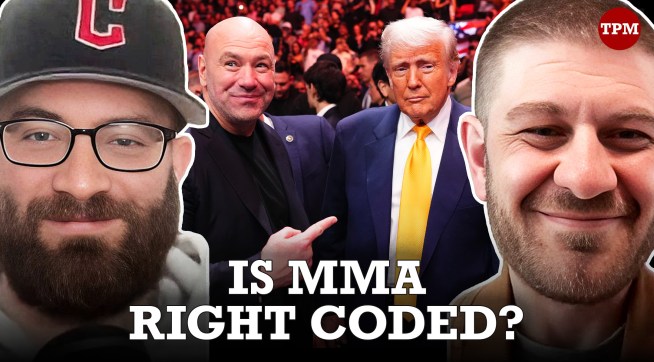
President Donald Trump is planning to bring the UFC into the White House later this year. But the brawl on the South Lawn is not the only way mixed martial arts has become a part of his administration.
Trump, like many other right-wing leaders before him, has a long history with combat sports.
Yesterday afternoon, John Light, Hunter Walker and Joe Ragazzo got on Substack Live to talk about how martial arts has become right coded. It’s a cultural phenomenon with troubling effects that stretch from D.C., to Saudi Arabia, and the white supremacist fringe.
Check out their full conversation below.
Kate and Josh talk airports in crisis, Trump’s bewildering political calculus and, believe it or not, an optimistic vision of what a post-Trump world could look like.
Read More
Due to popular demand, we’ve increased our ticket allotment for the Austin event on April 8.
Remember: If you are a member, you get discounted tickets. If you missed the discount code, just shoot me an email at joe@talkingpointsmemo.com and I’ll get you the goods.
If we sell out, please add yourself to the waitlist. Sometimes people drop out.
You can find more info about the event and get your tickets here.

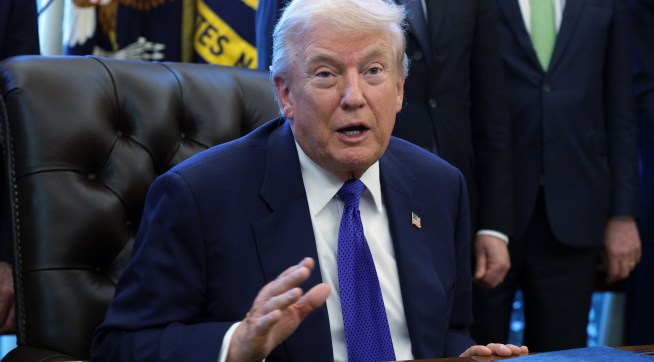
I had a moment of insight or perhaps revelation early in this war when the blockage of the Strait of Hormuz first became central in the news and President Trump was publicly debating whether he would use the U.S. Navy to escort ships through it. Would he, won’t he? Will it happen tomorrow? What will he decide. Then I was watching a YouTube show about maritime shipping. In passing the host, Sal Mercogliano, noted that, at that time at least, there weren’t any U.S. naval vessels in the Persian Gulf at all. And the kind of ships you need, in the numbers you’d need, were hundreds of even thousands of miles away. That made perfect sense since for the kind of war the U.S. is currently fighting we don’t need naval vessels anywhere near that close to the combat zone, and when they are that close they become much more vulnerable to attack. But the point is that the whole debate about whether Trump was about to do that any time in the near future was entirely contained within Trump’s Truth Social world. It wasn’t connected to any of the hard realities of whether any of that was even possible.
JoinDonald Trump’s threat last night to sign an executive order to pay TSA workers was, perhaps, a signal of where things were headed. “If the White House believes they have the authority to pay these workers, then every day for the past 41 days, they have been making a conscious decision not to pay them,” House Appropriations ranking member Rosa DeLauro (D-CT) said last night, which was about right.
Overnight, as Emine Yücel reports, the Senate followed suit, approving a Democratic bill to fund all of DHS except ICE and CBP. Notably, that means funding the TSA, giving away Republicans’ only point of leverage, airport chaos (a dubious point of leverage, to be sure).
Read MoreA fascinating illustration in this Times article and the included chart of what has happened over the last four weeks. In essence, oil has shot up; equities markets have declined. That trend has been interrupted a handful of times when President Trump has created what are essentially fake news moments. Those temporarily capture markets’ attention before reality set back in. It’s a powerful illustration of the both the power and the limits of what I yesterday referred to as Trump’s “drama-of-the-day spell.”
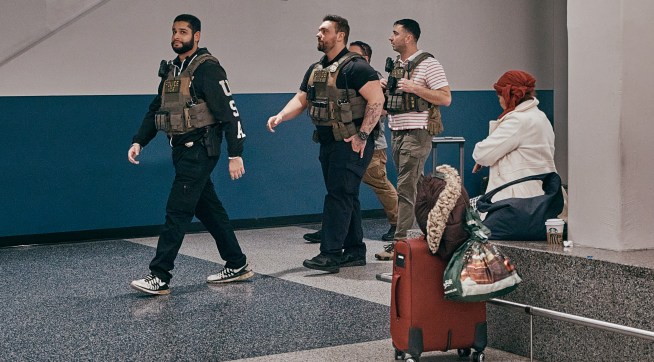
In recent weeks there’s been a recurring story, albeit with different players. This or that DHS or White House official gets asked about sending ICE to the polls in November. Will they disavow it, promise it won’t happen? The general answer has been no comment, no answer. It’s Tom Homan, or Kristi Noem or Stephen Miller. Yesterday, it was Todd Blanche at DOJ. There’s a general mood of a drip, drip, drip story, with all the vibes of looming danger and the hammer-fall of that danger being in the other guy’s hands. This is all a mistake. It’s a Trumpian sort of conditioning that is being perpetuated even though Trump himself, as far as I can tell, hasn’t addressed this particular question in some time. It’s a kind of watchful waiting in which all the power is being ceded to the hands of the White House when that is not necessary at all.
Being in a reactive mode, having the other guy holding the cards and waiting to know what they’re going to do and reacting when they do it is enervating, demoralizing, even paralyzing. And that’s always Trump’s personal angle: ‘I 100% can do it. Everyone agrees I can do it. But we’ll see what I decide,’ is more or less what he’s said about countless future crimes he’s dangled in front of an often-cowering opposition over the last decade.
Join