


Emine Yücel has those details, and others, as the Senate attempt to pay TSA falls apart in the House, and Trump (seemingly extralegally) orders that the officers be paid.
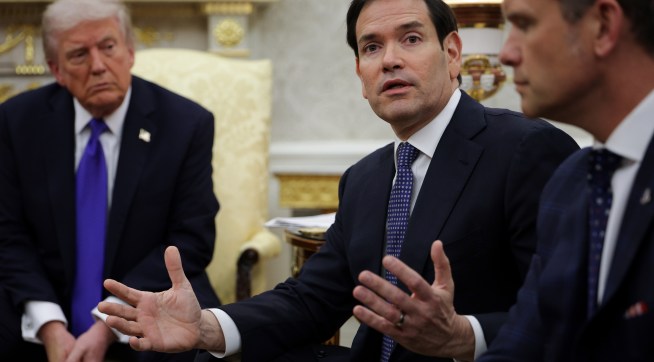
Secretary of State Marco Rubio today made some extraordinary comments after briefing G7 leaders about the progress — albeit difficult to call it that — in the U.S.’s Iran War. He seemed to say that the U.S. won’t be able to reestablish freedom of transit through the Strait of Hormuz even as a final war objective, let along doing so in the short term by force or threat. He said he told the G7ers that one of the post-war challenges will be Iran setting up a tolling system for passage through the Strait. In other words, Iran will be so empowered after the war that it will be able to assert or seriously contest sovereignty over the Strait.
This is such a remarkable statement that I want to quote it at length. I had seen more garbled and clipped versions of it. These are from a report in The Hill.
Read More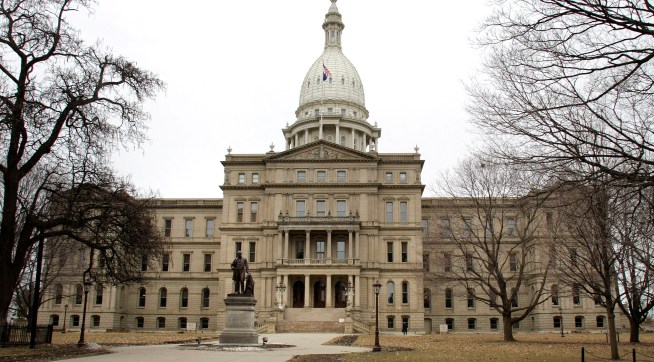
I’ve gotten a number of helpful responses to my post from earlier today about the necessity of escalating the question of whether the White House will try to deploy ICE agents to interfere with the 2026 midterm elections. In the course of following up on a few points readers had made, I found a piece of model legislation published on March 9th by the Brennan Center. (If you don’t know about the Brennan Center, they operate at the pinnacle level in terms of competence, expertise, reliability. They are perhaps a bit more conventional in their thinking — in terms of the law — than I am. But that’s not a criticism. You need people working in many different lanes to save a country.) Model legislation is a generic piece of legislation that state legislatures can pass whole or pass with their own fine-tuning. A lot of the drafting legwork is done by the creator of the model. So it can then be implemented quickly and well, so long as the model legislation is good.
This seems very good to me. Let me explain.
Read More
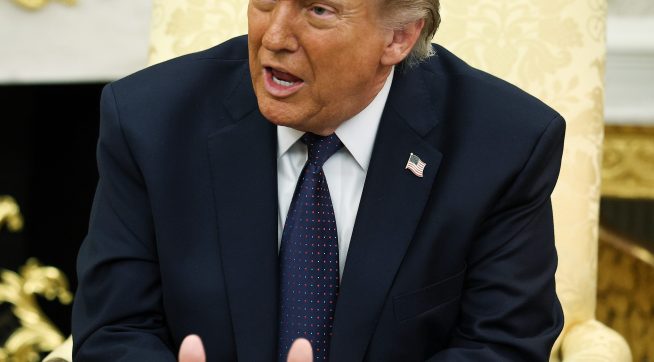
The U.S. is approaching a newly dangerous phase of its war against Iran. The administration is signaling that it will likely soon commence ground operations in Iran that will yet stop short of a full-scale invasion. Obviously, certainly to many TPM readers, this whole situation and war of choice are very bad things. But I want to point your attention to something specific.
JoinIn Morning Memo and Where Things Stand today, we noted some news that broke as the weekend was beginning and, I think, got less attention than it should have. Here’s FCC Chair Brendan Carr playing the hits for a CPAC crowd that was, on other issues, divided:
“President Trump took on the fake news media. And President Trump is winning. Look at the results so far. PBS defunded. NPR, defunded. Joy Reid, gone from MSNBC. Sleepy-eyes Chuck Todd, gone. Jim Acosta, gone. John Dickerson, gone. Stephen Colbert is leaving, CBS is under new ownership, and soon enough, CNN is gonna have new ownership as well.”
To some extent this is pandering to the audience. Not all of this is the result of his work atop the FCC. On the other hand, he has found ways to exercise his power that go beyond what he can actually do in that job, such as through his gradual trickle of social media threats — some believable, some baseless. It’s hard to argue with his assessment of the results.
Three years ago, Hunter Walker heard that Mark Robinson, then the lieutenant governor of North Carolina, was about to enter that state’s governors race. He also heard that Robinson had a penchant for extreme statements. And so, Hunter dug into his Facebook page, where Robinson had for years been an inveterate poster. In March 2023, TPM offered one of the first comprehensive looks at the public proclamations of this bizarre governor candidate-to-be — a man who would later be reported to have offered on porn forums such memorable self-descriptions as “I’m a black NAZI.” (Robinson denied at the time that the account was his, and even sued CNN, which had published the story.)
After losing in November 2024, Robinson got quieter. But, now, he’s back, with a sort-of apology. Hunter has that story here.
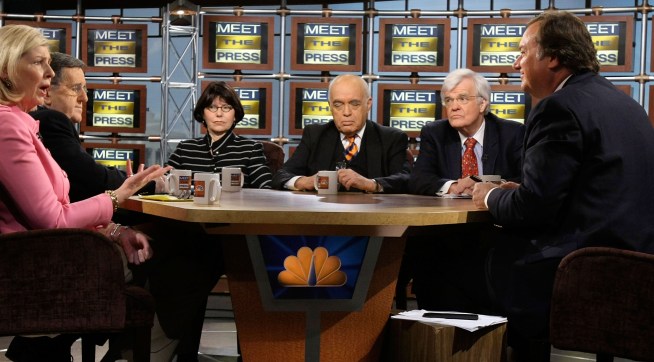
Over the weekend I noticed an example of one of the most significant features of the last decade-plus in American politics, though it’s one that still remains too little remarked upon. Lauren Egan writes a newsletter covering the Democratic Party for The Bulwark. Sunday night’s edition was about pundit and political analyst Stuart Rothenberg, “He Was a Legendary Independent Pundit. Then Trump Arrived.” Basically, How did Stuart Rothenberg come down with, as MAGA puts it, Trump Derangement Syndrome? Toward the end of the piece, Egan gets at what I think is the underlying issue here and some of the commonality I’m about to note.
Let’s start this story in the late ’80s and early ’90s. At the time, there were a handful of men — pretty much all men, as I recall — who played a very specific role in the political-journalistic ecosystem. They were rigorously, perhaps obsessively, non-partisan and were go-to people on basic questions of politics. They’d appear on shows, be on call for quotes for journalists at the big papers. Rothenberg and Charlie Cook played that role in the electoral analysis and predictions space. Larry Sabato also occupied that space, though he also played in the political analysis one. In the latter space were Norm Ornstein (AEI) and Thomas Mann (Brookings). I think they were on PBS Newshour for a long time as a pair. Their analysis was on the mechanics of governing, less the explicitly political stuff and generally not electoral stuff.
Join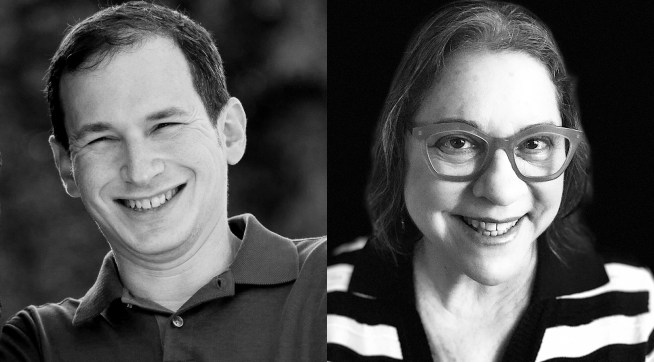
Longtime TPM readers know we always have been and always will be a small publication. We like to think we punch above our weight in terms of what we’re able to cover given our size. But we’re always looking for ways to do more.
That’s why we’re thrilled to announce the addition of Mike Rothschild and Sarah Posner as regular contributors to TPM. What that means is you’ll be seeing their bylines a lot more on our site, and hearing from them in our videos and Substack Live conversations.
Read MoreOne of the most bizarre aspects of the city occupations in 2025 and early 2026 (and perhaps continuing under Markwayne Mullin? TBD) was the way in which the administration brought random social media celebrities inside its operations to produce propaganda. Through lawsuits and reporting, we’re learning more about how that all worked. Josh Kovensky takes a close look.
I wanted to share a few thoughts on questions that are adjacent to or secondary to the question the Supreme Court is being asked to take up today. That is in part because there is no real question they are being asked to take up. Birthright citizenship is the clear, intended and unambiguous law of the federal constitution. One might as well try to complicate or question whether the document creates a federal senate. I have a source and correspondent deep in the federal bureaucracy who is a specialist in a specific area of federal law unrelated to citizenship questions. And even though I’ve written about this at length over the years, by going over developments in this person’s area of law with them it has helped me crystalize my own thinking on this topic.
Almost all of these cases are based on the premise, the working assumption of what can the U.S. Constitution mean if we decide that words or established phrases simply have no meaning and we can simply piece the individual words together based on their dictionary definitions? So what does the “law of the land” mean? Well, it turns out some guy who did a stint at the Claremont Institute and now teaches at some obscure law school has written a bracing new law review article about how it refers to agricultural policy, mineral and agricultural rights and the law of farming. That’s really where we are here.
Join