


The New York Times has a piece today with the title “Moderate Democrats Prepare for ‘War’ Against an Ascendant Left.” Specifically it’s about the centrist pressure group Third Way and a plan with a budget of $15 million to, as the group’s president Jonathan Cowan puts it, “prepar[e] for the next war that is coming.” I’ll note that during the first two years of the Biden administration Third Way was notably and consistently supportive of President Biden’s Build Back Better agenda. It was a sign of the remarkable party unity that allowed Biden to push through a remarkably progressive agenda with a tied senate. I’ll also note that you place an article like this because you want to show the people who gave you the $15 million that you mean business. So talk of “going to war” is sort of what you want to show them.
That said, this is remarkably ill-conceived and a misunderstanding of the current moment.
Read More
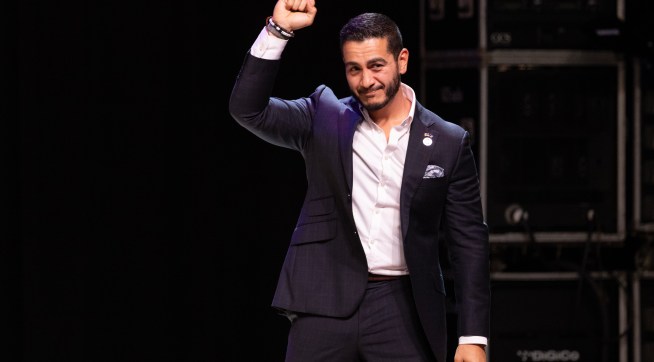
Jon Cohn has a good piece in The Bulwark on the challenges ahead for Abdul El-Sayed. The “brutal path ahead,” Jon calls it. I’ll note here that Jon is based in Michigan, despite beginning his journalism career in the East Coast cities where most political journalists are based. (In other words, his report isn’t based on parachuting into the state for a few weeks.) He notes the two, equally accurate narratives coming out of this primary battle. El-Sayed built a potent and victorious movement. Sanders-style progressive Democrats seldom win these contests in purple states. El-Sayed did. And he did it in the face of concerted opposition from the state’s Democratic establishment, the national establishment and an ocean of outside money, mostly from AIPAC.
It’s also true that Republicans will now run a viciously Islamophobic campaign against him, which will get extra traction from his association with the willfully inflammatory Hasan Piker. There’s another dynamic we’ve seen across numerous establishment-progressive battles. The Platner campaign pitched itself as appealing to working class or at least culturally working class voters who are usually unreachable by Democrats. But the polling showed that the demographic profile of Platner’s supporters looked pretty similar to what most Democrats have gotten over the last couple decades, and especially since Trump — the educated and affluent. The loose outlines of El-Sayed’s victory in Michigan look similar. Both make a pitch about young voters but they tend to appeal most to educated and downwardly mobile voters — so again, another version of standard early 21st century Democratic coalition.
Join
We’re now over 80% of the way toward this year’s goal in our Annual TPM Journalism Fund Drive. We need your help to get to the final goal, at least $500,000. Right now we’re at $423,276. If you’ve been meaning to contribute but haven’t found the right moment yet, now is definitely that moment. Please take just about 90 seconds this moment and join us. Click right here. You’ll truly be glad you did and will have our undying appreciation.
Three Republicans were running in Michigan’s 8th Congressional District primary. Trump in June endorsed Amir Hassan, a Navy Veteran, former Guantánamo guard, and Department of Homeland Security official. Hassan was up against Thomas Smith, a retired engineer, and Al Lemmo, an anti-abortion activist. In July, Smith suspended his campaign and endorsed Lemmo, who had decried Hassan as a “possible Trojan Horse candidate and lifelong Democrat.”
On Tuesday, Smith, who was no longer running, won a pretty clean victory over his Trump-endorsed former opponent.
Read More
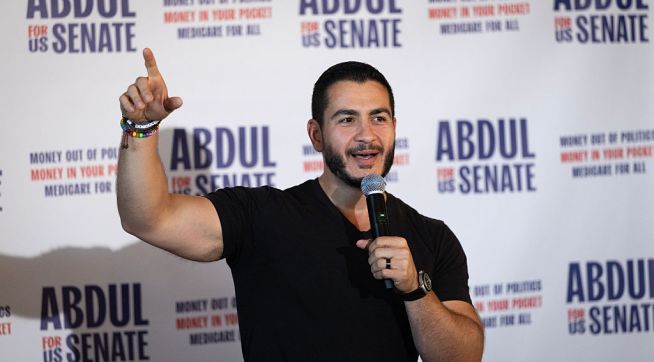
Though the AP called Abdul El-Sayed the winner of the Democratic nomination for Senate in Michigan as I went to publish this post, this race turned out to be much, much closer than people expected or what polls predicted. The margin ended up being just under 1% or about 15,000 votes. We become so entranced by polls that we often fall into thinking that a candidate like El-Sayed bobbled the race at the end or Stevens mounted a comeback. There may have been some late movement. But it’s important to remember that our narrative of the race was built around polls that were simply wrong. Very wrong. It was probably always much closer than people realized. Indeed, the margin is close enough that those polls might actually have shifted the outcome of the race by depressing Stevens’ turnout or juicing El-Sayed’s. It’s a good reminder that whether you’re a volunteer, a voter, an activist, or a campaign worker you play these things out till the very end. Polls are usually right. And they’re a good guide. Except when they’re not. And this was a big “except.”
JoinTighter than we expected based on the polls, at least!
NBC has called the Democratic Senate primary for Abdul El-Sayed. TPM tends to go with the AP for calls, or wait for multiple networks to call it.
Seemingly based on the NBC call, Mallory McMorrow, a third Democratic primary candidate who sought to occupy the middle ground between El-Sayed and Haley Stevens before dropping out, congratulated and endorsed El-Sayed early this morning.
Update, 6:41 a.m.: With the vast majority of the votes now in, El-Sayed and Stevens are separated by less than 20,000. El-Sayed still leads by roughly a percentage point.
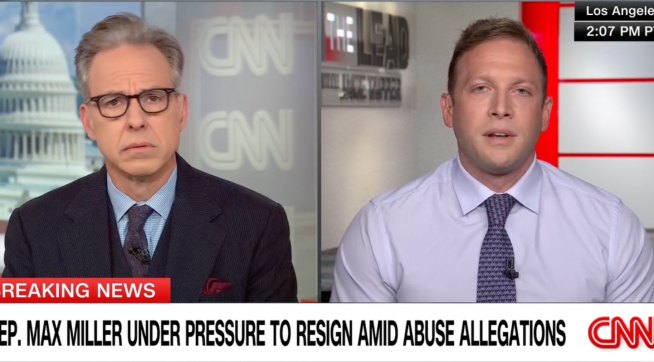
I break down some of the details in tonight’s edition of Where Things Stand here. It’s the third item in tonight’s newsletter, so just wanted to flag it. It was strange.
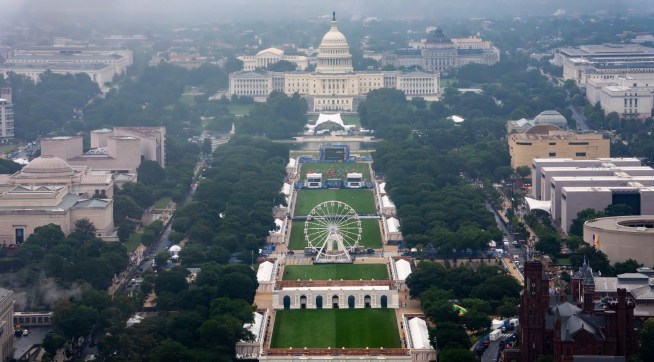
The 2006 midterm is often viewed today as the ur-wave election. Indeed, it’s part of the only example in recent decades of two successive wave elections, something that just 20 years later seems almost inconceivable. What’s less remembered is that almost to the very end of the cycle it was considered a very uncertain thing whether Democrats would be able to retake control of the House of Representatives, which they hadn’t controlled since the 1994 blowout. In fact, if you looked at the numbers — polls, special elections, etc. — it had been pretty clear what was coming for months. To explain this discrepancy — how official D.C. had missed what was coming — many focused on the Foley Scandal which broke in September 2006. (Mark Foley, a lightly closeted House Republican got in trouble for what we’d now call sexting with underage male pages in the House page program and was forced to resign.)
Join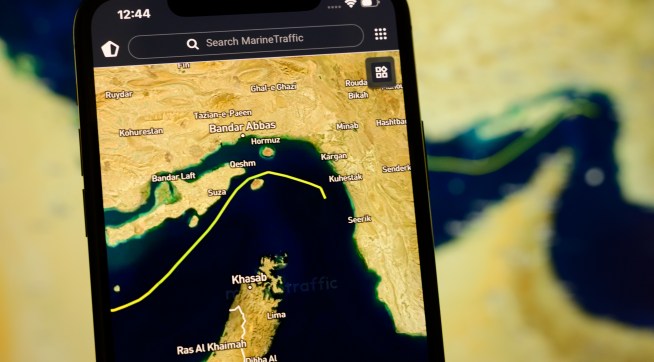
President Trump is now demanding that Iran reach a deal with Oman on the Strait of Hormuz as soon as today or face devastating attacks from the United States. On its face, you can put this in the same bucket of Trump’s last six months: threats about ending Iranian civilization or committing various war crimes or whatever. But this is actually an example of how deep a hole the U.S. is now in, and how rapidly it’s sliding into conceding a system of post-war Iranian tolls on the Strait as a given.
What Iran and Oman are negotiating is an interim agreement in which they will jointly manage a system of tolls (calling them “service fees”) over what is an international waterway. The White House would certainly point out that this is a temporary rather than a permanent deal. But something so fundamental conceded in a provisional or temporary agreement is seldom withdrawn in a final accord. The mix of control and revenue this provides to Iran amounts to a massive strategic gain from the war Trump began back in February. But it seems well on the way to becoming a given in U.S. post-war plans.
In response to last week’s post about AI data centers, I got this fascinating response from TPM Reader RK. Very interesting details and nuanced. But mostly I find it fascinating because it complicates the storyline by placing the data center rebellion in a line of continuity with earlier opposition, in the same or similar communities, to efforts to build wind turbines or solar arrays — stuff liberals obviously think is great.
Read MoreIntrigued by this post, as I’ve spent the past 2+ years lurking at township halls in Michigan, working on a book about the rising backlash against big companies with big plans to transform how land is used in rural communities.
It didn’t start with data centers. I was originally interested in how rural communities are pushing back hard against solar and wind farms. In Michigan, you have Gov Whitmer pushing a clean energy agenda, which requires vast swaths of open land. It takes a lot of real estate to replace an oil or gas plant with a solar or wind farm, and that much open space is not available in cities or suburbs. So you wind up in rural areas where voters lean conservative, are skeptical about climate change, and would prefer to see their pleasant landscape left alone. Lots of yelling, recall elections, angry rhetoric as formerly sleepy town halls turn into sights of intense conflict.