


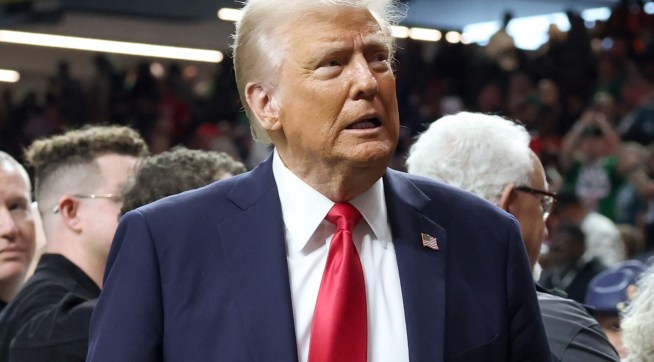
There are a number of you who simply don’t agree with me about the role of public opinion in the battle against Trumpism, which I sketched out in yesterday’s Backchannel and in other posts over recent months. And that’s great. Because, among other reasons, you keep me on my toes. And TPM isn’t a community that has any one point of view, in any case. But I note this because I have to again whack this same hornets nest today. So apologies in advance, probably mostly to myself. But this time it’s not with an argument, not some proposition I want to convince you of. It’s more a personal interpretation, my perception of events.
Quite simply, I think Trump’s already lost.
JoinAmazon quickly scraps idea of listing costs from tariffs on product listings after White House attacks the idea.
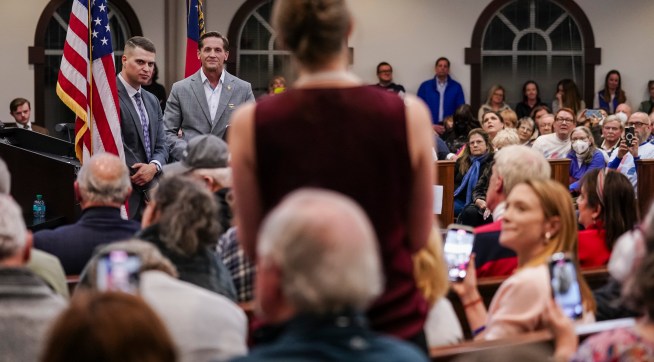
As I noted over the weekend, the arrival of Trump’s 100th day in office (April 30th), has been greeted by a raft of terrible polls. Most of the premium pollsters have fielded a poll to coincide with the 100 days milestone. The results range from approval in the low 40s to the very high 30s. Two put Trump’s approval number at 39%. His disapproval ranges from the mid to the high 50s. In response, there has been a predictable chorus that polls, or public opinion itself, simply doesn’t matter anymore. That’s either because Trump won’t face the electorate again, or because there won’t be elections again, or that there won’t be fair elections if they’re held, etc. The overarching argument is that public opinion doesn’t matter anymore because we’re no longer in the “normal” political space we’re used to.
This is categorically false, a basic misunderstanding of what politics even is.
JoinNew ABC/WaPo poll shows a similar story to AP-NORC poll: Trump dipping below 40% approval for the first time in his second administration. 39% approve, 55% disapprove. A CNN/SSRS poll shows him with 41% approval and 59% disapproval. In that poll, 22% strongly approve and 45% strongly disapprove.
I said yesterday that I thought we likely weren’t far away from the first national poll which showed Donald Trump’s approval number dipping into the 30s. And here we are: AP-NORC 39% approve, 59% disapprove.
I’ve said repeatedly that we are in the midst of a lengthy national struggle and that it is fundamentally over public opinion. To understand where we are, where we’re going and what the future possibilities are, everything must be seen through that prism. But I noticed a conversation yesterday that prompts me to be more specific.
Read MoreGovernment Executive: “The Veterans Affairs Department is requiring all employees working on its plans to slash tens of thousands of workers from its rolls to sign non-disclosure agreements, an unusual move that has prevented supervisors from sharing basic information with staff.”
Question: I’m looking for examples of medical schools which may just have received a letter from the Justice Department demanding detailed records of the school’s admissions going back five years. If you have information: Signal joshtpm.99 or joshtpm at protonmail dot com. All comms confidential.
This isn’t terribly surprising, given the broader budgetary situation at American universities, particularly in the sciences and biomedical research specifically. I’ve heard from faculty and graduate students at a number of schools around the country. Many programs are dramatically reducing the number of offers being made for PhD programs. One prestigious school of medicine cut the number of PhD students it’s admitting for next year by 50%. At another program, PhD students are being graduated on an expedited basis, sooner and with less work produced than would normally be allowed. The logic is simple. The program doesn’t think they’re going to have the money to allow these students to finish. I’ve heard multiple examples of offers being turned down to attend programs in other countries. Meanwhile and unsurprisingly, foreign students are turning down offers to study in the United States.
Read More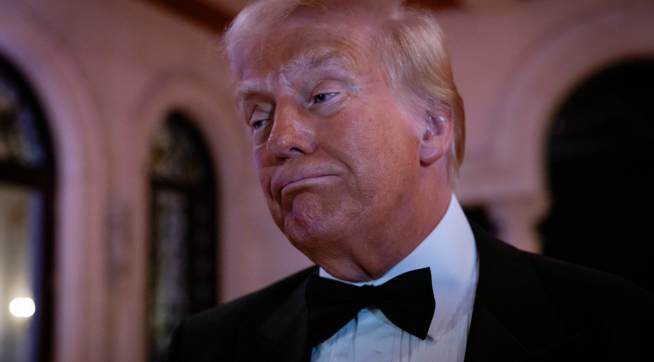
Let’s review some recent events.
The White House (yes, technically the GSA guy and the two lawyers) sent that letter to Harvard, demanding de facto control of the university’s hiring, admissions and various elements of its curriculum. Harvard replied with a flat rejection ten days ago. The White House immediately responded by freezing $2.3 billion in grants to Harvard. That was on April 14th. Then, four days later (April 18th), there was that weird article in the Times in which we learned that the White House said that the original demand letter had been sent by mistake. The White House wasn’t disowning the contents of the letter, or not exactly? They made what might best be described as a kind of low-energy and churlish demand or beg for Harvard to continue negotiating. It’s been reported that the White House made as many as three informal contacts to restart negotiations. Then, three days (April 21st) after that, Harvard sued. I noted yesterday that a majority of the University of Michigan Regents published an op-ed backing Harvard’s stand and denouncing the White House’s coercion tactics. The American Association of Colleges and Universities published an open letter doing the same which was signed by more than 150 university presidents.
Read More
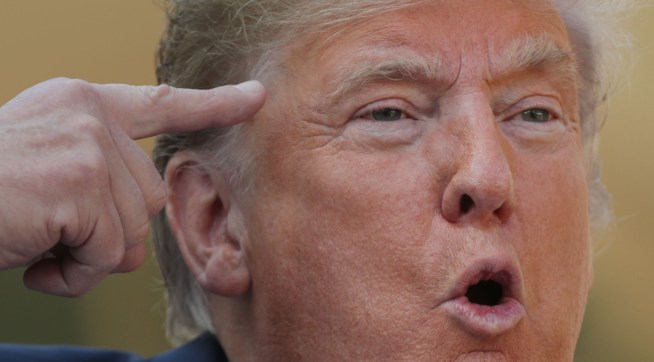
This morning, the White House announced that trade talks with China continue, albeit at a staff level. This came after a flurry of reports that Trump is planning to unilaterally ramp back the embargo-level tariffs he imposed on China earlier this month, advance notice that cheered Wall Street. Then Chinese officials said that the White House is wrong. There actually are no talks. And Trump must take the first step, unilaterally undoing the tariffs he had already imposed.
He appears set to do just that.
This comes just three days after the CEOs of Walmart, Target and Home Depot met with Trump at the White House and reportedly told him that his tariffs would result in empty shelves and product shortages in as little as two weeks.
All of this is, to put it mildly, a humiliating climb down for the President. He upended the global economy and seems to have massively damaged the perception of American assets as a safe haven during times of economic uncertainty. The goal was to go toe-to-toe with China and see China blink. But it’s the U.S. that’s blinking. And that’s after the earlier reciprocal tariffs blink that already happened.
Join