


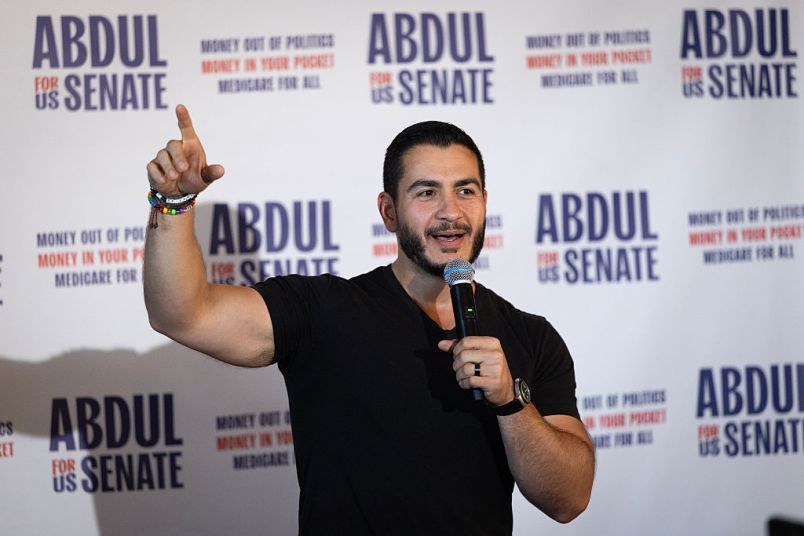
Though the AP called Abdul El-Sayed the winner of the Democratic nomination for Senate in Michigan as I went to publish this post, this race turned out to be much, much closer than people expected or what polls predicted. The margin ended up being just under 1% or about 15,000 votes. We become so entranced by polls that we often fall into thinking that a candidate like El-Sayed bobbled the race at the end or Stevens mounted a comeback. There may have been some late movement. But it’s important to remember that our narrative of the race was built around polls that were simply wrong. Very wrong. It was probably always much closer than people realized. Indeed, the margin is close enough that those polls might actually have shifted the outcome of the race by depressing Stevens’ turnout or juicing El-Sayed’s. It’s a good reminder that whether you’re a volunteer, a voter, an activist, or a campaign worker you play these things out till the very end. Polls are usually right. And they’re a good guide. Except when they’re not. And this was a big “except.”
Indeed, it was a big enough “except” that it requires more than a standard uncertainty interval or random chance explanation. The late polls had El-Sayed at least 10 points up, with many in the mid-teens. What’s equally notable is how relatively consistent they were. That could be an example of what pollsters call “herding,” where pollsters start getting influenced by each other and dismissing or adjusting results that don’t fit the trend or conventional wisdom. But it sounds like something more fundamental. I heard one knowledgable person last night say that it looked like pollsters had been modeling too young of an electorate. We may learn more about that once analysts get a closer look at the regional and demographic breakdown of the results.
As noted above, the near-upset storyline is really just a figment of inaccurate polls and the narrative that was built on them. Probably nothing actually “happened” in the race itself. That said, I think El-Sayed’s narrow win is a better result than a 15 point-plus blowout in terms of what’s really important for Democrats, which is uniting around the primary winner. A very narrow win will drain some of the triumphalism from the El-Sayed faction; a narrow defeat will allow the Stevens’ faction to hold their heads a little higher, having run a campaign they can feel good about even if they lost. Perhaps I’m misreading how that will affect the next three months. But that’s my read. That said, I spoke to a prominent Stevens supporter this morning who thinks it’s the precise opposite – mostly on the argument that undercuts key arguments for El-Sayed’s strengths as a general election candidate. That person knows the state and the people involved better than I do. So take it for what you will.
There’s lots of commentary about El-Sayed’s massive support in the state’s Arab American community and deep challenges in the state’s Jewish community. But those are both very small, albeit visible, slices of the population. His real challenge will be consolidating support among the state’s Black voters which are of course absolutely critical for any Democratic campaign in Michigan. They appear to have gone decisively for Stevens, though I’m not aware of any really concrete and granular data from last night that is yet available.
El-Sayed has his work cut out for him, as Stevens would have had if she’d won. A lot of that will mean outreach to key factions and demographic groups in the state. But probably just as important is going on the attack against Republican Mike Rogers, who has real vulnerabilities. Nothing activates Democratic partisan muscle memory like attacking and successfully attacking Republicans, really landing punches.