
Our friend John Judis had an essay over the weekend in NOTUS airing the provocative and audacious claim that Trump is a world-historical figure in the way that the German philosopher Hegel used the term. This is a proposition sure to drive many to distraction. And perhaps for good reason. But as I told John in an email I largely agree with him, but with an important exception or difference in the way he articulated the claim. Before getting to that, let me give a very, very brief outline of the concept.
The idea here is not that the figures in question — an Alexander or Caesar or Bonaparte, the figures Hegel thought of — are good people. It’s not even that they necessarily have any articulate awareness of their role in history. It’s that there are some individuals who have an intuitive sense of the opportunities of the historical moment. They then acquire power and force huge changes that drive the course of history in dramatically new directions, directions that are essentially impossible to undo. The key is there’s really no going back from the changes these people make.
Read More
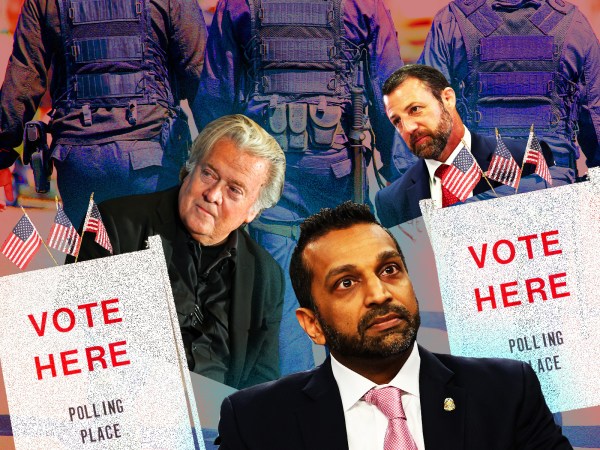
The Jan. 28 FBI raid on Fulton County, Georgia’s election hub brought new urgency to concerns that the Trump administration is trying to interfere in upcoming elections, including the midterms this fall.
And as Hunter Walker explained during a Wednesday Substack Live, “the call is coming from inside the house.” The raid came about thanks to a referral from special government employee Kurt Olsen, and thanks to the analysis of another special government employee, Clay Parikh.
In a conversation with editor Allegra Kirkland, Hunter breaks down exactly who these people are and why the Fulton County raid is so dangerous.
Read More
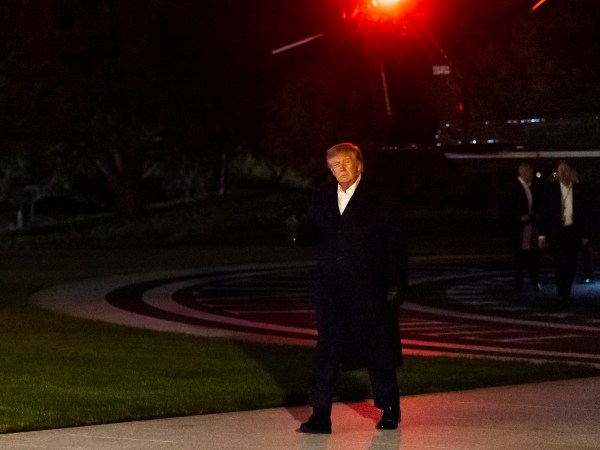
A few days ago Donald Trump said he’s deciding to “nationalize” American elections. He then made the comically insane claim that he won the fairly, though not totally, blue state of Minnesota three times. (Reality: 2016: -1, 2020: -7; 2024: -4). What precisely Trump means by this isn’t totally clear and in fact is totally not the point. It’s a bit like asking what the front man from a third-rate punk band means when he dives into a mosh pit for a crowd surfing adventure. It’s just not a linear thing. Not at all. To the extent we can connect it to anything, it is that same central thread as everything else beginning early last fall: Trump is getting less and less popular and, as he does, he is lashing out constantly, both from a desire to hold on to a dominant position in the attention economy and to exert some level of control over his adversaries’ fear. Both at home and abroad he is leaning into prerogative and other powers which are untrammeled as a kind of compensating salve for his loss of popularity and power.
I’ve seen a lot of people respond to this with a mix of fear, anger and most of all outrage. That is the wrong response. And by that I mean it’s the wrong public response. Obviously, you should respond on your own with whatever you actually feel. But the posture we assume and the words we use in the public square aren’t the same thing.
Read More