
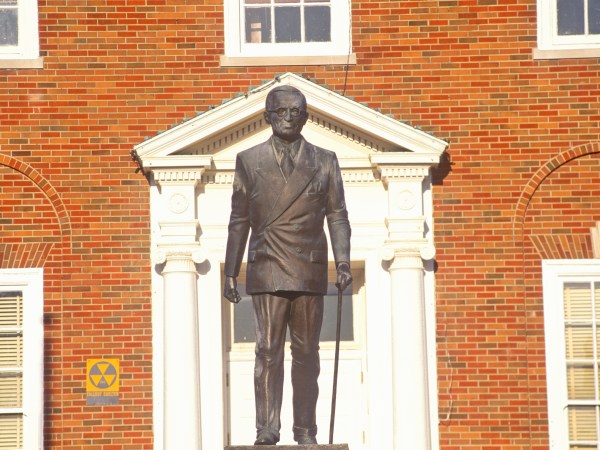


As you can see in my most recent post, yesterday evening TPM Reader BC flagged this news out of Independence, Missouri, best known as the hometown of Harry Truman. A city councilman, John Perkins, got canned in a recall election over a data center and by a massive margin: 68% of the town’s residents voted to end Perkin’s term immediately. It’s all backlash from the town’s approval of a major hyperscale AI data center on which construction is now already well underway.
While this is just one city council race, the broader metastory and this particular development sounds like one of the ur-stories of the 2026 midterm cycle. It coincides with and is related to the backlash against Donald Trump and all his corruption and wrongdoing over the last 18 months. But it’s only in the last three or four months that the AI data center story has fully broken into the national headlines. For all these reasons, I wanted to dig in and find out a bit more of the details. It’s really quite storybook in a kind of made-for-TV-movie dystopian kind of way.
Here’s the story as I understand it.



Though the AP called Abdul El-Sayed the winner of the Democratic nomination for Senate in Michigan as I went to publish this post, this race turned out to be much, much closer than people expected or what polls predicted. The margin ended up being just under 1% or about 15,000 votes. We become so entranced by polls that we often fall into thinking that a candidate like El-Sayed bobbled the race at the end or Stevens mounted a comeback. There may have been some late movement. But it’s important to remember that our narrative of the race was built around polls that were simply wrong. Very wrong. It was probably always much closer than people realized. Indeed, the margin is close enough that those polls might actually have shifted the outcome of the race by depressing Stevens’ turnout or juicing El-Sayed’s. It’s a good reminder that whether you’re a volunteer, a voter, an activist, or a campaign worker you play these things out till the very end. Polls are usually right. And they’re a good guide. Except when they’re not. And this was a big “except.”
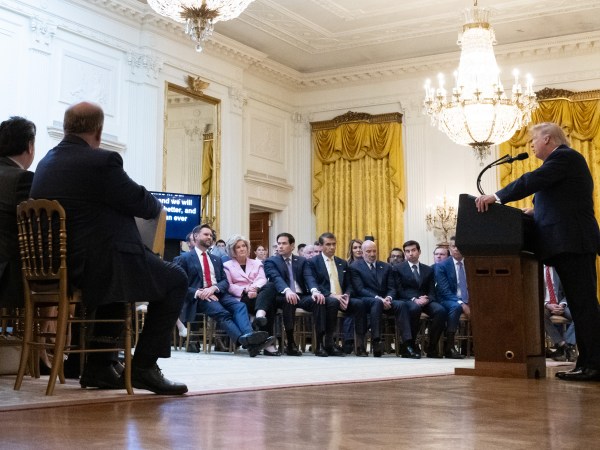

In press conference comments today, Homeland Security Secretary Markwayne Mullin threatened that state election officials could face jail time if they fail to cooperate with the White House’s purported efforts to “secure” the midterm elections, which seems to involve a range of illegal demands from the White House, Department of Homeland Security and the Justice Department. The specific demand is for states to feed their voter rolls into the federal “SAVE” database which purports to identify noncitizens on the rolls. Mullin seems to be saying that if states refuse to bend to these illegal White House demands, the federal government will then scrutinize those states’ election returns (by seizing ballots?) and hold state election officials criminally responsible for any illegal voting. (Assistant Attorney General Harmeet Dhillon has already sent out threats all 50 states and D.C. along these lines).
We have here again the old story. States run elections in the United States. This is guaranteed and mandated by the federal Constitution. Congress can set uniform rules for administering elections. The executive branch plays no role at all in setting rules for elections or administering them. The White House’s strategy is to use illegal means (threatened criminal punishment against state officials) to assert power or compel authority the Constitution simply doesn’t allow. This isn’t how anything works. A president cannot legitimately create by force powers that the Constitution specifically denies him.

This morning on Bluesky Politico’s Josh Gerstein flagged to me and others a piece by Matt Yglesias in which, he said, Matt “says progressive Dems [are] too obsessed with fighting Trump rather than winning in marginal states/districts [and] picks fight with Josh Marshall over it.”
It turns out Yglesias is responding to a piece I wrote a couple weeks ago entitled “Centrists, This Is on You.” I sat down and read Matt’s piece and found myself kind of baffled because he has me saying perhaps not the diametric opposite of what I wrote but pretty close to the opposite of it. I always try to be sensitive to the possibility that when someone so thoroughly misunderstands what I wrote that it may be that I just wasn’t clear. There’s the additional factor that I usually write assuming familiarity with the stream of posts I’ve written on the same topic in recent days and weeks. People read a single post and some of my meaning might not be clear. Here though I can’t help but think that Matt zipped through the post in question, zeroed in on a few buzzwords like “fight” and then just plugged those into his existing framework and didn’t actually pay attention to my argument. Because, as I said, he’s just arguing against these stock arguments that I never made.
Still, there are some illuminating things that can be drawn from the misunderstanding and/or disagreement.