

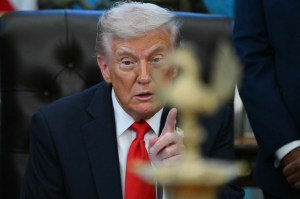

Yesterday, for me, was a mixed visual and reported tableaux. There were the visuals: Donald Trump literally bulldozing about a third of the White House complex. It’s not the main house itself, which goes back more than two centuries, albeit with a rather intense renovation. It’s not the the West Wing where most of the post-war history is. But still, Good lord, he brought in a bulldozer and tore the thing down. Then I saw the news reports that Trump is demanding that his toadies at the Justice Department cut him a check for $230 million. I couldn’t tell whether this was notionally to repay his legal expenses or to compensate him for the tort of being indicted for the crimes for which the Supreme Court let him off the hook. He didn’t seem clear himself. In an impromptu press availability yesterday he said he needed the quarter of a billion for “the fraud of the 2020 election”.
Read More
Here’s a funny little nugget about the Pat Fitzgerald/James Comey relationship.
You’ll remember that Pat Fitzgerald first came to be known by the broad politically-attuned public when he was special counsel investigating and eventually convicting Bush White House advisor Scooter Libby over the disclosure of CIA agent Valerie Plame’s identity. James Comey first became known to this broader politically-attuned public because of a series of actions he took during the Bush administration, stuff like the so-called “hospital bed” showdown over the admin’s domestic surveillance program. Now move forward to early 2007 and we at TPM were in the thick of the so-called US Attorney firings scandal, for which TPM eventually won a Polk Award.
Read More
The turnout and character of the weekend’s No Kings demonstrations speak for themselves and at great volume. But I wanted to say something about the naming and the focus of No Kings, which is emerging as something between a protest and a protest movement. It is a great good fortune for the country and the anti-Trump opposition that it has emerged in the way that it has, by which I mean the name itself, a deceptively resonant name and slogan with the deepest possible roots in American history. This brings with it a critical inclusivity, which grows out of the name itself and the lack of those specific and lengthy sets of demands that often characterize and ultimately fracture such movements.
I’ll say a few things here that favorably distinguish No Kings from what we might call “traditional” liberal or left-leaning protests. That includes some of those that featured prominently during the first Trump administration. I’m not disparaging those. It’s simply that this is a specific moment in history and requires an especially broad tent. Its purpose and specific character must be different.
Read More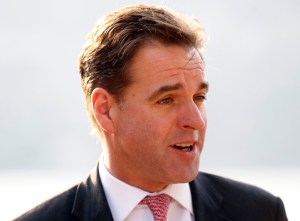
I first encountered Niall Ferguson in a real way when I was writing a review essay for The New Yorker at the end of 2003. The editors had sent me a small stack of books about what we might call the “neo-imperial” moment that took hold of Washington, D.C. in the aftermath of the 9/11 attacks. One of these books was by Ferguson, a fairly rousing and unabashed celebration of the British Empire. If anything it was among the more indirect and implicit versions of the story told by the various authors, celebrating the glories of empire and leaving it to the reader to draw the conclusion it was time to bring them back. As I’ve read columns of his here and there over the last couple decades, the historianness has receded as the tendentious provocateur has moved to the front. But something different struck me about the piece he published in The Free Press earlier this week (subscription required) about Trump’s Gaza peace plan: that was how much it matched in key outlines the piece I wrote on the same topic last week. If you recall, I wrote that the Trump plan was actually a fairly big deal and one that for a variety of reasons only Trump was in a position to pull off. The basis of the agreement is the common authoritarianism and corruption that now knits together Washington, Riyadh, Abu Dhabi and other regional capitals through the personal relationships binding together Trump family and the princely families of the Gulf.
Read More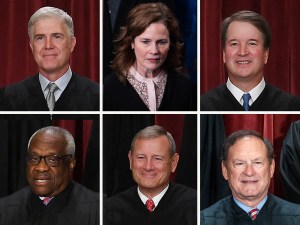
I read a group email from Capitol Hill yesterday essentially predicting the extinction of the Democratic Party after what is predicted to be a decision from the Supreme Court overturning what remains of the Voting Rights Act. A less apocalyptic but still daunting version of this argument appeared in an evening piece published by Nate Cohn in the Times. Before getting to the partisan and vote count implications, let’s first discuss what this means, which is essentially ending African-American political representation in the states of the old Confederacy. Most if not all majority-minority districts disappear and Republican state legislatures are free to draw up districts which spread/dilute African-American voters into safely Republican districts. Cohn thinks it’s plausible that Democrats could permanently lose (as much as anything can ever be permanent) 12 House seats. And this is on top of the strong-arm restricting happening in a number of states across the country. The overall scenario is one in which the House becomes an even bigger electoral challenge than the Senate, one that is possible to win but only in a generational wave style election.
Is this plausible? Is this true?
Read More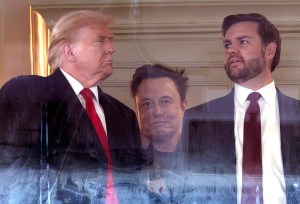
I titled a recent Editors’ Blog post The Age of Monsters. I’ve been thinking about that post and theme again because I keep seeing more confirmation, more evidence of this dimension of the world we are currently living in. I stress again that the idea here is not that these “monsters” are bad people, though I would say that most of them are in varying degrees. The issue is their gigantism. They are so much more powerful than ordinary people, mostly but not in every case because of wealth, that they distort the whole fabric of society and politics. They are like big, clumsy and lumbering oafs who nonetheless have power that make if not the whole game than all the center of gravity be about them.
Read More
Has Trump brought peace to Gaza? Ended the war and cycle of killing that has now been going on for two years? I’ve had a number of TPM Readers ask me different versions of this. And in those questions is a lurking undercurrent, sometimes more or less explicit, of “does this malevolent clown actually get credit for this?” I wanted to address this question. And my answer is that this is perhaps the first time when Trump’s frequent and degenerate boast — I alone can do it — has a very real element of truth.
I don’t think Trump expended any great amount of energy over this and I don’t think he really cares greatly about any of the people on either side of the conflict. Let’s remember that a few months ago he backed a plan to “voluntarily” depopulate Gaza and remake it as a series of mediterranean resorts, sort of Monaco only 150 times the size.
Read More
It’s always a complicated matter to say who is “winning” a shutdown fight. By one measure, no one “wins” since voters are unhappy with everyone and more generally the “system” for letting things get to such a point of dysfunction. Polls provide one of our most objective measures. But majority opinion isn’t always the terrain that one or both parties is playing to. What’s more, it may be fickle. If it doesn’t last until the next election, does it even matter? The real measure is who’s moving and who’s not, who is coming off their first positions, negotiating with themselves? By this measure — and in fact the others too — Democrats are pretty clearly winning the current shutdown fight.
Polls have been clear: more Americans blame Trump and the Republicans for the shutdown then Democrats. Every poll that I’m aware of has shown this. Republicans now say the latest polls show the blame divide narrowing in their favor. And it’s possible that’s true, though it could just as easily be noise in the polls. And in any case losing by slightly less isn’t exactly a big rallying cry. The real evidence is who is budging. The shutdown started with the White House saying it absolutely wouldn’t budge and threatening a big new round of layoffs to punish Democrats into submission. More and more evidence now shows that the firings threat was a bluff the White House feels unable to follow through on. As this has become more obvious, they’ve been forced to say that they’ve simply decided to delay the firings for no apparent reason. Even the elite media outlets which for days were passing on the White House threats as news are now, belatedly, seeing that it’s not happening, at least not yet. After failing to follow through on that threat, the White House and OMB moved to a new threat: no back pay. But that seems as empty a threat as the first one. In any negotiation or test of wills the failure to follow through on a threat always signals weakness. And these are no different.
Read More
News comes today that Office of Management and Budget Director Russ Vought is now threatening not to pay back pay to federal employees after this shutdown ends. There’s both more and less here than meets the eye. The step Vought has taken is to remove references to back pay from OMB guidance about the shutdown. The backpay rule is not based on OMB guidance. It’s federal law. And even better than that, it’s a federal law Trump signed.
Yes, yes, I know: federal law isn’t a big constraint on Trump White House planning. Make of that one what you will. But I want to zoom in on something else. The big, big threat coming from Vought was that the Trump administration would use the opportunity of the shutdown to institute large-scale firings of federal employees on the unsupported theory that the shutdown opened up more powers to fire federal employees. That’s not true. But that doesn’t matter. Because the Supreme Court has already given Trump power to fire as many federal employees as he wants, federal law notwithstanding.
Read More
One of the biggest challenges I’ve had in the last nine months and especially since the summer is how to convey both the very brittle, thin nature of Trump’s power and also the scale of the threat his government poses. Jamelle Bouie captured a key dimension of this in a weekend column in the Times: if you wanted to drive the country into literal disunion it’s hard to imagine what you’d do differently than what he is doing right now. He is both rhetorically and (with increasing intensity) literally unleashing the U.S. military on the strongest bastions of opposition to his government (basically blue cities in blue states). He is also canceling more and more of the funding the federal government gives to those states, despite the fact that it is disproportionately funded by taxes from those states. This is definitionally fairly close to warlordism, a broken state in which the leader holds on to power — if not legitimacy — by hoarding state resources for loyalists and depriving opponents of any of them.
I have a deep ideological commitment to the American union. And beyond ideology, red and blue states are largely a fiction. The big red and blue states have huge minorities of the other “side” within their borders. Still, governance on these terms is illegitimate and unsustainable. The only recourse is a much more aggressive use of the sovereign powers of the states than state governments are currently doing.
Read More