

It’s hard to know what to say about former Republican Speaker of the House Denny Hastert, whose death at the age of 84 was reported this morning. Few if any political leaders in modern American history have experienced a fall quite so ignominious and total. The obvious point of comparison is Richard Nixon. But post-Watergate Nixon was never without his defenders and supporters. All but his most adamant critics granted significant successes of his presidency. And by the time of his death in 1994, he’d made significant progress in being treated by many as a sage elder statesman, albeit a greatly tarnished one. Hastert remains almost a test case of a top political leader whose fall was immediate and absolute. He came as close as one can come to have to having zero public defenders (though a significant number of former colleagues wrote leniency letters on his behalf at sentencing in 2016).
What stands out in my mind are two moments, one from his moment of ascent to power and another at the denouement but certainly not the nadir of career. Go back to 1998. The so-called Lewinsky scandal had been trundling forward for most of the year. Republicans are giddy about the Red Tsunami that was about to supercharge the existing GOP majority. Predictions of a 30- or 40-seat pick up were common and assumed. (I was one of few people I knew to basically predict no wave at all; it was simply a matter of watching the polls rather than the bipartisan hype.) When Democrats ended up gaining five seats, House Speaker New Gingrich was summarily tossed overboard — a mix of the failure of his wild overpromising and slowly building frustrations with his erratic and high drama leadership style.


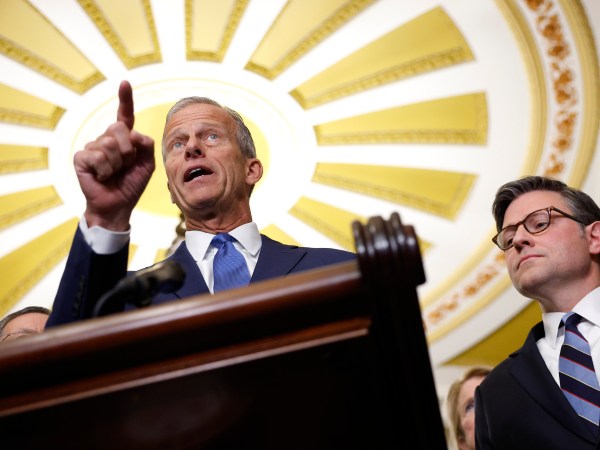

The House has already left town. The Senate is heading home this week. With the midterms just around the corner, GOP lawmakers are giving up on doing any more legislating and skipping town to try to mobilize their demoralized voters.
TPM’s congressional reporter Emine Yücel has chronicled all the drama for us. Emine joined publisher Joe Ragazzo on YouTube Live at 2 p.m. ET to talk through what Congress has actually done — and failed to do — this session.
Check it out:
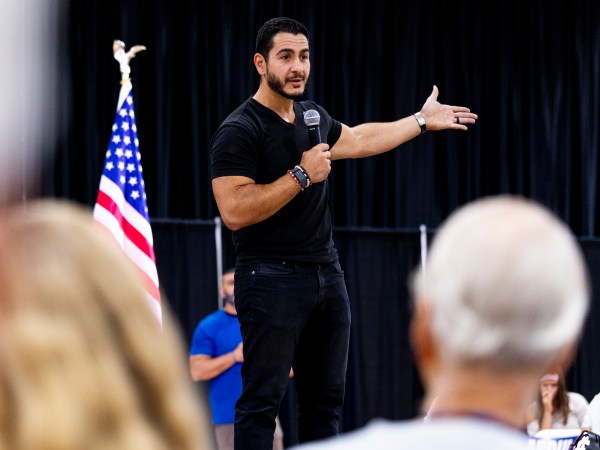







I want to flag this poll for you. It’s a poll of the Florida Senate race by St. Pete Polls, a mid-tier regional pollster. It shows appointed incumbent Senator Ashley Moody (R) and Democratic nominee Angie Nixon tied at roughly 45% of the vote. There’s not much polling of this race. There are two other recent polls, one by Change Research a respected but generally Democratic-aligned pollster, and another from Quantus Insights, a GOP-aligned pollster with an iffy reputation. Change Research had a tied race a week ago. Quantus had Moody up by eight points a bit less than a week ago.
I want to be clear that I am not predicting or expecting Nixon to win this race. What I do expect is that Republicans will likely need to fight to hold it. And that is significant in itself. There are other signs that Republicans are facing a rough political environment in Florida this year, at least one that looks very different from where Florida has been trending since 2018-20 when the state went from a GOP-tilting purple state to something approximating bright red. Yesterday, Nicole LaFond highlighted the video put out by South Florida Rep. María Elvira Salazar (R-FL) which basically had Salazar telling Donald Trump: We didn’t know you meant mass deportation when you promised us mass deportation.
We can joke about the the substance of Salazar’s video but it speaks for itself as a measure of the political climate in the state.