
Here in the U.S., we’re looking at the Iran War in terms of whether the U.S. should have started it in the first place, how it’s affecting oil prices, how it’s going to affect the midterms and a bunch of other things. But there’s another way to look at it, which is that Iran is putting on a global performance of standing head to head with the full might of the U.S. military and pulling it off. By their actions, we can see pretty clearly that the Iranian government does not fear Donald Trump. They’re not acting scared. If anything, they’re upping the rate of their provocations, as the state of war and effective stalemate transitions to a new normal of sorts.
It is fair to say that this is not actually the full might of the U.S. military in a theoretical sense. The president could order the U.S. military to mount a full scale ground invasion of Iran, occupy the country, dismantle the state’s system of command, control and repression. Those things are very likely possible, albeit at vast cost. But the real test of a military is not what it can do in some theoretical sense, the precise armaments it has and so forth but what the country which controls that military is able and/or willing to do in a specific economic, geopolitical, and political context. And the U.S. is clearly not willing to do those things. So in a practical sense — not the abstract power and capabilities of the U.S. military but the country’s ability to do those things — this is the full force of the U.S. military.
Our friend John Judis had an essay over the weekend in NOTUS airing the provocative and audacious claim that Trump is a world-historical figure in the way that the German philosopher Hegel used the term. This is a proposition sure to drive many to distraction. And perhaps for good reason. But as I told John in an email I largely agree with him, but with an important exception or difference in the way he articulated the claim. Before getting to that, let me give a very, very brief outline of the concept.
The idea here is not that the figures in question — an Alexander or Caesar or Bonaparte, the figures Hegel thought of — are good people. It’s not even that they necessarily have any articulate awareness of their role in history. It’s that there are some individuals who have an intuitive sense of the opportunities of the historical moment. They then acquire power and force huge changes that drive the course of history in dramatically new directions, directions that are essentially impossible to undo. The key is there’s really no going back from the changes these people make.
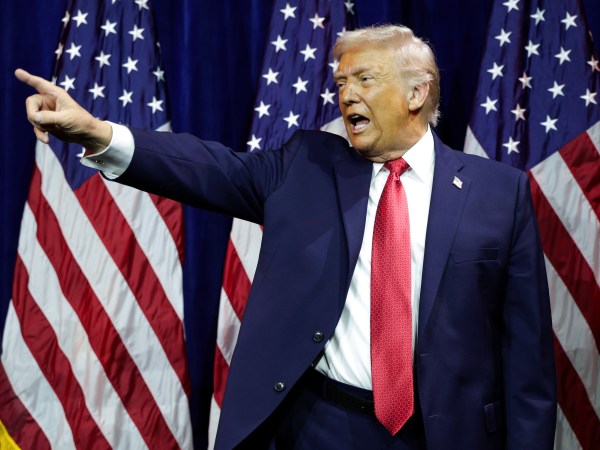
Not long after I first moved to Washington, D.C. more than 25 years ago, I was at a foreign policy event and my friend, who was the moderator, talked about “high trust” versus “high fear” international orders. The concept is simple: trust and fear each build on themselves and tend to create their own equilibria. A high-trust environment encourages trustworthy and predictable behavior. A high-fear environment makes trust foolish and dangerous. It makes rapid resorts to violence and force logical and common. What is most important about this observation is the way each environment is self-perpetuating, how each creates a logic which participants are foolish not to follow, even if they wish they were in a different international order altogether.
I’ve been watching the various debates about what the U.S. is doing in Venezuela, and may possibly do in Greenland, Cuba or other Latin American states. Most of them, as I’ve noted, seem wildly overdetermined. You have different factions pushing for various military adventures, often for different reasons. If they can pique Trump’s interest, there’s a good chance the adventure will happen. What the reason is depends on which faction you decide was most important. Whatever you find out from that analysis is probably an illusion. There’s a more general pattern that helps understand this current moment, one that has little to do with formal ideology and quite a lot to do with his business practices before he entered politics.
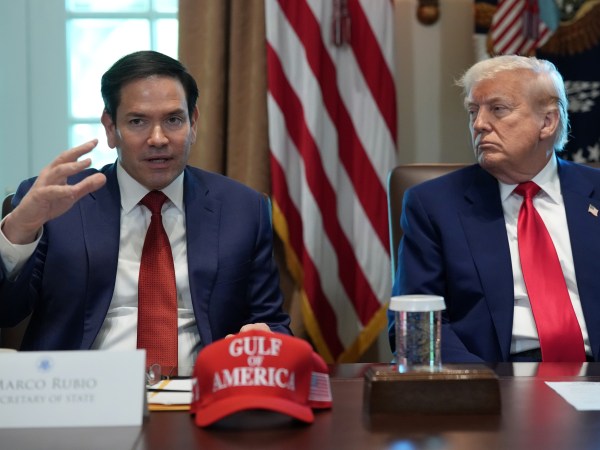
I’ve written a number of times over the years about the fact that Americans mostly believe that the post-World War II world order is the normal state of things. Of course, it is not. The last 80 years are unparalleled in global history for their general prosperity, lack of great power wars, a fairly predictable system of global rules. One has to say the obligatory caveats about all the ways the United States honored its values and rules in the breach, the slow run of proxy conflicts it participated in or fomented around the world. But these caveats only serve to illustrate the larger point in a paradoxical way. Things can always get worse and getting worse — conflict, instability, mass death — are the normal order of things in world history. Even a thin appraisal of the American ascendency shows its close to uniqueness in this regard.