


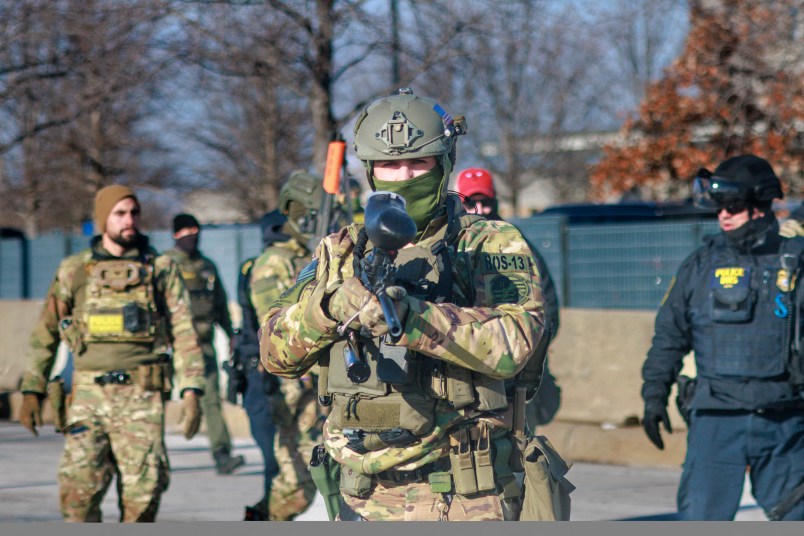
I want to return to a topic I’ve alluded to in several recent posts. The U.S. Constitution, U.S. law and U.S. civic culture all have a deep resistance to the use of the military in civilian spaces, except under the most extreme circumstances. Even then, we rely almost exclusively on what are in effect state and part-time militias, which are incorporated into the federal U.S. military but still distinct from it, at least largely based in the communities in which they are occasionally deployed. This issue came to the fore early in the second Trump administration with federalized National Guard troops deploying in various blue states and even “hostile” red states at least offering to deploy their guards into blue states. But the real game is Immigration and Customs Enforcement and Customs and Board Patrol and other, increasingly super-sized federal policing forces within the Department of Homeland Security. And they’re not military.
Over time, I’ve realized I’m being too literal about this. As a legal and constitutional matter, these aren’t military forces. They’re civilian policing agencies. But the aversion to military deployments in civilian areas isn’t simply a matter of technical designations, the formal unfreedoms of military service, the different legal code, the focus on war-fighting. There is a substantive reality of the desire to menace and dominate civilian spaces as though they are enemy territory, conquered rather than governed.
Join TPM to get full-access to our reporting, newsletters, and other member-only features.