

“Instead of making the wealthy pay their fair share, some Republicans want Medicare and Social Security to sunset every five years,” President Joe Biden said at Tuesday’s State of the Union.
Continue reading “Republicans Have Wanted To Cut Medicare And Social Security For Decades”Biden’s Powerful, 2023 State Of The Union Address In Pictures
President Joe Biden’s 2023 State of the Union address, expected to be a run-of-the-mill exercise, was unexpectedly powerful and included some surprising moments. This gallery presents some vivid pictures from the night.
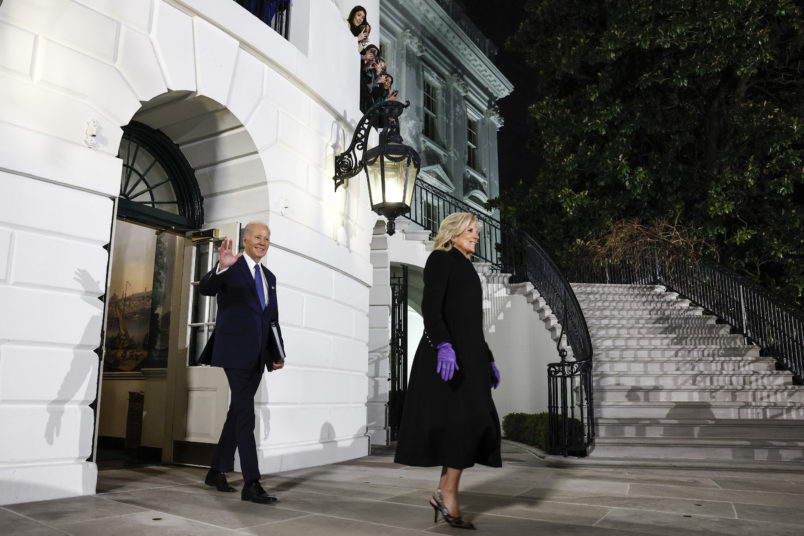
Biden and First Lady Jill Biden
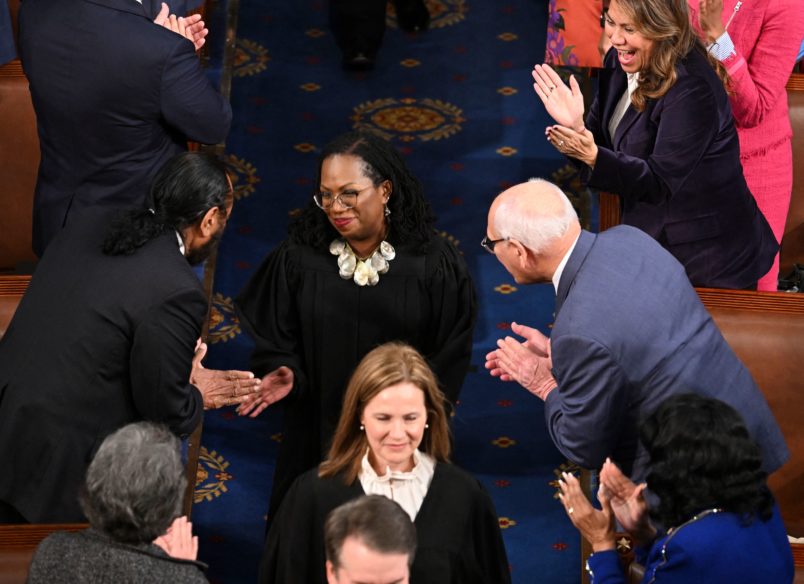
Supreme Court Justices Arrive
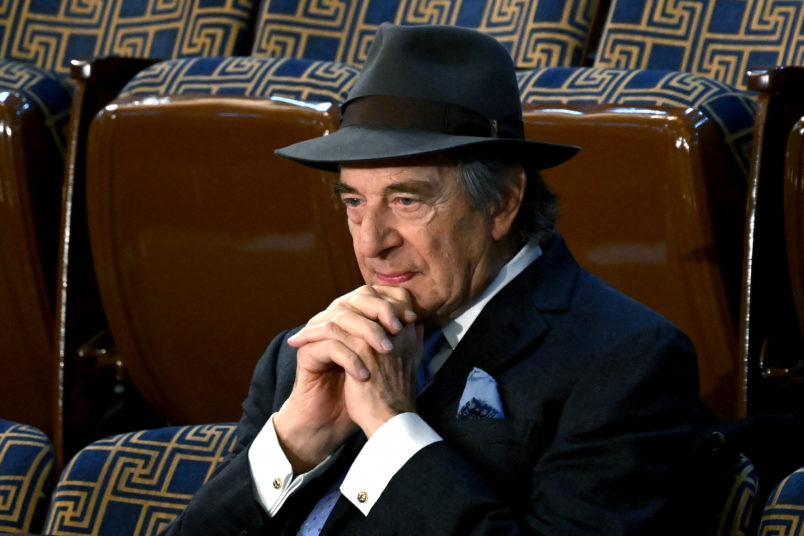
Paul Pelosi
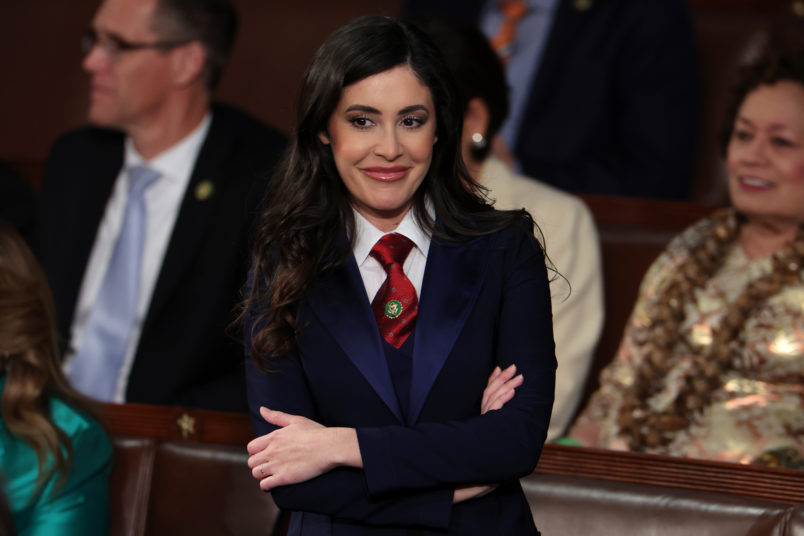
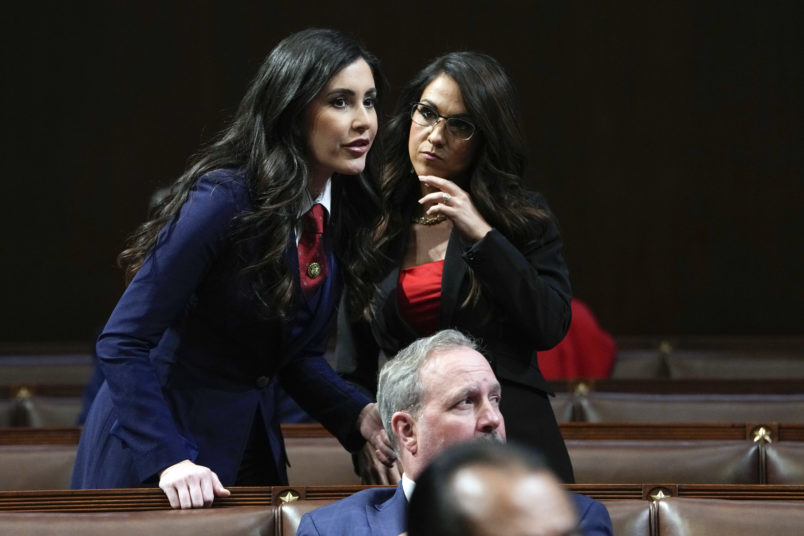
Rep. Anna Paulina Luna
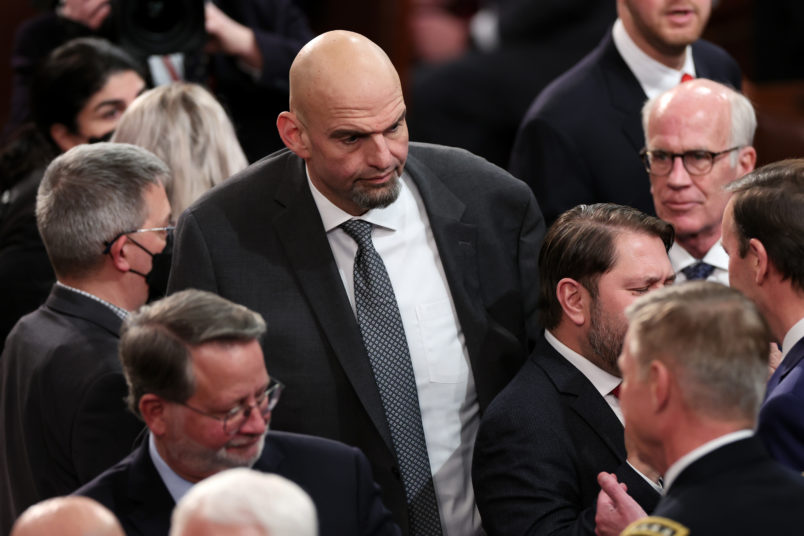
Sen. John Fetterman
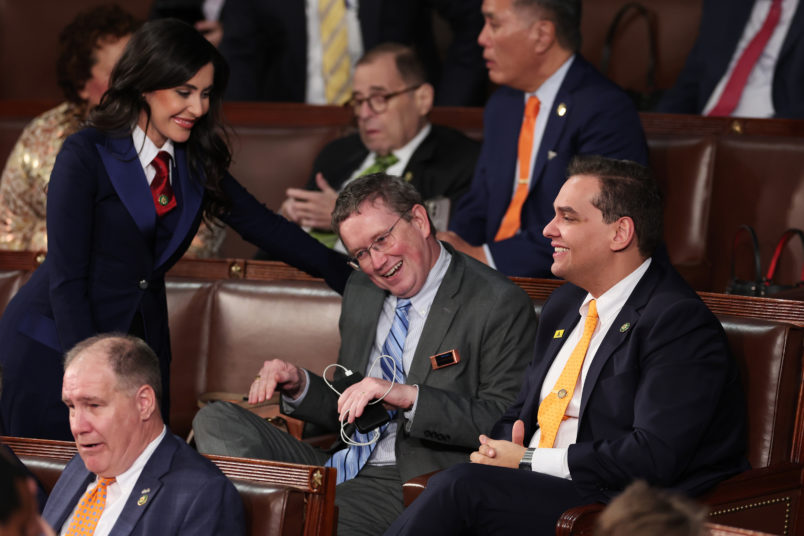
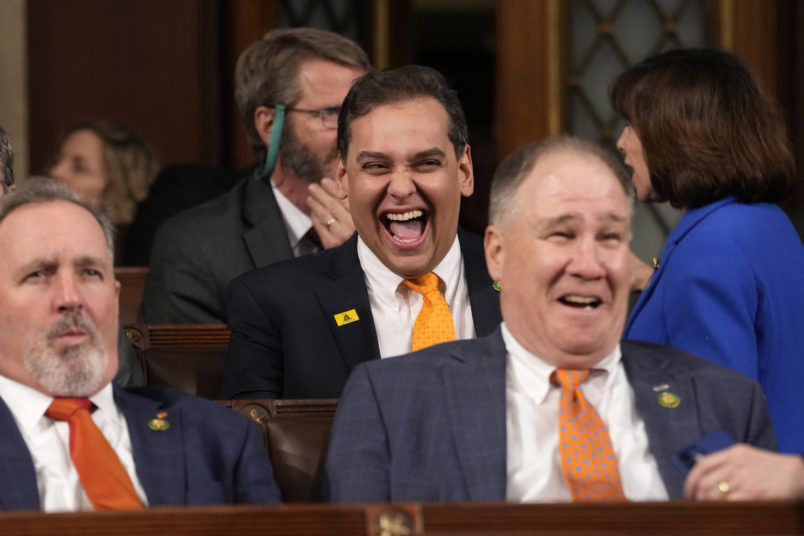
Luna, Massie and Santos
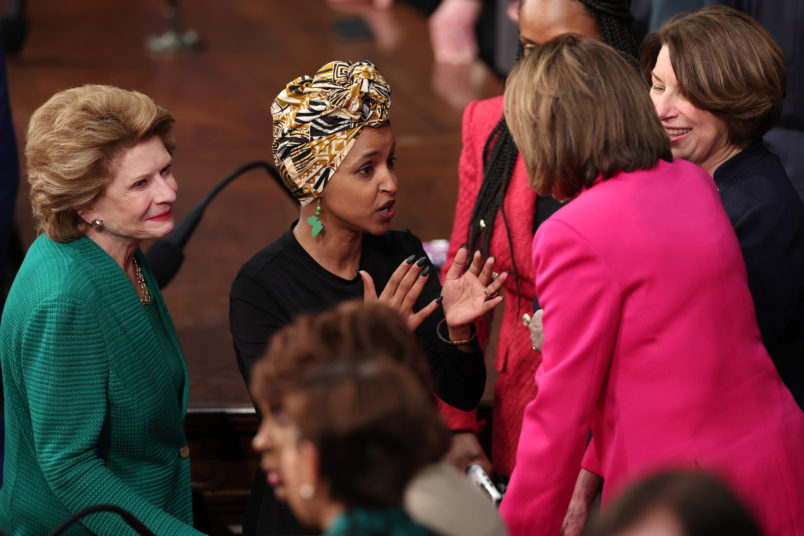
Sen. Debbie Stabenow, Rep. Ilhan Omar, Rep. Nancy Pelosi
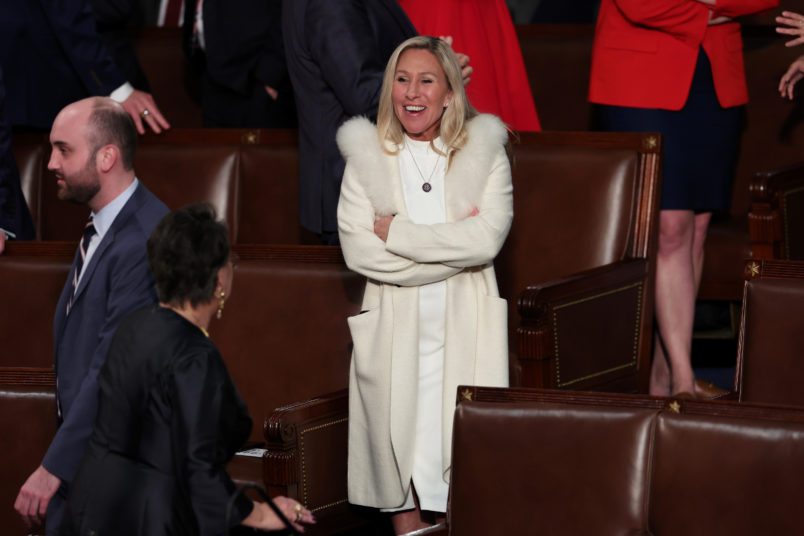
Rep. Marjorie Taylor Greene
Biden arrives
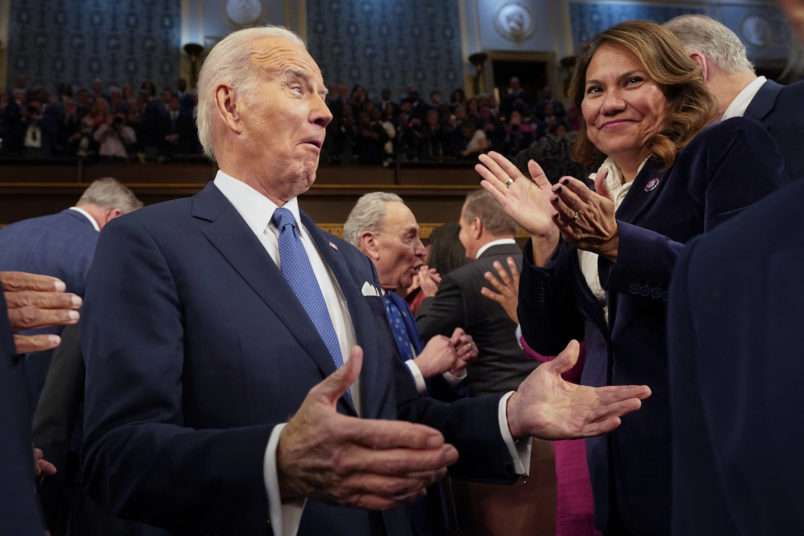
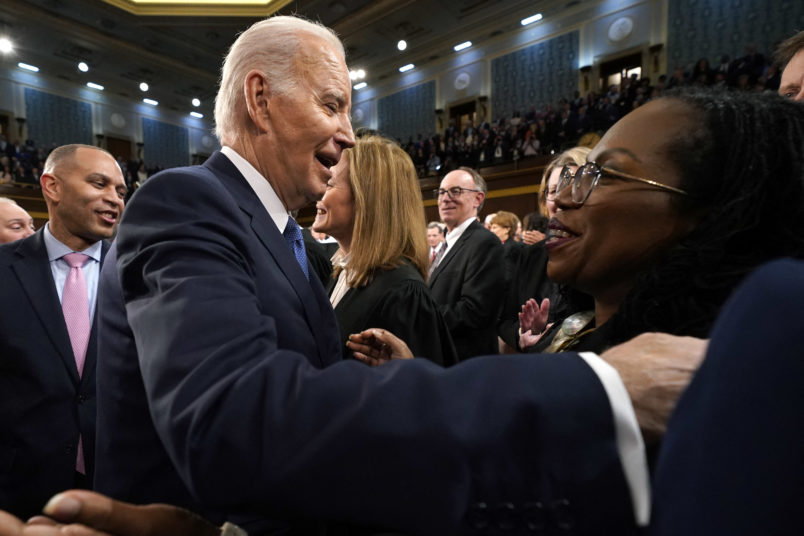
Biden greets Justice Jackson
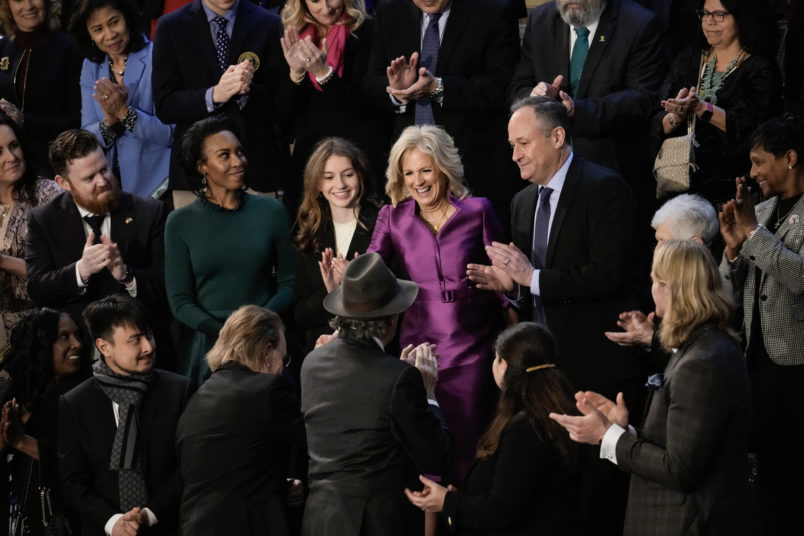
First Lady Jill Biden arrives
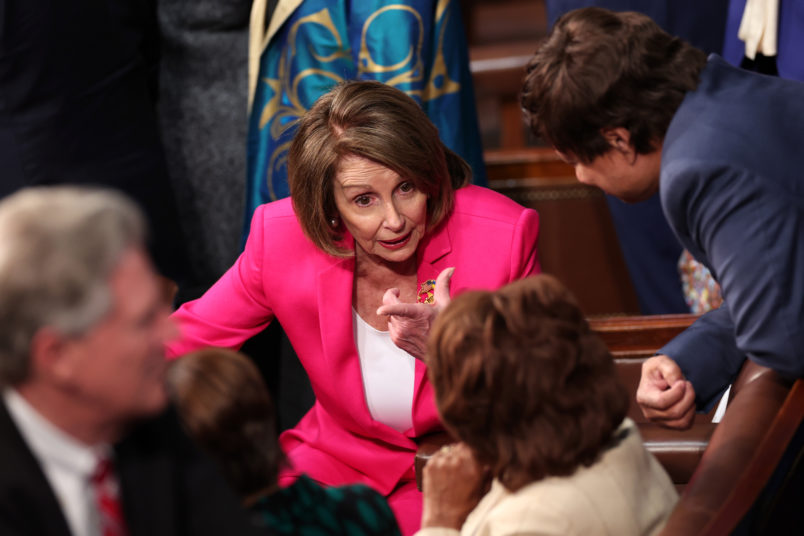
Rep. Nancy Pelosi
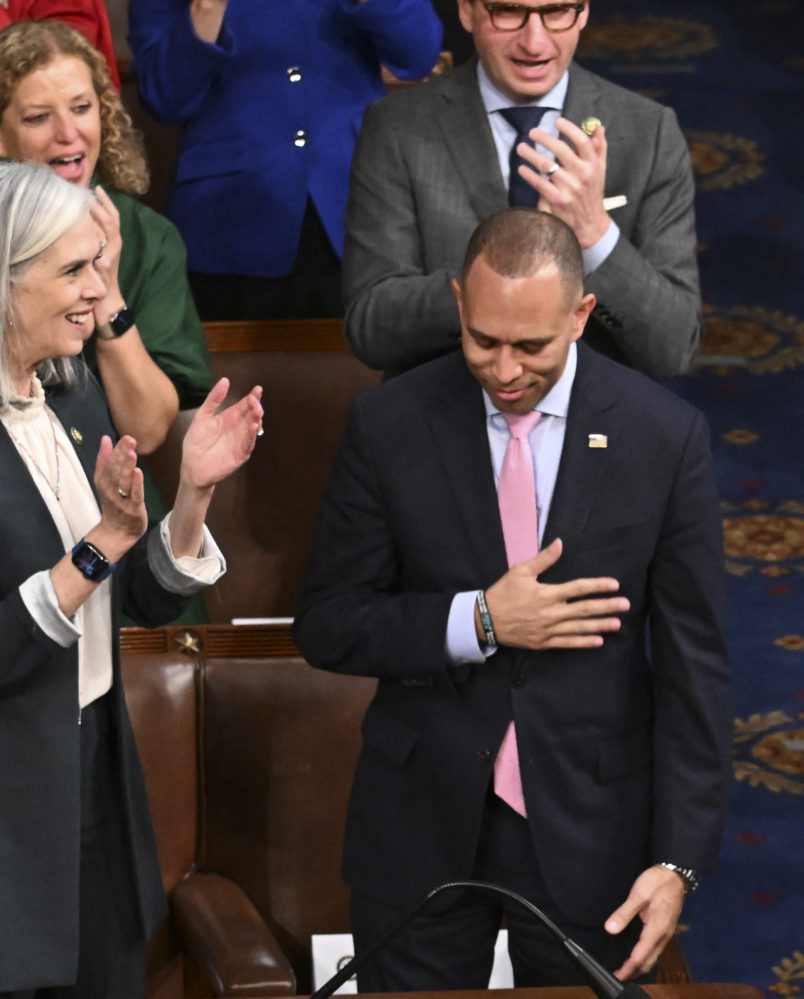
House Minority Leader Hakeem Jeffries
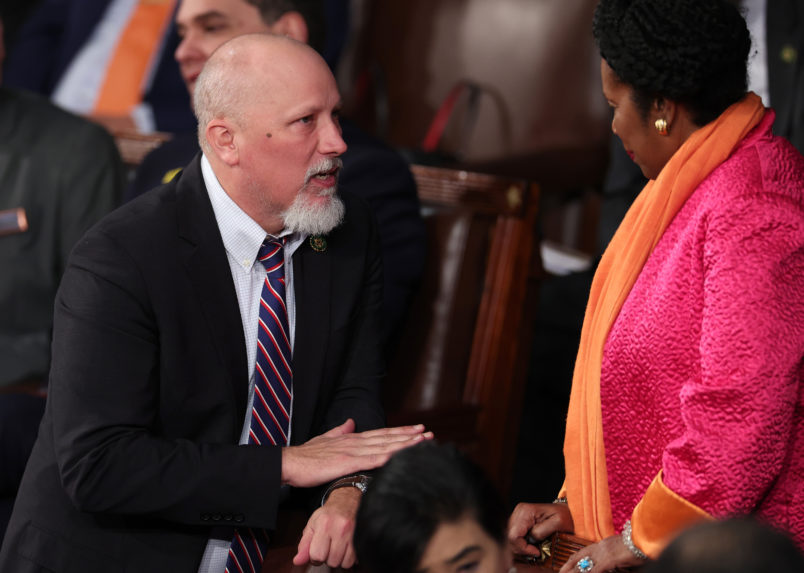
Rep. Chip Roy talks to Rep. Sheila Jackson Lee
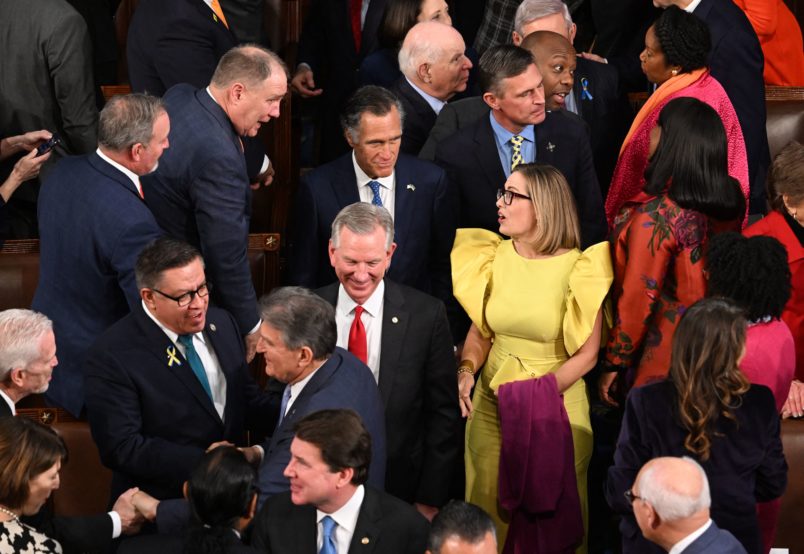
Sen. Kyrsten Sinema and Sen. Mitt Romney
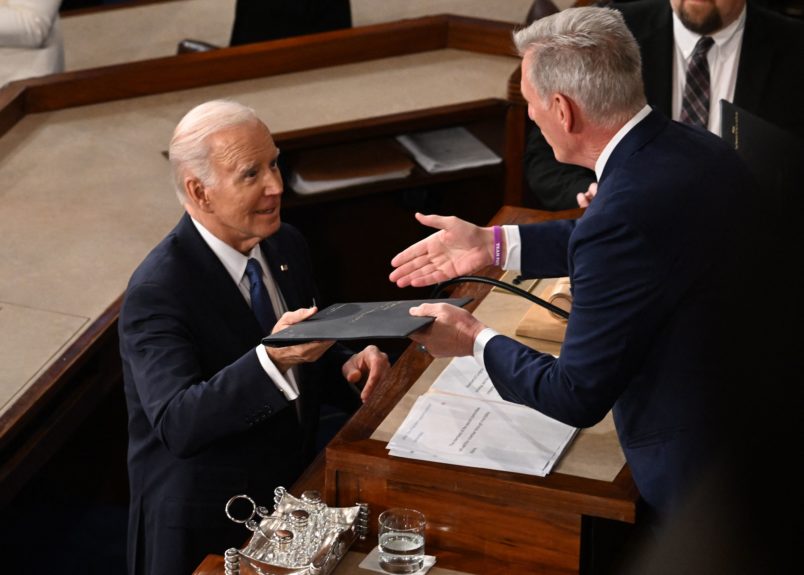
Speaker McCarthy shakes hands with Biden
Santos
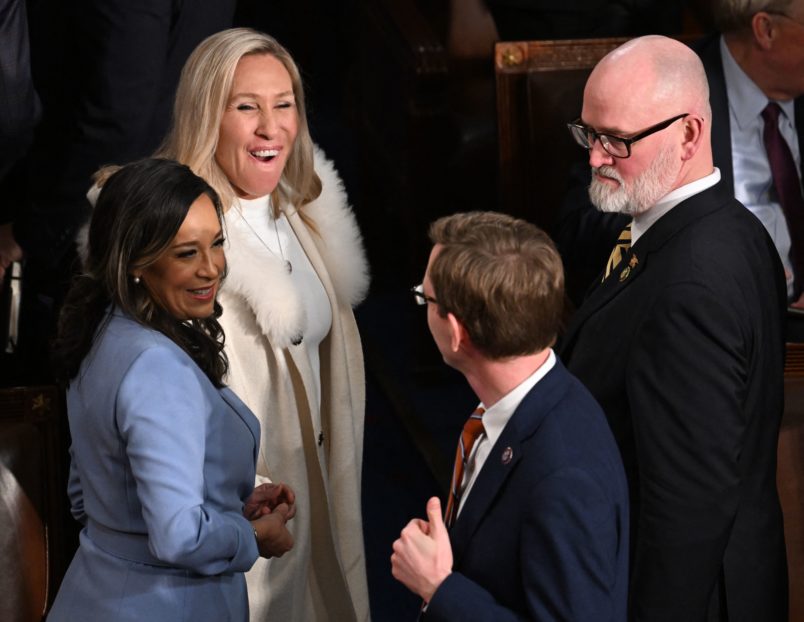
Greene, Rep. María Elvira Salazar, and Rep. Dusty Johnson
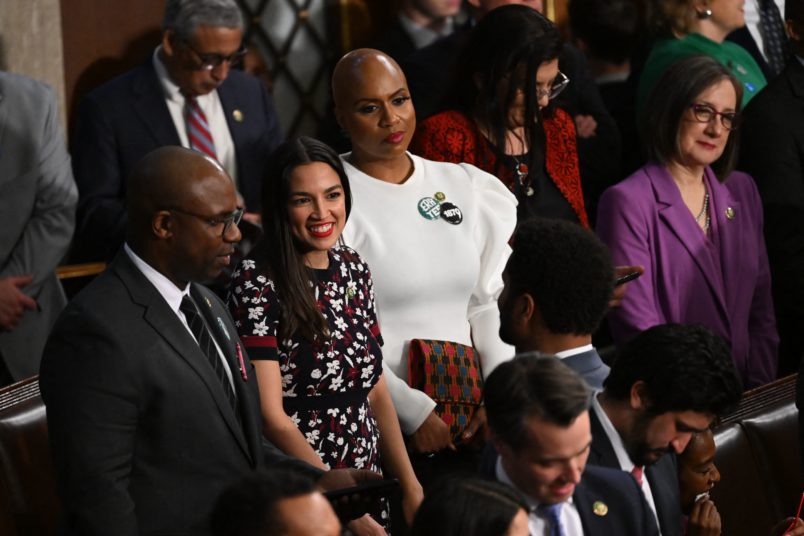
Reps. Jamaal Bowman, Alexandria Ocasio-Cortez, and Ayanna Pressley speak to Representative Maxwell Frost
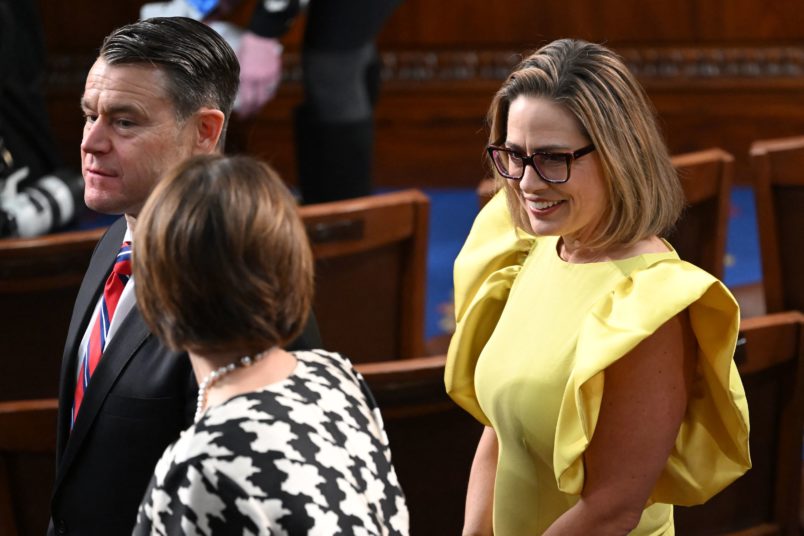
Sinema and Sen. Todd Young
Luna talks with Boebert
Bono and Brandon Tsay

Biden points
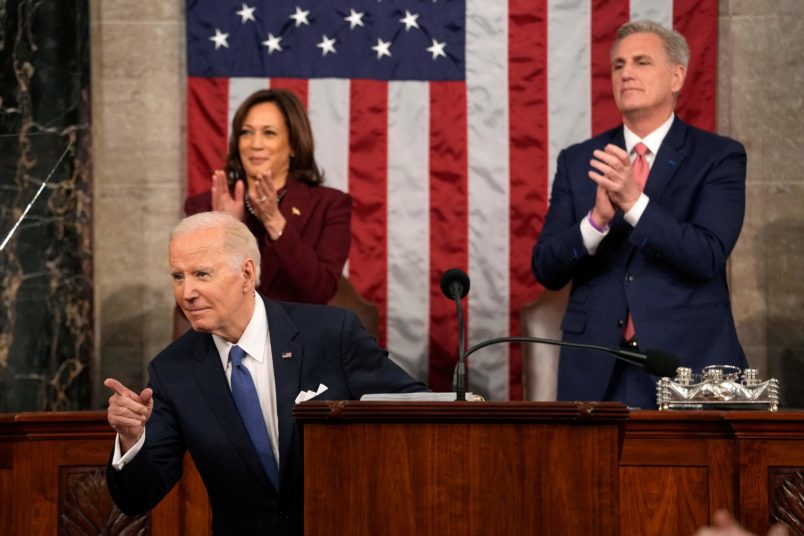
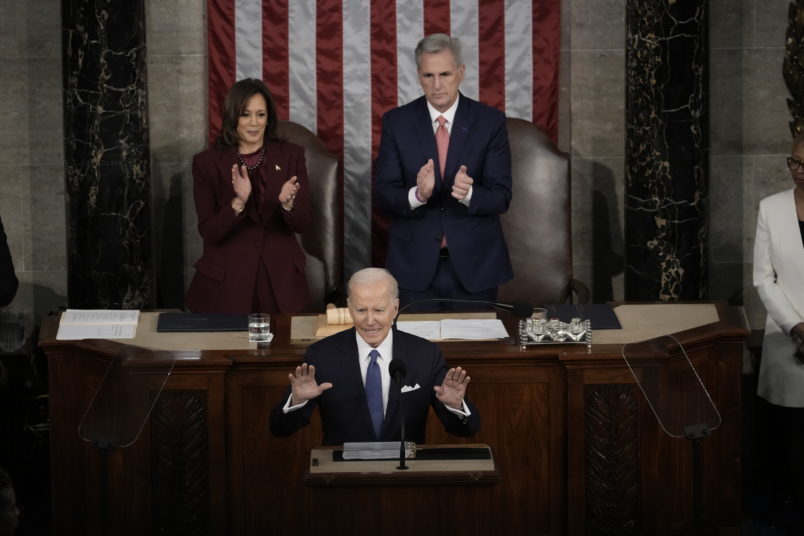
Biden
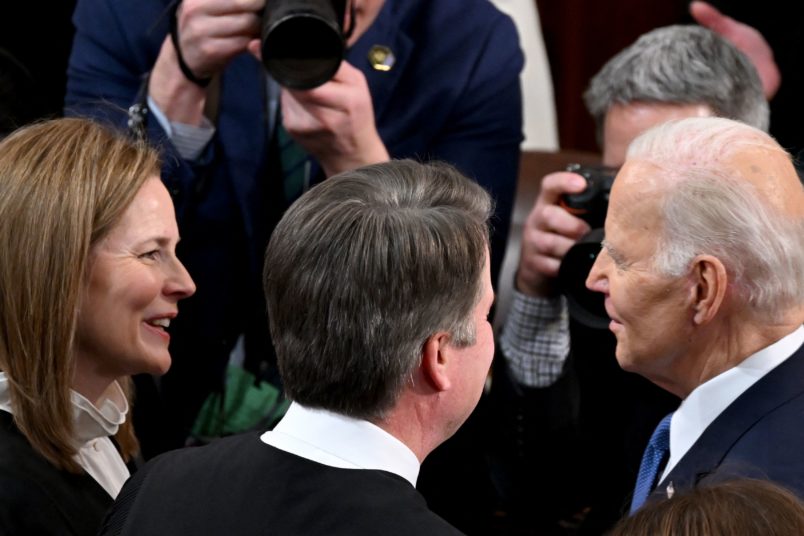
Justices Amy Coney Barrett and Brett Kavanaugh
Supreme Court Chief Justice John Roberts
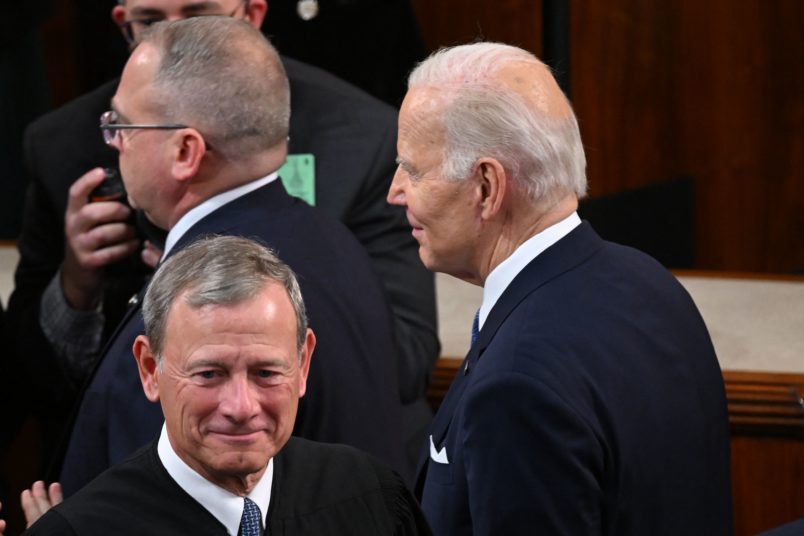
House Democratic Caucus Chairman Rep. Pete Aguilar, U.S. House Minority Whip Rep. Katherine Clark and U.S. Minority Leader Rep. Hakeem Jeffries
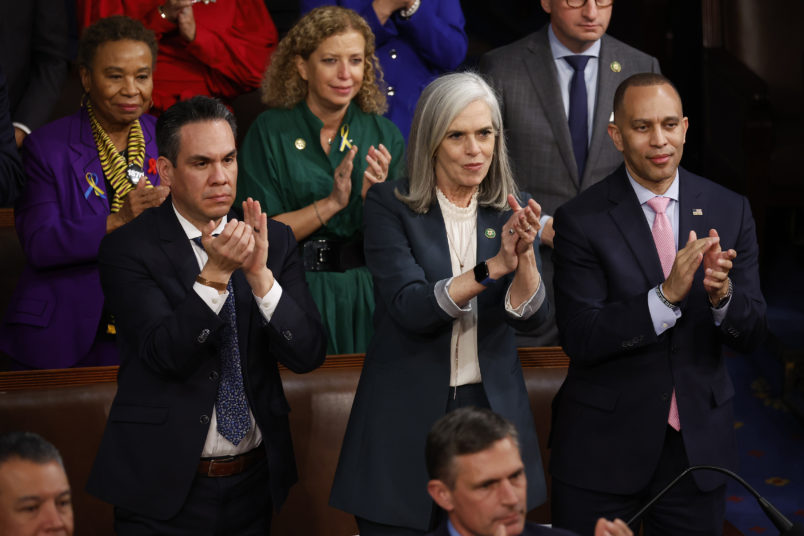
U.S. House Majority Leader Rep. Steve Scalise
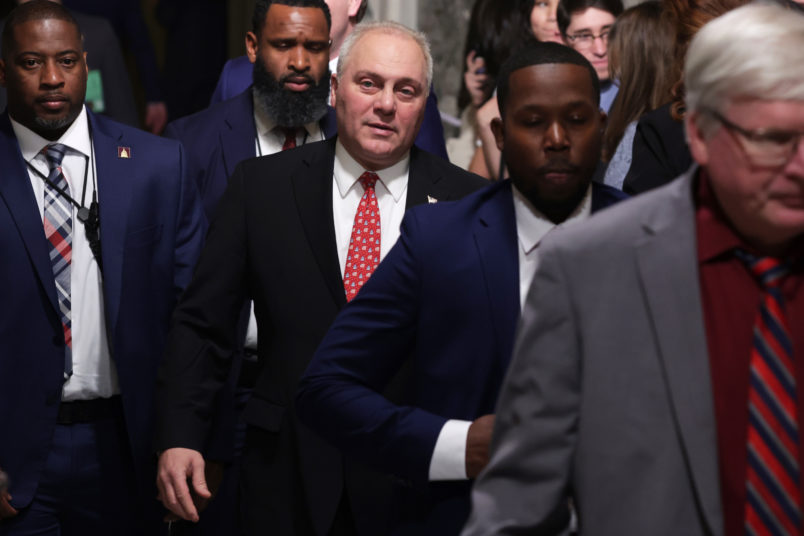
Democrats applaud
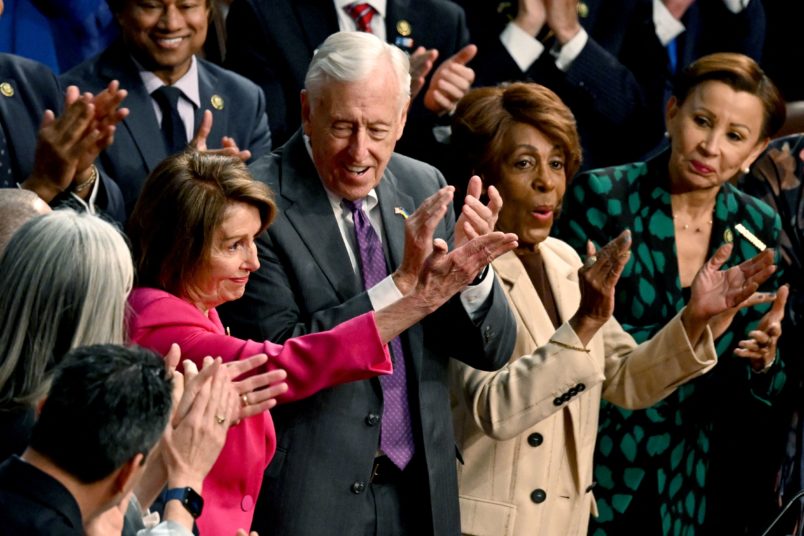
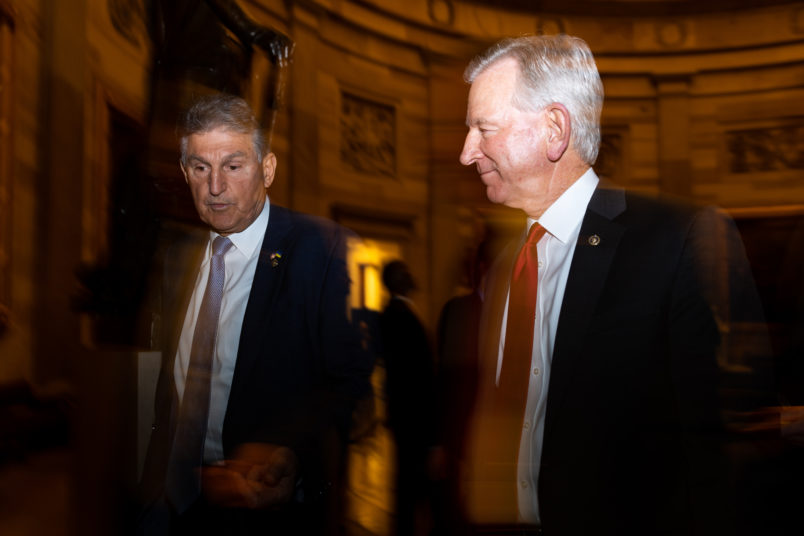
Sens. Joe Manchin and Tommy Tuberville
Attendees applaud Ukrainian Ambassador

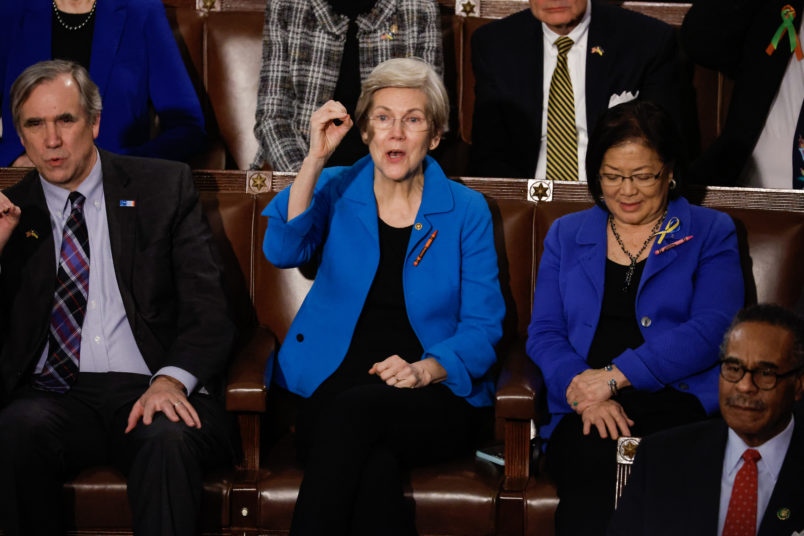
Sen. Jeff Markley, Sen. Elizabeth Warren and Sen. Mazie Hirno
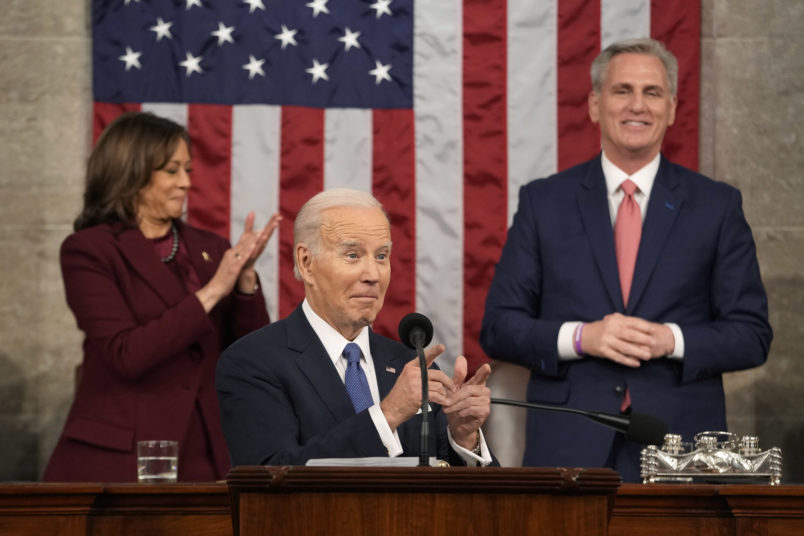
Biden
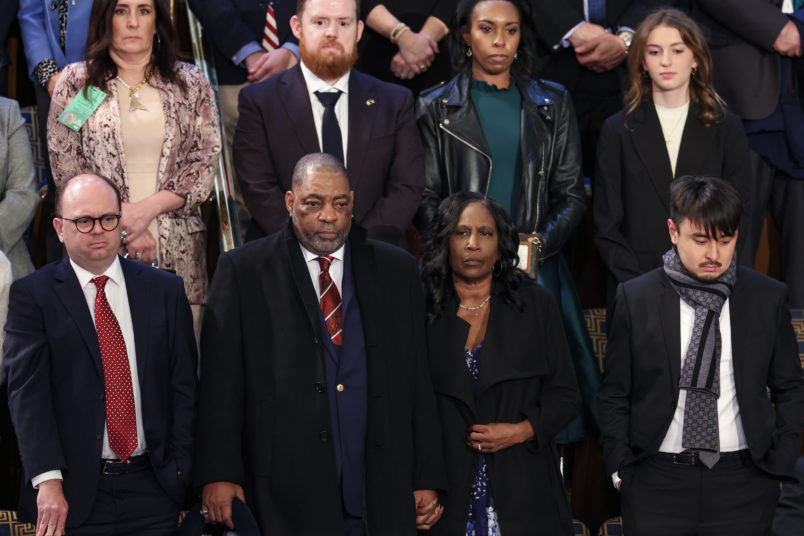
Guests
Donalds, Boebert and Gaetz
Inside The Sinema-DC Insider Mind Meld
I’ve had a few readers point me to this new Puck rundown of Kyrsten Sinema’s chances in 2024 and/or her incipient campaign. (It’s subscription-only but you can get like one free article if you really want to read it.) One reader was mystified that reporter Tara Palmeri approached the race on the assumption that Sinema holds all the cards versus national Democrats and the Senate leadership.
So what’s my take?
First of all the reporter, Tara Palmeri, is very much part of the inside D.C. consensus, very much part of the Axios/Politico/Punchbowl “this is excellent news for Kyrsten Sinema!” mindset. Nothing wrong with that. But I just wanted to position the players for you. Palmeri does kind of paint that picture at the head of the article. But perhaps in spite of herself she comes round much closer to the reality of the situation further down in the piece.
Continue reading “Inside The Sinema-DC Insider Mind Meld”McConnell Again Pummels Rick Scott Over His Push To Sunset Social Security
Senate Minority Leader Mitch McConnell (R-KY) criticized fellow Republican Sen. Rick Scott (R-FL) on Thursday over his “Rescue America” plan, a Republican agenda guidebook that Scott tried to push ahead of the 2022 midterms that was roundly rejected by many GOPers, including McConnell.
Continue reading “McConnell Again Pummels Rick Scott Over His Push To Sunset Social Security”Brazil’s President Visits White House As He Tries To Counter Rising Threats To Democracy At Home
This article is part of TPM Cafe, TPM’s home for opinion and news analysis. It was first published at The Conversation.
When Brazilian President Luiz Inácio Lula da Silva meets with President Joe Biden on Feb. 10, 2023, climate change, economic development and security will be on the agenda. But if Lula cannot stabilize his country’s democracy, he won’t be able to tackle any of these other goals.
Biden and Lula lead vastly different countries. Yet, the violent challenges each faced to their elections have given them similar battles to fight.
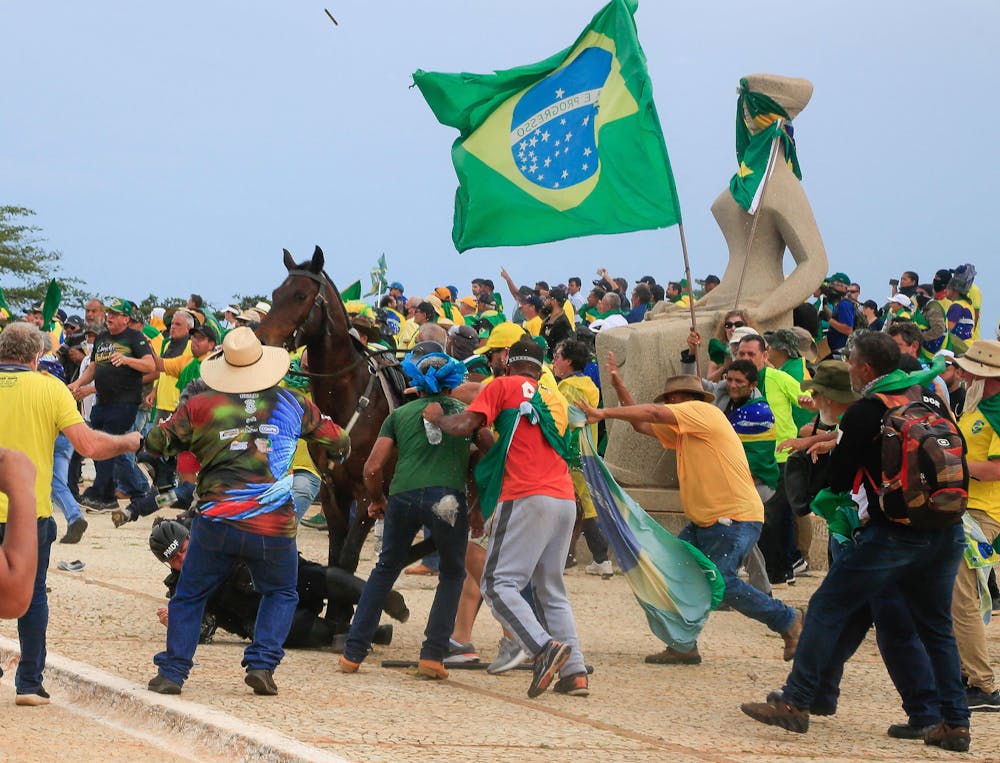
The Jan. 8, 2023, attack on Brazil’s capital echoed elements of the Jan. 6, 2021, insurrection at the U.S. Capitol. In both countries, incumbents who lost reelection began encouraging the violence weeks before their followers acted.
As an anthropologist who studies Brazilian politics, I see connections between how both riots were organized and the collective rage they conveyed. And I see the countries taking similar steps to shore up their democracies. The U.S. is two years into the process. But Brazil, where the insurrection was further complicated by military complicity, is just beginning the undertaking.
They acted on a lie
In both cases, rioters were convinced the election had been stolen from them and the candidates they backed – former President Donald Trump in the U.S. and Brazil’s former president, Jair Bolsonaro – despite there being no evidence of election fraud. In both cases, rioters organized online, and far-right influencers like Steve Bannon, who has had close ties to Bolsonaro since 2018, fanned the flames.
The rioters attacked physical symbols of democracy, like the Capitol in the U.S. and the National Congress and the Supreme Federal Court buildings in Brazil. In the U.S., rioters even openly called for the hanging and killing of elected officials. In Brazil, a nation once governed by a brutal military dictatorship, rioters pushed for a military takeover of the government.
The fact that so many people were moved from visceral anger to violence shows how easily people can be seduced by extreme ideology. That is a threat to democracy.
My book “Precarious Democracy,” which I co-edited with fellow anthropologists Lucia Cantero, Benjamin Junge and Sean Mitchell, demonstrates that political affect — the nonrational, emotional aspects of politics — can shape events in modern democracies.
Bolsonaro, for example, relied on portraying LGBT minorities as morally disgusting and a threat to the nation to rally support. That characterization was central to his electoral victory in 2018. Similarly, Trump — as candidate and president — cast immigrants as a threat to the United States. While Trump had an uncommon approach to the modern American presidency, his followers reveled in his norm breaking. And Bolsonaro validated conservatives’ emotional shift from hope to hate with the stoking of racial division and other tactics. As the anthropologist Patricia de Santana Pinho argues, Bolsonaro fomented a growing racial resentment among white Brazilians accustomed to being at the top of the country’s racial hierarchy, but who felt they had lost that privilege under Lula’s Workers’ Party. Bolsonaro promised to return to a mythical past when “there was decency and respect for the family,” using violence if necessary to achieve that goal. He even encouraged gun ownership as a way to reestablish social and moral order.
The challenges ahead
It is very hard to combat rage, resentment and nostalgia with appeals to rationality and civility. And Lula’s charge is further complicated by Bolsonaro supporters’ call for the return of military rule.
From 1964 to 1985, Brazilian citizens were tortured, raped and subjected to forced disappearances during the country’s military dictatorship. And in the decades since, most elements of the country’s democracy were restored, but the civilian-run government still has not gained back full control of Brazil’s security agencies. What’s more, while he was in office, Bolsonaro worked to make sure civilians did not regain that control by appointing thousands of military officers — both active duty and reserve — to civilian posts that controlled significant sectors of the government and the federal budget. He celebrated the 1964 coup that led to military rule and the military regime itself. And he made sure the military and police force were amply funded, giving the agencies a total of about US$5 billion by the end of his term. The country’s annual budget is about $19 billion.

The path to democracy
Restoring Brazil’s democracy and ridding the government of military influence may be Lula’s biggest challenge. But he’s taking practical steps to do it, such as firing a military general who reportedly prevented Jan. 8 rioters from being arrested. He also co-signed a letter with the governor of every state in Brazil, which explained that democracy is non-negotiable.
On a different front, Lula is combating rage with another powerful emotion: hope. The historian John French describes his approach as a “politics of cunning,” characterized by a willingness to compromise and a vision of the nation that feels more inclusive and equitable for all Brazilians.
When Lula was sworn in, he walked up the ramp to the Presidential Palace with eight representatives of his diverse political coalition, among them a metalworker, an Indigenous leader, a Black activist and a gay, disabled influencer.
This is a man who understands the power of symbols and is trying to change how Brazilians feel about their nation. He is asking them to claim a stake by embracing diversity — and democracy.
This article is republished from The Conversation under a Creative Commons license. Read the original article.

Research Finds Large Numbers Of Americans Still Want An Authoritarian Leader
This article is part of TPM Cafe, TPM’s home for opinion and news analysis. It was first published at The Conversation.
It might be comforting to think that American democracy has made it past the Jan. 6, 2021, insurrection. But our research shows that a wide range of the American people, of all political stripes, seek leaders who are fundamentally anti-democratic.
Continue reading “Research Finds Large Numbers Of Americans Still Want An Authoritarian Leader”How Could You NOT Subpoena Mike Pence?
A lot of things happened. Here are some of the things. This is TPM’s Morning Memo.
Pence Is A Critical Jan. 6 Witness
The big news last evening, first reported by ABC News and then duplicated by every major news outlet, was that Special Counsel Jack Smith has subpoenaed former Vice President Mike Pence as part of his investigation into the 2020 election subversion scheme.
My reaction was a mixture of relief that it finally happened and chagrin that it took so long. You can’t fairly investigate Jan. 6 and the events leading up to it without Pence’s testimony. He’s a must-have witness.
To be fair, Pence and the Justice Department have reportedly been in negotiations for months over his testimony, so the subpoena is as much a culmination of one process as it is the beginning of another. Nonetheless, this has been a long time coming (though it remains unclear publicly when the subpoena issued).
A few points to capture the general reaction among close observers of the investigation:
- Pence’s executive privilege claims (or more precisely those Trump will raise to block some of Pence’s testimony) are not particularly strong.
- Remember that a series of secret court battles have been fought over executive privilege already and our best understanding is that DOJ succeeded in getting the testimony of Pence aides Marc Short and Greg Jacob.
- Pence has already divulged information in his own memoir that falls squarely within executive privilege. You can’t say it in your book then decline to testify about it to the grand jury.
Let me also flag the distressingly real possibility that under current precedent some of the most significant court decisions of the last half century around executive privilege and the ability to hold the president accountable for criminal conduct may happen in secret. That would be a disaster for the rule of law and democracy. Stay tuned on that front.
One last point: The Smith investigation appears to be pressing ahead resolutely now, but it’s hard not to think back to all the time Merrick Garland lost in 2021. The Pence subpoena comes more than two years after the fact, long enough for Pence to have published his memoir in the meantime.
Don’t Sleep On This One
The Pence subpoena sucked up all the oxygen yesterday, but we learned via CNN that former Trump national security adviser Robert O’Brien has also been subpoenaed by Jack Smith.
Biden Brings It On Social Security
President Biden seems to be relishing the leverage he has since the State of the Union in attacking Republicans over Social Security. He was in Florida yesterday, where Sen. Rick Scott (R-FL) is a chief target, and wouldn’t you know but Scott’s controversial plan was hilariously placed on every seat at the Biden event:
…and these are waiting in the guest seats 😂😂 pic.twitter.com/xZflHTzYqA
— Ray Roa (@rayroa) February 9, 2023
You’ll remember Scott rolled out his 12-point plan last year before the midterms while he was heading up the Senate Republicans’ campaign arm, much to the consternation of Senate Minority Leader Mitch McConnell (R-KY), who is still roasting Scott over it:
Biden himself pulled no punches at the Florida event: “Look, I know that a lot of Republicans, their dream is to cut Social Security and Medicare. Well, let me say this — if that’s your dream, I’m your nightmare.”
The Newest George Santos Dog Scandal Is A Head Scratcher
Help me make sense of this.
Politico first reported yesterday and other outlets confirmed that Rep. George Santos (R-NY) was charged in Pennsylvania in 2017 for writing bad checks totaling more than $15,000 to Amish dog breeders. Among the baffling details:
- The case didn’t come to a head until 2020, when Santos received a extradition warrant in New York.
- Santos allegedly told Pennsylvania law enforcement he worked for the SEC ( he didn’t).
- The charges were dropped after Santos claimed his checkbook had been stolen. The lawyer friend who helped Santos on the case now says she doesn’t believe his story given the serial fabrications that have since emerged.
- Soon after one of the bogus checks was written with “puppy” in the memo line, Santos’s fake dog charity held a puppy adoption event on Staten Island.
I’m sure there’s a perfectly reasonable explanation for all this. Right?
Another George Santos?!?!
The Washington Post has an in-depth report out this morning on the curious biography of another incoming thirtysomething GOP member of Congress that doesn’t quite add up.
The WaPo story doesn’t go so far as accusing Rep. Anna Paulina Luna (R-FL) of fabricating her biographical details – and in fact her mother corroborates much but not all of her daughter’s account – but there is a lot of fishiness around certain aspects of her past and of her public identity.
Luna, 33, was plucked from relative obscurity by Turning Point USA founder Charlie Kirk in 2018 to be the group’s director of Hispanic engagement. But her Hispanic identity and hardcore conservatism seem to have emerged rather late in life, according to the Post report:
Twelve years before she was elected as the first Mexican American woman to represent Florida in Congress, Anna Paulina Luna was serving at Whiteman Air Force Base in Warrensburg, Mo., where friends said she described herself as alternately Middle Eastern, Jewish or Eastern European. Known then by her given last name of Mayerhofer, Luna sported designer clothing and expressed support for then-President Barack Obama.
Luna declined to comment to the Post.
Congresswoman Assaulted In DC Elevator
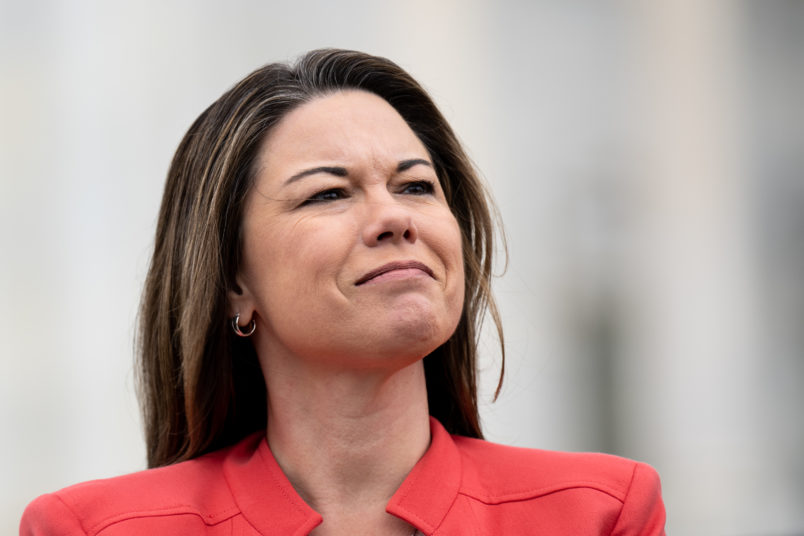
A man has been arrested for the alleged assault Thursday of Rep. Angie Craig (D-MN) in the elevator of her DC apartment building. Craig threw hot coffee on her assailant and was able to get away without serious injuries. The attack is not believed to be politically motivated.
2024 Ephemera
Jason Miller is stepping down as CEO of the right-wing social media site GETTR to return to Donald Trump’s side as a senior adviser to his 2024 campaign.
In Case You Missed It
The ex-girlfriend of indicted former FBI official Charlie McGonigal keeps on talking, this time to Insider.
Her account of their year and half together while he was married includes him using a backup iPhone primarily for its encrypted WhatsApp messages and manilla envelopes passed to him by an ex-Russian diplomat who wined and dined them.
Lots of intriguing details but still so many more questions than answer about McDonigal.
Florida Won’t Quiz High School Athletes On Their Periods
After a national outcry, the Florida high school athletic association is dropping its requirement that athletes provide information on their menstrual cycles:
The four questions at the center of the controversy asked whether the student had a menstrual period, and if so, how recent it was. The form also asked “how old were you when you had your first menstrual period?” and “how many periods have you had in the past twelve months?”
The not-so-thinly veiled targeting of transgendered students, comes after Gov. Ron DeSantis (R-FL) signed a 2021 bill outlawing transgender women and girls from competing in women’s sports.
Death Toll Tops 20,000 In Turkey Earthquake
The human toll is staggering. The manmade environment is wrecked. The natural environment is showing incredible scars:
Do you like Morning Memo? Let us know!
How The Fake Electors Scheme Explains Everything About Trump’s Attempt To Steal The 2020 Election
Here’s a new way of thinking about the effort to overturn the 2020 election.
Instead of a series of disconnected, disparate schemes all aimed at the same goal, the fake electors plot provides a lens through which to view the entire effort, giving Trump’s 2020 plans a coherence, with each piece fitting neatly together. Now, two years after the violence of Jan. 6, this fresh look at the scheme reinforces how efforts to spread conspiracy theories, subvert the DOJ, weaponize state legislatures, summon an angry mob and, ultimately, pressure the vice president on Jan. 6 were all part of the same plot, with fake electors at the center.
Continue reading “How The Fake Electors Scheme Explains Everything About Trump’s Attempt To Steal The 2020 Election”Election Misinfo on Key Podcasts Rose by Over 600% In The Days Before Jan. 6 Insurrection, Study Finds
A new study examines the huge amount of misinformation being disseminated by a small but popular group of political podcasts. In particular, researchers found that claims of election fraud rose by over 600% in the days leading up to the Capitol insurrection, with the increase concentrated, unsurprisingly, among conservative media.
The study, conducted by the Brookings Institution, analyzed 36,603 episodes from 79 different podcast series in order to determine podcasting’s effect on public discourse.
What researchers found was that nearly 70% of the podcasts they examined shared at least one unsubstantiated or false claim, as did at least one out of 20 episodes—1,863 episodes total—recorded by prominent hosts.
Due in part to his prodigious output, the researchers found that Steve Bannon was the worst offender, blasting out dozens of episodes a week.
“Bannon’s War Room, which produced both a high number of episodes and shared the most unsubstantiated or false claims in the dataset, topped the list, with close to 20% of all episodes assessed during this period including claims that Snopes and Politifact fact-checkers or the terms dictionary flagged as false or unsubstantiated,” the researchers noted.
They also found that just ten podcasts contributed more than 60% of the unsubstantiated and false claims about politics and public health in their research, and conservative hosts were 11 times more likely than liberals to share such information.
The Big Lie held a significant place within this trend: “After voters cast their ballots, podcast hosts and guests regularly promoted the lie that the election had been stolen from Trump, relying on debunked evidence, hearsay, and blatant conspiracy tropes to bolster their claims,” the researchers’ report on their findings reads.
Social media platforms like YouTube, Facebook and Twitter faced increased scrutiny for the role they played spreading misinformation leading up to the attack. “At the time,” the study notes, “podcasts barely registered as a concern.”
Researchers examined 3,916 podcast episodes that aired between the political party conventions of 2020 and the Capitol insurrection, finding that one out of every seven episodes featured unverified information.
Right-wing shows had an outsized presence in their sample. This imbalance was “not a deliberate choice,” the study says, “but rather a function of how popular these series are across the medium and how likely Apple is to recommend them.”
For example, Bannon’s “War Room,” currently one of the top-ranked “news” series on Apple Podcasts, publishes up to four episodes a day, up to six days a week. Liberal shows like Pod Save America, meanwhile, publish new content about twice a week.
Among 79 popular political shows the researchers looked at, thirteen of them have produced over 1,000 episodes, and all but two of them were conservative.
Election fraud claims rose by 600%, from 3% of all episodes between August and November 2020, to more than 28% of all episodes between Nov. 3, 2020 and Jan. 6, 2021. And 29 out of 79 shows shared at least one misleading election claim, while nine shows shared 25 or more or devoted more than half of the episode to election misinformation.
Listen To This: The State of the Union Is Strong
A new episode of The Josh Marshall Podcast is live! This week, Josh and Kate discuss President Biden’s big night.
You can listen to the new episode of The Josh Marshall Podcast here.