

Sen. John Cornyn (R-TX) on Tuesday threatened to vote against President Donald Trump’s ambassador nominees for Jamaica and Slovakia unless the Trump administration released the money Congress appropriated for the President’s Emergency Plan for AIDS Relief (PEPFAR) — before he got “assurances” that convinced him to drop the plan.
Continue reading “Cornyn Threatens to Block Trump Noms Over Unreleased PEPFAR Funds — And Quickly Relents”5 Points on Trump’s Loyal Labor Secretary Nominee
Keith Sonderling has been acting Secretary of Labor since ex-secretary Lori Chavez-DeRemer resigned in April amid a flurry of misconduct allegations ranging from drinking on the job to having an affair with a staff member. Sonderling, though, was reportedly at the helm long before then.
On Thursday morning, members of the Senate Health Education Labor and Pensions Committee will vote in an executive session on whether to advance Sonderling’s nomination to lead the embattled agency to the full Senate.
Formerly a Republican labor and employment attorney representing business interests, Sonderling joined the government during Trump I as the first-ever political appointee for the Wage and Hour Division. He went on to help lead the division, and later serve as a commissioner on the Equal Employment Opportunity Commission throughout the Biden administration. In every role, he maintained the most conservative views.
As acting Secretary of Labor, Sonderling has wielded himself as a weapon in Trump’s retribution campaign against blue states. If he’s confirmed as Labor Secretary, here is a snapshot of the man to whom Congress will give a rubber stamp.
DOL’s Weaponization of Alleged Fraud to Punish Blue States
In June, the Department of Labor under Sonderling issued a historic threat: to defund federal contributions to state unemployment programs unless states took “immediate action” to root out fraud and waste in those programs. While a release about the effort mentioned all 50 states as well as some U.S. territories, it targeted California, Illinois and New York as the most “glaring” alleged examples of unemployment funds misuse.
“We are officially putting governors on notice,” Sonderling said in a release. “This department is no longer afraid to use every lever available to ensure taxpayer money is protected.”
The Labor Department’s push comes as part of Vice President JD Vance’s anti-fraud task force that Trump has said will target blue states. Sonderling is a member of the task force.
He’s Behind the Big Push to Bring Crypto into Your 401K
Months before the Labor Department proposed a rule that would make it easier for retirement account fiduciaries to invest in risky assets — and while Chavez-DeRemer was still the Labor Secretary on paper — Sonderling promised industry insiders he would deliver on the controversial policy.
Experts told TPM in April that the proposed rule removes legal protections from retirees in the event employer-sponsored retirement plan managers don’t live up to their fiduciary duties. It would allow fiduciaries to pursue riskier investments like boom-and-bust cryptocurrencies and private credit, an industry whose investors sought withdrawals at such a rate they triggered withdrawal caps and couldn’t recoup their full investments.
“We have an industry living in fear … that a judge or a lawyer is going to second guess their decisions,” Sonderling said at a January industry event. “We have to eliminate that.”
In February, Sonderling Would Not Commit to Upholding Federal Union Rights
During a Senate hearing considering Sonderling’s nomination as deputy labor secretary, he faced in-person and written questions from Democratic senators asking his commitment to upholding the collective bargaining rights of the department’s employees as the Trump administration continued working to dismantle federal unions.
Asked by Sen. Angela Alsobrooks (D-MD) whether he understood the collective bargaining process, Sonderling responded, “I am not a traditional labor lawyer,” an odd response for the de facto leader of a department that handles workers rights.
At the EEOC, He Voted Against Pregnancy and Gender Protections
Confirmed and appointed vice chair of the EEOC in 2020, Sonderling remained on the commission until his term expired in August 2024. While there, he voted to block the Pregnant Workers Fairness Act. Republicans opposed the rule, which requires companies to provide reasonable accommodations for pregnant people, because it lists abortion as a protected medical condition.
Sonderling also opposed a rule that expanded discrimination protections to include gender interpretations in addition to biological sex. That rule was approved by the Democratic majority but parts of it were struck down by a Texas court in 2025.
While leading the Labor Department, Sonderling has continued to weaken worker wages and protections. In May, the department rescinded time-and-a-half pay protections that expanded overtime pay eligibility for more than four million workers. Under Sonderling, the department has also proposed the roll back of Fair Labor Standards Act protections for home healthcare workers.
He’s Been a Key Part in Pro-Biz Staffing Across Agencies
Far from a quiet Republican bureaucrat, Sonderling reportedly “had to move heaven and earth,” to get Republican Labor official James Macy nominated to the National Labor Relations Board. Operatives told Politico Sonderling was instrumental in selecting candidates for several agencies.
Even if he isn’t confirmed by the Senate, Sonderling can likely lead the department in an acting capacity indefinitely.
Only a Handful of Tickets Left
We’re one week out from our upcoming event in Brooklyn, and there are only a handful of tickets left. On Wednesday July 29, independent journalist and The Handbasket founder Marisa Kabas will join us at Crystal Lake bar in Brooklyn for an evening of conversation, drinks and trivia.
Marisa will talk midterms, Trump II and the state of independent media with TPM editor in chief and founder Josh Marshall; Nicole LaFond and I will lob some politics trivia questions at you; and TPM’s New York staff will be around to chat during our happy hour.
It’s only $25. Snag your ticket while you can!
New Attack Launched Against Trump’s Corrupt US Attorney Scheme
A Low-Key U.S. Attorneys Scandal
Eighteen months in, President Trump’s strategy to circumvent the Senate on the appointment of U.S. attorneys does not yet seem to have sunken in as one of the defining elements of bringing the Justice Department to heel under the White House.
While Trump’s appointments of charlatans like Alina Habba and Lindsey Halligan to temporary gigs as U.S. attorneys have been headline-grabbers, they are only part of of a larger Trump scheme to seize control of the appointment of U.S. attorneys in blue states despite what the Constitution’s Appointments Clause and federal statutes say.
Trump’s play is basically this: With blue state senators essentially having a veto over U.S. attorneys in their states (thanks to the Senate’s blue-slip tradition), Trump has used a variety of different workarounds to get his preferred people into those U.S. attorney slots. Those workarounds have avoided the constitutionally required Senate confirmation and in some instances have violated the law on acting or interim appointments. In a third use case, where district judges have appointed an interim U.S. attorney, Trump has promptly fired their appointee, and acting Attorney General Todd Blanche has promised to fire future judge-appointed U.S. attorneys unless they are approved by the administration.
Trump’s scheme is about to be put the test by a carefully planned, first-of-its-kind legal challenge from the judge-appointed U.S. attorney in Seattle, Roger Rogoff, who was fired last week by the president within an hour of his appointment.
In his new lawsuit filed in federal court in Washington state yesterday, Rogoff — whose legal team includes former Obama Solicitor General Donald B. Verrilli Jr. — places his firing in the broader context of Trump’s strategy to circumvent the Senate and the law:
By disregarding the carefully calibrated statutory framework that Congress enacted to address U.S. Attorney vacancies, Defendants ignore Congress’s exercise of its authority under the Appointments Clause to determine how inferior officers are appointed, and they claim the power to install and remove U.S. Attorneys at will in this district—and elsewhere—without Senate confirmation and outside the bounds of federal law. As illustrated in districts across the country, those actions threaten the very harms that the Appointments Clause was intended to prevent, leaving the President (and all future Presidents) free to appoint whomever he chooses as de facto U.S. Attorney indefinitely, regardless of their qualifications for the role.
Rogoff is the fourth judge-appointed U.S. attorneys to be fired, following similar terminations in the Northern District of New York, New Jersey (Habba’s former position), and the Eastern District of Virginia (Halligan’s former position). In New Jersey, the judges and DOJ eventually reached an agreement on a judge-appointed interim U.S. attorney.
Rogoff’s lawsuit points to three other jurisdictions — the Central District of California, New Mexico, and Nevada — where Trump’s workarounds violated the law but district judges have not stepped in to appoint U.S. attorneys.
This case is ultimately about whether the president can install U.S. attorneys indefinitely no matter how unqualified or corrupt or beholden to him they are, and in the process sideline the Senate and judges, to whom the law gives roles in checking the president’s powers in this regard.
What’s next?
Shortly after filing his lawsuit, Rogoff filed a motion for preliminary injunction seeking to invalidate his removal and to restore him to his position as interim U.S. attorney until the Senate confirms a permanent U.S. attorney. That puts the case on what should be a faster track to resolution, perhaps within weeks. That will largely depend on whichever judge ends up taking the case. It won’t be a local judge since they have an interest in the matter. Expect the 9th Circuit, which covers Washington state, to name an outside judge to hear the case.
But there’s one more wrinkle to this unprecedented case to bear in mind.
The federal judges in Seattle appear to have decided this is a fight they wanted to fight. They asked applicants for the interim position whether they would contest their anticipated firing by the president. Rogoff indicated he would, and they named him to the position. The speed with which Rogoff filed his lawsuit and motion for preliminary injunction, the quality of the complaint, and the caliber of the lawyers representing him all suggests this is going to be a hard fought, fully engaged case that ends up before the 9th Circuit and perhaps the Supreme Court.
The Retribution: Blue State Edition
The Trump administration is withholding an additional $1 billion in Medicaid funds from California and Minnesota based on spurious allegations of fraud.
Mahdawi Loses on Appeal
The 2nd Circuit Court of Appeals ruled that a district court lacked jurisdiction when it ordered the release of pro-Palestinian advocate Mohsen Mahdawi from immigration detention, a decision could pave the way for him to be detained again, Reuters reports.
BBC Puts the Screws to Trump
In President Trump’s defamation lawsuit against the BBC, a magistrate judge ruled that Trump must turn over to the broadcaster detailed financial information.
The Corruption: Pardons Edition
In an unprecedented expansion of White House clemency power, President Trump has issued pardons for companies, not just people, Bloomberg reports.
A Virtually Infinite Enemies List
At The Bulwark, Matt McManus chronicles the far-right’s ever-growing enemies list, with its special focus on racial minorities, feminists, and intellectuals.
News? Tips? Feedback? Please let me know. For sensitive information, use the encrypted methods here.
The Right’s New Country Club: Inside the Bizarre World of Luxury Gun Clubs
This book excerpt is part of Cafe, TPM’s home for opinion and news analysis.
The story of modern gun culture is partly about how reactionary forces worked lawmakers and the judiciary to transform America’s relationship with firearms. Congress granted extraordinary liability protections to the gun industry, while the Supreme Court reframed the Second Amendment, ignoring the long-held view that its reference to “a well-regulated militia” was not a fusty preamble but a commonly understood restraint.
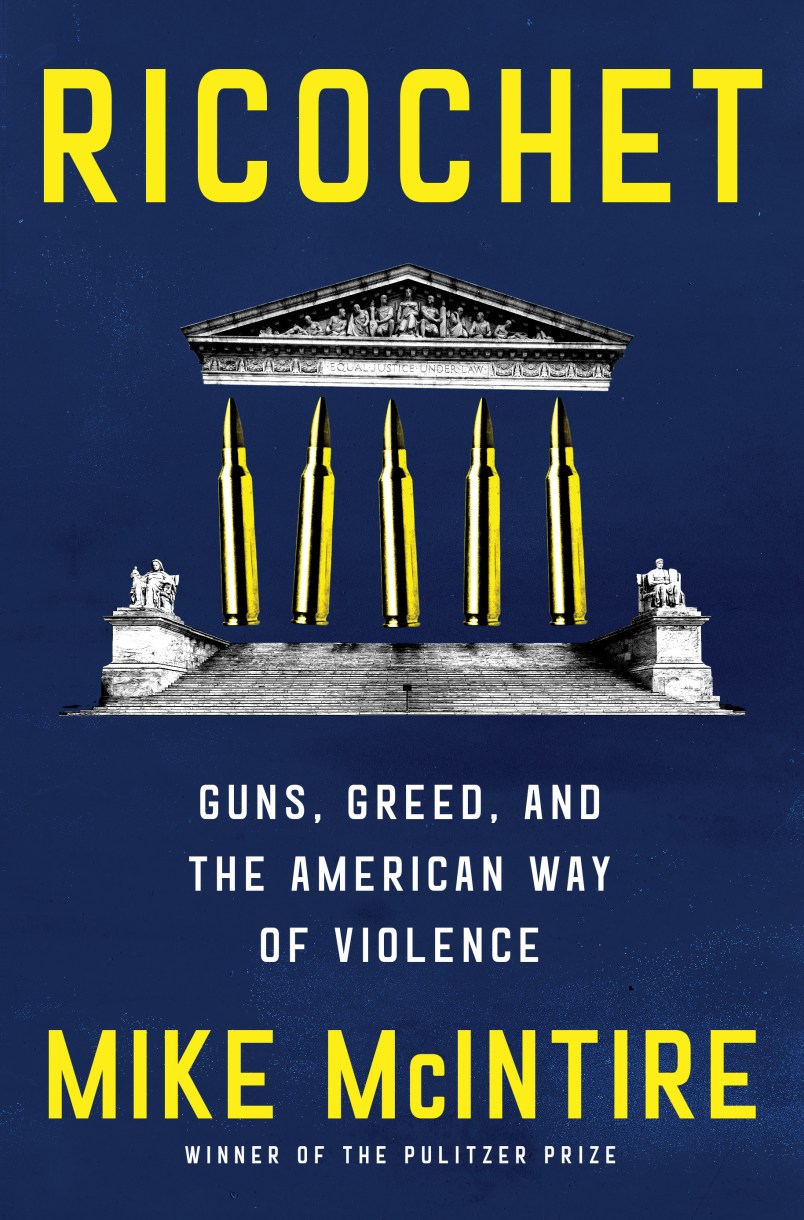
In Ricochet: Guns, Greed, and the American Way of Violence, I explore how these legal victories freed politicians, businesses, and Wall Street players to seek power and profits by making gun ownership a cultural identifier. And the gun lobby worked especially hard to cultivate a younger generation of gun owners by making rifle shooting a school physical education activity and conducting social research on how to get kids interested in firearms.
The heedless integration of firearms into American life is not solely explainable by historical undercurrents, such as the grand schemes of the NRA and the gun industry to inculcate pro-gun attitudes in young people. Larger cultural and social forces have also become increasingly important.
As I began exploring them more deeply, it quickly became apparent that modern-day gun culture has entered a phase akin to the late-stage Roman Empire, when success and power devolved into selfish extravagance. No longer was it enough to argue that sports shooting, hunting, and self-defense justified an expansive interpretation of the Second Amendment—simply having fun with guns was now a God-given right.
On a 550-acre desert expanse in the unincorporated township of Pahrump, Nevada, you can pay for Rolling Thunder, an “adrenaline-fueled experience” of high-speed tactical shooting from an off-road vehicle, offered by Staccato Vegas, an offshoot of the Staccato gun company. A marketing brochure shows a blond woman wearing mirrored shades blasting away with a semiautomatic rifle painted like an American flag.
For a $1,000 annual Patriot membership plan, you get 50 percent off on “run-n-gun” courses, free firearms cleaning, and unlimited monthly guest passes. If you’re willing to pay $3,000 to upgrade to the Freedom plan, you get additional perks such as concierge services, on-demand food and beverage, preloaded magazines for your pistol or rifle when you arrive, and exclusive access to the Staccato 368 Lounge (368 supposedly was a code used for the word liberty by Revolutionary War patriots).
If all of this sounds rather silly, Staccato wants you to know that it is their solemn obligation as red-blooded Americans. At Staccato, you see, “We believe in protecting freedom and celebrating liberty: “It’s a part of who we are as Americans, allowing us the freedom to be individuals and for each of us to pursue our own unique happiness.” To join this assembly of patriots, you must buy at least one Staccato Pistol.
Sport-shooting clubs have been around for at least a century. In olden days, they mostly entailed well-to-do men gathering at some secluded retreat to drink, smoke, play cards, and occasionally shoot bolt-action rifles at targets or maybe go out for a hunt. They were genteel affairs. In recent decades, entrepreneurs have taken this concept and jacked it on steroids. Numerous oases of controlled violence dot barren landscapes in Nevada, Arizona, and Texas, with indoor facilities as well in Los Angeles, Chicago, and Philadelphia. In Las Vegas, the Range 702 offers bachelorette parties, where ladies can shoot machine guns and get a free shot glass, followed by drinks and a “limo to Larry Flynt’s Hustler Club.”
Luxury is a defining theme. An NRA blog post from 2017 explained the emergence of a new name to describe the phenomenon: guntry club. Acknowledging that “gun culture could inspire thoughts of dark and cold ranges, dusty or muddy outdoor environments or even loud, brash and unforgiving crowds,” guntry clubs sought to combine the shooting experience with luxury accoutrements of traditional country clubs.
Some of these places are fashioned as family theme parks, combining sightseeing, swimming, and horseback riding with shooting machine guns and grenade launchers. “Drive a tank! Crush cars!” blares an ad for Bullets and Burgers, an apocalyptic playground of sorts in Arizona. If you’re willing to part with $2,300, the Super Platinum Shooting Package gets you access to eight machine guns of your choice, a flamethrower, and a gigantic .50-caliber tripod-mounted sniper rifle “used in several Hollywood hits including Jumanji and Rambo II.”
In 2014, Alex MacLachlan, an Ivy League-educated investment banker from New Jersey, and his wife, Alison, visited Bullets and Burgers. Their nine-year-old daughter was allowed to shoot an Uzi submachine gun, but lost control of it, accidentally killing the shooting instructor who was guiding her.
The relative wealth and professional status of the tragedy-struck MacLachlan family came as somewhat of a surprise to me. I suppose that betrays my own biased assumptions about the type of person who would want to go to a place such as Bullets and Burgers. Part of my preconception was based on my experience in the 1990s visiting gun ranges such as the one in Kentucky where you could pay to blow up gas-filled barrels—“Machine gun and flame thrower rentals available Friday, Saturday and Sunday!” It was the epitome of “loud, brash and unforgiving.” Since then, it seemed, the audience had expanded to include a demographic
I had not thought would be as interested in it. When I learned about the MacLachlan incident it immediately brought to mind an eerily similar case I knew of involving a physician from Connecticut. In that tragic incident, the doctor’s eight-year-old boy was accidentally shot in the head when he lost control of an Uzi submachine gun he was given at a range in Massachusetts (unlike the Arizona case, this one led to criminal indictments and changes in the law). Well-educated, well-off parents with the freedom to choose any number of healthy, memorable adventures for their children gravitated to ones centered around instruments of lethal violence as entertainment. Some of this was undoubtedly influenced by the gun lobby’s decades-long effort to position firearms as an acceptable way to teach responsibility to kids by making shooting a family-friendly pastime.
But there were deeper societal currents working as well. Legally purchasing and maintaining a decent firearm has never been cheap. One consequence of restricting imports of expensive guns such as so-called Saturday night specials—which in the 1960s and early ’70s could be bought for as little as $10—is that it allowed American-made guns to be sold at even higher prices. Gun control advocates such as Sen. Thomas Dodd were often accused of pushing import bans, in part, to protect homegrown manufacturers, such as Colt, Winchester, and Sturm, Ruger in Dodd’s state of Connecticut.
Import restrictions under the 1968 Gun Control Act required firearms to be for “sporting purposes” and go through licensed dealers. The foreign-made guns that continued to be imported, such as the Beretta, tended to be higher quality and thus more costly. And as the AR-15 took off as a cultural icon, the money required to partake in the fun increased exponentially. Gun industry marketing adjusted to target higher earners, who could more easily afford the advanced weaponry they were selling.
By 2014, households earning more than $90,000 were nearly twice as likely to have guns in the home than those earning less than $50,000. A 2019 study found that “slightly less than half of US guns were owned by persons whose household income was $100,000 a year or more.”
At the same time, the typical education level of the people buying these weapons was also on the rise. In 1994, 29 percent of gun owners had some college education. By 2017, that figure had risen to 34 percent, and by 2022 it was 40 percent. Of course, educational attainment for Americans in general has been trending upward, but the concentration of gun ownership among wealthier households outpaced the extra income that accompanies higher levels of schooling.
There is no better window into this phenomenon than the history of the Staccato Vegas gun range in Pahrump, Nevada. The place actually began under a different name and ownership. It started as the vision of Ignatius Piazza, a chiropractor from California, who founded a firearms training program he called Front Sight. But it wasn’t just about shooting.
From the beginning, Piazza imagined more than dusty target ranges nestled in the desert canyons. He obtained a development agreement with the county to build a “vacation club and resort” that would include thousands of time-share condos, single-family homes, a hotel, and a recreational park, among other amenities—a veritable town dedicated to gun lovers.
To join Front Sight required paying membership fees that could reportedly exceed $200,000 at the topmost “lifetime” tiers, which included a luxury home site. I had a hard time believing anyone would actually pay that much, but fortunately there was a way to find out: Front Sight filed for bankruptcy protection in 2022, and buried in the thousands of court records I found a list of close to three thousand members and the amounts they were said to have paid. The membership costs ranged from $500 to $350,000.
There was the real estate sales and investment consultant from California who paid $165,000; an oncologist and vineyard owner, also from California, was in for $148,000; a corporate lawyer in Illinois paid $106,000; for a physician in Arizona it was $50,000; a tech consultant in New Jersey, $48,000. And on and on.
The chief operating officer of Front Sight once described the Clientele this way: “We’ve got people that are college students to Forbes 400 guys. The economic spectrum is quite broad, but what we find is there’s very few, like forty or fifty, who actually want a residence. What they want is an upscale place to stay for the week or two that they’re out here.”
What motivates them? Bruce, a “gold status” member and CEO of a tech company in Orange County, California, explained why he brought his fourteen-year-old son and members of his family’s church group to the range: “The feeling of security that I come home with, that I’m able to protect my family with all the craziness going on in this world.”
Michelle, a tax accountant from Liberty, Missouri, spent weeks at Front Sight with relatives and “girls from my office” learning to shoot and “be ready to defend our family.” Grant, a software-company executive from Bloomington, Minnesota, came with friends because “it’s really important to be able to defend myself and defend my family if I ever got into that situation.”
As much as self-defense may be the practical, mature rationale participants offer when asked, many also gravitate to these guntry clubs for entertainment. The industry has been remarkably successful at selling the eat-your-spinach objective of skills training in a sugary wrapper of fun, comfort, or excitement. And for that, the lure of cool “forbidden” stuff comes in handy.
Desert Wolf Tours in Arizona offers packages for bachelor and bachelorette parties and corporate retreats that combine off-road ATV driving with shooting machine guns, which they are licensed to operate. One of them, priced at $314 per person, is the Machine Guns and Suppressors Adventure, which is cosponsored by a company that makes silencers or, in the industry’s preferred parlance, suppressors: “Shoot REAL, Federally-Restricted Machine Guns and Suppressors! These are the REAL DEAL!”
The use of guns for entertainment and over-the-top recreation may be all in good fun (the wisdom of it notwithstanding), but a darker element to the modern idolization of firearms and violence can be found in our political discourse. Here, the societal effects are especially profound because, for better or worse, our elected leaders both reflect and set the tone for what’s considered “normal.”
For schoolchildren, a visit to their class by a politician once conveyed a sense of seriousness and civic duty. Students today could be forgiven for confusing it with professional wrestling.
To be sure, American politics has a long history of bare-knuckle excesses. The 1828 presidential campaign featured accusations, circulated in dueling handbills, that Andrew Jackson was a cannibal and John Quincy Adams a pimp. In modern times, negative attacks on opponents have tended to emphasize fear as much as slander and innuendo. Democrats can lay claim to one of the most notorious examples — The “Daisy ad” of 1964, showing a little girl plucking flower petals followed by a nuclear blast, the unsubtle message being that a vote for Republican Barry Goldwater meant the end of the world.
At the same time, as the NRA made support for gun rights a potent political signifier, it became increasingly common for candidates from both parties to flaunt their love of firearms. Traditionally, they struck relatively tame poses—hunting ducks or shooting at targets—just enough to reassure voters for whom guns were important. But in the 2010s, political messaging around guns took a sharp turn. Conservative opposition to President Obama and the rise of the Tea Party movement propelled a class of antiestablishment Republicans to the fore, along with increasingly agitated campaign ads of a different caliber—literally.
In Arizona, there was Pamela Gorman bragging about her NRA rating in 2010 by firing a machine gun, an AR-15, and a semiautomatic pistol. Another Arizona candidate, Jesse Kelly, promoted a campaign event that year where supporters could “shoot a fully Automatic M16” with him. Around the same time, Christina Jeffrey in South Carolina ran an ad in which she brandished an AK-47 while asserting that gun rights were necessary “to ensure that our limited government stays limited.”
Will Brooke, who unsuccessfully sought the Republican nomination for Congress in Alabama in 2014, ran an ad in which he used a small arsenal of semiautomatic weapons to blow holes in a printed copy of the “Obamacare” law. He was mimicking a milder ad from four years earlier showing West Virginia Sen. Joe Manchin, a Democrat, shooting a bolt-action rifle at a different bill.
In the 2016 Missouri governor’s race, Eric Greitens, a Republican and former Navy SEAL, took gun imagery to new heights in two ads, one showing him firing a mounted machine gun while pledging to “fight Obama’s Democrat machine and their corrupt attacks.” In the other, he shot an assault-style rifle at an unseen target until it blew up. And in 2018, there was the not-so-subtle ad for Republican Kay Ivey, the governor of Alabama, showing two men loading pistols at a range while saying they are “sick of those DC politicians” and that Ms. Ivey “protected our monuments.”
What was different about these is that the political messaging featured a firearm but, unlike in the past, the focus was neither progun nor pro–gun control. Rather, the gun itself was a prop used as a sort of ominous exclamation point for some other argument. The careless flaunting of firearms by these twenty-first-century pols stood in stark contrast to earlier generations of elected leaders, who may have supported gun rights but didn’t shove it in people’s faces. The discourse had become so militant that even John Dingell, the archetype of the pro-gun politician, was having doubts.
In a memoir published shortly before he died in 2019, Dingell recounted watching his wife, who had succeeded him in Congress, give a speech pleading for reason and a spirit of compromise to address gun violence. Thinking about it the next day, he said he found himself regretting that “the gun debate had gotten too polarized.” “As Debbie had said with such passion the night before, ‘Can’t we have a discussion?’” Dingell wrote. “And I thought about the role I know I played in contributing to that polarization.”
Compromise, however, does not sell as well with certain constituencies as performative antics, which have only gotten more extreme in the years since Dingell’s ruminations. Republican Congressmen Thomas Massie of Kentucky and Andy Ogles of Tennessee sent out
Christmas cards in 2021 showing their families posing with assault rifles. A Republican Senate candidate in Georgia, Josh Clark, held weekly giveaways of AR-15s in 2022 to ensure voters are equipped to “fight tyranny and evil” and filmed himself with his kids shooting one of the rifles. And in 2024 in Missouri, Republican attorney General candidate Will Scharf fired a grenade launcher at a stack of documents from Trump-related court cases.
Watching these ads, I found myself thinking of another politician from a bygone era, Robert F. Kennedy, and his remarks about gun ownership after his brother, the president, was assassinated: “We have a responsibility to the victims of crime and violence. It is a responsibility to think not only of our own convenience but of the tragedy of sudden death. It is a responsibility to put away childish things, to make the possession and use of firearms a matter undertaken only by serious people who will use them with the restraint and maturity that their dangerous nature deserves and demands.”
Copyright © 2026 by Mike McIntire. From Ricochet by Mike McIntire, published by One Signal/Atria Books, an Imprint of Simon & Schuster, Inc. Printed by permission.
We Need Your Help
We’re now in the toughest part of this year’s Annual TPM Journalism Drive. That’s the part between $300,000 and $400,000. Once we get passed the latter number people start to focus on being near the goal ($500,000) and the pace of contributions builds. But we need to get there first! If you can, please take a moment to contribute today. Any amount means the world to us, and it’s critical to this organization’s future. Just click right here.
Update: We’re just $1,358 short of getting to $310,000 tonight!
Trump Is an Angry, Violent Man … And Canada Is His Battered Wife
Donald Trump has announced that he will impose in 30 days a new round of tariffs on Canada. Those tariffs are at best of dubious legality. They are justified under the Smoot-Hawley Tariff Act of 1930, which has quite likely been superseded by subsequent post-war trade legislation. But questions of legality, while critical, tend to obscure the more elemental question of why? There are at least arguments as to why the U.S. might want to impose protectionist measures against China or other countries with far lower wages and workforce protections. There are other weaker but still arguable rationales for protectionism targeting Europe. One can even make arguments about Mexico since wages south of the border are still much lower than in the U.S. (To be clear, I mostly don’t agree with these arguments, though I also disagree with a doctrinaire free trade approach.) There’s really no economic or strategic argument for these tariffs on Canadian goods at all. Canada has comparable living standards and regulatory regimes to the U.S.; key U.S. industries like autos are woven across the U.S. border. The anchor of U.S. prosperity has always been the way it amounts to a massive free trade zone. And Canada only extends that to the north. And yet tariffs against Canada appear to be the White House’s near or entire focus.
Trump Has to Beg Two GOPers He’s Spurned to Get Blanche Over Finish Line
Republicans Can’t Afford to Lose Votes
The White House is being forced to court a Republican senator who President Trump has labeled a “loser” and another whose political career Trump ended to advance acting Attorney General Todd Blanche’s AG nomination to the Senate floor.
Continue reading “Trump Has to Beg Two GOPers He’s Spurned to Get Blanche Over Finish Line”LOL
I’ve got to give Mike Lindell credit for engaging our questions about whether he’s actually registered to vote in Minnesota, where he’s running for governor. But his explanation here – he texted our reporter a copy of a temporary driver’s license that expired in January – will truly make your day. See here.
Hegseth Sidesteps Murkowski Question About Backdoor War Authorization
Almost five months into President Donald Trump’s war on Iran, the Trump administration still has not asked for authorization from Congress to continue hostilities. They, however, did present Congress with a supplemental request — which includes, among other things, an ask for $67.1 billion for the Department of Defense to fund Trump’s war.
Defense Secretary Pete Hegseth testified in front of the Senate Appropriations Committee Tuesday afternoon on the details of the Pentagon’s request. Sen. Lisa Murkowski (R-AK) used a significant portion of her time asking Hegseth if the administration plans to use an Iran war supplemental approved by Congress as a substitute for congressional authorization to continue the war.
Continue reading “Hegseth Sidesteps Murkowski Question About Backdoor War Authorization”