

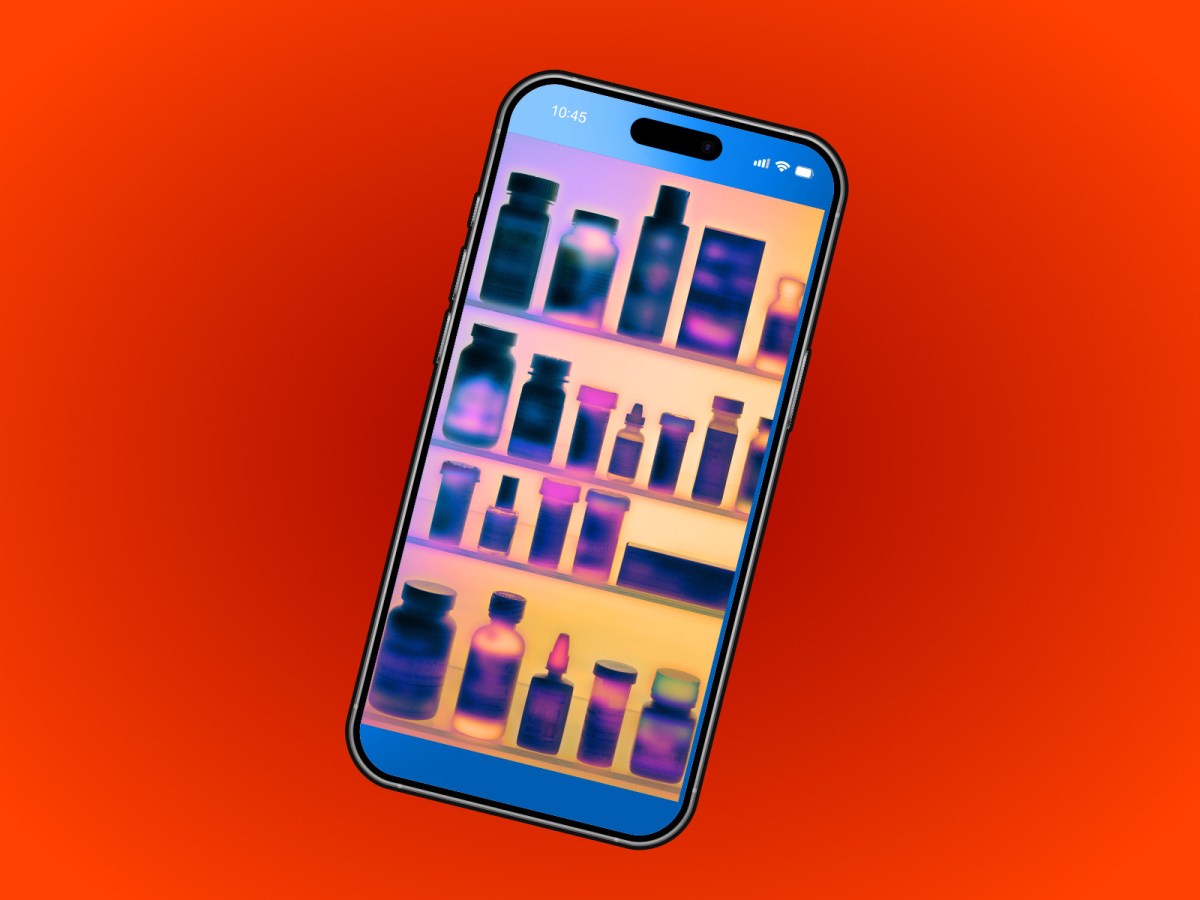







There’s a cabinet in my apartment that tells the story of how journalism broke during the pandemic. Vitamins, supplements, mushroom coffee from the Midwest, superfood powders from the Amazon, prebiotic syrup from Japan, bone marrow protein from England, liver detox from a lab — each bottle represents a different “expert” I encountered online, a fragment of information that promised to reveal what mainstream media wouldn’t tell me. About 90% of these purchases were triggered by social media ads that positioned themselves as news sources, alternative journalism, citizen reporting.
This cabinet is a physical manifestation of the COVID-19 infodemic — the first time in human history that a global crisis unfolded entirely within social media platforms, where the line between news, advertising, and conspiracy theory dissolved completely. Traditional journalism competed directly with wellness influencers, political provocateurs, and foreign disinformation campaigns. The World Health Organization adopted the term, warning that we were fighting not just a pandemic, but an “infodemic” — a parallel epidemic of misinformation that spread faster than the virus itself.
I had become both victim to and perpetrator of this information chaos, an unlicensed curator of alternative facts, dispensing health advice to friends based on Instagram stories and Facebook ads that masqueraded as investigative journalism.
When the News Broke First on Social Media
December 2019. Our first reports about COVID-19 didn’t come from CNN or the New York Times. They came from Chinese citizens risking their lives to post warning videos on social media, circumventing their government’s information suppression. My partner, who is Chinese, lay in bed scrolling through these underground reports, telling me in his best Cassandra voice: “This is coming here. It has to.”
Traditional Western journalism was still weeks behind. While citizen journalists in Wuhan were documenting overwhelmed hospitals, American news outlets were running stories about whether this mysterious virus would even reach the United States. The information asymmetry was staggering — social media users had access to real-time ground reports while professional journalists were still waiting for official statements.
This reversal of the traditional news hierarchy set the stage for everything that followed. When mainstream media finally caught up, it offered only the most basic suggestions on how to proceed: “stay home,” “wash your hands,” “wash your groceries” and “wait for official guidance.” But social media had already trained us to expect more — insider knowledge, secret intelligence, the story behind the story.
To assuage our fears, I suggested we buy masks. Shopping online for what we’d come to call PPE opened what psychologist Barry Schwartz labels the “paradox of choice,” but it also opened something more dangerous: the paradox of news sources. Suddenly, my social media feeds weren’t just showing me mask options — they were showing me mask “investigations,” mask “exposés,” alternative mask “experts” who claimed to know what the CDC wouldn’t tell us.
The Maximizer’s Guide to Information Consumption
Schwartz’s research on consumer psychology maps perfectly onto how we consumed news during COVID. He identifies two types of buyers: maximizers, who want the best of everything and experience anxiety when they feel like they made the wrong choice, and satisficers, who want “good enough.”
Applied to news consumption, maximizers become information addicts, constantly seeking the “real” story, the hidden truth, the perspective that mainstream media is allegedly suppressing. Satisficers accept that the New York Times or BBC will give them adequate information. But social media algorithms are designed to convert satisficers into maximizers.
In early 2020, I was a news satisficer. I read the Washington Post, watched the evening news, and accepted expert guidance. The first wave of alternative health “journalism” didn’t faze me. But by the second wave, I had started questioning whether mainstream sources were giving me the whole story. And so I began to look elsewhere, including at social media content that was, at its core, advertising. But these posts professed to be more — they were presented as investigative reports, suppressed studies that “they” didn’t want me to see.
The psychological playbook was identical to authoritarian propaganda: overload the information environment, create doubt about traditional sources, then offer simple solutions. Social media perfected this by making every user a potential news source, every post a potential scoop.
The Magic Bullet Media
By April 2020, traditional journalism had settled into a frustrating pattern: coverage of daily press conferences, infection statistics, and the repeated admission that experts didn’t know much yet. Though the scientific community was scrambling to learn about the deadly new disease in real time, this situation created an information vacuum that alternative sources rushed to fill with confident assertions and secret knowledge.
My vitamin C purchase wasn’t just a health decision — it was a news choice. The sources promoting massive vitamin doses weren’t pharmaceutical companies; they were presented as independent journalists, alternative health reporters, whistleblowing doctors with “suppressed” studies. Each supplement represented a different information ecosystem, a parallel media universe with its own experts and evidence.
When I developed a rash from vitamin overdosing, I didn’t turn to traditional medical journalism. Instead, the algorithm fed me more alternative sources: “Here’s what doctors don’t want you to know about detox reactions.” The problem wasn’t just misinformation — it was the fragmentation of information authority itself.
The “magic bullet” solutions flooding my feeds — glutathione, shilajit, various exotic supplements — were always presented with the same journalistic framing: “Here’s the story mainstream media won’t tell you.” Each purchase was really a subscription to a different news source, a different version of reality.
The Global Information Export
The most disturbing aspect of the COVID infodemic wasn’t just how misinformation spread, but how American conspiracy theories became global news. Social media platforms turned our local disinformation into international journalism.
Between 2021 to 2023, I traveled to over 20 countries. Untethered from an office, I started meeting friends around the globe who were on assignment for different projects. I was amazed at how widespread the infodemic had become. In Belgrade, a Serbian whispered that he knew the truth about COVID — it was all in Hunter Biden’s laptop. In Cape Town, a South African tour guide earnestly explained that Bill Gates was putting computer chips in vaccines worldwide. These weren’t just random conspiracy theories; they were American political narratives that had been packaged as news and exported globally through social platforms. When I visited a friend in Bucaramanga, Colombia, I met her uncle who wheezed and coughed constantly from his COVID-wrecked lungs. He had refused the vaccine because he heard it would make him impotent. The impotence conspiracy theory was the same excuse rapper Nicki Minaj posted as to why her relatives were not taking the vaccine. My father’s nurse was Nigerian and she had two sons who were also nurses, and they all refused to take the vaccine because of the “impotence panic.”
When I asked the South African guide how a computer chip could physically fit through a syringe needle, he shrugged. He didn’t need those details. He had accepted a complete media ecosystem that provided simple answers to complex questions. The traditional South African media’s careful, qualified reporting on vaccines couldn’t compete with the confident assertions flooding his Facebook feed from American “alternative journalists.”
The Serbian in Belgrade didn’t need to know what was actually in Hunter Biden’s laptop. The South African didn’t need to understand how computer chips work. They just needed to feel like they had access to secret knowledge that mainstream sources wouldn’t provide. Social media gave them that feeling — and in the process, broke the shared information environment that democracy requires.
When the Cabinet Finally Opened
It took a year of increasingly bizarre supplements and increasingly paranoid information sources before I finally surrendered to traditional medicine. A licensed doctor told me I was taking too many supplements and prescribed Selsun Blue — an over-the-counter shampoo — for my rash. The problem that had persisted for months disappeared in a week.
The parallel to news consumption was obvious: I had been so busy seeking alternative sources that I had stopped trusting the most basic, verified information. The same week I simplified my supplement routine, I also simplified my news diet — unsubscribing from dozens of alternative health newsletters that had started sending me political conspiracy theories, deleting apps that promised “real news” but delivered rage-inducing fragments.
Over half of consumers regret their social media purchases, according to recent surveys. But the bigger regret might be informational: the time spent consuming low-quality news sources, the relationships damaged by conspiracy theories absorbed from “alternative journalists,” the mental energy wasted on information that turned out to be advertising in disguise.
My vitamin cabinet tells the story of what happens when consumer choice overwhelms consumer judgment. The global infodemic tells the story of what happens when information choice overwhelms information judgment. Both problems require the same solution: recognizing that more options don’t always mean better outcomes, and that sometimes the most radical choice is to choose less.



The Jude Law character in “Contagion” was a great commentary on many of the issues you raise. Considering Soderbergh made it in 2011, that film had some incredibly prescient details.
I guess there has been real value in my ad blocker and a mother who was all for organic foods but also sneered at the vitamin and supplement aisles of health food stores. She got it that that was where they made their money. She was also all in on vaccines: her mother was permanently disabled by diptheria in the days before there was a diptheria vaccine. She was a little nervous, but like all my friends’ families, she signed the paperwork to allow me to be a “Polio Pioneer” and celebrated when polio disappeared. A different time.
Aurin, thanks for this. As a boomer, I could only watch in horror as this psycho-drama of societal breakdown has unfolded over decades. The central assumption that underlies so much of our fascination with supplements and our mad drive for the secret information that will make our lives, finally, worth living, is that as is, we are not enough. I think it’s the apotheosis of the capitalist ideal reaching its limits in an environment of diminishing returns. People have been trained in this culture to think they can buy their way to health and happiness, in tiny increments that are guaranteed to boost your whatever, and central to that appeal is that you, the consumer, are right now at a disadvantage. You are not enough. It’s a climate designed to make you feel insecure, the solution to which is not the actual stuff you buy - they are truly placebos - but the buying itself.
Just look at that list of things you bought, not one of them, not even the vitamins, had a significant impact on your health or well being, and even if they had some effect, it wouldn’t be anywhere near the benefit you’d get from cooking and eating a meal made of simple, proper ingredients (superfood? - gimme a break) after going outside and getting a dose of exercise and fresh air and ogling something beautiful. We’re so focused on getting that last increment of “wellness” that we’ve lost track of what truly makes us well, and it’s not buying stuff. We’re so focused on what’s missing that we’ve lost track of what’s there. What’s there is a body that’s ready to be happy and healthy with a modicum of attention to its needs.
It’s good that you came to your senses and stopped believing the nonsense you were reading on social media, but I have to ask why I should take your writing seriously if you were gullible enough to fall down that rabbit hole in the first place? We all lived through that time period and many of us managed to maintain a healthy skepticism throughout that time. I have little sympathy or patience for people who think that their personal failings and internal anxieties make for a useful grand moral lesson rather than just admitting they were scared and stupid and moving on. If anything, the lesson here should be about the danger of internet brain rot turning people’s minds into mush.
How foolish you were to believe stuff you heard on social media. Hopefully there are not too many people like you.