

Nikki Haley on Saturday lost the Republican primary in her home state of South Carolina to Donald Trump, a not unexpected but still embarrassing blow to the former governor in her effort to be seen as a viable alternative to the former president.
Continue reading “Haley Loses To Trump In Home State Of South Carolina”South Carolina Republican Primary
Polls will be closing soon in South Carolina, where Donald Trump is widely expected to demolish Nikki Haley in the state where she once served as governor. Read Kate Riga’s take on where things in today’s issue of the The Weekender.
Trump Hit With $355M In Penalties And Biz Ban In New York Fraud Case
On Friday, New York state Judge Arthur Engoron handed down the verdict in Donald Trump’s civil fraud case. Engoron ordered Trump, Donald Trump Jr. and Eric Trump, along with other officers, to pay more than $360 million. Trump himself is banned from running any corporation in New York for three years; his sons are banned for two.
“Their complete lack of contrition and remorse borders on pathological,” Engoron wrote.
New York Attorney General Letitia James got nearly everything she asked for in terms of disgorgement, and secured the business bans, if for shorter durations than she’d sought.
Engoron is also extending the tenure of the Trump Organization’s independent monitor (finding that Trump et al would likely continue to commit fraud “unless judicially restrained”), banned two top executives from being in roles of financial control for life and barred Trump and company from getting loans from financial institutions in New York for three years.
Engoron had already found that Trump and his top executives committed fraud; in Friday’s verdict, he settled on the penalty.
The Rising Cost of the Oil Industry’s Slow Death
This article first appeared at ProPublica and Capital and Main. ProPublica is a Pulitzer Prize-winning investigative newsroom. Sign up for The Big Story newsletter to receive stories like this one in your inbox.
In the 165 years since the first American oil well struck black gold, the industry has punched millions of holes in the earth, seeking profits gushing from the ground. Now, those wells are running dry, and a generational bill is coming due.
Until wells are properly plugged, many leak oil and brine onto farmland and into waterways and emit toxic and explosive gasses, rendering redevelopment impossible. A noxious lake inundates West Texas ranchland, oil bubbles into a downtown Los Angeles apartment building and gas seeps into the yards of suburban Ohio homes.
But the impact is felt everywhere, as many belch methane, the second-largest contributor to climate change, into the atmosphere.
There are more than 2 million unplugged oil and gas wells that will need to be cleaned up, and the current production boom and windfall profits for industry giants have obscured the bill’s imminent arrival. More than 90% of the country’s unplugged wells either produce little oil and gas or are already dormant.
By law, companies are responsible for plugging and cleaning up wells. Oil drillers set aside funds called bonds, similar to the security deposit on a rental property, that are refunded once they decommission their wells or, if they walk away without doing that work, are taken by the government to cover the cost.
But an analysis by ProPublica and Capital & Main has found that the money set aside for this cleanup work in the 15 states accounting for nearly all the nation’s oil and gas production covers less than 2% of the projected cost. That shortfall puts taxpayers at risk of picking up the rest of the massive tab to avoid the environmental, economic and public health consequences of aging oil fields.
The estimated cost to plug and remediate those wells if cleanup is left to the government is $151.3 billion, according to the states’ own data. But the actual price tag will almost certainly be higher — perhaps tens of billions of dollars more — because some states don’t fully account for the cost of cleaning up pollution. In addition, regulators have yet to locate many wells whose owners have already walked away without plugging them, known as orphan wells, which states predict will number at least in the hundreds of thousands.
“The data presents an urgent call to action for state regulators and the Department of the Interior to swiftly and effectively update bond amounts,” said Shannon Anderson, who tracks the oil industry’s cleanup as organizing director of the Powder River Basin Resource Council, a nonprofit that advocates for Wyoming communities. Anderson and nine other experts, including petroleum engineers and financial analysts, reviewed ProPublica and Capital & Main’s findings, which were built using records from 30 state and federal agencies.
“We have allowed companies intentionally to do this,” said Megan Milliken Biven, who reviewed the data and is a former program analyst for the Bureau of Ocean Energy Management, a federal regulator of offshore oil rigs, and founder of True Transition, a nonprofit that advocates for oil field workers. “It is the inevitable consequence of an entire regulatory program that is more red carpet than red tape.”
Regulatory agencies in several states maintain that they have adequate tools to protect taxpayers, such as the authority to require companies to post larger bonds as their wells stop producing. Other states are working to reform their bonding systems. Industry representatives, meanwhile, say they have done their part by paying fees on oil production that help fund states’ well-plugging efforts.
“Our industry is taking action every day to address the permanent closure of historic oil and natural gas wells and the remediation of historic well sites in accordance with applicable federal and state laws,” Holly Hopkins, a vice president of the American Petroleum Institute, the industry’s major trade group, said in a statement.
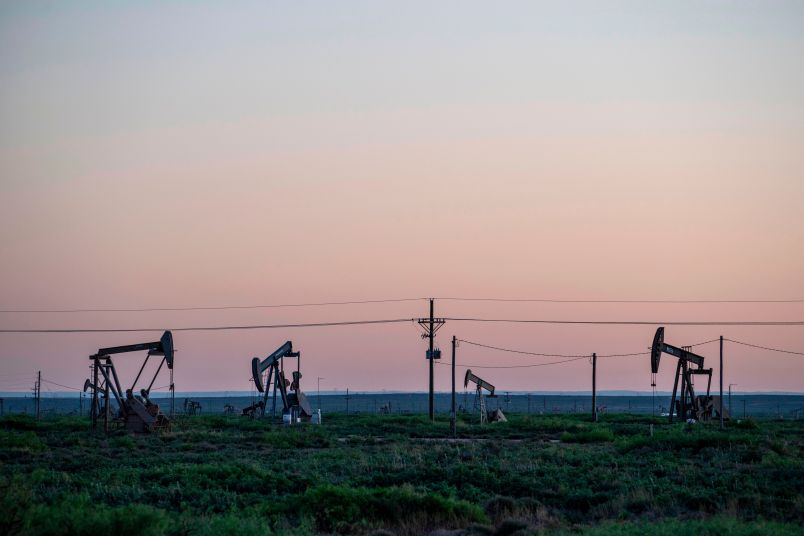
A graveyard of rusting wells rising from once-picturesque sand dunes near Artesia, New Mexico, tells a more complicated story.
Around the corroding skeletons of pump jacks, the ground is stained black from spills. Leaking hydrogen sulfide, which reeks of rotten eggs, has turned the air toxic, making each breath burn. At the base of one salt-caked well, a sign indicates who is responsible for the mess. Barely legible beneath splattered oil, it reads “Remnant Oil Operating.”
The story of Remnant is the story of the American oil industry.
The industry’s household names — Chevron, ExxonMobil and others — often reap the biggest profits from any given oil field. As the booms fade and production falls, wells are sold to a string of ever-smaller companies, many of which let the infrastructure fall into disrepair while violations and leaks skyrocket. The number of idled wells soars too, as companies warehouse them to avoid costly cleanup. By this point, regulators’ hands are tied because the bonds states demand to use as leverage are so small. Seeing little incentive to plug wells and get their tiny bonds back, companies slip into bankruptcy court, where executives are protected from their environmental liabilities. When the dust settles, the government is on the hook for the now-orphaned wells.
The practice is so tried-and-true that researchers and activists call it “the playbook.”
As the company’s name implies, Remnant gathered the industry’s dregs into a portfolio of several hundred wells. Drilled decades ago by larger companies, their most productive days were behind them. When Remnant arrived in 2015, it briefly boosted production, but regulatory violations, bad bets and the oil fields’ age caught up with the company. Within four years, Remnant filed for bankruptcy protection, and its leadership shuffled assets and liabilities between companies the executives managed.
Remnant representatives did not respond to ProPublica and Capital & Main’s requests for comment.
Over their lifespans, the wells that remain in the hands of Remnant and a related company generated roughly $2 billion in revenue, when adjusted for inflation, enough to cover the cost of their cleanup many times over. This is according to estimates produced from state production data by ProPublica, Capital & Main and Texas-based petroleum reservoir engineer Dwayne Purvis.
The New Mexico State Land Office sent letters in 2023 demanding that cleanup begin. Remnant’s executives have yet to comply.
Seeking Fortunes
As wildcatters scoured Texas for oil in the 1920s, one hopeful investor christened their well in honor of Saint Rita of Cascia — the patron saint of impossible causes — asking for a miracle. The gusher that followed ignited a drilling frenzy in the Permian Basin, from West Texas to southeastern New Mexico.
By the late 1940s, the Square Lake Pool had come alive among New Mexico’s sand dunes. Anadarko Production Company — now part of the $50 billion Oxy Petroleum — took over the oil field in the 1960s and increased production. To keep the oil and gas flowing, Anadarko turned to unconventional methods: fracturing underground rock, injecting wells with gelled water and frac sand and waterflooding. The chemical treatments continued into the 1980s, but production steadily declined as the wells aged and underground oil reservoirs were depleted.
In 1995, Xeric Oil & Gas Corp. acquired much of the field. Two years later, Xeric transferred the wells to GP II Energy Inc. In the two decades that followed, the wells ping-ponged to CBS Operating Corp., Boaz Energy LLC, Memorial Production Operating LLC, Marker Oil and finally, in 2017, to Remnant.
Remnant was the brainchild of Everett Willard Gray II, Robert Stitzel and Marquis Reed Gilmore Jr., oilmen out of Midland, Texas, the heart of the Permian. They set up shop north of downtown, their office surrounded by those of other oil companies, a politician and banks in a six-story office building rising above a parking lot full of white pickup trucks.
Initial investments in the wells succeeded in reversing the declining production and squeezed out tens of millions of dollars of additional revenue, estimates based on state data show.
But Gray, Stitzel and Gilmore — who did not respond to requests for comment — reduced the workforce that serviced the wells and limited repairs to cut costs. Regulators noted 146 infractions in the years Remnant and a related company operated the wells, according to New Mexico Oil Conservation Division data. Among them: leaks and spills, degraded wells, a lack of infrastructure to contain spills and “contaminated material on location.” The records show Remnant only brought two of the infractions into compliance, but it continued pumping.
Peer-reviewed studies have found that wells emit methane, a greenhouse gas that in the short term has 85 times the warming impact of carbon dioxide, at a higher rate as they move down the oil industry food chain, from majors to thinly capitalized operators like Remnant.
Transferring wells between companies has historically been approved automatically in New Mexico, as long as the company receiving the wells is in compliance with inactive-well rules and has a bond, according to Oil Conservation Division acting Director Dylan Fuge.
As oil fields age and are passed between companies, it’s also common to let wells stand inactive temporarily to wait out a price dip or complete maintenance. But idling is often a prelude to a well being orphaned, and after a few months of inactivity, the chance that a well never produces again rises significantly.
Across the country, more wells are idle than producing, according to an analysis of data from energy software company Enverus.
Despite a New Mexico law that requires companies to plug, restart or get approval to temporarily idle wells that haven’t produced for 15 months, ProPublica and Capital & Main identified more than 3,100 oil and gas wells in the state — 4% of the state’s portfolio — that sit unproductive and out of compliance, a step away from being orphaned.
A bill introduced in this year’s legislative session — written by the Oil Conservation Division, the industry and certain environmental groups — would’ve reformed New Mexico’s Oil and Gas Act, giving the agency more authority to intervene to stop transfers that pose a risk of leaving wells orphaned. The bill died on the floor of the state’s House of Representatives.
Any reforms would likely come too late for the oil fields in Remnant’s hands, where numerous wells are already idle.
Hesitant to Regulate
On a brisk November day, ProPublica and Capital & Main reporters examined a Remnant well that, like the company, was listed in state records as inactive. Oil coated the wellhead, rust crept across the pump jack and a faded sign bore Remnant’s coat of arms — a bird of prey with outstretched wings perched on a shield.
Suddenly, the well creaked to life, producing for a dead company. A haze appeared. Methane, typically invisible to the naked eye, leaked in such a high concentration that the air shimmered. A handheld gas detector aimed at the wellhead screeched a warning — the amount of escaping methane had made the air explosive.
That day’s production and emissions never appeared in state records.
ProPublica and Capital & Main reporters visited dozens of Remnant wells and tank batteries — facilities used for oil storage and early stages of processing — scattered across this rural stretch of New Mexico. Multiple sites emitted explosive levels of methane, with one leak clocked at 10 times the concentration at which the gas can explode.
Several wells belched sour hydrogen sulfide at concentrations that maxed out the gas detector, registering levels three times as high as what is “immediately dangerous to life or health,” according to the National Institute for Occupational Safety and Health.
Oil Conservation Division inspectors hadn’t visited some of the wells since 2017, according to agency records.
Two hundred fifty miles northwest of these oil fields, New Mexico’s Democrat-controlled government in Santa Fe has for years made big promises on climate change and the environment. But there has been little action to regulate the industry in ways that could hit the bottom line of the state’s petroleum companies and oilmen like Remnant’s Gray, Stitzel and Gilmore. The taxes and royalties the industry pays, which the state has tied to public education funding, typically account for more than a quarter of the state’s general fund, earning it a nickname — “golden goose.”
This close relationship to the industry cuts across parties. When Republicans were in power, the head of the New Mexico Environment Department left to run the New Mexico Oil and Gas Association. Now, the state’s Democratic leaders take major fossil fuel donations, publicly assert that they will not target the industry with aggressive regulations, and block reform.
State Rep. Joanne Ferrary, a Las Cruces Democrat who has worked on oil legislation, had a simple explanation for what dooms these efforts: money. She pointed to the industry’s spending on lobbying as well as the threat of losing taxes and royalties. “We do get a lot of money from them,” she said, “but those are our resources and they’re not doing us any favors.”
Consider the state’s Office of Natural Resources Trustee, which pursues polluters for financial settlements to clean up the environment. The agency has secured millions of dollars from mines, an Army munitions depot and a wood treatment facility. But it completed just one action for petroleum pollution in decades. Even then, the office only had jurisdiction to pursue a small settlement because a tanker truck flipped on an icy road, spilling refined gasoline and diesel into the Cimarron River.
Legislators attempted to expand the office’s authority in 2009, 2010, 2011, 2013 and again last year. All those efforts failed.
Ferrary, who sponsored the 2023 bill to grant the trustee more authority over petroleum and certain cancer-causing substances, said the oil and gas industry has “such strong lobbying that we have to negotiate whatever we are trying to do. It always seems to get negotiated down.”
In a recent four-year period, the state’s oil and gas industry spent $11.5 million to influence policy, in addition to employing dozens of lobbyists, according to research from two government accountability nonprofits.
“Lawmakers and regulators appropriately balance the need to hold industry accountable while also ensuring oil and gas operations remain viable,” Frederick Bermudez, the vice president of communications for the New Mexico Oil and Gas Association, said in a statement. He added that Remnant is not a member of the trade group and that “bad actors in the industry should be held accountable.”
Regulators argue they’re underfunded and understaffed, while environmental activists point out agencies are sometimes tasked with simultaneously overseeing and advancing the industry. New Mexico records, for example, show that the Oil Conservation Division inspects roughly half the state’s wells annually, but many go years without a visit. Meanwhile, it quickly greenlights requests to drill new wells, generally granting approval for more than 90% of permits within 10 days.
The state does even worse at preparing for the industry’s decline. The division secured about 7% of the tens of millions of dollars of additional bonds it requested from companies in violation of idle well rules, according to a ProPublica and Capital & Main analysis of the agency’s data. (The division said some companies no longer need to hand over the requested bonds because they have since left their wells as orphans for the state to plug. The state has already labeled more than 1,700 wells as orphans.)
The Oil Conservation Division has “limited bandwidth” and has to triage enforcement, Fuge, its acting director, said, adding that a mix of enforcement actions and business decisions lead companies to plug many of their own wells. “We don’t prioritize inactive well actions when the chute’s too deep because we want to devote the resources that we have to other enforcement initiatives.”
“Ill-Prepared for This Last Phase of Life”
By the time regulators took notice of Remnant’s myriad violations and idle wells, it was too late.
Core to oil regulators’ power are bonds, the financial assurances oil companies must set aside to guarantee that wells are plugged. Proper cleanup is expensive, so when bonding levels are low, companies have no incentive to finish cleanup and retrieve their bonds.
To decommission a typical orphan well in New Mexico costs the state about $167,000, according to documents the Oil Conservation Division submitted to the U.S. Department of the Interior. That translates to an $11.8 billion shortfall between the potential future cleanup costs and bonds that companies set aside with the agency, ProPublica and Capital & Main found.
“The state of New Mexico is short,” Fuge said. “We don’t hold sufficient bonding to cover likely plugging liabilities.”
Fuge suggested the shortfall might be smaller, deferring to an environmental group’s lower projection. Elsewhere in state government, the State Land Office in 2022 estimated the gap between bonds and cleanup costs was $8.1 billion.
Based on the per-well cleanup costs Fuge’s agency submitted to the federal government, the wells belonging to Remnant and a related company could cost the state $67 million if they are orphaned. The companies have only set aside about $1.5 million in bonds across three state and federal agencies.
Under current New Mexico rules, companies only need to put up a single bond worth a maximum of $250,000 — no matter how many wells they have — with the Oil Conservation Division. The failed reform bill would’ve increased that cap to $10 million. The division can request additional bonds to cover the increased risk from idle wells, but when it asked Remnant and a related company for about $3 million, the operators put up less than a tenth of that and kept pumping oil.
Weak bonding rules and an unwillingness to take on the industry have created similar shortfalls across the nation.
The Pennsylvania General Assembly in the 1990s, for example, forced the state’s oil regulators to hand back money that oil companies had set aside to plug wells drilled prior to 1985, which numbered in the tens of thousands of wells.
Oklahoma allows oil companies that prove they’re worth at least $50,000 — about the price of one of the ubiquitous pickup trucks cruising the oil fields — to set aside no money to plug their wells.
And Kansas gives companies, no matter how many wells they own, the option of paying a flat $100 annual fee instead of setting aside a bond, as long as they have not committed recent infractions. Seven out of eight companies in the state take this route, leaving an average of less than $13 in bonds for each of the state’s 150,000 unplugged wells. The state’s estimated cleanup costs — which experts said may be low — would mean the state faces about a $1 billion shortfall between the bonds and plugging costs.
“Regulations that may have worked well enough in the past have left the public and the industry ill-prepared for this last phase of life for millions of old wells,” Purvis, the petroleum reservoir engineer, said. “Left unchanged, current regulations and practices will continue to accrue liabilities that will ultimately fall on taxpayers.”
All told, oil drillers have set aside only $2.7 billion in bonds with the 15 states that account for nearly all the country’s oil and gas production and $204 million with the Bureau of Land Management, the main federal oil regulator. The expected cost to plug and clean up wells in those states is $151.3 billion.
ProPublica and Capital & Main obtained and analyzed more than a thousand pages of states’ applications for funding to plug orphan wells as part of the Biden administration’s Infrastructure Investment and Jobs Act. The documents reveal for the first time states’ own estimates of the cleanup costs in a way that allows states to be compared.
“You can give us probably the entire infrastructure act funding — $4.7 billion — and we’d probably spend that in Pennsylvania,” Kurt Klapkowski, head of the commonwealth’s Office of Oil and Gas Management, told a national meeting of regulators in October.
Some states acknowledged that accumulated costs from unplugged wells are high but said they could be mitigated by additional money in the states’ orphan well funds — which often contain several million dollars and were not included in this study — and by tools meant to ensure companies, rather than taxpayers, plug the wells. For example, Wyoming significantly increases the bonds required of operators when wells go idle.
“Wyoming is fully bonded to be protective of the wells” under state oversight, Tom Kropatsch, oil and gas supervisor of the Wyoming Oil and Gas Conservation Commission, said in an email, pointing to the fact that most wells that have been plugged in Wyoming were plugged by the industry, not the state. “The bonds we hold are adjusted on an ongoing basis as our agency conducts an annual bond review of each operator.”
North Dakota regulators, with the luxury of a still highly profitable industry, have resources to more rigorously police oil. Lynn Helms, director of the North Dakota Department of Mineral Resources, said this includes enough inspectors to observe well plugging, determine whether idle wells require additional bonding and scrutinize proposed well transfers to smaller operators, which are “the biggest risk.”
Helms said the state aims to cover as much as 10% of future plugging costs through bonds and orphan well funds, although his department is still working to reach that level.
Both North Dakota and Wyoming hold more bonds and face lower impending liability than New Mexico.
“When the bottom goes out of this oil and gas production economy, who’s going to be left holding that bag?” New Mexico Commissioner of Public Lands Stephanie Garcia Richard asked.
“I Got Big-Time Screwed Over”
In July 2019, less than four years after Gray, Stitzel and Gilmore began buying up wells, Remnant was in bad shape. Its wells were deteriorating and production was declining. The owners had made a costly gamble on an oil sale and the company’s bank demanded payment on a debt, according to court testimony from Gray.
So Remnant employed a tactic that has saved the oil industry billions — its owners filed for Chapter 11 bankruptcy protection with a court in Texas.
The Bankruptcy Code is meant to protect jobs, creditors and the economy by allowing companies to stabilize during rough patches. But bankruptcy court is a key step in the industry’s playbook, as it has become an oil field escape hatch, effectively allowing companies with aging wells to sell off valuable assets while orphaning wells in need of immediate cleanup. Companies can also stop the clock on many enforcement actions.
Between 2015 and 2021, 256 oil and gas producers entered bankruptcy protection across the country, carrying with them about $175 billion in debt, according to Haynes and Boone, a law firm that produced the most comprehensive research on oil field bankruptcies. (Haynes and Boone is representing ProPublica in several Texas lawsuits.)
Court records show the bankrupt Remnant companies owed millions of dollars to hundreds of creditors — oil field service companies, the New Mexico Taxation and Revenue Department, counties, banks, trucking companies and a local air conditioning and heating company.
But in the year leading up to the bankruptcies, court filings show, Remnant paid hundreds of thousands of dollars in consulting fees to companies belonging to at least two of the men who ran the company and cut numerous paychecks to a daughter, son, cousin and daughter-in-law of various executives.
In April 2020, unsecured creditors who were owed millions of dollars had the case converted to Chapter 7, meaning a trustee would take over, liquidate the company’s assets and pay back creditors where possible.
Debts relating to cleaning up the environment or repaying labor “get pretty low priority” in bankruptcy cases, explained Josh Macey, a law professor at the University of Chicago who studies bankruptcy and reviewed ProPublica and Capital & Main’s findings. To Macey, one solution to unfavorable bankruptcy rules is bonds, as they’re protected even in bankruptcy.
“Bonding requirements have not proven to be sufficient,” he said, “but if they were, it would make bankruptcy irrelevant.”
Arturo Carrasco was one of Remnant’s unsecured creditors, meaning a long list of debts would have to be settled before he saw any money. Carrasco, now retired, owned Art’s Hot Oil Services, an oil field maintenance company with a handful of drivers and trucks out of Lovington, New Mexico. By the time Remnant hired Carrasco’s company to work on its wells, most were “already depleted,” he said.
Remnant only paid him a little at a time and never the full amount it owed, Carrasco said.
Carrasco filed claims for more than $165,000 in the bankruptcy, according to court records, and that didn’t include another $50,000 in unpaid expenses like fuel, he said. Concerned his company might go under, Carrasco worked “double time” to make up for the lost income. With no expectation of recovering money via the bankruptcy, he briefly fantasized about throwing a chain around Remnant’s pump jacks and pulling them down.
“I got big-time screwed over,” he said.
Graveyards of Wells
Three months after the judge ordered that Remnant liquidate, a buyer called Acacia Resources LLC wired $402,000 to the trustee, completing the purchase of Remnant’s assets.
The new company was run by familiar names — Stitzel and Gilmore, Remnant’s former chief operating officer and president, state records show. Business filings and his LinkedIn profile suggest Gray left the venture to launch a helium and natural gas company.
“All they did was file bankruptcy. Then they went to the bank and bought it at a cheaper price, and they’re still producing,” Carrasco said. “How can that be allowed?”
Fuge, the New Mexico oil regulator, said the companies are the “subject of prime enforcement attention” but did not comment further. And a Bureau of Land Management spokesperson said Remnant had no outstanding violations and the agency was not preparing to forfeit the company’s bonds.
The details of Acacia’s operations are murky. The on-the-ground situation doesn’t always match New Mexico’s data, while state records don’t align with federal records.
But Remnant’s business practices are similar to those of any number of undercapitalized drillers holding portfolios of old wells. So the State Land Office began a campaign to bring such operators into compliance to protect the state from shouldering the burden of even more orphan wells.
Buried amid pages of infractions in Remnant’s files, agency staff noted that satellite imagery appeared to show a spill at a Remnant well in the Drickey Queen Sand Unit. In November, the agency wrote to Gray, Stitzel and others, demanding they begin plugging wells in the field.
Jaclyn McLean, an attorney representing Acacia, responded with a proposal — Acacia would plug a few wells per year and pay back some money it owed for pumping oil on expired leases if the state would renew those leases and reduce the amount the company owed. With Gilmore, who was a manager of both Remnant and Acacia, copied on the letter, McLean blamed prior management’s “severe inaction” and promised that “the new management team seeks to maintain professionalism, integrity, and authenticity.” (McLean did not respond to a request for comment.)
“Tell your client to get serious,” the agency responded.
Still unplugged, Remnant’s wells in the Drickey Queen Sand Unit stood eerily silent during a recent site visit, the bellowing and bleating of cattle the only sound as they grazed among the apparent orphans. At one of the pump jacks, which had not drawn oil in more than eight years, pieces of metal had corroded and fallen off. Lines used for collecting oil in preparation for sale lay in the dirt. They connected to nothing.
Methodology
To investigate what leads to oil and gas wells being orphaned, ProPublica and Capital & Main filed more than 55 public records requests with state and federal agencies and toured oil fields in New Mexico, Texas and California. We interviewed dozens of petroleum engineers, researchers, community members and government officials, including the leadership of oil agencies in Louisiana, North Dakota, Pennsylvania and elsewhere.
To determine the magnitude of the shortfall between cleanup costs and bonds, we needed to answer several questions: how many wells are unplugged, how much money have companies set aside in bonds and how much does it cost to plug and remediate a well. The analysis focused on the top 15 oil- and gas-producing states because, according to U.S. Energy Information Administration data, they accounted for 99% of the country’s output in recent years. Those states are Texas, Pennsylvania, New Mexico, Oklahoma, North Dakota, Louisiana, Colorado, West Virginia, Ohio, Wyoming, Alaska, California, Arkansas, Utah and Kansas.
With petroleum reservoir engineer Dwayne Purvis, we analyzed data from energy software company Enverus to determine the number of unplugged wells in each state, conservatively defining them as either clearly active or in some stage of idling. We checked these figures against previous estimates, such as what states self-reported to the Interstate Oil and Gas Compact Commission.
To calculate plugging costs, we used the estimates that states reported to the U.S. Department of the Interior in their notices of intent to apply for Infrastructure Investment and Jobs Act funds. We checked these figures against states’ next round of applications, Native American tribes’ applications and hundreds of orphan well plugging contracts from across the country. The agreements showed the detailed mechanics of the work, such as where cement plugs were placed, how surface infrastructure was removed and what post-remediation environmental monitoring was completed. Plugging costs varied widely depending on the depth, condition and geography of the well, but costs ballooned to the high six figures or even the seven-figure range when projects faced unanticipated obstacles, such as cannonballs having been dropped into a well as an improvised plug, wells igniting and the need to tear up city streets to plug some wells.
For bonding figures, we obtained the 15 states’ datasets of all active bonds tied to oil and gas well plugging, remediation and reclamation. We relied on figures reported by the Government Accountability Office for the value of bonds held by the Bureau of Land Management. We requested, but did not receive, that agency’s data, and the Bureau of Indian Affairs didn’t answer questions about bonds on tribal land. We didn’t include other jurisdictions’ bonds, as those are much smaller. (For example, New Mexico’s State Land Office requires bonds but only holds $20,000 for Remnant’s wells.)
To check our methodology, we gave a 10-member panel of petroleum engineers, law professors and former regulators an opportunity to comment on the findings. These experts have worked or currently work with the California Geologic Energy Management Division, the Bureau of Ocean Energy Management, Texas Christian University, the Carbon Tracker Initiative and other research organizations. They widely accepted the final methodology. The lead oil regulatory agency from all 15 states also had a chance to review the findings. Some states’ data showed slightly different numbers of unplugged wells than Enverus’ data, but we used the Enverus data because it is standardized and not all states provided well counts. Regulators also emphasized that bonds are an insurance policy not meant to cover 100% of the cost, that states won’t have to plug every well because the industry will plug many and that other agencies also hold bonds.
When estimating the total revenue generated by Remnant’s and Acacia’s wells, we used New Mexico Oil Conservation Division data to tell us how much oil and gas each well produced. Because some production wasn’t assigned a year, we worked with Purvis to model a likely production decline curve. We multiplied that by each year’s oil and gas prices, mainly found in Energy Information Administration data, and adjusted that for inflation, using Bureau of Labor Statistics figures.
Finally, our emissions testing fieldwork was completed using a handheld Bascom-Turner Gas Explorer Detector. We consulted Amy Townsend-Small, a professor of environmental sciences at the University of Cincinnati, to formulate the testing plan. We checked the readings with the manufacturer, whose employees said they had never seen their equipment register such high levels. They gathered in an office to call our reporter and ask if he was all right (he was because he wore an acid gas and organic vapor respirator around the wells).
Senators Now Defending IVF CoSponsored Bill to Outlaw It
Sen. Steve Daines (R) of Montana heads the Senate Republican campaign committee, which today sent out a memo to all its candidates instructing them to vigorously defend IVF fertility treatments which the Alabama Supreme Court just effectively outlawed in the state. Donald Trump put out a statement so wildly endorsing IVF that he appears all but ready to undergo IVF himself just to make the point. But Sen. Daines himself recently cosponsored (along with numerous Senate colleagues) a law based on precisely the same theory used by the Alabama court.
Continue reading “Senators Now Defending IVF CoSponsored Bill to Outlaw It”Trump’s ‘Show Me the Money’ Campaign—Full YOLO in 2024
For weeks political observers have been having fun with Donald Trump’s decision to launch if not a hostile then what we might call an abusive takeover of the RNC. Of course, one might ask what was left to take over exactly. Since the day before his inauguration in 2017 the RNC has been under the management of Trump’s pliable toady Ronna McDaniel (née Romney McDaniel) who has served in that role for the unheard of span of seven years. But that was clearly not a tight enough bond to the Trump family. Trump wants to replace McDaniel with his daughter-in-law Lara Trump, who has become an increasingly visible Trump political surrogate. Technically, it’s not just Lara Trump. They propose a kind of co-leadership with North Carolina GOP chair Michael Whatley and Lara Trump serving as cochairs. Presumably Whatley is there for the operational experience and management; Lara is there for the control. Trump campaign senior advisor Chris LaCivita will become the RNC’s COO.
Trump campaign sources tell pliant media outlets that this is to assure a “seamless operation,” uniting the campaign and the RNC. And there’s no arguing that point. They will become in effect the same organization. You can’t get more seamless than literally no seams. But I think we should not underestimate the odds that the takeover of the RNC is for reasons beyond the mere crony-fication of political institutions. Trump clearly needs the money. Certainly for legal expenses and quite possibly to pay legal judgements to the state of New York and E. Jean Carroll.
Continue reading “Trump’s ‘Show Me the Money’ Campaign—Full YOLO in 2024”New Tennessee Marriage Law Takes Aim At Obergefell
A new Tennessee law undercuts the Supreme Court’s 2015 landmark, closely divided decision legalizing same-sex marriage nationwide, and marks a significant victory for a resurgent conservative movement to restrict LGBTQ rights.
Continue reading “New Tennessee Marriage Law Takes Aim At Obergefell”Trump’s Ridiculous Attempt To Escape The MAL Charges
A lot of things happened. Here are some of the things. This is TPM’s Morning Memo, coming to you today from Manhattan. Sign up for the email version.
Trump: You Can’t Touch Me
Donald Trump filed a slew of motions Thursday seeking to dismiss the charges against him in the Mar-a-Lago classified documents case. Not all of the motions are public, but for our purposes the most important is probably the one arguing for presidential immunity. It makes the preposterous claim that magically deeming government records “personal” under the Presidential Records Act makes it an “official” act that is immune from prosecution.
Setting aside the extreme dubiousness of that proposition, the immunity claim gives Trump a chance to delay the MAL proceedings the same way he has used another similar presidential immunity claim to forestall the Jan. 6 trial in DC. Recall that he if loses on immunity at the trial court level, like he did in DC, he has a right to appeal that decision and the case will likely grind to a halt.
We are still awaiting a Supreme Court decision on whether to take up the immunity appeal in the DC case. I would be surprised if we don’t hear from the Supreme Court today on that. It’s not clear how or if the two immunity claims will impact each other or the Supreme Court’s thinking on how to handle it.
Never Seen Anything Like It
I don’t recall ever seeing criminal defendants released from custody by federal judges and then immediately rearrested in the same case. It happened twice this week.
First, the case of former FBI informant Alexander Smirnov, accused of a long-running smear campaign against the Bidens and being in bed with foreign intel, including Russia. A federal magistrate judge in Nevada granted his release Wednesday over the objections of prosecutors, who immediately appealed that decision to a federal judge in Nevada. But rather than wait for that judge to decide, prosecutors seem to have obtained a separate arrest warrant from the federal judge in California overseeing the case. (Smirnov was arrested in Nevada but the case is charged in California.) Rather than escaping, Smirnov went to his lawyer’s office to confer, where the feds found him and rearrested him.
Second, the case of violent white supremacist leader Robert Rondo (a.k.a. Robert Rundo). As I mentioned yesterday, Rondo was released from custody after a federal judge in California dismissed his indictment on selective prosecution grounds, making the insane claim that “Antifa” and left-wing activists haven’t been charged for similar behavior. Prosecutors raced to the 9th Circuit Court of Appeals seeking an emergency stay, which was granted. Another arrest warrant was issued yesterday, and Rondo self-surrendered to authorities.
Truly unusual developments in each case.
Consider Yourself Warned
HuffPost’s Matt Shuham: Federal Judge Ominously Warns That Trump Won’t Accept Defeat In 2024
Quote Of The Week
He said at some point he could shoot someone on Fifth Avenue and not lose a vote. Well, I think he could shoot someone on Fifth Avenue, and the conservative media wouldn’t even report on it.
Florida Gov. Ron DeSantis (R) on Donald Trump
A Valuable Skeptic
I often direct you to the work of Philip Bump because he’s an even-keeled fellow in the current maelstrom, seeing the Trump threat clearly for what it is but maintaining a skepticism that is valuable in helping navigate the current moment.
He offers not one but two correctives today. They don’t dramatically change the shape of the coverage, but they do nudge things a degree or two closer to the true course:
- Don’t confuse the baseless GOP impeachment push with the debunked one
- What might happen after another inauguration of Donald Trump
GOP: Less Sex, More Babies – But Not IVF Babies
- TPM’s Nicole Lafond: Republicans Have No Effing Clue What To Do With The Alabama IVF Ruling
- NYT: Alabama IVF Ruling Opens New Front in Election-Year Abortion Battles
It’s TPM Reader Survey Time!
If you’ve been meaning to take our reader survey, now’s the time to do it! We’re wrapping up our periodic effort to gather your views of your own experience of TPM. It helps us meet you where you are, try to get better at what we do, and make sure that what we are doing is landing with you. Thanks for taking a few minutes to respond!
For Your Weekend
Our little shared obsession with politics only gets us so far. We need to get out in the world: breathe outside air, stub a toe, sweat, make something with our hands, relish music, absorb art. Make it real for a bit.
When I need a jolt to get me out of the politics bubble, I will sometimes turn to the music of Nick Cave. It’s often angry, always poetic, and has a primal urgency that strips away the pretense and fluff we surround and cushion ourselves with. You may know his work even if you’re not familiar with his name. His signature “Red Right Hand” is the theme song for the British TV series Peaky Blinders.
This is all by way of an introduction to The Red Hand Files, a newsletter Cave has been putting out for several years that has turned into a long-running conversation between him and his fans. It’s quirky as fuck, but often striking, occasionally memorable, and somehow feels quite real in its honesty and directness.
It usually takes the form of a letter from a fan, often framed as a question, and Cave’s response. Today’s installment is the kind of funky back and forth that makes the entire experiment delightful.
A subtext of the newsletter is Cave alternatively shrugging off the mantle of celebrity or guru or wiseman and yet dispensing the truth bombs, poetic prose, and glaring insight that draw people to him in the first place. I’m not your Yoda, Padawan. The one-man tug of war creates an underlying tension that makes the thing pop.
Cave’s teenage son died in a tragic accident almost a decade ago and that has made him a icon of sorts for people in mourning, suffering loss, or enduring trauma. I do not tend toward fandom. Too much skepticism and suspicion in my bones. I don’t need artists (or actors or athletes or billionaires) to be oracles or prophets. But with my own teenage son narrowly escaping death not once but twice in the last two years, I have drawn on Cave’s experience as proof of a kind that it’s possible to continue to create, to do public-facing work, and to be thoughtful even when nothing makes any sense to you.
Do you like Morning Memo? Let us know!
Republicans Have No Effing Clue What To Do With The Alabama IVF Ruling
The Republican response to the Alabama Supreme Court ruling that found embryos are considered children in wrongful death lawsuits — a finding that has thrown into question the future of IVF in the state — has been weird. Republican senators, governors and presidential candidate Nikki Haley are all trying to toe some imaginary line between declaring they believe embryos are, in fact, “babies” while still maintaining their support for the procedure as a good tool for helping adults conceive children. Most of them also mention all of this with the caveat that they haven’t actually read the ruling.
Continue reading “Republicans Have No Effing Clue What To Do With The Alabama IVF Ruling”Can DC Reporters Overcome Their Trumper Shock-Training?
As I noted yesterday, the Alexander Smirnov news is either confirmation of what we already knew or else spurs a kind of mass outburst of incredulity about how it is we’re still as a country, as a media, as a national political conversation getting led around by the nose by these same transparent scams?
Let’s stipulate that these are rhetorical questions.
But let me note a tendency I’m already seeing in a lot of coverage. House Republicans seems surprisingly candid that their holy grail of Biden impeachment isn’t going to happen. Quite a few press reports are taking a different tack. Some are playing this as “the Smirnov news may undermine the whole Biden investigation.” (Who’s gonna tell ’em?) To others it’s like a hot start up that failed. It just didn’t pan out. Oh well.
Continue reading “Can DC Reporters Overcome Their Trumper Shock-Training?”