This morning on Twitter, Tim Murtaugh, a former Trump campaign spokesman, concluded a tweet attacking Harris by writing: “Her whole vacant message sounds like it’s from a party that’s out of power. But they’re her messes.” Through the spittle and frustration you can see him making a point which quite understandably has Trump’s campaign angry and bewildered. Harris has made Trump into the incumbent with her as the challenger running on a campaign message to turn the page. Whether this is fair or true or any number of other descriptors you might come up with, there’s little doubt that it is an accurate description of the campaign we are in the midst of. The Trump campaign itself is telling us this, almost in spite of itself. And it’s worth taking a moment to consider how exactly this manages to be the case. Since Harris is not only a member of the incumbent party. She’s literally the incumbent Vice President.
I can’t explain it entirely myself because I haven’t been able to completely understand it. But I can point to several key parts of the puzzle.
What remains most striking about this week’s Democratic convention is that they pulled it off despite switching presumptive nominees four weeks before it started.
By any measure, it was a competent and well-run convention that kept the focus on the nominee and the election ahead while catalyzing the energy and enthusiasm of the party base. But by the measure of what they were up against with a last-minute candidate change, it was an extraordinary tableau, one without any real historical parallel. Nothing remotely like this has happened before in the modern TV-era of politics. Lyndon Johnson’s withdrawal in 1968 was months before the (cataclysmic) Democratic convention.
But there’s another level of finesse and derring-do here by convention organizers, the Harris campaign, and the party itself. There’s a cost to being a coalition party. Decision making is often collaborative and diffuse and therefore slow. The party is structured to disperse power and influence, in marked contrast to the very top-down GOP. If the Republican Party is run like a military unit or a corporation, the Democratic Party is run like a church bake sale committee.
That makes any change of direction, unexpected difficulties, or even basic logistical problems hard to address quickly and decisively. There are no quick turns in Democratic politics. But despite all of those structural, cultural, and temperamental obstacles, they defied the odds and pulled it off.
Must Watch
If you watch only one portion of Kamala Harris’ acceptance speech, make it this one:
Harris: In many ways Donald Trump is an unserious man, but the consequences of putting Donald Trump back in the White House are extremely serious…he tried to throw away your votes. When he failed, he sent an armed mob to the Capitol where they assaulted law enforcement officers pic.twitter.com/muKQlUGMfe
In another section, she explicitly affirmed “America’s fundamental principles, from the rule of law to free and fair elections to the peaceful transfer of power.”
Best Line Of The Night
Kamala Harris: “Trump won’t hold autocrats accountable because he wants to be an autocrat himself.”
Josh Marshall: “I doubt her advisors and press people thought it could have gone much better. … The most telling comments were those from Republican commentators who couldn’t find their way around saying that it was a strong speech before, of course, reassuring listeners that Harris is obviously terrible and they agree with her about nothing.”
Susan Glasser: “In a speech that ran close to forty minutes, Harris more than met the moment, offering her rejuvenated party a vision for winning in 2024 that was pragmatic enough to sound possible and inspiring enough to mark the address as the most consequential of her career.”
John Harwood: “Trump has taken Republicans so far off the deep end as to leave the American mainstream wide open Harris and Democrats spent this effective convention claiming it – on broadly-shared values, on decency, on love of country.”
The rampant rumor that a special guest was scheduled for a supposedly empty 15-minute block on the last night of the Democratic convention took on a life of its own. In the end, there was no special guest. No Beyoncé. No Taylor Swift. No George W. Bush. No Melania Trump. (Okay, I made up that last one.) Here’s one effort to find the origin of the rumor, but it’s not really clear where it came from or why TMZ thought it had confirmation.
Chicago 2024 Was Not Chicago 1968
Despite considerable handwringing internally among Democrats and anticipatory media coverage for months ahead of time, Chicago did not collapse into the chaos of violent protests and civil unrest during the Democratic convention. The pro-Palestinian protestors who did show up came in fewer numbers than they had hoped for and remained mostly peaceful.
Trump Tries To Counter-Program Harris Speech
A very agitated Donald Trump spent Harris’ acceptance speech furiously posting random outbursts to social media then called into friendly TV networks to give his own meandering reviews of his opponent’s performance.
On The Trail
Good Riddance: RFK Jr. is expected to end his presidential campaign in Arizona today, with the expectation that he will endorse Trump. In related news, Trump will have a “special guest” at his Friday rally in Glendale.
Like A Buddy Comedy: Tucker Carlson and Donald Trump Jr. lobbied RFK Jr. to drop out and endorse Trump
Georgia On His Mind: Groveling Trump crawls back to Gov. Brian Kemp (R).
2024 Ephemera
Fun Fact: More people donated to the Harris campaign in its first 10 days than in the entire 15 months of the Biden campaign.
Lessons Learned? Democratic pollsters have a warning about Kamala Harris’ lead.
SCOTUS Muddies Voting Requiements In Arizona
In a mixed-bag ruling, a divided Supreme Court allowed some parts of Arizona’s proof-of-citizenship requirements in the voting realm to remain and blocked others:
The Supreme Court left in place a lower court’s ruling that barred enforcement of the law that required voters to document their US citizenship to vote in this year’s presidential election, but it allowed the state to enforce a requirement that would-be voters document their citizenship before registering to vote using a state registration form.
In a partial win for Republicans, in other words, proof of citizenship will be required for new voters in some circumstances. Voters who cannot document their citizenship status will still be allowed to register using a federal form.
Abortion Watch
The Arkansas Supreme Court has ruled 4-3 that an abortion-rights ballot initiative failed to follow the required procedures to make it on the November ballot, leading to some preening by Gov. Sarah Huckabee Sanders (R).
A special TPM addendum: The case was brought by state Attorney General Tim Griffin, whose name should ring a bell. Way back when, Griffin was among the first of the Bush II loyalists — he’d been a White House aide to Karl Rove — to be installed as a U.S. attorney in the 2006-07 U.S. attorney scandal that led to the resignation of Attorney General Alberto Gonzalez.
Iceland Is At It Again
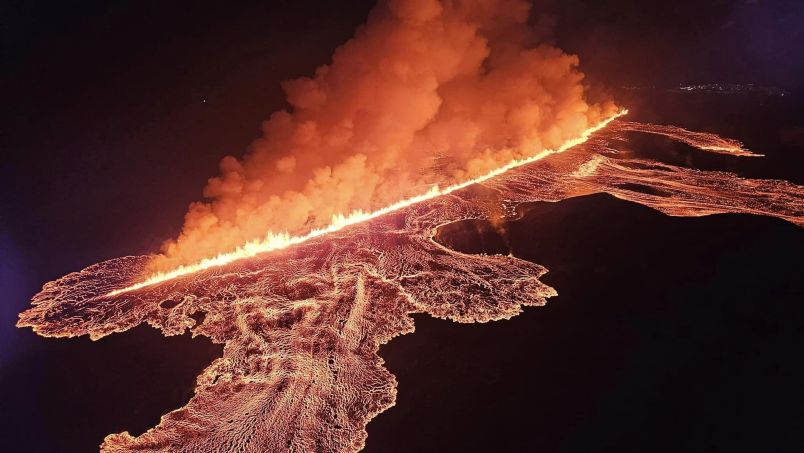
REYKJANES, ICELAND – AUGUST 22: (—-EDITORIAL USE ONLY MANDATORY CREDIT – ‘ ALMANNAVARNADEILD (ICELAND CIVIL DEFENSE) / HANDOUT’ – NO MARKETING NO ADVERTISING CAMPAIGNS – DISTRIBUTED AS A SERVICE TO CLIENTS—-) An aerial view of Iceland’s Reykjanes Peninsula volcanic eruption as it has seen its sixth eruption since December 2023, with lava spewing from a new fissure as seismic activity continues, according to press reports, at Sundhnukur in Reykjanes peninsula, Iceland on August 22, 2024. Reykjanes Peninsula experienced the eruption late Thursday night, following a series of earthquakes, the largest recorded at a magnitude of 4.The eruption began at 9:26 p.m. local time, with lava bursting from a fissure that initially measured 1.4 kilometers (nearly 0.9 miles) but quickly extended to 3.9 kilometers (over 2.42 miles) within 40 minutes, according to the Icelandic Meteorological Office (IMO). (Photo by Almannavarnadeild/Anadolu via Getty Images)
A new four-kilometer long fissure unzipped Thursday on Iceland’s Reykjanes Peninsula, unleashing effusive lava flows in the same general area as the series of eruptions that have occurred since December. The bulk of the lava is flowing away from the evacuated town of Grindavik.
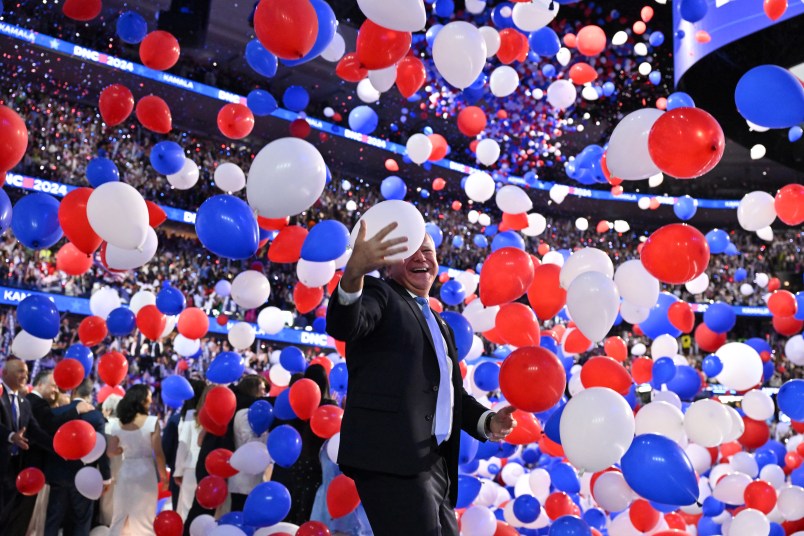
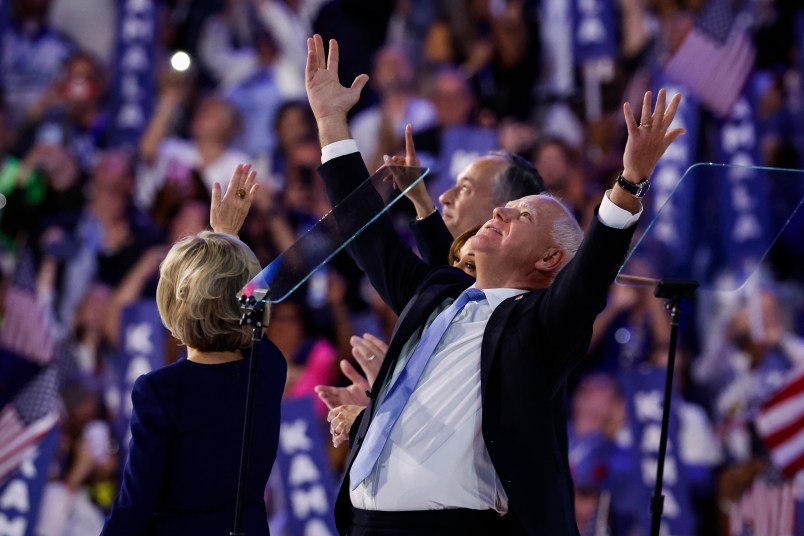
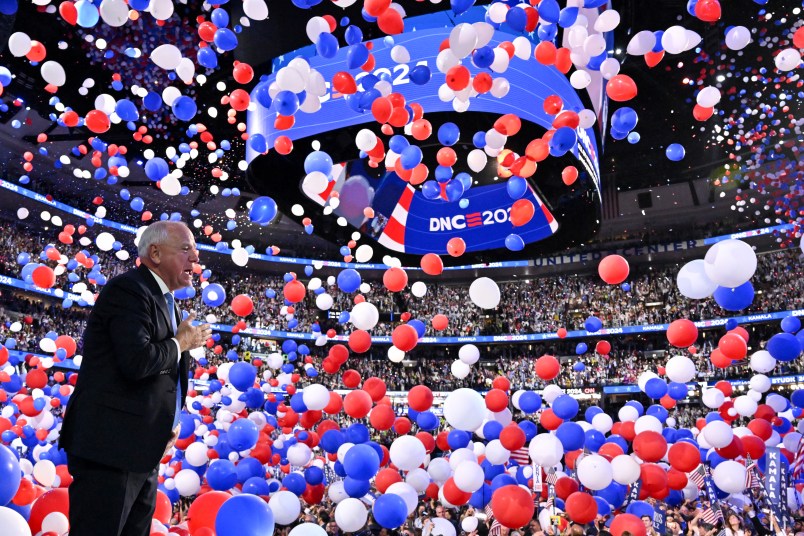
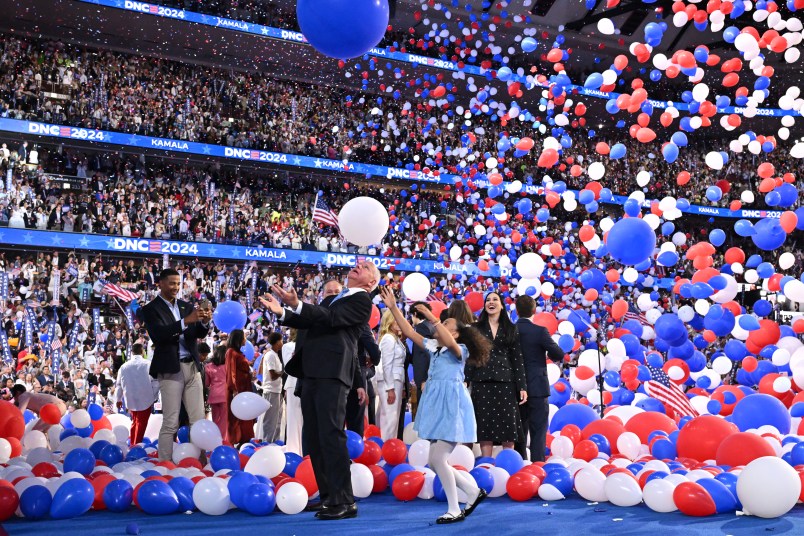
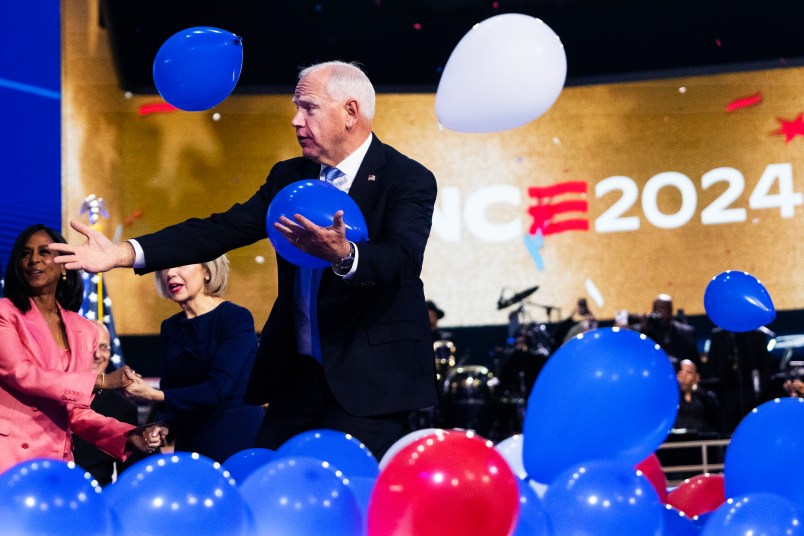
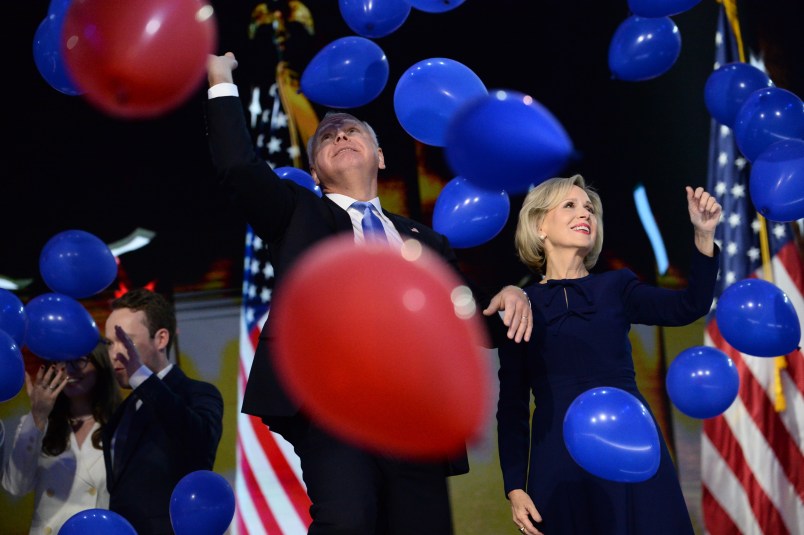
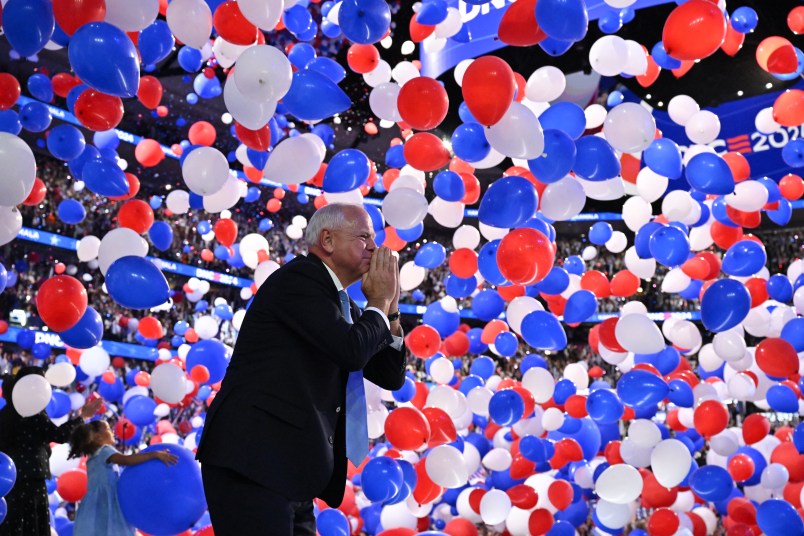
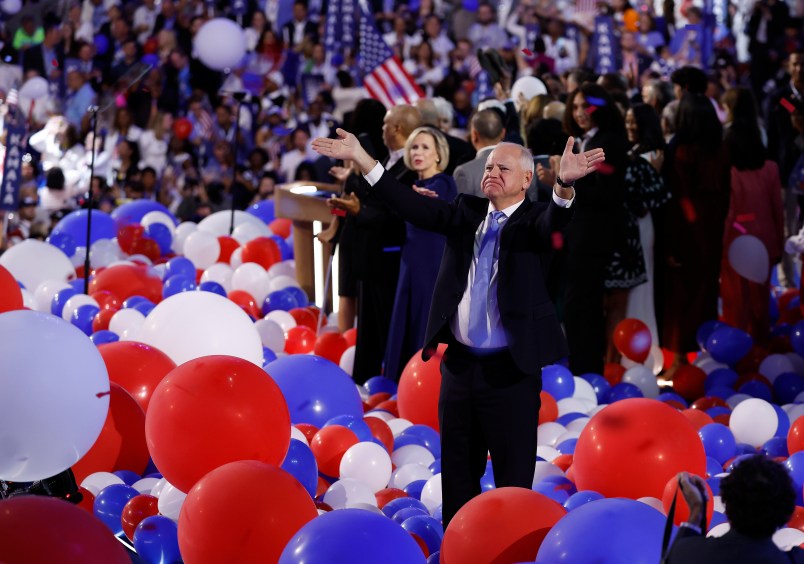
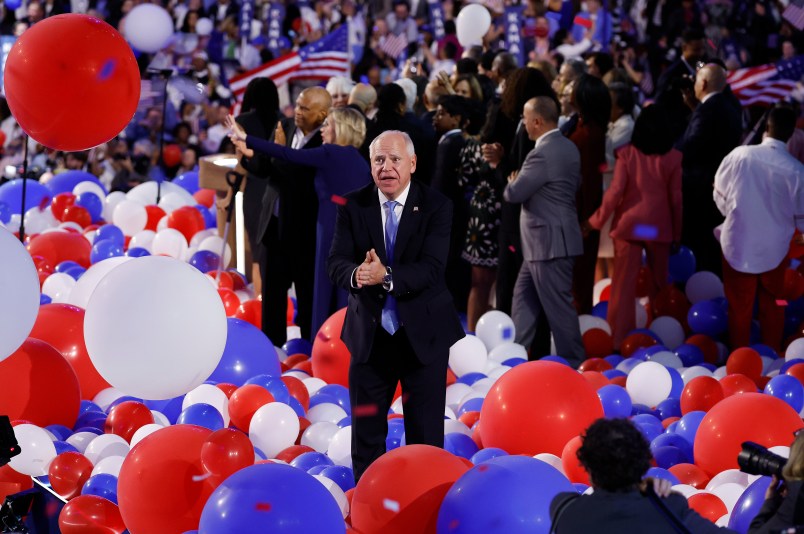
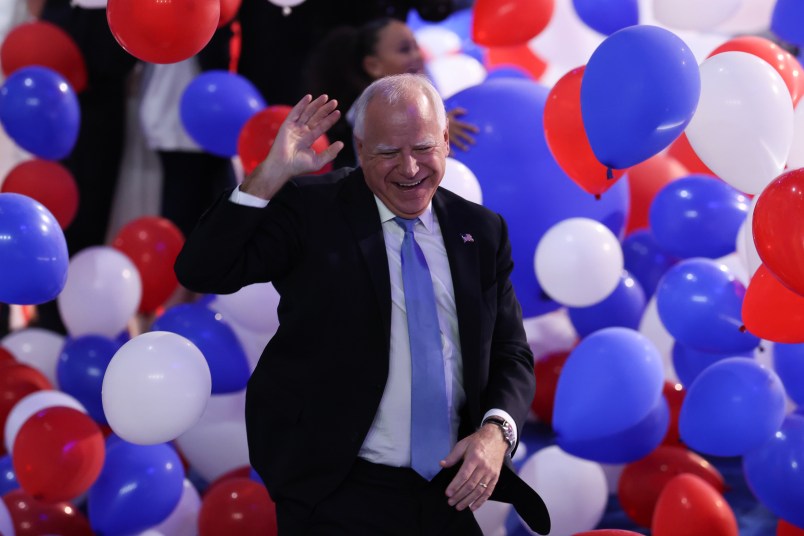
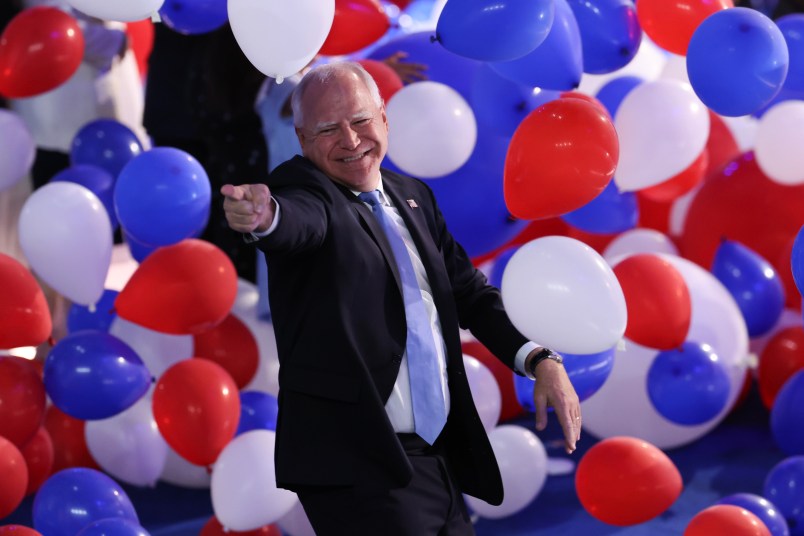
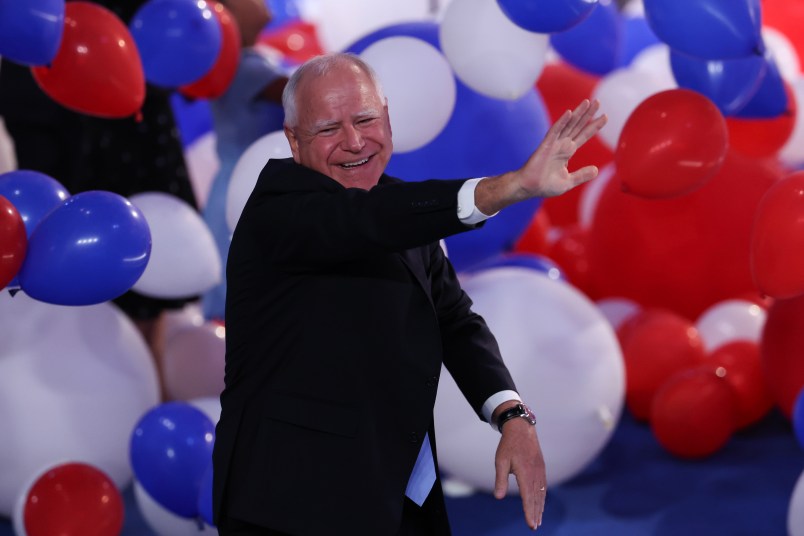
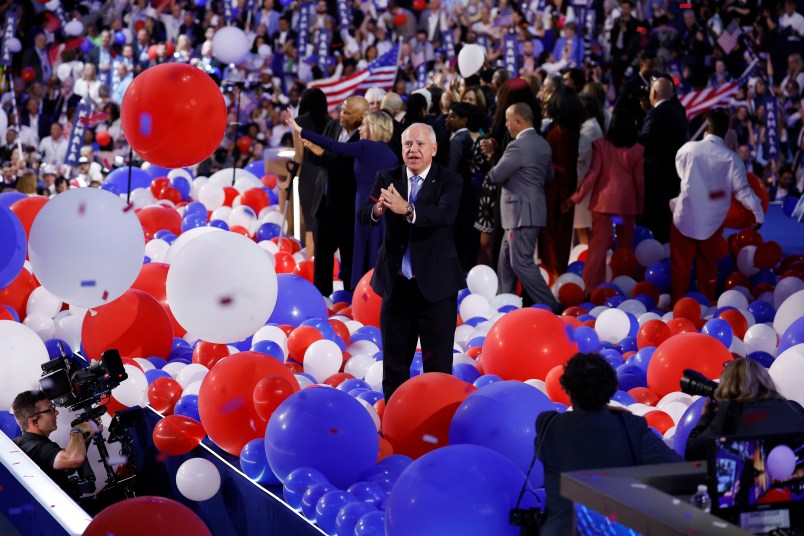
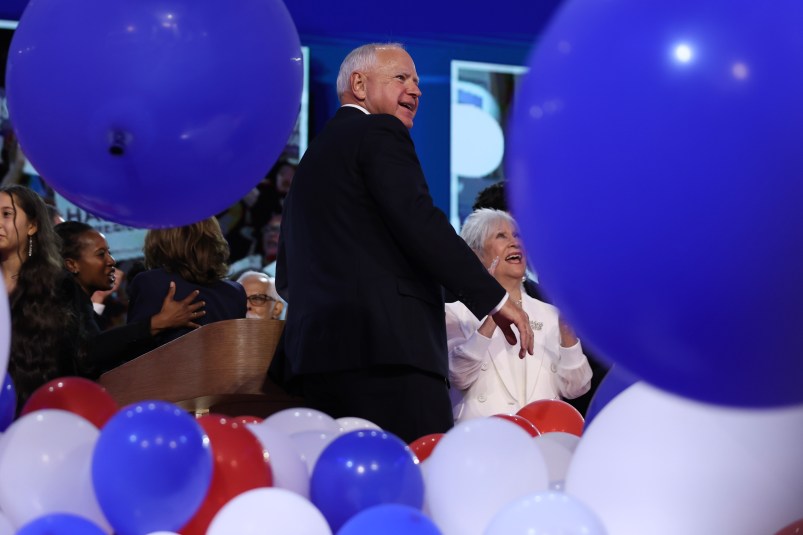
Vice presidential candidate Tim Walz has developed a reputation as a jolly man, one who appears to love life and family. He is also, we now know, a man who loves balloons.
The final night of the DNC was capped by a speech from Vice President Kamala Harris and a celebratory balloon drop. The former teacher and high school football coach seemed to enjoy the whimsical moment, batting balloons while smiling from ear to ear.
Pure joy is Walz amongst hundreds of falling balloons at the DNC. See for yourself:
Tim Walz enjoying the balloon drop
(Photo by ROBYN BECK/AFP via Getty Images)
Walz laughs as balloons fall
(Photo by ROBYN BECK/AFP via Getty Images)
Walz awaits the falling balloons
(Photo by Kevin Dietsch/Getty Images)
Walz takes in the moment, and the balloons
(Photo by ROBYN BECK/AFP via Getty Images)
Tim Walz and Harris’ great-niece play with balloons
(Photo by ROBYN BECK/AFP via Getty Images)
Walz celebrating amongst the balloons
(Tom Williams/CQ-Roll Call, Inc via Getty Images)
Tim and Gwen Walz in the falling balloons
(Photo by Jacek Boczarski/Anadolu via Getty Images)
Walz revels in this epic balloon moment
(Photo by ROBYN BECK/AFP via Getty Images)
Walz waves to the crowd surrounded by balloons
(Photo by Kevin Dietsch/Getty Images)
Tim Walz loving the balloon stage
(Photo by Kevin Dietsch/Getty Images)
Walz enjoying his moment in the balloons
(Photo by Win McNamee/Getty Images)
Walz celebrates surrounded by balloons
(Photo by Win McNamee/Getty Images)
Walz waves to the crowd from the balloon stage
(Photo by Win McNamee/Getty Images)
Walz waiting to see if more balloons will be dropped
(Photo by Kevin Dietsch/Getty Images)
Walz takes in the sight of the balloons and the crowd at the final night of the DNC 2024
Headlining speaker Vice President Kamala Harris entered the packed arena Thursday night to deafening applause and cheers of “Kamala.” The chants and cheers of jubilance were so loud that Harris was not able to start her speech for several minutes.
On the fourth and final night of the Democratic National Convention, the vice president officially accepted her nomination as the Democratic presidential candidate for the 2024 election and delivered her much anticipated remarks — not just to Democratic voters in the room and at home, but to Republicans, Independents and the undecideds.
“I know there are people of various political views watching tonight. And I want you to know: I promise to be a president for all Americans,” Harris said. “You can always trust me to put country above party and self. To hold sacred America’s fundamental principles from the rule of law, to free and fair elections, to the peaceful transfer of power.”
First, on the speech … rock solid. I doubt her advisors and press people thought it could have gone much better. At the beginning I thought it might be understated somehow. Not bad at all, but understated, a bit quieter than we expect from these speeches. But as it progressed I realized she was developing an emotional audience, in person and on television. This came through later in the speech when she ranged from intense to boisterous to categorical. It worked with a mixture of intensity and authenticity. There’s no point in my doing more interpreting of the speech. It hit every point and hit every one well. The most telling comments were those from Republican commentators who couldn’t find their way around saying that it was a strong speech before, of course, reassuring listeners that Harris is obviously terrible and they agree with her about nothing.
As the crowded chanted her tagline, “we won’t go back,” VP Kamala Harris painted a bright picture of the future. She offered olive branches to non-Democrats and sought to reclaim patriotism, a mantle Trump’s MAGA movement has monopolized. She talked about her prosecutor-born toughness and sense of justice, her refusal to be coddled by dictators. She traced her “unlikely journey” from humble beginnings to the heights of political power, mirrored in her unusual path to the presidential nomination. She characterized Trump as both small and dangerous, a self-obsessed weirdo with the potential to do immense damage if given a second term.
And with that, the metric ton of balloons fell upon the crowd and the convention has come to a close.
The biggest surprise of the night was the lack of surprise guest, a rumor egged on by at least one senior White House staffer.
The Arkansas Supreme Court sided with state officials in a ruling on Thursday that will keep an abortion rights question off the ballot in November over what is, essentially, a paperwork issue.
The court upheld state officials’ decision to reject certain signatures that were collected by paid petitioners. The officials had found that the organizers behind the effort to get the amendment on the ballot — which would protect abortion access in the state — submitted the signatures in a way that did not comply with state law.
Election officials said Arkansans for Limited Government failed to comply with state law primarily because it submitted documentation regarding paid signature gatherers separately and not in a single bundle. The group argued that it should have been given more time to provide any additional documents needed.
“We find that the Secretary correctly refused to count the signatures collected by paid canvassers because the sponsor failed to file the paid canvasser training certification” in the way the law requires, Justice Rhonda Wood wrote for the 4-3 majority.
A dissenting justice wrote that the decision strips Arkansans’ of their rights and effectively changes the state’s initiative law.
Nepo baby-turned-Arkansas Governor Sarah Huckabee Sanders — who is vehemently anti-abortion — celebrated the decision, and even took credit for the ruling in a tweet on Thursday.
Proud I helped build the first conservative Supreme Court majority in the history of Arkansas and today that court upheld the rule of law, and with it, the right to life.
Abortion is currently banned in Arkansas, with exceptions only if the pregnant person’s life is in danger.
“This effort has generated a wave of fiercely engaged Arkansas women,” Arkansas for Limited Government, the group behind the measure, said in a statement to the AP. “We are outraged. We will not back down. And we will remember this in November.”
We’ve spoken a few times about the ongoing discussion of when Kamala Harris’s “honeymoon” is going to come to an end. We had a lot of press conversation about how it had to end a week after she got into the race. There’s been a growing media hunger for it to end. I was prompted to write this post because of a piece I saw in New York Magazine headlined, “How Long can ‘Brat Summer’ Last? The vibes are good, but at some point, Kamala Harris has to leave her bubble.”
I need to be really clear about what I mean here. On the podcast, Kate and I keep saying that there are going to be reverses in this campaign, to be prepped for them, not to lose heart at the first ugly attack that lands or the first bad poll. I’ve said similar things in various posts. So when I talk about “honeymoonism,” I don’t mean to suggest that I think we’re in a straight-line progression from now until Election Day. Just as we should never lose heart in the bleakest moments, we should always be mindful to invest positive energy in future resilience. But through these discussions of Harris’ “honeymoon” and when it has to end or when she has to come out of the “honeymoon” bubble, we can see an assumption or claim that is a bit different. It’s that somehow what’s happened during the first month of Harris’ campaign isn’t quite real, that it’s a sugar high, if you will, a burst of excitement that can’t last.
Let me expand a bit on the RFK Jr. discussion from yesterday. It’s now clear that Kennedy will drop out tomorrow and that he will endorse Trump. I mean, clear as anything with two confirmed weirdos can be. But that’s what all the big publications are reporting, so we’ll assume that’s the case. I went through the numbers again and looked closely at what those most immersed in them think. If we look strictly at the numbers, the odds are likely that Trump gains some modest benefit. But it’s very modest. Elliott Morris, new top guy at 538, has become one of my go-tos on these things. He looked at their data which says that Kennedy dropping out of the race loses Harris two-tenths of a percentage point on her current lead. That’s not nothing in a race we all know will be very close. But it’s not far from nothing.