A newly unsealed court filing has revealed previously unknown details about the Trump administration’s operation to remove Venezuelan nationals under the Alien Enemies Act and threatens to undermine key elements of its legal defense.
The filing is a declaration by ICE official Carlos D. Cisneros in an Alien Enemies Act case in federal court in the Southern District of Texas. The implications of what Cisneros has revealed could reverberate in AEA cases around the country, including at the Supreme Court.
Timing: The headline news was Cisneros’ revelation that detainees are being given “no less than 12 hours” to decide whether to contest their imminent removal under the AEA and another 24 hours to file a habeas case. This is supposed to satisfy the notice requirement the Supreme Court imposed earlier this month in AEA cases, but it is unlikely any court is going to find the 12/24-hour combo sufficient. By way of comparison, U.S. District Judge Charlotte Sweeney of Colorado earlier this week imposed a 21-day notice requirement and other procedural safeguards on the government in an Alien Enemies Act ruling.
Inconsistency: Legal reporter Chris Geidner has an excellent analysis of how the Cisneros declaration reveals the Trump administration is telling the Supreme Court one thing and apparently doing another. In a different AEA case out of North Texas, Solicitor General John Sauer has told the Supreme Court the administration will not remove AEA detainees who file habeas claims. But the Cisneros declaration reveals that there may be a couple of different exceptions in practice to that general rule, which would undermine if not flat out contradict what the Trump DOJ represented in court.
Imminence: In that North Texas case, where the Supreme Court acted in the middle of the night to block another round of removals, Justice Samuel Alito wondered in his dissent (joined by Justice Clarence Thomas) what all the rush was about. “The papers before us, while alleging that the applicants were in imminent danger of removal, provide little concrete support for that allegation,” Alito wrote. But the new revelation in the Cisneros declaration about the 12/24-hour combo establishes exactly what the plaintiffs had claimed: Removals were imminent. (Credit to Georgetown Law professor Steve Vladeck for this catch.)
Another Brazen Defiance Of A Court Order?
Reuters: The Trump administration moved a Venezuelan man to Texas for possible deportation about a half an hour after U.S. District Judge Stephanie Haines had issued an order blocking his removal from the Western District of Pennsylvania.
A Bad Day In Court For President Trump
Elections Executive Order: U.S. District Judge Colleen Kollar-Kotelly temporarily blocked a provision of President Trump’s executive order demanding that proof of citizenship be added to some federal voting forms.
Anti-DEI: Federal judges in DC, Maryland, and New Hampshire separately blocked elements of the Education Department’s ban on DEI in K-12 schools.
Sanctuary cities: U.S. District Judge William H. Orrick of San Francisco temporarily blocked the Trump administration from withholding funds from sanctuary cities, a replay of a case Orrick had early in Trump I.
As Bad As It Gets
President Trump ordered the Justice Department to investigate the leading Democratic fundraising platform ActBlue:
If this were a report about any other country in the world, the headline would be something more like "Trump Expands Efforts to Crackdown on Political Opposition."
A slow-motion train wreck – and a nightmare for any lawyer – has played out since Wednesday in the NYC congestion pricing case. The sequence was as follows:
Wednesday night, DOJ mistakenly uploaded to the public docket an internal letter that contained its legal advice to the Department of Transportation about why its case was a sure loser.
Thursday morning, DOJ asked the judge in the case to remove or permanently seal the “inadvertently uploaded” letter.
A Department of Transportation spokesperson blasted the DOJ attorneys and questioned whether it was really a mistake: “Are SDNY lawyers on this case incompetent or was this their attempt to RESIST? At the very least, it’s legal malpractice. It’s sad to see a premier legal organization continue to fall into such disgrace.”
The Department of Transportation said it was replacing the lawyers involved, who worked in the U.S. Attorney’s Office for the Southern District of New York, with lawyers from the Main Justice’s Civil Division in DC.
The federal judge in the case, Lewis Liman, temporarily sealed the mistakenly filed letter but ordered briefing on (i) whether there’s a sufficient basis to seal the letter permanently since it was already made public and widely republished by news outlets; and (ii) whether the inadvertent publication of the letter waived attorney-client privilege.
The cringe outweighs any schadenfreude.
Blast From The TPM Past
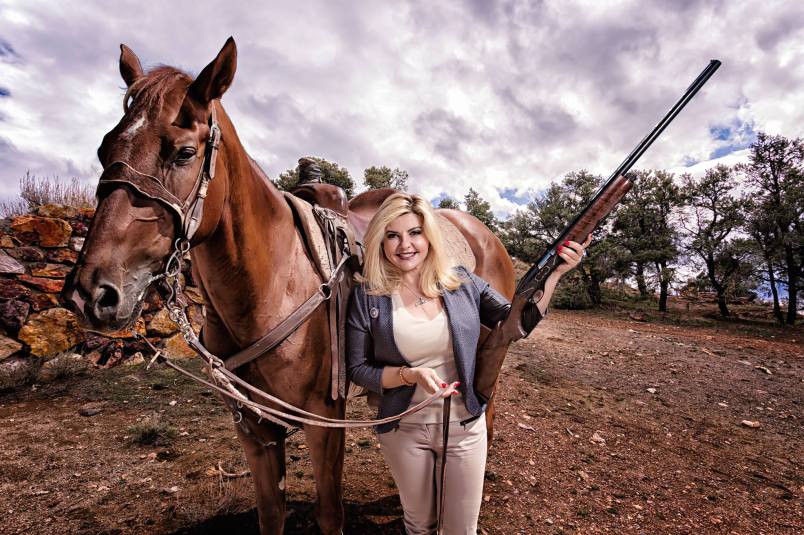
Former Nevada state Assemblywoman Michele Fiore (R)
A decade ago, Michelle Fiore of Nevada was a fixture in TPM coverage of far-right politics. This week President Trump pardoned her before her sentencing on a federal fraud conviction. Her crime? Using money collected to honor a slain police officer on personal expenses, including cosmetic surgery.
For Your Radar …
Former Rep. George Santos (R-NY) is scheduled to be sentenced today in federal court in New York, where he pleaded guilty in his fraud case.
The Purges
Gov’t-wide: President Trump signed an executive order Thursday making it easier to fire probationary government employees.
VA: The Veterans Affairs Department is forcing staff in workforce reduction discussions to sign non-disclosure agreements.
SSA: Acting Social Security Commissioner Leland Dudek is moving to convert the status of many of his agencies employees to the new Schedule F.
‘Vladimir, STOP!’
On the same day that President Trump plaintively posted to social media “Vladimir, STOP!’ CNN reported that he is “frustrated” and has privately told advisers that mediating a deal to end the war in Ukraine “has been more difficult than he anticipated.”
Pete Hegseth Watch
WSJ: Polygraph Threats, Leaks and Infighting: The Chaos Inside Hegseth’s Pentagon
AP: Hegseth had an unsecured internet line set up in his office to connect to Signal
NYT: “Defense Secretary Pete Hegseth’s personal phone number, the one used in a recent Signal chat, was easily accessible on the internet and public apps as recently as March, potentially exposing national security secrets to foreign adversaries.”
Good Read
Jay Willis: Let’s Take a Look at the Children’s Books Sam Alito Is So Afraid Of
This story first appeared at ProPublica. ProPublica is a Pulitzer Prize-winning investigative newsroom. Sign up for The Big Story newsletter to receive stories like this one in your inbox.
The attacks on Judge John Barberis in the fall of 2016 appeared on his personal Facebook page. They impugned his ethics, criticized a recent ruling and branded him as a “politician” with the “LOWEST rating for a judge in Illinois.”
Barberis, a state court judge in an Illinois county across the Mississippi River from St. Louis, was presiding over a nasty legal battle for control over the Eagle Forum, the vaunted grassroots group founded by Phyllis Schlafly, matriarch of the anti-feminist movement. The case pitted Schlafly’s youngest daughter against three of her sons, almost like a Midwest version of the HBO program “Succession” (without the obscenities).
At the heart of the dispute — and the lead defendant in the case — was Ed Martin, a lawyer by training and a political operative by trade. In Missouri, where he was based, Martin was widely known as an irrepressible gadfly who trafficked in incendiary claims and trailed controversy wherever he went. Today, he’s the interim U.S. attorney in Washington, D.C., and one of the most prominent members of the Trump Justice Department.
In early 2015, Schlafly had selected Martin to succeed her as head of the Eagle Forum, a crowning moment in Martin’s career. Yet after just a year in charge, the group’s board fired Martin. Schlafly’s youngest daughter, Anne Schlafly Cori, and a majority of the Eagle Forum board filed a lawsuit to bar Martin from any association with the organization.
After Barberis dealt Martin a major setback in the case in October 2016, the attacks began. The Facebook user who posted them, Priscilla Gray, had worked in several roles for Schlafly but was not a party to the case, and her comments read like those of an aggrieved outsider.
Almost two years later, the truth emerged as Cori’s lawyers gathered evidence for her lawsuit: Behind the posts about the judge was none other than Martin.
ProPublica obtained previously unreported documents filed in the case that show Martin had bought a laptop for Gray and that she subsequently offered to “happily write something to attack this judge.” And when she did, Martin ghostwrote more posts for her to use and coached her on how to make her comments look more “organic.”
“That is not justice but a rigged system,” he urged her to write. “Shame on you and this broken legal system.”
“Call what he did unfair and rigged over and over,” Martin continued.
Martin even urged Gray to message the judge privately. “Go slow and steady,” he advised. “Make it organic.”
Gray appeared to take Martin’s advice. “Private messaging him that sweet line,” she wrote. It was not clear from the court record what, if anything, she wrote at that juncture.
Legal experts told ProPublica that Martin’s conduct in the Eagle Forum case was a clear violation of ethical norms and professional rules. Martin’s behavior, they said, was especially egregious because he was both a defendant in the case and a licensed attorney.
Martin appeared to be “deliberately interfering with a judicial proceeding with the intent to undermine the integrity of the outcome,” said Scott Cummings, a professor of legal ethics at UCLA School of Law. “That’s not OK.”
Martin did not respond to multiple requests for comment.
Martin’s legal and political career is dotted with questions about his professional and ethical conduct. But for all his years in the spotlight, some of the most serious concerns about his conduct have remained in the shadows — buried in court filings, overlooked by the press or never reported at all.
His actions have led to more than $600,000 in legal settlements or judgments against Martin or his employers in a handful of cases. In the Eagle Forum lawsuit, another judge found him in civil contempt, citing his “willful disregard” of a court order, and a jury found him liable for defamation and false light against Cori.
Cori also tried to have Martin charged with criminal contempt for his role in orchestrating the posts about Barberis, but a judge declined to take up the request and said she could take the case to the county prosecutor. Cori said her attorney met with a detective; Martin was never charged.
Nonetheless, the emails unearthed by ProPublica were evidence that he had violated Missouri rules for lawyers, according to Kathleen Clark, a legal ethics expert and law professor at Washington University in St. Louis. She said lawyers are prohibited from trying to contact a judge outside of court in a case they are involved in, and they are barred from using a proxy to do something they are barred from doing themselves.
Such a track record might have derailed another lawyer’s career. Not so for Martin.
As a presidential candidate, Donald Trump vowed to use the Justice Department to reward his allies and seek retribution against his perceived enemies. Since taking office, Trump and his appointees have made good on those pledges, pardoning Jan. 6 rioters while targeting Democratic politicians, media critics and private law firms.
As one of its first personnel picks, the Trump administration chose Martin to be interim U.S. attorney for the District of Columbia, one of the premier jobs for a federal prosecutor.
A wide array of former prosecutors, legal observers and others have raised questions about his qualifications for an office known for handling high-profile cases. Martin has no experience as a prosecutor. He has never taken a case to trial, according to his public disclosures. As the acting leader of the largest U.S. attorney’s office in the country, he directs the work of hundreds of lawyers who appear in court on a vast array of subjects, including legal disputes arising out of Congress, national security matters, public corruption and civil rights, as well as homicides, drug trafficking and many other local crimes.
Over the last four years, the office prosecuted more than 1,500 people as part of the massive investigation into the violence at the U.S. Capitol on Jan. 6, 2021. While Trump has pardoned the Jan. 6 defendants, Martin has taken action against the prosecutors who brought those cases. In just three months, he has overseen the dismissal of outstanding Jan. 6-related cases, fired more than a dozen prosecutors and opened an investigation into the charging decisions made in those riot cases.
Martin has also investigated Democratic lawmakers and members of the Biden family; forced out the chief of the criminal division after she refused to initiate an investigation desired by Trump appointees citing a lack of evidence, according to her resignation letter; threatened Georgetown University’s law school over its diversity, equity and inclusion policies; and vowed to investigate threats against Department of Government Efficiency employees or “chase” people in the federal government “discovered to have broken the law or even acted simply unethically.”
Martin “has butchered the position, effectively destroying it as a vehicle by which to pursue justice and turning it into a political arm of the current administration,” says an open letter signed by more than 100 former prosecutors who worked in the U.S. Attorney’s Office for the District of Columbia under Democratic and Republican presidents.
Already, Martin has been the subject of at least fourdisciplinarycomplaints with the D.C. and Missouri bars, of which one was dismissed and the other three appear to be pending. Two of the complaints came after he moved to dismiss charges against a Jan. 6 rioter whom he had previously represented and for whom he was still listed as counsel of record. (The first complaint was dismissed after the D.C. bar’s disciplinary panel concluded that Martin had dismissed the case as a result of Trump’s pardons and so did not violate any rules.) The third was filed in March by a group of Democratic lawmakers in the U.S. Senate. The fourth was submitted last week by a group of former Jan. 6 prosecutors and members of the conservative-leaning Society for the Rule of Law. It argues that Martin’s actions so far “threaten to undermine the integrity of the U.S. Attorney’s Office and the legal profession in the District of Columbia.” If Martin has responded to any of the complaints, those responses have not been made public.
Trump has nominated Martin to run the office permanently. Senate Democrats, meanwhile, have vowed to drag out Martin’s confirmation, demanding a hearing and setting up a fight over one of Trump’s most controversial nominees.
Martin stepped off the elevator into the newsroom of the St. Louis Post-Dispatch newspaper. He was angry at a reporter named Jo Mannies, one of the city’s top political journalists. At a conference table with Mannies and her senior editors, he accused Mannies of being unethical and pressed the paper’s leadership to spike her stories about him, according to interviews.
Mannies said later she believed he was trying to get her fired.
“He was attacking her,” said Pam Maples, who was managing editor at the time. “He was implying she had an ax to grind, that she wanted to get some big story and that she was not being ethical. And when that didn’t get traction, it was more like ‘this isn’t a story.’ It wasn’t that he said anything about a fact being inaccurate, or he wanted to retract a story; he wanted the reporting to stop.”
Mannies had been covering a scandal dubbed “Memogate” that started to unfold in 2007 while Martin was chief of staff to Missouri Gov. Matt Blunt. In that role, Martin was using his government email to undermine Democratic rivals and rally anti-abortion groups. But when reporters requested emails from Blunt’s staff, the governor’s office denied they existed. Media organizations joined a lawsuit to preserve the messages and recover them from backup tapes.
An attorney for the governor, Scott Eckersley, later said in a deposition that Martin tried to block the release of government emails and told employees to delete their messages. After Eckersley warned that doing so might violate state law, he was fired. He sued the state for wrongful termination and defamation and settled for $500,000. Martin resigned as chief of staff in 2007 after just over a year on the job, and Blunt’s office would eventually hand over 22 boxes of internal emails.
In a 2008 email to the Associated Press, Martin dismissed Eckersley’s lawsuit as a “desperate attempt” to revise his story after he was fired, citing Eckersley’s own testimony that not all emails are public records.
The Memogate incident was telling — and Martin’s efforts to have Mannies fired were never reported. “His claim was we were misrepresenting what the law was and what he was doing,” she told ProPublica. “I mean, he can get very hyper. He can get very emotional.”
When Martin launched a bid for Congress in 2010, he acted as if Memogate was ancient history. He made himself available to Mannies, she recalled, always taking her calls. Years later, he even appeared, lighthearted and bantering, on a St. Louis Public Radio podcast Mannies co-hosted. She said Martin could be outlandish and aggressive, but he could also be disarmingly passionate about whatever cause he was pursuing at the moment, often speaking in a frenetic rush. “He just wore people down with his enthusiasm,” she said.
Martin allowed a different St. Louis reporter to shadow him during his 2010 run for Congress. The reporter asked about the St. Louis election board, a dysfunctional organization that, by all accounts, Martin had helped turn around in the mid-2000s. Martin had fired an employee there named Jeanne Bergfeld, and she later sued for wrongful termination. The board settled the lawsuit.
As part of the settlement, Martin agreed not to talk about the case and the board paid Bergfeld $55,000. Martin and two others issued a letter saying she had been a “conscientious and dedicated professional.”
But talking to the reporter covering his campaign, Martin said Bergfeld enjoyed “not having to do anything” and “wasn’t interested in changing.” The day after the story was published, Bergfeld sued Martin again, this time for violating the settlement agreement. Martin denied making the comments, but the Riverfront Times released audio that proved he had.
Martin agreed to pay Bergfeld another $15,000 but delayed signing the settlement for a few months. The judge then ordered Martin to pay some of her legal costs, citing his “obstinacy.”
Martin lost his 2010 congressional bid. He ran for Missouri attorney general two years later and lost again. After his stint as chair of the Missouri Republican Party, he went to work as Schlafly’s right-hand man. Martin grew so attached to Schlafly that a lawyer for the Eagle Forum jokingly called him “Ed Martin Schlafly.”
As the 2016 presidential campaign ramped up, Martin supported Trump even though Eagle Forum board members, including Cori, supported Sen. Ted Cruz of Texas. Cori described Trump at the time as an “egomaniacal dictator.” (Today, she said she supports him.) Cori and other board members were stunned when Schlafly endorsed Trump, with Martin standing by her side.
A few weeks later, a majority of the Eagle Forum’s board voted to oust Martin as president; a lawsuit filed by the board cited mismanagement and poor leadership and described his tenure as “deplorable.” Martin has maintained that he was Schlafly’s “hand-picked successor” and has characterized his removal as a hostile takeover.
“Every day, they are diminishing the reputation and value of Phyllis,” he said in a 2017 statement. She died in September 2016.
Cori and the board’s lawsuit sought to enforce Martin’s removal and demand an accounting of the forum’s assets. That’s the case that wound up before Barberis.
On top of his efforts to direct Gray’s posts on Barberis’ Facebook page, Martin prepared a separate statement, according to previously unreported records from the case. The statement called Barberis’ ruling to remove him as Eagle Forum president “judicial activism at its worst” that “shows what happens when the law is undermined by judges who think they can do whatever they want.”
Martin emailed the statement, which said it was from “Bruce Schlafly, M.D.” — the name of one of Schlafly’s sons — to himself, then sent it to two of her other sons, John and Andy, court filings show. Martin said the statement was a “declaration of war” and urged the Schlaflys to “put something like this out to our biggest list.” (It’s unclear if the message was ever sent.) Bruce Schlafly did not respond to requests for comment.
In a 2019 sworn deposition, Cori’s lawyer asked Martin questions about the posts on Barberis’ Facebook page and the letter he drafted for Bruce Schlafly. Because of the possibility that he could be charged with criminal contempt of court, Martin declined to comment, on the advice of his own lawyer, though he acknowledged that lawyers are barred from communicating with judges outside of court or engaging in conduct meant to disrupt proceedings.
Andy Schlafly, a lawyer and former Eagle Forum board member who supported Martin in the leadership fight, said “no court has ever sanctioned Ed for his engagement of First Amendment advocacy” and likened the controversy to liberal attacks on conservative judges. He dismissed concerns about Martin directing Gray to contact the judge, saying she “speaks for herself” and had every right to voice her outrage. He compared Martin’s style — then and now — to Trump’s. He said he did not believe the email Martin drafted for his brother Bruce had ever been sent, but if it had been, it would have been no different from Trump posting on Truth Social, which he considered normal behavior in political battles.
“What would Trump do in that position?” Andy Schlafly said of Martin’s current role in Washington. “I would say Trump would be doing just what Ed’s doing. Elections do have consequences.”
Gray declined to comment. She was not part of the lawsuit.
When Cori’s lawyers uncovered the emails, they asked a new judge, David Dugan — who had taken over the case after Barberis was elected to a higher court — why Martin should not be held in criminal contempt for “an underhanded scheme” to “attack the integrity and authority” of the court with the Facebook comments about Barberis, according to court records.
Dugan declined to take up the criminal contempt motion. But he later found Martin and John Schlafly in civil contempt of court for having interfered with Eagle Forum after Barberis had removed them from the group. John Schlafly appealed the contempt finding and mostly lost. He did not respond to requests for comment. It’s unclear if Martin appealed.
Cori told ProPublica she also filed an ethics complaint against Martin with the Missouri Office of Chief Disciplinary Counsel, which investigates ethics complaints against lawyers. She said she was told her complaint would have to wait until her lawsuit concluded. The office said it could neither confirm nor deny it had received a complaint.
In 2022, when part of Cori’s lawsuit went to trial, a jury found Martin liable for defaming her and casting her in a false light — including by sharing a Facebook post suggesting that she should be charged with manslaughter for her mother’s death. It awarded her $57,000 in damages and also found Martin liable for $25,500 against another Eagle Forum board member.
Martin argued that the statute of limitations had expired on the defamation claims and that many of his statements were either true or vague hyperbole not subject to proof. He also claimed he could not be held liable because he didn’t write the offending post — he had merely shared something written by someone else.
In a post-trial motion, he also leaned into protections that make it harder for public figures to win defamation cases. Under that higher legal standard, it’s not enough for a plaintiff to show that a statement was false. Cori also had to prove that Martin knew it was false or acted with reckless disregard for the truth, and he said she didn’t prove it.
But while he’s wrapped himself in First Amendment protections when defending his own speech, he’s taken the opposite stance since being named interim U.S. attorney by Trump, threatening legal action against people when they criticize the administration.
For instance, after Rep. Robert Garcia called DOGE leader Elon Musk a “dick” and urged Democrats to “bring weapons” to a political fight, Martin sent Garcia a letter warning his comments could be seen as threats and demanding an explanation.
With the start of Trump’s first presidency, Martin and his family moved to the Northern Virginia suburbs near Washington, D.C. Martin had no formal role in the new administration, but he turned himself into one of the president’s most prolific and unfiltered surrogates.
CNN hired him in September 2017 to be a pro-Trump on-air commentator, only to fire him five months later after a string of controversial on-air remarks. He attacked a woman who had accused Alabama U.S. Senate candidate Roy Moore of molesting her as a child, praised Trump for denigrating Sen. Elizabeth Warren as “Pocahontas,” and described some of his CNN co-panelists as “rabid feminists” and “Black racists.”
Unbowed, Martin went on to make more than 150 appearances on the Russia Today TV channel and Sputnik radio, both Russian state-owned media outlets, first reported by The Washington Post. On RT and Sputnik, Martin railed against the “Russia hoax,” criticized the DOJ investigation led by special counsel Robert Mueller and questioned American support for Ukraine after Russia’s invasion by saying the U.S. was “wasting money in Kiev for Zelensky and his corrupt guys.” The State Department would later say RT and Sputnik were “critical elements in Russia’s disinformation and propaganda ecosystem.” The Treasury Department sanctioned RT employees in 2024. The DOJ indicted two RT employees for conspiracy to commit money laundering and conspiracy to fail to register as foreign agents.
Martin’s flair for fealty set him apart even from fellow Trump supporters. He cheered the Maine Republican Party for considering whether to censure Sen. Susan Collins for her vote to convict Trump during the second impeachment trial. He singled out Sen. Lisa Murkowski of Alaska in a radio segment titled “America Needs to Go on a RINO Hunt.” He accused Sen. John Cornyn of going “soft” on gun rights after Cornyn endorsed a bipartisan gun-safety law after the Uvalde, Texas, mass shooting that left 19 children and two teachers dead.
On Jan. 6, 2021, Martin joined the throngs of Trump supporters who marched in protest of the 2020 election outcome. He compared the scene that day to a Mardi Gras celebration and later said the prosecution of Jan. 6 defendants was “an op” orchestrated by former Rep. Liz Cheney and law enforcement agencies to “damage Trump and Trumpism.”
During an appearance on Russia Today, Martin said then-House Speaker Nancy Pelosi “weaponized” Congress’ response to the Jan. 6 riots by ramping up security on Capitol Hill, comparing her to the Nazis. “Not since the Reichstag fire that was engineered by the Nazis have we seen behavior like what Nancy Pelosi did,” he said.
As an attorney, he represented Jan. 6 defendants, helped raise money for their families and championed their cause. Last summer, Martin gave an award to a convicted Jan. 6 rioter named Timothy Hale-Cusanelli. According to court records, Hale-Cusanelli held “long-standing white supremacist and Nazi beliefs,” wore a “Hitler mustache” and allegedly told his co-workers that “Hitler should have finished the job.” (In court, Hale’s attorney said his client “makes no excuses for his derogatory language,” but the government’s description of him was “simply misleading.”)
After hugging and thanking Hale-Cusanelli at the ceremony, Martin told the audience that one of his goals was “to make sure that the world — and especially America — hears more from Tim Hale, because he’s extraordinary.”
In his three months as interim U.S. attorney for D.C., Martin has used his position to issue a series of threats. He’s vowed not to hire anyone affiliated with Georgetown Law unless the school drops any DEI policies. He vowed to Musk that he would “pursue any and all legal action against anyone who impedes your work or threatens your people.” He publicly told former special counsel Jack Smith and Smith’s lawyers to “[s]ave your receipts.” And in another open letter addressed to Musk and Musk’s deputy, Martin wrote that “if people are discovered to have broken the law or even acted simply unethically, we will investigate them and we will chase them to the end of the Earth to hold them accountable.”
More often than not, Martin’s threats have gone nowhere.
A month into the job, he announced “Operation Whirlwind,” an initiative to “hold accountable those who threaten” public officials, whether they’re DOGE workers or judges. One of the “most abhorrent examples” of such threats, he said, were Sen. Chuck Schumer’s 2020 remarks that conservative Supreme Court justices had “released the whirlwind” and would “pay the price” if they weakened abortion rights.
Even though Schumer walked back his incendiary comments the next day, Martin said he was investigating Schumer’s nearly 5-year-old remarks as part of Operation Whirlwind. Despite Martin’s bravado, the investigation went nowhere. No grand jury investigation was opened. No charges were filed. That the probe fizzled out came as little surprise. Legal experts said Schumer’s remarks, while ill advised, fell well short of criminal conduct.
In another instance, when one of Martin’s top deputies refused to open a criminal investigation into clean-energy grants issued by the Biden administration, Martin demanded the deputy’s resignation and advanced the investigation himself. When a subpoena arrived at one of the targeted environmental groups, Martin’s was the only name on it, according to documents obtained by ProPublica.
Kevin Flynn, a former federal prosecutor who served in the D.C. U.S. attorney’s office for 35 years, told ProPublica that he did not know of a single case in which the U.S. attorney was the sole authorizing official on a grand jury subpoena. Flynn said he could think of only two reasons why this could happen: The matter was of “such extraordinary sensitivity” that the office’s leader took exclusive control over it, or no other supervisor or line prosecutor was willing to sign off on the subpoena “out of concern that it wasn’t legally or ethically appropriate.”
And when the dispute between the environmental groups and the Justice Department reached a courtroom, federal Judge Tanya Chutkan asked a DOJ lawyer defending the administration’s actions for any evidence of possible crimes or violations — evidence, in other words, that could have justified the probe initiated by Martin. The DOJ lawyer said he had none. “You can’t even tell me what the evidence of malfeasance is,” Chutkan said. “There are still rules that even the government has to follow, last I checked.”
Martin’s tenure has caused so much consternation that in early April, Sen. Adam Schiff, D-Calif., put a hold on Martin’s nomination. Typically, the Senate Judiciary Committee approves U.S. attorney picks by voice vote without a hearing. But in Martin’s case, all 10 Democrats on the committee have asked for a public hearing to debate the nomination, calling Martin “a nominee whose objectionable record merits heightened scrutiny by this Committee.”
Even the process of submitting the requisite paperwork for Senate confirmation has tripped him up. According to documents obtained by ProPublica, he has sent the Judiciary Committee three supplemental letters that correct omissions about his background. In an earlier submission, Martin did not disclose any of his appearances on Russian state-owned media. But just before The Washington Post reported that Martin had, in fact, made more than 150 such appearances, he sent yet another letter correcting his previous statements.
“I regret the errors and apologize for any inconvenience,” he wrote.
Government Executive: “The Veterans Affairs Department is requiring all employees working on its plans to slash tens of thousands of workers from its rolls to sign non-disclosure agreements, an unusual move that has prevented supervisors from sharing basic information with staff.”
Question: I’m looking for examples of medical schools which may just have received a letter from the Justice Department demanding detailed records of the school’s admissions going back five years. If you have information: Signal joshtpm.99 or joshtpm at protonmail dot com. All comms confidential.
This isn’t terribly surprising, given the broader budgetary situation at American universities, particularly in the sciences and biomedical research specifically. I’ve heard from faculty and graduate students at a number of schools around the country. Many programs are dramatically reducing the number of offers being made for PhD programs. One prestigious school of medicine cut the number of PhD students it’s admitting for next year by 50%. At another program, PhD students are being graduated on an expedited basis, sooner and with less work produced than would normally be allowed. The logic is simple. The program doesn’t think they’re going to have the money to allow these students to finish. I’ve heard multiple examples of offers being turned down to attend programs in other countries. Meanwhile and unsurprisingly, foreign students are turning down offers to study in the United States.
The White House (yes, technically the GSA guy and the two lawyers) sent that letter to Harvard, demanding de facto control of the university’s hiring, admissions and various elements of its curriculum. Harvard replied with a flat rejection ten days ago. The White House immediately responded by freezing $2.3 billion in grants to Harvard. That was on April 14th. Then, four days later (April 18th), there was that weird article in the Times in which we learned that the White House said that the original demand letter had been sent by mistake. The White House wasn’t disowning the contents of the letter, or not exactly? They made what might best be described as a kind of low-energy and churlish demand or beg for Harvard to continue negotiating. It’s been reported that the White House made as many as three informal contacts to restart negotiations. Then, three days (April 21st) after that, Harvard sued. I noted yesterday that a majority of the University of Michigan Regents published an op-ed backing Harvard’s stand and denouncing the White House’s coercion tactics. The American Association of Colleges and Universities published an open letter doing the same which was signed by more than 150 university presidents.
It’s been expected for some time that President Trump would eventually roll out a strategy ahead of the 2026 Midterms that involved at least a bit of ratfuckery, and, potentially, Big Lie version 3.0, taking aim at Democrats running for office and election administration generally. His recently released presidential memorandum going after ActBlue — the fundraising machine that powers the vast majority of the Democratic Party ecosystem, and is used by candidates running for offices at every level across the nation — could well end up being the beginning of his scheme’s grand unveiling.
A federal judge temporarily blocked parts of President Trump’s executive order demanding that proof of citizenship be added to some federal voting forms Thursday.
In her lengthy ruling, U.S. district judge Colleen Kollar-Kotelly dismissed the administration’s argument that the power of the presidency entitles him to tinker with voting requirements.
“The President has no constitutional power over election regulation that would support this unilateral exercise of authority,” Kollar-Kotelly wrote. “The Constitution vests that power in the States and Congress alone.”
She blocked the two sections of the order numerous voting groups had challenged: one requiring that the Election Assistance Commission, an independent executive branch agency, add the proof of citizenship requirement to the federal voter registration form, and one requiring the various agencies that dispense public assistance to assess each individual’s citizenship before giving them voting forms.
A coterie of national Democratic organizations also challenged other parts of the order that Kollar-Kotelly did not enjoin, including the order that the EAC cut off federal funds for states that accept ballots sent before but delivered after Election Day, and the mandate that the attorney general enforce the executive order.
On the former, she wrote that states were the more natural plaintiffs in that claim (many of which have challenged the order in a parallel, separate case). On the latter, she questioned the feasibility of the attorney general taking action under the Election Day statutes, and reasoned that she could comply with the order and the law with lower-level enforcement, like sending states letters urging compliance.
In Kollar-Kotelly’s order, she bolstered the independence of the EAC, writing that “the President lacks the authority to direct the outcome of the rulemaking process that Congress has assigned to the EAC.”
She also dinged the administration for making misrepresentations to court. In a revelation shortly before a hearing earlier this month, the voting group plaintiffs produced proof that the head of the EAC was already reaching out to state election officials for guidance about how to put the citizenship requirement into effect — despite claiming to the Court that implementation of the order had not yet begun.
The order is part of a bundle of actions Trump and Republicans in Congress have taken that, if successful, could suppress voting in the 2026 elections. House Republicans have also passed voter restrictions in the SAVE Act (Senate Minority Leader Chuck Schumer (D-NY) has vowed that the bill, which would need Democratic votes to overcome a filibuster, will not pass in the upper chamber). And Trump has signed a different executive order targeting the Federal Election Commission, which is also being litigated.
This morning, the White House announced that trade talks with China continue, albeit at a staff level. This came after a flurry of reports that Trump is planning to unilaterally ramp back the embargo-level tariffs he imposed on China earlier this month, advance notice that cheered Wall Street. Then Chinese officials said that the White House is wrong. There actually are no talks. And Trump must take the first step, unilaterally undoing the tariffs he had already imposed.
He appears set to do just that.
This comes just three days after the CEOs of Walmart, Target and Home Depot met with Trump at the White House and reportedly told him that his tariffs would result in empty shelves and product shortages in as little as two weeks.
All of this is, to put it mildly, a humiliating climb down for the President. He upended the global economy and seems to have massively damaged the perception of American assets as a safe haven during times of economic uncertainty. The goal was to go toe-to-toe with China and see China blink. But it’s the U.S. that’s blinking. And that’s after the earlier reciprocal tariffs blink that already happened.
A new episode of The Josh Marshall Podcast is live! This week, Kate and Josh discuss Pete Hegseth and Signal-gate part two, the Supreme Court’s extraordinary Alien Enemies Act order and the passing of Pope Francis.