


All at once this evening it seemed every major publication with solid Pentagon reporters had a story with unnamed Pentagon officials saying in so many words, “It Wasn’t Me!” Non-involvement in politics has been part of US military indoctrination, especially for high ranking officers, for generations – or at least until recently. But these denials had less the sound of something that was wrong than something that was proving unpopular or indefensible. In most cases the officials calling up reporters seem to have been civilian appointees. But the precise identities are not clear. Secretary of Defense Mark Esper sat for an interview with NBC News in which he claimed he was out of the loop about yesterday’s tear gas and photo op stunt. “I didn’t know where I was going … I thought I was going to do two things: to see some damage and to talk to the troops.”
This has the feeling of a turning point.
Notable article from Robert Kagan in the Post, noting how dictatorships grow out of broken democracies and how President Trump has already, with relatively little opposition, managed to suborn, corrupt and subordinate law enforcement as well as domestic and foreign intelligence to his own personal, political control. (This is what makes Bill Barr far and away the most corrupt Attorney General in American history.) The military is the one other “power ministry” (Kagan borrows the phrase most familiar from analysis of the Russian state) that has remained largely beyond this corruption. On that front, Monday’s spectacle and the Chairman of the Joint Chiefs decision to parade around with Trump in his combat fatigues was a very bad sign.
For my part I have some slight optimism about how this is playing out. Because, as I noted last night, it seems clear this was so crude and transparent and overplayed that they now appear to be in what we might call the political equivalent of an exposed salient. And most of those how had a hand in it are now claiming they were out of the loop.

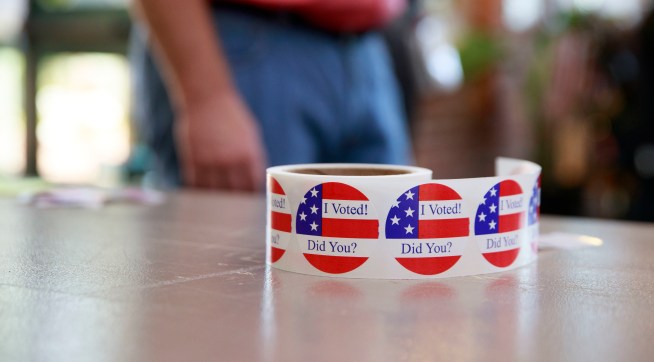
Protesters weren’t the only people demanding justice last night.
Join
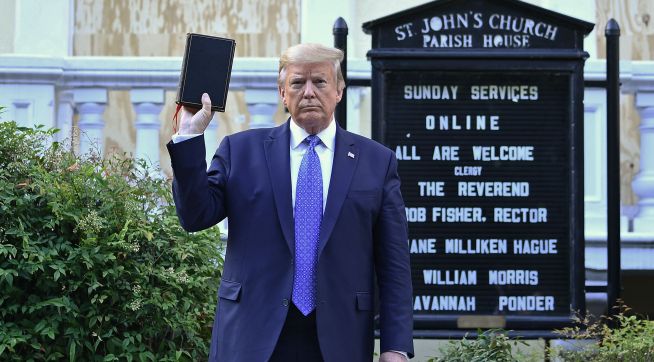
As I’ve said, living in history is about not knowing the future. We are in a very volatile, unpredictable, dangerous moment in the history of this administration and indeed the history of the country itself. The stunt in front of the White House on Monday is not wearing well. It has the feel of one of those gambits employed by an embattled strongman which does both too little and too much, exposes weakness while galvanizing opponents. In the brittle late 20th century states of Africa and Latin America these moments would rapidly force a decision to massacre demonstrators or start lining up a flight to the French Riviera or exile in Saudi.
JoinOnly a couple hours ago, the AP reported that the Pentagon was beginning to send regular Army troops deployed to DC back to their home bases. Now Secretary Esper has abruptly reversed that order. Seems very likely that the White House found out – quite possibly from the news report – and ordered Esper to reverse course.
Trump and Barr are patrolling DC with federal prison guards from the units trained to deal with prison riots and emergency situations in federal prisons. These appear to be at least some of the federal police who have been refusing to identify themselves on the streets of DC.
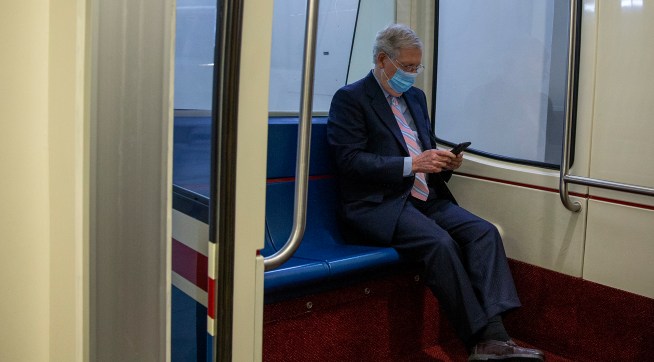
The Senate majority leader rarely straightens his spine to break with President Trump. And when he does, you can always expect push back about as stiff as a wet noodle.
Join
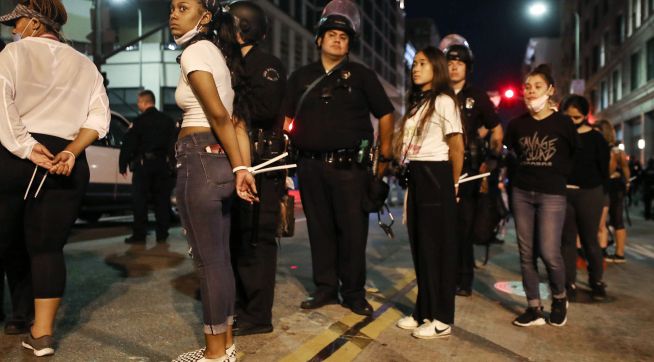
One of the essential features of Trump and Trumpism is the way he has – both in his person and his movement ideology – managed to bring all the contradictions and controversies in our society furiously to a head. In a matter of days not weeks we have managed to skip from the intricacies of a public health crisis to racism and police violence to the state cornerstone of civilian-military relations and the rather essential question of whether the President is threatening some sort of distended military rule.
Join
Yesterday, amidst global protests about police brutality, the venerable New York Times published an op-ed by Sen. Tom Cotton (R-AR) titled “Tom Cotton: Send In the Troops.”
“The nation must restore order,” the sub-headline read. “The military stands ready.”
This piece was met with visceral anger. The union representing New York Times staff, the NewsGuild, issued a statement that Cotton’s message “undermines the journalistic integrity of our members, puts Black staff members in danger, promotes hate, and is likely to encourage further violence.” Countless journalists tweeted “Running this puts Black @nytimes staff in danger.” Read More
A few days ago I flagged that that big hydroxychloroquine study published in The Lancet was becoming a major and substantive controversy. The questions raised about it went well beyond critical questions of interpretation or how one structures a proper study or review to questions verging on accusations of fraud.
Today The Lancet officially retracted the study. This was followed a short time later by The New England Journal of Medicine retracting a separate study that was not about hydroxychloroquine but relied on data from the same company, Surgisphere.