


Just before 2 a.m., I’m trying to make sense of the Senate results. If I’m making sense of this right, Democrats have clearly won 54 senate seats, appear likely to win 55 and could still win 56.
The final uncertain seat is in Mississippi. The Times calls it a toss-up with a 61% chance of Republicans winning it. But election watchers I trust seem to think it’s just a bit more likely that Colom will win. To be clear, they’re only talking about likelihoods, and it’s a bit more likely, in their view, that Colom will win. To be fair to the Times, these are models that are fully devised in advance. And this is extremely close. When it’s that down to the wire, it’s down to picayune details, idiosyncrasies of particular counties that may just be hard for a model to fully capture. The people I’m following suggest that in the key counties where votes remain the last ballots tend to lean Democratic.
Read MoreThank you to everyone who joined us for tonight’s livecast. We had about a thousand people watching through most of the evening from 8 PM to around 12:30 or so. We really enjoyed it and we hope you did too. We’re going to be doing more of these.
As I’ve noted a few times, polling is just a predictive artifact. None of all those polling questions matter now. But one thing is worth observing simply to think clearly about the unpredictability of polling error. It will take a while for numbers folks to crunch all the numbers. But simply look at the Senate races it’s clear that while some polls were accurate quite a number of them significantly underestimated Democratic strength – South Carolina, Texas, Iowa and a number of others. This isn’t an exhaustive list. I’ve been on our video-cast for almost five hours. I’m a bit fried. But again, polling error doesn’t just underestimate Republicans. It goes both ways. It’s unpredictable.
7:45 PM: Okay, we still only have a few states reporting. But there are some important ones. And this is looking like it’s going to be a very long night for Republicans and perhaps not that long a night for reporting results. I don’t want to get ahead of ourselves but the details are looking that way. Buckle up.
7:06 PM: If you’re watching individual races don’t put much stock in any results unless you have a good handle on what’s early vote and what’s election day vote. We know that the early vote was landslide margins for Dems. And they’re often counted first. This is why you start to be able to understand what’s happening when you start seeing total results even in small counties. Then you get a real sense of swings.
7:03 PM: We’re about to get a bunch of results. But one thing to keep in mind is that we might see a somewhat different story in battlegrounds and non-battleground states. The general take about 2024 was that even though Harris lost, her campaign pushed the battleground further in her direction than the locked down parts of the country. So another possible dynamic to keep in mind. It might be rougher for the GOP outside the battlegrounds. But that can play out in unpredictable ways. You can have a big Dem swing. But in a very Red state most Republicans might still hold on.
6:36 PM: Another thing to keep an eye on is when races in what should be safe Republican seats don’t get called right when polls close. They’ll probably win most of those. But you get a read of what’s happening just by when some of these races can’t be called right away even if the Republican likely will end up winning it.
6:30 PM: As noted below, join us at 8 PM for our live videocast. For now, we only have reporting from a couple states. But we’re seeing some Republicans in pretty Red districts with real races on their hands. They may win those. But those seats being in contention point toward something bigger than your average wave. We’re seeing substantial swings in Indiana. Keep an eye on Indiana 5, Victoria Spartz’s district. That’s a R+8 Cook PVI district. Trump won it by 17 points in 2024. And she may have a race on her hands. (Remember that midterms can be weird. Different states can have different dynamics.)
We hope you will join us tonight starting at 8 p.m. eastern for our live videocast as we bring you live election results and commentary. It’ll be me and TPM Publisher Joe Ragazzo and pretty much the whole TPM cycling through to discuss different races over the course of the evening. We’ll also be answering your questions in real time over the course of the evening. You can either watch on our TPM YouTube page or right here at the website where the live feed will be embedded on the front page. Can’t wait to see you this evening.

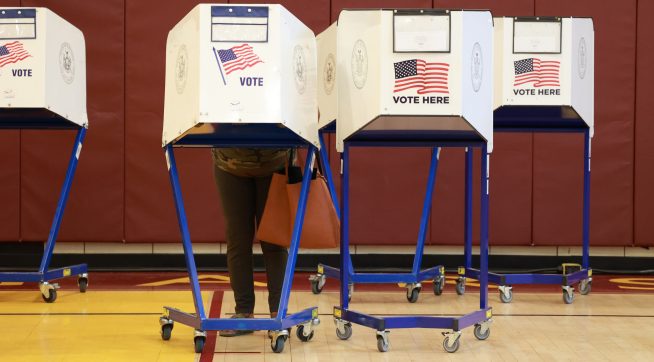
We’re now down to nothing to do but wait (and, obviously, pore over day-of indicators that mostly won’t mean anything). So with that in mind, a couple quick observations.
Join
Two years on from Donald Trump’s 2024 second election to the presidency we can identify clear patterns separating Term One and Term Two. I’ve noted at other times that for all the norm-busting, outrages and crimes of Term One, if you were a regular person who didn’t pay much attention to politics, very little of it intruded into your life. And the economy remained buoyant. The fact that Trump inherited a strong economy doesn’t matter in terms of public tolerance.
Of course, Trump still got quite unpopular. But to the extent that the Trump opposition kept up that resigned refrain “Nothing matters” there was a reason: If you simply didn’t pay attention to politics, most people could say, ‘Yeah, he’s weird but how is it affecting me?’ And at least before COVID there was much less — in terms of things that are materially affecting your life today — that many Trump foes allowed.
Read MoreIf you’re here for our amazing election and post-election coverage don’t forget to subscribe and support our team’s work, as well as get access to extra cool stuff.
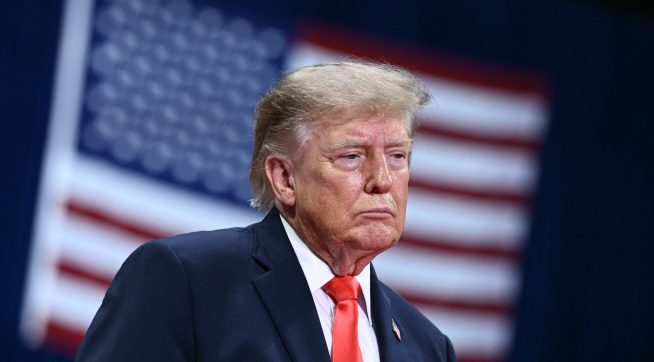
It is a given of the 2026 midterms that a wave of still-uncertain magnitude is likely because of Donald Trump’s historic unpopularity. What gets less attention is how much the Senate races themselves — like who is running and whether an election is even being held — have been shaped very directly by his actions. Ohio, South Carolina, Florida, Georgia, North Carolina, Texas and Iowa all, amazingly, fall into this bucket.
JoinWith the pro-fascist wing of Senate Republicans threatening not to seat Mary Peltola if she’s elected to the Senate, I wanted to give you a short primer of how all this works, not just in Peltola’s case but in the larger terrain of GOP denialism.
First, the House and Senate are fundamentally different. The senate is a “continuing body”; so Republicans are in some position to refuse to seat Peltola. The House on the other hand reverts to what we might call a parliamentary state of nature every two years. When the House reconvenes in January, there won’t be a Republican majority and Mike Johnson will not be Speaker. Everyone shows up with their state certifications in hand and it’s the clerk of the House who examines those credentials on a ministerial basis. Then everyone votes on who the Speaker will be. That’s why we had that drama with Kevin McCarthy a few years ago.
Read MoreI think we’ve seen all that can happen in the bizarre continuation of the Michigan Democratic Senate primary, which of course actually ended a few months ago. But given what’s happened over the last 72 hours, I guess, who am I kidding? Stevens did a new round of interviews last night, including one on CNN with Anderson Cooper. It was a further train wreck in the weeklong run of pile-ups. It was a classic case of why, in a high-stress news environment, you shouldn’t go on TV if you don’t know what you want to say. Stevens appeared to be figuring out or trying to come up with an explanation for her actions in real time on live TV. At one point she seemed to suggest she might end up voting for Abdul El-Sayed after all, though it was so disjointed that it’s hard to know just what she was trying to say. It’s for this reason that both her erstwhile friends and her current friends have been begging her to just stop talking.
Read More