


Independent media can feel like an isolating place. Most of us operate as individuals or in small newsrooms with limited resources, throwing spaghetti at the wall to try to reach new audiences and get our stories in front of people in an ever-more-consolidated media environment.
But we’re in this together, as celebrated historian and writer Heather Cox Richardson reminded us in a generous live interview with TPM’s Kate Riga and Josh Marshall this afternoon.
HCR had Josh and Kate on to talk about what it’s like to report on today’s frenetic politics; the founding and future of TPM; and what independent media will look like in the years to come.
Read MoreKate Riga has a good summary of the stakes Democrats currently face in Virginia. There’s a way to reverse the state Supreme Court’s decision tossing out the majority statewide vote supporting the new Dem-friendly districts. It involves intense political hardball. But it’s the same kind of political hardball Democrats will need to embrace at the national level in 2028-29 with a trifecta if there’s any hope on turning the tide against Trumpism. So Virginia will give us some view into what kinds of fights Democrats are ready for.
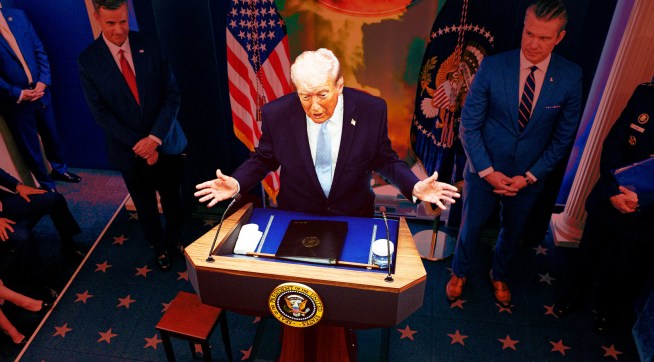
Again we see that, contrary to numerous press reports, the U.S. and Iran remain lightyears apart in their on-again, off-again negotiations to end their war. Iran’s demands, its response to Trump’s latest proposal, amount to a maximal package of winnings for a war Iran won: an end to the decades-long sanctions regime, sovereignty over the Strait of Hormuz, reparations. It is true that antagonists can sometimes seem very, very far apart and then suddenly arrive at an agreement. But these two sides seem really, really far apart.
Read More
TPM’s own Hunter Walker has won a 2026 New York Press Club award for his seven-part investigative series delving into the impact of President Trump’s mass deportation agenda in New York, the U.S. city with the greatest population of immigrants, and which has seen the highest number of violent courthouse detentions.
Over two months in New York City’s federal courts, churches, and safe houses, Hunter spoke to more than 50 migrants, organizers, ICE agents and lawmakers, including then-mayor-elect Zohran Mamdani and Reps. Dan Goldman and Nydia Velasquez (D-NY). At the heart of the series are the New Yorkers, many of them volunteers, operating in secret to protect and serve their immigrant neighbors.
Read MoreThe Supreme Court’s decision in Louisiana v. Callais probably closes the book on the use of the Voting Rights Act to ensure Black voting rights in the South. The decision is being taken as a blow to Black voting rights — and even as indicative of the court’s racist leanings — but I wouldn’t jump to those conclusions. The redistricting effort that Callais ends may not have been of unequivocal benefit to the Southern Blacks it was designed to aid. And while it could damage Democratic prospects in 2026, it might help them in the longer run.
Read More
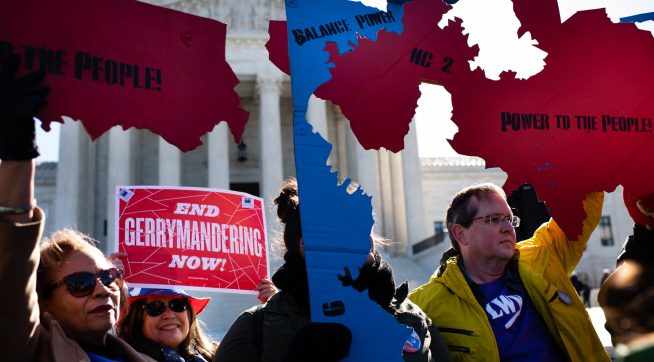
Callais, combined with today’s court ruling in Virginia, has jolted Democrats and sent commentators into bemoaning an accelerating “race to the bottom” and, to paraphrase Jeff Zeleny on CNN this afternoon, the end to norms that have organized American politics and redistricting for generations.
I’d like to offer a significantly different view of the situation. What we have seen over recent months is that Democrats have largely abandoned the mode of the last decade plus in which with one hand they fought the partisan battles of the day and with the other assume the mantle of defending the political norms Republicans have already destroyed. In other words, it was the responsibility of Democrats both to be contestants and referees. Republicans violated norms; Democrats tried to uphold them. That of course meant no partisan battle was ever on equal terms and Republicans almost always won them.
JoinWith the big news out of Virginia this morning, in addition to the fallout from the Callais decision, we decided that an insta-pod edition of the podcast was important to bring you up to date with what all this means. Kate and I recorded one about an hour ago and it should be in your podcast feeds this afternoon. So if you’re eager to unpack this barrage of news, Kate and I will be answering those questions in this emergency edition of the podcast.
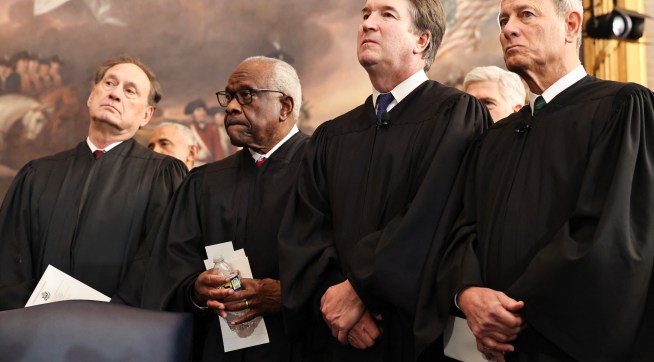
Yesterday, Lauren Egan — who authors The Bulwark’s newsletter about Democrats — sent out a newsletter edition entitled “Get Ready for the Dem Court-Expansion Litmus Test.” (Egan tends to be fairly dismissive of Democrats’ intentions, with a kind of mainstream media vibe.) Today Chief Justice John Roberts is complaining that the public is misinformed thinking that the Supreme Court is made up of corrupt political actors. As I’ve written repeatedly, there are deep inertia pools of opposition to Supreme Court reform. It’s a much heavier, though just as critical, lift than contesting the gerrymandering wars or abolishing the filibuster. But these and other hints show that a movement and a coherent push are beginning to take shape.
JoinYesterday I wrote a post basically arguing for a broad resistance to allowing the avalanche of corrupt and criminal conduct under the second Trump administration to take on the color of normality and acceptability. The answer to that is broad criminal accountability. The post was entitled, “The Law is Coming.” This was partly a reference to a phrase I used frequently during the first Trump administration, after which the cause of accountability was at best uneven and ultimately a failure, a story we all know well and from bitter experience.
Read More

I’m hoping to bring you some news on the DOJ-in-Exile front in the not-too-distant future. It was probably simply too early in the spring and summer of 2025. It’s not too early now. But the DOJ-in-Exile idea was and is part of a more general ambition and agenda — to create a baseline record, a predicate and an expectation of future accountability for the Trump administration’s criminal conduct. Some of that effort is a kind of opposition therapy, resisting the authoritarian aim of convincing the public that the law, the ecosystem of criminal accountability has disappeared. It heartens people. It provides a framework of expectation: the law hasn’t disappeared. We’re in an interregnum. It will return, as will accountability. The battle over expectations about the future is a central battle in any authoritarian takeover.
But it’s not solely a matter of heartening, strengthening the morale of the opposition. It is also very directly and literally laying the groundwork for criminal accountability for a renegade executive and all the corrupt actors and criminals who now populate the executive branch.
Join