


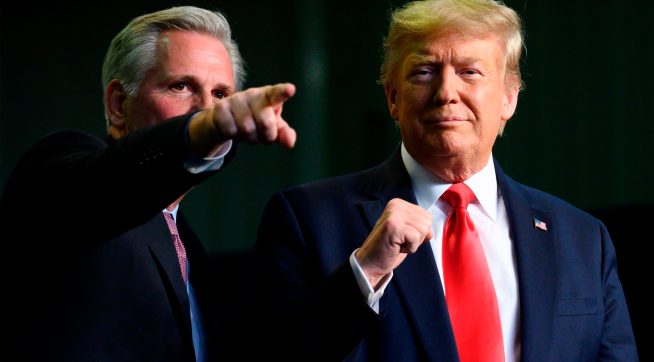
TPM Reader JO makes a point I confess had not occurred to me. If Republicans again place Donald Trump’s name in nomination to serve as the next speaker, Democrats should raise a point of order that Trump is in fact ineligible to serve as speaker under the 14th Amendment because he previously “engaged in insurrection” against the United States. The Constitution placed essentially no qualifications on potential speakers. They do not have to be members of Congress. But the 14th Amendment prohibition clearly trumps that open door by disqualifying anyone who has engaged in insurrection or rebellion from holding “any office, civil or military, under the United States.” That unquestionably includes the speakership, one of only a handful of federal offices explicitly created by the constitutional text. If Trump engaged in insurrection, he is clearly ineligible to serve as speaker.
Join
That is where things stand.
(In all seriousness we will be bringing back my daily Editors’ Blog post next week after our brains recover from the dumpster that is on fire on the House floor right now.)
In the meantime, Emine Yücel and I are covering all of today’s madness here.
🙃 🙃 🙃 🙃 🙃 🙃 🙃 🙃 🙃 🙃 🙃 🙃 🙃 🙃 🙃 🙃 🙃 🙃 🙃 🙃 🙃 🙃 🙃 🙃 🙃 🙃 🙃 🙃 🙃 🙃
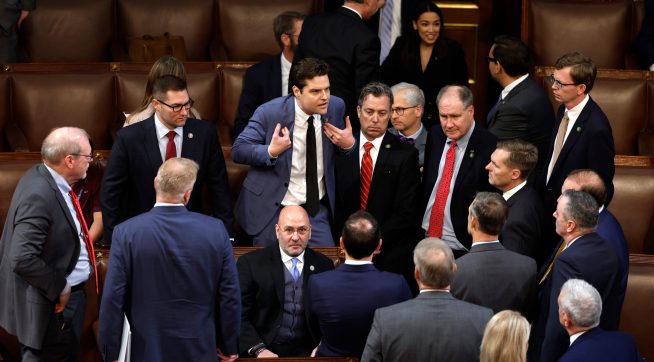
I thought it was worth making a simple point. The spectacle of the last two days is an embarrassment. The House GOP and really the GOP generally has shown itself incapable of governing in the most basic sense. But I’ve heard some suggestions that this is sort of a lo-fi reenactment of the events of two years ago: more chaos, more craziness, more dysfunction. It’s worth pushing back a bit on that appraisal. This is democracy. If anything there is something a bit invigorating about seeing vote after vote where the outcome, immediate or eventual, isn’t at all clear. One vote, followed by various frenzied negotiation, another vote, followed by more.
JoinThe House is set to come back into session at 8 p.m. ET. You can follow along with the TPM team here. But the House may not be in session for long. Kevin McCarthy told reporters he thought it was “best” not to vote again tonight because the results would be the same (he falls short of a majority) but that talks were continuing. Not a sure bet we’ll see a quick adjournment, but that definitely looks possible.
Read More
When we talk about the GOP as a failed state run by assorted warlords think about stuff like this.
Join
Today’s and yesterday’s events were predictable, unbelievable and hilarious all at once. One increasingly common refrain from analysts and reporters is that the issue between Kevin McCarthy and his now-20-plus rebels is really personal. They don’t trust him, will never trust him. Perhaps. But this personalizing analysis ignores the larger dynamic that has been unfolding in the Republican Party for more than a decade. We might trace the roots of the present moment to Barry Goldwater, to Newt Gingrich, to the Tea Party, or to Donald Trump. But the key turning point here is 2008 and 2009 when the GOP ceased to function as a center-right party of government and became something more like the sectarian revanchist parties that have long existed on the margins of European parliamentary politics.
But the U.S. isn’t a parliamentary democracy. Its constitutional structure makes it all but inevitable that two coalitional parties will trade power back and forth. This shift in the GOP happened along with a deep fracture, and an inevitable one in an American context. The House Freedom Caucus was nominally formed in 2015. But it was an institutionalization of the Tea Party radicalism that had its roots in the shift from Republican to Democratic rule in 2008 and 2009.
Join
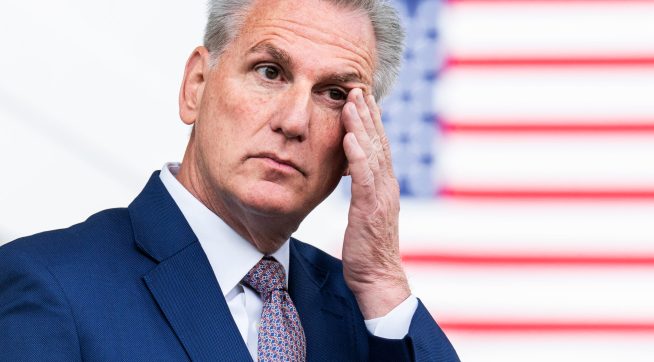
On the big vote, my best guess is that through some set of machinations Kevin McCarthy becomes speaker today — likely a mix of abstentions and votes secured through desperate promises. I say that for only two reasons, both flimsy and thin. One is what I’d call metaphorical body language from the top Freedom Caucus arsonists. They say they’re unmovable and yet they’re still sitting at the table holding their cards like they are. The second is that political parties usually find ways to make things work at pivotal moments — the half time entertainer at the Super Bowl never forgets their lyrics. As I said, these are both pretty thin reasons. But they’re why that is my assumption going in.
Join