


Excited to announce that we’re hiring for a newly created position: Editor for Content Strategy and Audience Development. This editor will help nourish and grow the TPM community. I think you’re going to like what this new role will enable us to do. We want a fantastic new teammate, so help us out. Please spread the word to your sharpest, most talented friends and colleagues – and put in a good word for us. Thanks.

Derek Chauvin was found guilty on all counts in the murder of George Floyd last night, the first verdict of its kind in a landmark case that inspired a wave of protests across the nation last summer against police brutality and systemic racism.
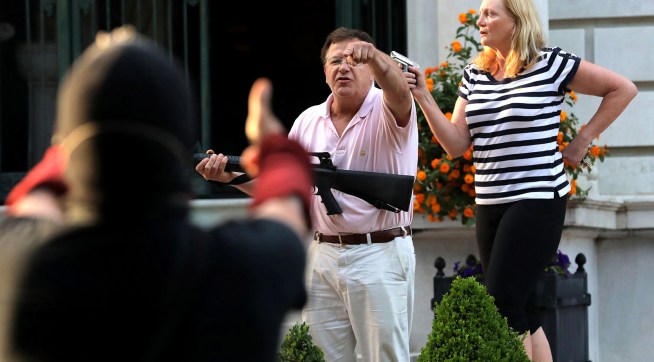
A few hours later, the St. Louis lawyer Mark McCloskey — who become known for standing barefoot outside his home alongside his wife last summer as the two pointed weapons at peaceful Black Lives Matter protesters — told Politico that he was considering a Senate bid in Missouri.
“I can confirm that it’s a consideration, yes,” McCloskey reportedly said Tuesday evening.
Join
Recently, Justin Levitt, Professor of Law at Loyola Law School and an expert on constitutional jurisprudence and voting rights issues, was named White House Senior Policy Advisor for Democracy & Voting Rights by President Joseph Biden and Vice President Kamala Harris. In February, Levitt joined Josh and Tierney for an Inside Briefing to discuss his thoughts on the state of elections in the United States, voting rights issues, and the importance of institutions in a democracy. Members can watch the discussion after the jump.
Join
There are a host of articles today about the US reaching a vaccination tipping point at which the key challenge is no longer the supply of vaccine but the supply of people willing to take it. Like “herd immunity” it isn’t a binary, clear-cut moment. It’s incremental. We’re approaching it now and the challenge will accelerate over the next two to four weeks. In many ways this challenge is a product of our success. In January I don’t think anyone thought we’d have widespread availability and half of all adults vaccinated in April. But we did it.
Join
I’m working my way through your emails on making sense of the post-Trump Era. Please keep them coming. (See the linked post for more details.) They are fascinating but like the topic itself they are hard to bring into focus. There are common themes but they are elusive. I will be publishing a number of them. But I wanted to start with this note from TPM Reader CC, who lives in Australia. It’s a very different perspective given that’s from someone in a foreign country on the other side of the world. But I found it very interesting as a window into what America now looks like from abroad …
Join
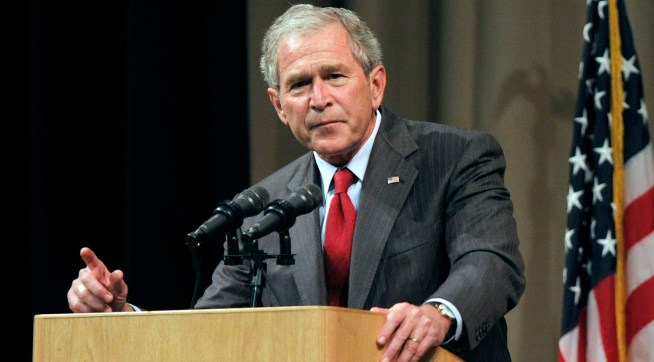
“It’s not exactly my vision,” former President George W. Bush said of his Party during a live interview with NBC’s “Today” show this morning.
Join
A very interesting backgrounder from TPM Reader AH on the specifics of the kind of stroke that killed Brian Sicknick …
JoinHi, Josh! This is a topic I really do know something about – I am consulted to see several patients for stroke every day. The news about Brian Sicknick having died from a brainstem stroke is a bit of a surprise to me, because they are uncommon in general, and for a young, healthy guy to have one raises my eyebrows. To die from one is less surprising – these are the most, or maybe tied for the most lethal strokes you could possibly have.

What are we to make of yesterday’s news that Capitol Police Officer Brian Sicknick died of ‘natural causes’? Sicknick’s death and to a much lesser degree the suicides of two other Capitol Police Officers within days of the insurrection are inextricably bound up in the story of that day and the gravity of those events. The Medical Examiner’s comments to the Post were themselves contradictory, at least in layman’s terms. Francisco J. Diaz found no discrete injury such as a head wound that would have been a proximate cause of Sicknick’s strokes. He also found no sign of acute respiratory constriction, which would be the standard sign of an allergic reaction to chemical spray which also could have caused a subsequent stroke. Yet Diaz also said of the events of January 6th and Sicknick’s confrontation with insurrectionists that “all that transpired played a role in his condition.”
What does that mean?
JoinYou see the question. Tell me what you’re thinking, what sense you’re making of the post-Trump Era. How does it feel? Withdrawal? Relief? Confusion? Perhaps as important as anything what do you expect? Over the next year and the next four?
I’ve written in a few posts about what I’ve called the Politics of Opaqueness, how much the direction of events is now seemingly driven by decisions, developments, fortuitous and otherwise, that are outside of our view. Even more than this though, I think most people – myself included – thought we had a pretty clear view into what a post-Trump presidency would be like. Trump leaving doesn’t mean the end of Trumpism, he’ll continue to dominate the scene from the outside. In the event, I don’t think much of that has turned out to be true.
What are you seeing? Drop me your notes at the main email address.
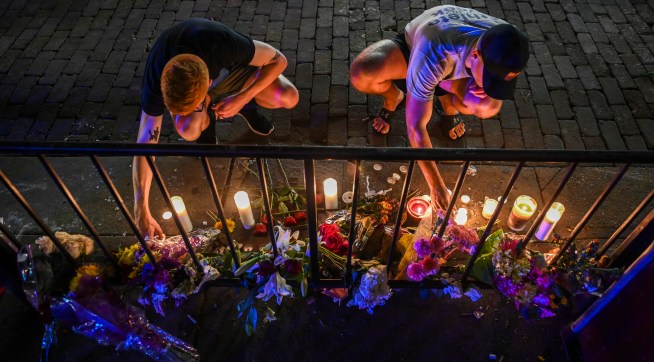
The pandemic has brought to a head the complexities of one very uniquely American problem: the emphasis we as a country put on individual freedoms, which, this past year, has repeatedly run headlong into the need to care for our fellow man during a global health crisis.
It’s also revealed in new ways a more depressing American problem: mass shootings.
Join