


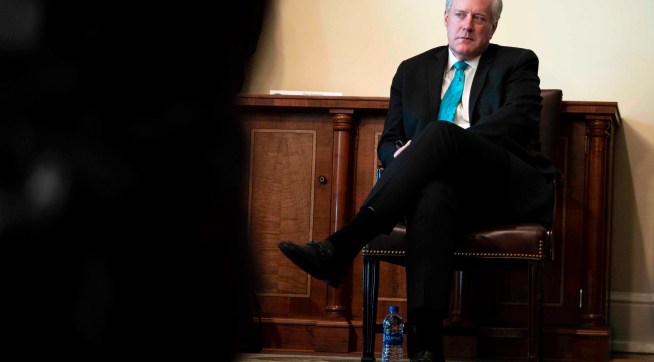
In what appears to be an attempt to contradict a recent report in the New York Times — that President Trump spends his days eating french fries and obsessing over the TV — newly minted chief-of-staff Mark Meadows told the New York Post this weekend that his “biggest concern” as a top White House official is making sure Trump eats lunch.
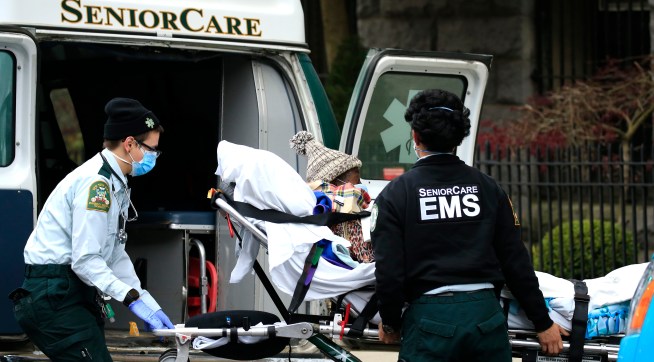
One of the most fascinating and ominous things about COVID19 is that as clinicians and researchers have learned more about it that knowledge has not simply filled out the details of a broadly understood story. Rather, more knowledge has confirmed how little we knew and still know about the disease. For lay people like most of us the original story was that COVID19 was a viral respiratory tract infection. It was more deadly, less predictable in its course and had no known therapies to treat it. But broadly speaking a disease that attack the lungs, leads in severe cases to pneumonia and from there a cascading series of failures that can lead to death. Doctors had a more sophisticated but broadly comparable understanding. Four months plus into the history of the disease they know that COVI19 can attack most of the body’s major organs – heart, liver, kidneys, brain, et al. It’s far more insidious and copious in its range of potential attacks on the human body than they realized only six weeks ago.
A new emerging issue is how COVID19 attacks or disrupts a patient’s blood – specifically the delicate and critical balance of regulating when to flow and when to clot. When I first read articles about this I assumed these clotting issues were just part and parcel of the failure or near failure of the various organ systems. COVID19 attacks your liver or kidneys and clotting issues are just a manifestation of injury. But that does not seem to be the case. It seems to be a distinct way COVID19 attacks the body.
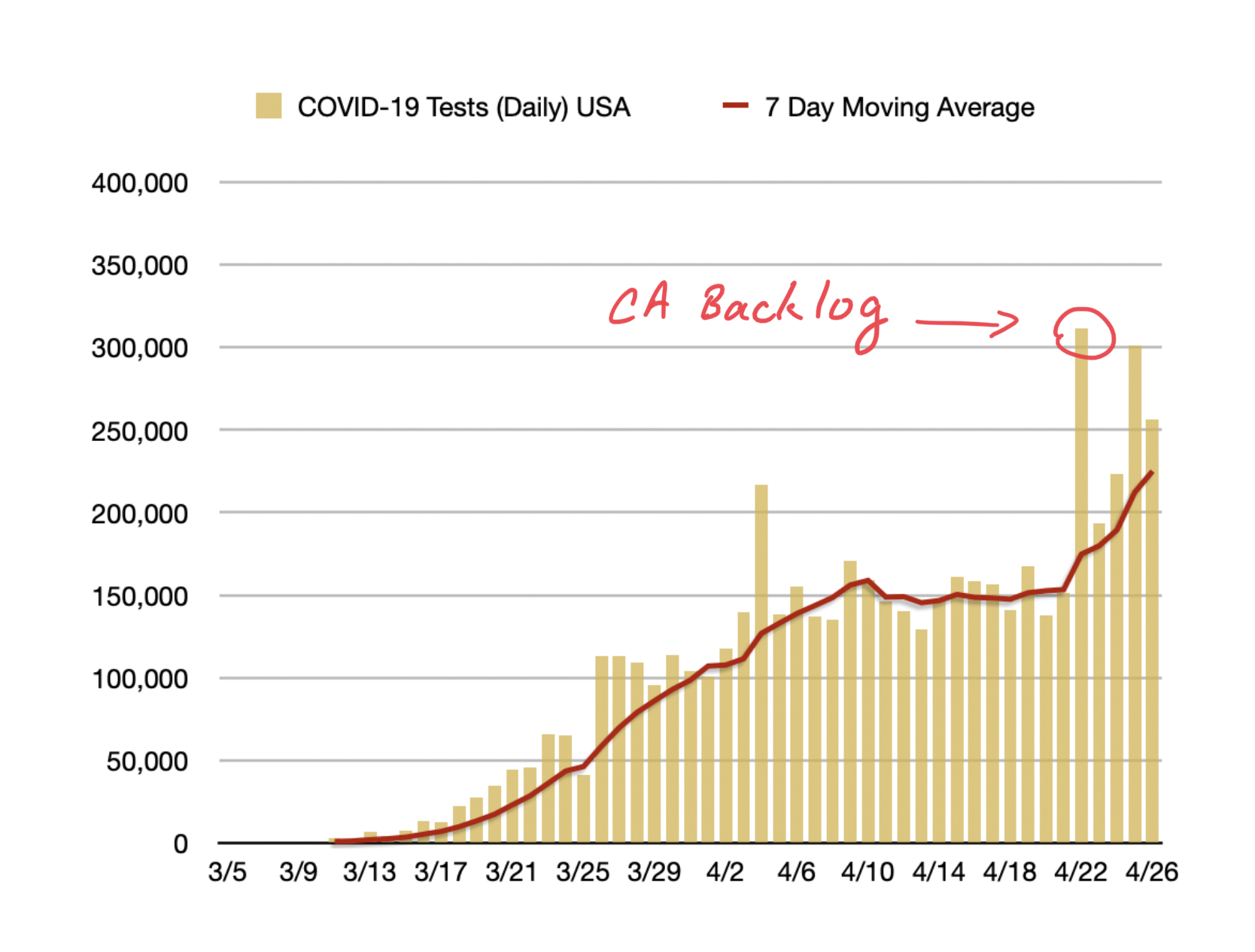
Good news has been hard to come by in the COVID19 Crisis. But testing capacity across the country did appear to grow substantially over the last week. Here is daily COVID19 tests across the country along with a 7 day moving average.
Today researchers at the University of Miami released the preliminary results of serology (antibodies) testing in Miami-Dade County. They estimate that 6% of the population – or 165,000 residents – have been exposed to the disease. According to this write-up: “The researchers say they are 95% certain that the true amount of infection lies between 4.4% and 7.9% of the population, with 6% representing the best estimate.” The methodology for the sample appears to have been more robust than that applied in the Stanford group’s studies in California. Researchers say they used data from electrical utility Florida Power and Light to generate phone numbers in targeted demographic areas who were then contacted asked to voluntarily provide samples. Read More

If you haven’t had a chance I hope you’ll take a moment to read Josh Kovensky’s exclusive on federal government confiscations of masks and other PPE during the COVID19 Crisis. It’s the kind of piece we’re very proud to publish and the kind of weeks’ long effort your memberships and contributions to the TPM Journalism Fund make possible. Explicit partisan politics or political motivation did not turn out to be an issue in that particular story. But this story from NBCNews brings the broader story into focus. At every level, the White House is using access to PPE, medical supplies and testing as patronage. Friends get help; enemies can talk to the hand.

I think we all may be very numb at this point. If you’re not already, I am sure you will soon join the cynics.
Let’s go back to Wisconsin after the April 7th in-person election. We have a couple more days of data since we discussed this last. Did it lead to a bump in COVID19 infections?
Let me show you the data with first a seven day and then a three day moving average.
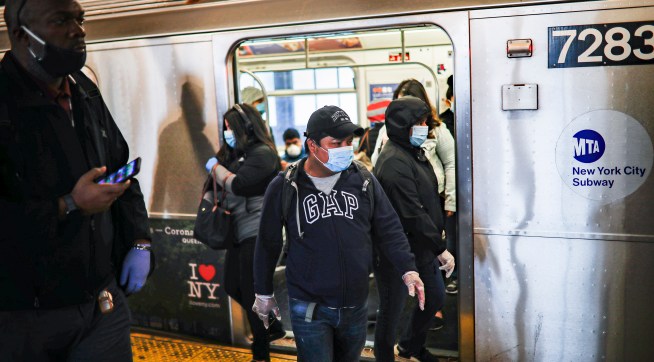
Gov. Cuomo released some very important data today from New York State’s first COVID19 serology (antibodies) testing. They’re preliminary. So keep that in mind as more than just fine print. (Details on that in a moment.) The key data: 21.2% of New York City residents tested positive for COVID19 antibodies. 16.7% for Long Island; 11.7% for Rockland and Westchester (the suburbs just to the north of the city); and 3.6% in the rest of the state.
Reopen, but not like that.
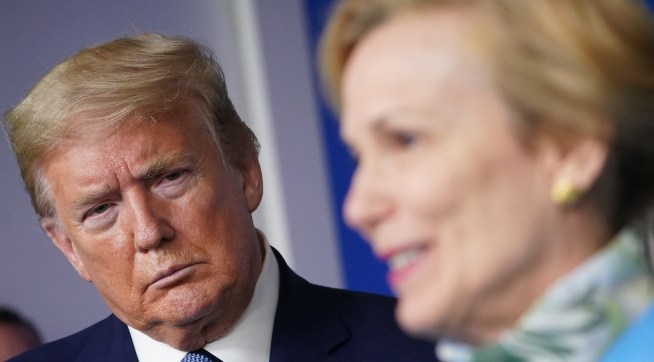
While it took some goading, President Trump criticized his friend and fellow Republican Brian Kemp on Wednesday evening for his plan to push businesses in his state to reopen, a move that the President has been hyping for weeks.
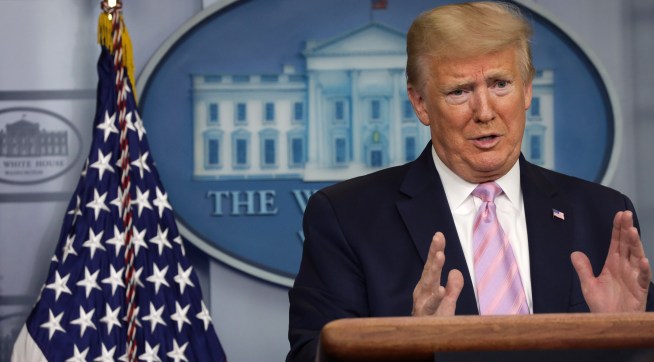
One of the many things Donald Trump has done badly for the country in recent months is focus this debate – largely around himself – about whether to ‘open up’ or not. This argument is good for generating intractable arguments. But it’s not terribly productive. Jeremy Konyndyk, a former Obama administration official involved in the US ebola response and other international aid efforts, suggests this analogy. Your house is on fire. You can shut the windows to deprive the fire of oxygen. That will slow it down. But eventually you’ll suffocate. We’ve now got a public debate which amounts to whether to be incinerated or suffocate. What we need is the fire brigade to show up and hose down the house. The fire brigade, as Konyndyk explains, is a system of widespread testing, contact tracing, isolation for the infected and beefed up hospital capacity to make an interim new normal possible.
This is very hard work to do.